
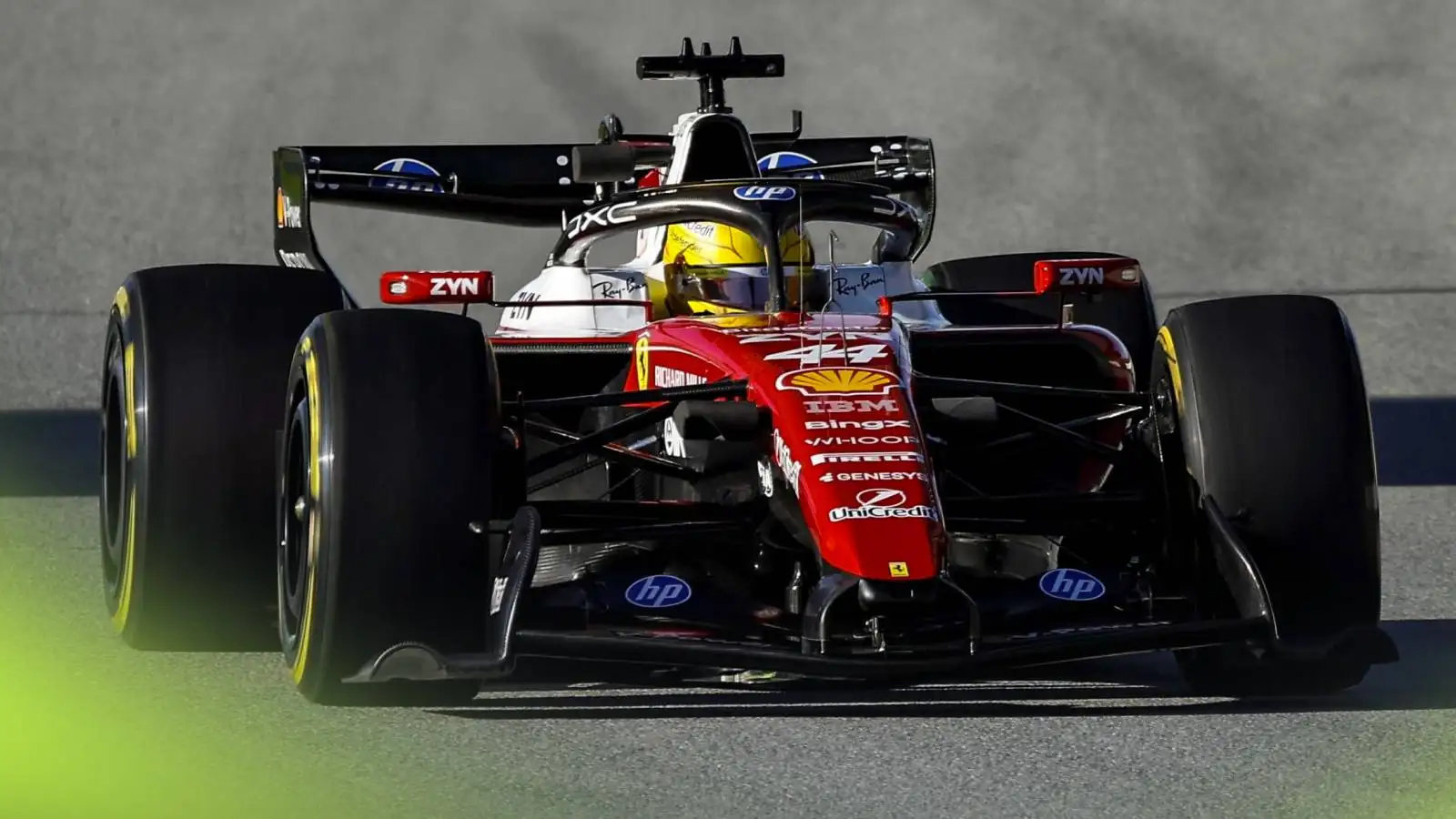
After the closed-doors shakedown in Barcelona concluded, attention now turns to Bahrain with the first of two official pre-season tests.
The Barcelona shakedown means we still know pretty little about how the F1 2026 grid will look but Bahrain sees the media and fans once again trackside, giving us a much clearer vision of the year to come. Ahead of the event kicking off on February 11, here’s what you should be looking out for over the three days:
What to look out for in F1 2026 pre-season testing
Lap count over lap times
Of the 19 drivers who took part in last season’s test and were there to finish the year, just two of them matched their lap times with their place in the Drivers’ Standings.
Coincidentally, they were both Mercedes drivers but in general, it is best not to pay too much attention to who is the quickest for there are a whole host of reasons why the numbers may lie.
For starters, we do not know what kind of run plan each driver was on so when Carlos Sainz set the quickest lap of last year’s testing, he could have had a fraction of the fuel that eventual title winner Lando Norris, who was down in 17th, did.
Another reason is that teams do not want to show their hand unless necessary, leading to a process deemed as sandbagging, which is in effect, not pushing your car to its maximum as you do not want your rivals to know how good you are.
A better metric to study then is laps completed as pre-season testing tends to be more about reliability than outright pace.
Last year, Haas completed the second most pre-season laps of any team, just one fewer than Mercedes, and would go on to finish behind only McLaren in terms of laps raced.
Laps completed takes on an even greater importance this season as each team is running an entirely new power unit.
The benchmark would appear to be between the 300-400 range for a team, anything above that would be a great start to the year while anything below would suggest a constructor still has some problems to solve.
Flow-vis paint and aero rakes
For a new person tuning into pre-season testing, they may wonder why fluorescent green paint has been splashed over the cars but it is actually an important part of how teams gather data.
The paint is a fluorescent powder mixed with a light oil that is then applied all over the car. As the driver puts the laps in, the light oil part evaporates and the part that is left shows what flow structures the car has.
This helps to give a very visual look at how a car’s aero package works which then allows aerodynamicists to rectify problems.
Another unusual sight is what looks to be a metal grid attached to either the wings or the wheels of the car, these are known as aero rakes.
These are a series of pitot tubes which measure fluid flow velocity or dynamic pressure coming off certain areas of the cars.
This will again tell the aerodynamics team about how air moves around the car and they can create modifications to improve it.
Both these tools are likely to be in heavy use given it is a whole new regulation set and no amount of wind tunnel testing can truly replicate what life is actually like out on track.
Secrecy, even if the cameras are now allowed in
Formula 1 has often had plenty of secrecy surrounding it but since Liberty Media pulled back the velvet rope, fans have been given more access than ever before – which is why the Barcelona shakedown felt so strange.
Fans, and the media, were kept out of the five-day event in Spain, meaning the only images we saw of the new cars were released by the teams themselves or through the lens of a photographer who perched themselves on the top of a Barcelona hill.
Bahrain though is different with the world’s media once again allowed back in but even then, teams will be doing their best to guard some of their secrets.
Anyone who has ever watched pre-season testing before will know some of the methods teams deploy whether that is with boards or literal human shields but a new regulation cycle would suggest an even greater emphasis on keeping the cards close to the chest.
In the previous era of regulations, the floor was one of the most intriguing aspects to get your eyes on and while a move away from ground effect has decreased its importance, teams will still be trying to keep what is underneath away from prying eyes.
Not to mention the spies working for each team who are on hand to snap pictures of their rivals in order for their own team to analyse what others have done.
More on PlanetF1.com
* Push-rod vs Pull-rod: How F1 teams are shaping 2026 suspension strategies
* What Isack Hadjar’s crash revealed about the new-look Red Bull
* How important is the fastest lap in F1 testing? History tells us more
Run plans giving hints to teams’ preparedness
While the teams are kind enough to let us know which driver will be driving when, after that they don’t tend to feel much like sharing.
However, one of the most impressive aspects of Mercedes in Barcelona was that the team was doing race runs pretty early on in the week, demonstrating how quickly it had ironed out any immediate problems.
It was something that James Vowles picked up on, highlighting Mercedes’ recent history in doing well out of the blocks come a new regulation cycle, and so one thing to look out for in Bahrain is which team has got its car in a stable enough condition to put it through the stress test of a race sim?
Any team doing those, especially early on, would be an indication of one that is relatively happy with the reliability of its car and can now turn its attention to performance.
What boost, overtake and recharge look like in real life
Perhaps one of the most interesting aspects will be getting to see just how the new, bigger battery and its deployment will be used.
This season, drivers need to put an increased focus on the boost, overtake and recharge function but up until now, we have only heard about it rather than seen it in action.
The drivers had their first taste in Barcelona but dash cams and helmet cams should give the viewer a much clearer idea of just how the technology works and how drivers will be utilising it.
Of course, this is not a race so drivers will not be pushing 100% but it will be interesting to see how the major changes look in practice.
Read next: Aston Martin AMR26: What we’re hearing about Adrian Newey’s first Aston Martin