
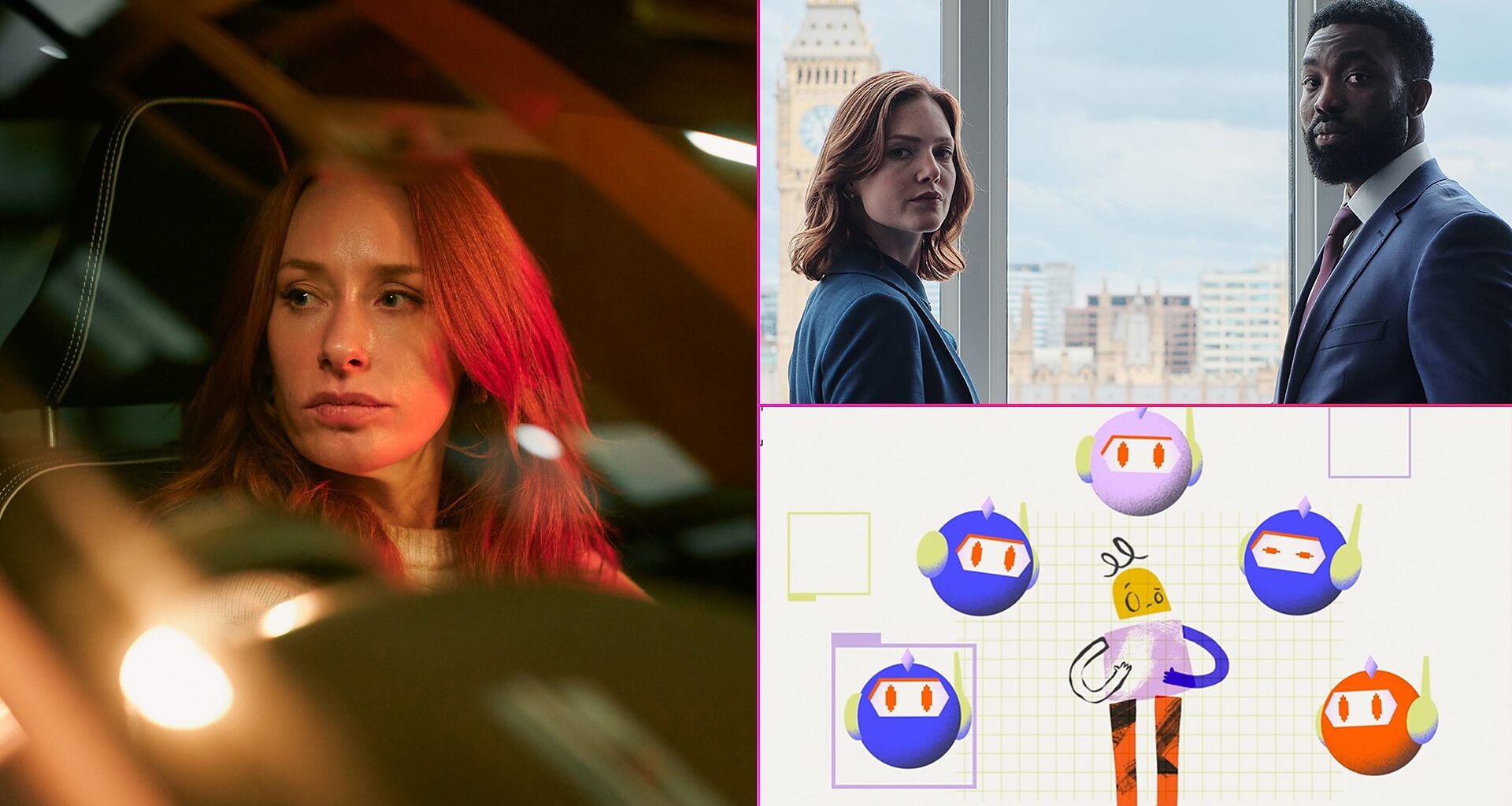
Artificial Intelligence is changing the way we live, work and learn – and the BBC is producing a week of programmes to tell those stories, and explore what AI means for you. From dramas and education to news and discussions, we’ll provide practical guides on how to get the most out of AI and ask the big questions about how it is shaping our world.
New research from the BBC shows AI use is rapidly rising across all ages, with a third of people in the UK now using is every week. The under 35s are the heaviest users, but uneven adoption does mean some people risk being left behind. And as the reliance on AI has grown, so too have concerns about this technology – concerns about how it will change careers and education, and what it means for news and creativity. The BBC has always played an important role in helping people understand new technology – both developing practical skills and discussing what it means for the future. That’s why the BBC has invested in AI Unpacked, which explores what you need to know about AI and the skills to navigate the future.
Kate Phillips, Chief Content Officer says: “AI Unpacked Week builds on the BBC’s work on educating UK audiences about AI and its place in society. Across TV, radio and digital we have a range of dedicated AI programming to inform and excite audiences about the rise of this new technology. From grief tech in EastEnders, to a Panorama special on the advance of robotics, to BBC Bitesize guides for teenagers.
“As we stand at the brink of a major technological revolution, the BBC will play a vital role in being a trusted destination for advice, insight, and engagement for all audiences.”
Programmes set to feature in AI Unpacked Week, with more to be announced soon, will fall into three big themes:
The big questions around AI – with Professor Hannah Fry investigating extraordinary tales from the front lines of the AI revolution in a new three-part documentary, AI Confidential with Hannah Fry. Those themes will continue with the return of thriller The Capture, back for series three and an AI storyline in EastEnders. On radio, we’ll be discussing the big questions and hearing from you. On Radio 2 Jeremy Vine will explore the use of artificial intelligence in therapy, Radio 4 will explore the future of truth in Sophia vs AI Slop and we’ll have discussions on BBC Asian Network’s Everyday Hustle and Asian Network Trending.
What AI means for you – with practical tips for using AI – what it is good for, and what are the watch outs. As part of National Careers Week, BBC Bitesize’s Guide to AI for teenagers explores how AI is already being used in real jobs and CBeebies Parenting Download will explore how families can use AI safely at home. BBC Ideas has also produced an AI essential explainer series in exploring how to get started and make the most out of AI chatbots.
AI and the future of work – will help us navigate what AI means for jobs, in National Careers Week. BBC Panorama will investigate advances in robotics – and our AI podcast and Radio 4 programme, The Artificial Human, will explore if AI is transforming learning in a special live episode recorded at University College London. Bitesize will also bring their practical advice to a live careers event with the Science Museum. The event will bring together 14 to 18-year-olds with professionals using AI in their jobs, helping them move beyond fear or hype and feel confident about how AI could fit into their future careers.
The Open University’s STEM academics are also collaborating with the BBC on activities relating to Artificial Intelligence, including co-producing AI Confidential with Hannah Fry and contributing academic insight via BBC Ideas on how AI can be used and understood in everyday life.
AJ2
BBC TV and iPlayer
BBC News
BBC Panorama: Will Robots Take my Job?
Robots can already do many jobs more quickly and efficiently than humans. Soon they may be better than us at many more tasks. In Silicon Valley, plans are underway for massive changes in the workplace – prompting fears that millions of people could be replaced by robots and the AI that powers them. So, will this future bring freedom from work in a world of unlimited resources, or a dystopia where millions of workers are discarded and impoverished? Reporter Richard Bilton investigates the rise of the robots and what it could mean for all of us.
Tech Now
Tech Now will broadcast a special AI compilation on the 7 and 8 March – with Joe Tidy’s innovative film exploring whether AI could really lead to the end of humanity, a look at the way AI is being used to reduce the number of accidents on roads, and the cat photographer who’s come up with a unique way to stop his images being replicated by AI tools.
BBC One
EastEnders
EastEnders will feature a storyline which will see Patrick become reliant on AI software as he struggles to cope with his grief in the wake of son Anthony’s death. The storyline will focus on how the AI software offers Patrick an outlet for his grief and will explore the effects this has on Patrick as his reliance on the software intensifies over the coming weeks.
The Capture Series 3
How do you protect the truth, in a world where lies are daily currency? And with the proliferation of deepfakes, how can we trust what we see? It’s been 12 months since Rachel Carey broadcast a live deepfake of a government minister to the nation, exposing the UK intelligence service’s clandestine video manipulation programme known as Correction. Amidst an inquiry into the unlawful use of Correction, Carey has become Acting Commander of Counter Terrorism Command, determined to regain the public’s trust in surveillance technology through the new Operation Veritas camera system.
And then it happens: a brutal and exceptionally well-coordinated act of terror aimed right at the heart of the British establishment that leaves behind just one witness. The more Carey investigates, the deeper she is drawn into an unfolding geopolitical crisis that infects the British political establishment, the security services, and the media. The conspiracy reaches deep into the State, but just who is pulling the strings?
Caught in an increasingly violent situation, and with few allies left to trust, what sacrifices will Carey be willing to make?
BBC Two
AI Confidential with Hannah Fry
Professor Hannah Fry investigates extraordinary tales from the front lines of the AI revolution in this brand new 3 x 60 series for BBC iPlayer and BBC Two. Artificial intelligence has already begun transforming our lives at break-neck speed – and it’s caused some incredible and sometimes shocking true-life stories as a result. Broadcaster and mathematician Prof Hannah Fry is going to meet the people whose lives have been impacted by this technology in huge ways – from falling in love with an AI chatbot, to life and death decisions made by robots, to the people whose lives have been upended by Silicon Valley corporations.
Taking a deep-dive into some of the most extraordinary human stories emerging from the world of AI, meeting key individuals whose lives have been transformed by this new technology for better or for worse, and investigating everything from ‘grief tech’ to driverless cars, this hugely entertaining and deeply enlightening new series will see Hannah grapple with some of the most important questions of our time, through some of the most thrilling untold stories of recent years.
Co-produced by The Open University, AI Confidential is available on BBC Two and iPlayer from Monday 23 February and episode two will air during BBC Week.
BBC Radio and Sounds
Asian Network
BBC Asian Network will offer special programming exploring AI on The Everyday Hustle (Monday, 6am-6.30am) and Asian Network Trending (Wednesday, 8pm-10pm).
BBC Radio 2
Jeremy Vine
On 3 March, Jeremy Vine on Radio 2 (12-2pm weekdays) will explore the use of artificial intelligence in therapy, asking listeners whether they have been counselled by AI and how the experience worked.
BBC Radio 3
New Music Show
Tom Service presents Radio 3’s weekly immersion into cutting-edge and experimental new music, including an exclusive recording from the BBC Philharmonic ahead of the BBC’s AI week (2nd-8th March): the world premiere of Robert Laidlow’s TECHNO-UTOPIA, a 30-minute concerto for piano, synthesizer and newly developed intelligent instruments, with Zubin Kanga as soloist. Robert’s compositional work is based on his belief that AI can be used as an expressive instrument to augment our own human artistic practices and can even help us to understand what being human is.
Saturday Morning
Sara Mohr-Pietsch sits in for Tom Service, with the best classical music and guests to start your Saturday. As part of the BBC’s AI week (2 – 8 March), throughout the morning Sara explores the multi-faceted impact of AI on classical music, from copyright issues facing the industry, to the pros and cons of AI in musical composition, and potential roles for AI in music and health settings.
BBC Radio 4
The Artificial Human
Aleks Krotoski and Kevin Fong will be back with The Artificial Human and their ongoing mission to demystify Ai. In this special series they’ll be answering one of the biggest questions in artificial intelligence today. Is the Ai bubble about to burst? 2025 saw unprecedented sums invested in the technology making Ai companies the most valuable in the world. But with take up slowing down and updates to Ai models found underwhelming are the wheels about to come off the Ai bandwagon, and if so, what does that mean for economies and businesses who’ve made massive bets based on the hype?
In episode 6 on 4 March, which coincides with BBC AI Unpacked Week, Aleks and Kevin will explore if AI is transforming learning in a special episode recorded at University College London, now in its 200th year. In front an audience of pupils, parents, and teachers and with a panel of education experts on hand we’ll explore how schools are responding to the stratospheric rise of AI. How do they make sure its enhancing learning and not detrimental to it, and are teachers and institutions ready for the challenge?
Series 7 of The Artificial Human begins at 3.30pm on Wednesday 28 January on BBC Radio 4 and available thereafter on BBC Sounds.
Currently: Sophia versus AI Slop
The journalist Sophia Smith Galer was recently astonished by a book she found on Amazon: it was a biography of Sophia Smith Galer. She ordered it and found it full of inaccuracies – and it was just one of numerous biographies apparently all written by the same author. AI makes it incredibly easy for these books to be produced and they are sold with a named author attached, but the consumer has no way knowing that the content on offer is likely to be unreliable – so-called AI slop.
Sophia reports on how she challenged Amazon and investigates the rise and rise of AI slop, such as her biography. These books are produced alarmingly quickly: a biography of footballer Michelle Agyemang was available the day after she scored a vital goal at the Euros and cannot have been researched or written by anything other than AI. These titles might then be read by other Large Language Learning Models and enter the food chain. They also saturate a market, potentially squeezing out books written and researched by humans. Sophia seeks to understand how widespread is the phenomenon of AI slop and considers whether we are in the twilight of a golden age where we can still access information that is untainted by AI.
BBC Radio 5 Live
Radio 5 Live will be unpacking the rise of AI – the opportunities, the risks, and how this rapidly evolving technology could reshape our work and daily routines.
BBC Education
BBC Bitesize Guide to AI Science Museum / Careers Week Event
For teens, the Bitesize Guide to AI offers practical advice and guidance, as part of a series of careers-focused videos and resources on the Bitesize website. Alongside this, a live careers event with the Science Museum will also take place on Tuesday 3 March during National Careers Week. The hands-on event brings 14 to 18-year-olds face to face with professionals from a range of industries, helping them move beyond fear or hype and feel confident about how AI could fit into their future careers.
CBeebies Parenting Download
In a special episode focused on parenting and AI, CBeebies Parenting Download examines how families can use AI responsibly at home, balancing opportunity with caution, alongside expert insight from BBC Technology Editor Zoe Kleinman.
BBC Local
BBC Radio Scotland
BBC Radio Scotland’s flagship show – Mornings – will feature phone in discussions on AI throughout the week. Coverage will include a Q&A on AI with experts, whether AI could replace your job, how to effectively use AI in education for parents and teachers across Scotland, how to spot AI in elections in the lead up to the Holyrood elections and how AI is advancing healthcare in Scotland. Each topic will feature a list of AI experts and those at the centre of these areas in Scottish society whilst allowing the listeners a chance to have their say on how it affects Scottish life.
BBC Ideas
The BBC News Technology editor, Zoe Kleinman has narrated five short animations aimed at boosting AI literacy for those new to the technology. Made by BBC Ideas in partnership with The Open University, these digital shorts cover a number of topics including: ‘How to get started with AI chatbots’, ‘How to spot an AI scam’ and ‘How to up your game on AI’.
There will also be short films made with the Oxford Internet Institute exploring how having AI skills on your CV can boost your career – and even help you attract a higher salary. They can all be found at www.bbc.co.uk/ideas
BBC Media Action, the BBC’s international charity, is working with local broadcasters in some of the world’s hardest-to-reach places on the need for responsible AI, and how to sniff out false and misleading information. They’ll be sharing the BBC Ideas films with their media partners and audiences this week and conducting further training to ensure those most in need of trustworthy information benefit from the BBC’s expertise.
Follow for more