
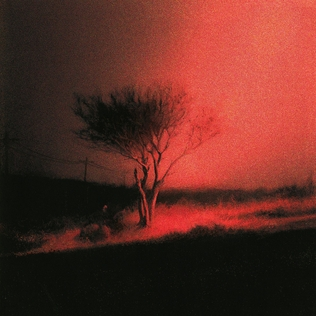
Released on Feb. 6 by Japanese singer-songwriter Joji, Piss In The Wind would frustrate an old art teacher, refusing to fill in the entire whitespace in order to seem “complete” — a choice that embodies his preference for restraint over expansion.
For George Miller, known as Joji, restraint quickly translates into brevity. Known for making music with no obligation to extend past natural ideas, Joji, like on previous works Nectar and Smithereens, shifts easily from robust, sweet-to-the-touch balladry to fleeting fragments.
Just as a track seems poised to launch off, Joji pulls back before it turns into something bigger. Tracks “If It Only Gets Better” and “Last of a Dying Breed” show great afterburning danceability and concepts, but get capped at their climax.
Piss In The Wind is less like a pivot and more of a reshuffling of ideas Joji already knows. Tracks like “Past Won’t Leave My Bed” and “LOVE YOU LESS” remind listeners of earlier Joji. On the warm shoegaze of the former, he sings about unmet devotion, a common checkbox for him.
However, familiarity makes 21 tracks hard to stand out — even on more thoroughly structured songs. The slick rap rhythms on “Cigarette” and “Silhouette Man” ping-pong against the itchy sides of brains, while the flat and detached vocal lines on “Love Me Better” mentally germinate. Even “Hotel California” attempts to swoon with watery, subdued lo-fi passages, but after the choruses, the song’s momentum slows.
Lyrically, most of the album’s emotional weight stems from being emotionally and physically distant from safety. The dark, deconstructed nature of “Strange Home” helps put listeners into its skeletal composition, but also allows Joji to sweetly contrast.
“We can work this out, thirty million miles / Make it back in style, strange home / Keep runnin’ back, it’s true / Nothin’ left inside these shoes.”
Piss In The Wind experiments with rage music on “PIXELATED KISSES,” underscoring the “insanity” of being “a million miles away” from his relationship. The genre flirtation transfers onto the four-chord hypnotism of “Rose Colored,” featuring rapper Yeat. His guest verse runs as a legacy pick after hearing how little he contributes to the song’s hypnotic tug.
Joji feels most himself on the jersey club whiplash of “DYKILY” or the eerie piano twiddling of “Horses to Water,” matching his sonic trademark most. His sweet, boyish vocals take the edge off the oddity of the beats themselves.
Piss In The Wind feels like a student in class who, although always knows the answer, chooses to refrain from speaking. As a whole, it suggests that Joji isn’t interested in pushing beyond what he feels compelled to, even if it comes at the expense of surprise and, most of the time, structure. But he prompts what actual musical sublimation could be: no force, some grace, all intentional.
2 urinals out of 5.