
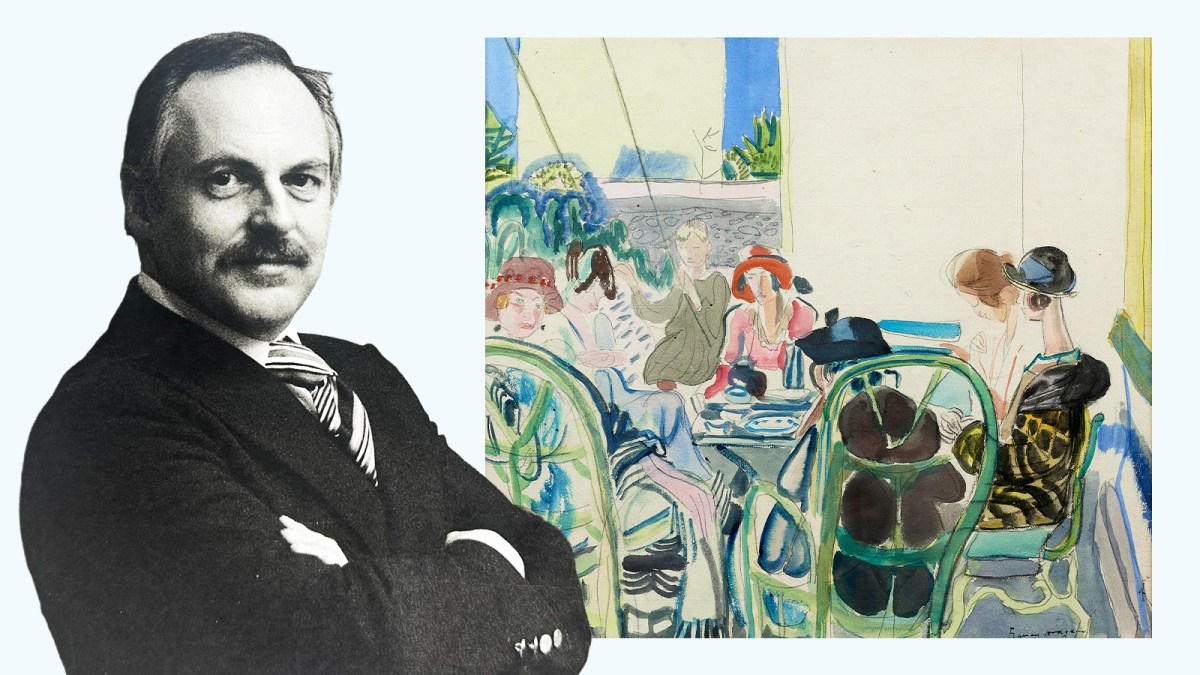
When an intruder broke into the critic John Russell Taylor’s flat in London he knew what he was after. Cash. Small electricals. Quick hits. The burglar left empty-handed. Nothing worth stealing. Just a load of old books and pictures.
Just watercolours by Edward Bawden. Just a couple of Eric Ravilious’s covetable, collectible coronation mugs. Just drawings, paintings and woodcuts by John Piper, Paul Nash, Keith Vaughan, Eric Gill, John Craxton and Mary Fedden. Just shelf after shelf of first editions illustrated by Lucian Freud, Wyndham Lewis and William Nicholson.
Longstanding readers of The Times will remember Taylor’s byline. From the late 1950s to 2005, Taylor was the paper’s theatre, film and art critic. He was also an unstoppable collector.
Aged 12, already precociously clever and voraciously acquisitive, he bought his first painting. Three pounds was a lot in 1947, but he persuaded his parents, Arthur, a customs officer, and Kathleen, a teacher and artist, to buy it for his birthday. It was a Dutch Golden Age painting of a housemaid plucking a chicken and was known in the family as “John’s Old Master”. A year later his first piece of paid criticism was published in Picture Post. He was off. From boyhood to his death last year at the age of 90, he wrote — not just criticism but more than 40 books on subjects from art nouveau to Alfred Hitchcock — and collected with equal dedication.
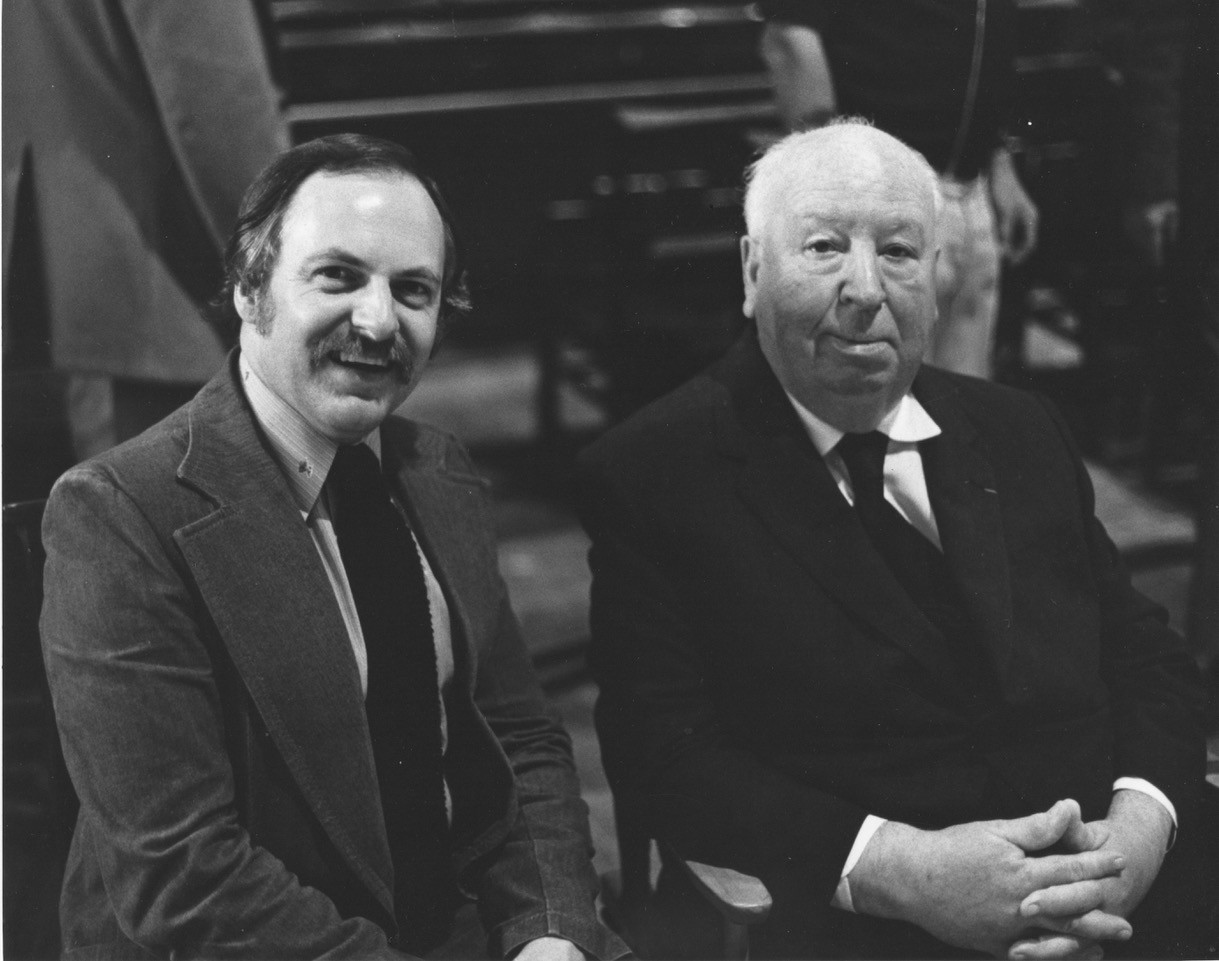
John Russell Taylor with Alfred Hitchcock
© JOHN RUSSELL TAYLOR FAMILY ARCHIVE
Highlights from his collection are to be sold this week by Olympia Auctions in west London. The catalogue is wonderfully varied. Some collectors are obsessives. Japanese tea bowls. Ex libris bookplates. Footballers’ autographs. Taylor, like many journalists, was a great generalist. He knew a little about everything and an awful lot about a surprising amount. He bought French still-lifes, German crucifixions and a Polish landscape. Here, cheek by jowl, you will find a 19th-century natural history study of a kingfisher, a drawing by Mervyn Peake for the Gormenghast trilogy, an Édouard Vuillard sketch of two ginger jars. There is no sense of a programme or shopping for posterity, only the passionate immediacy of “I’ll have that”. (And that. And that.) Most of the works are English and the mid-20th century — a dash of surrealism, lashings of neo-romanticism — is well represented.
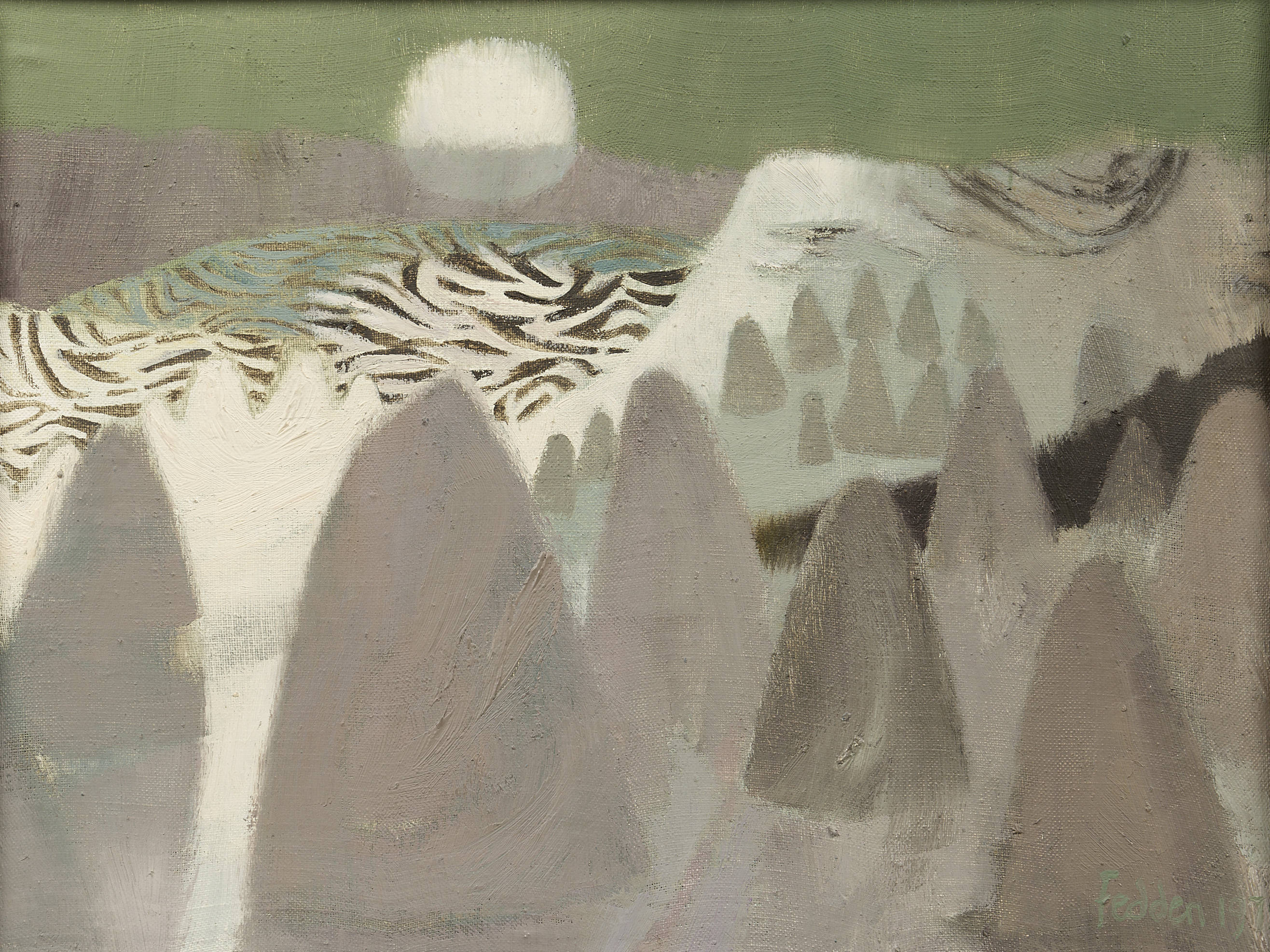
Cappadocia by Mary Fedden, 1971
Taylor met his lifelong companion, the artist Ying Yeung Li, when Li was working at the Marlborough Gallery in 1978. They were together for 47 years but maintained separate homes, libraries and studios. Taylor’s flat in Brook Green in west London creaked at the seams. Li says he had to rehang Taylor’s entire collection four times, on each occasion moving the pictures a few inches closer together to free up more wall space. Every room — except the drawing room where Taylor kept his record collection — was lined with books. More books waited in canvas bags in the corridors or in piles on the floor and in front of the fireplace. The first time Li took Taylor to meet his family in Hong Kong, Taylor had sounded out every second-hand bookshop in the city within a day. Li estimates there are 20,000 books in the flat. Some of the most beautiful are to be auctioned. I am sorely tempted by a specimen book of Curwen Press patterned end-papers, which includes designs by Ravilious, Bawden and Enid Marx.
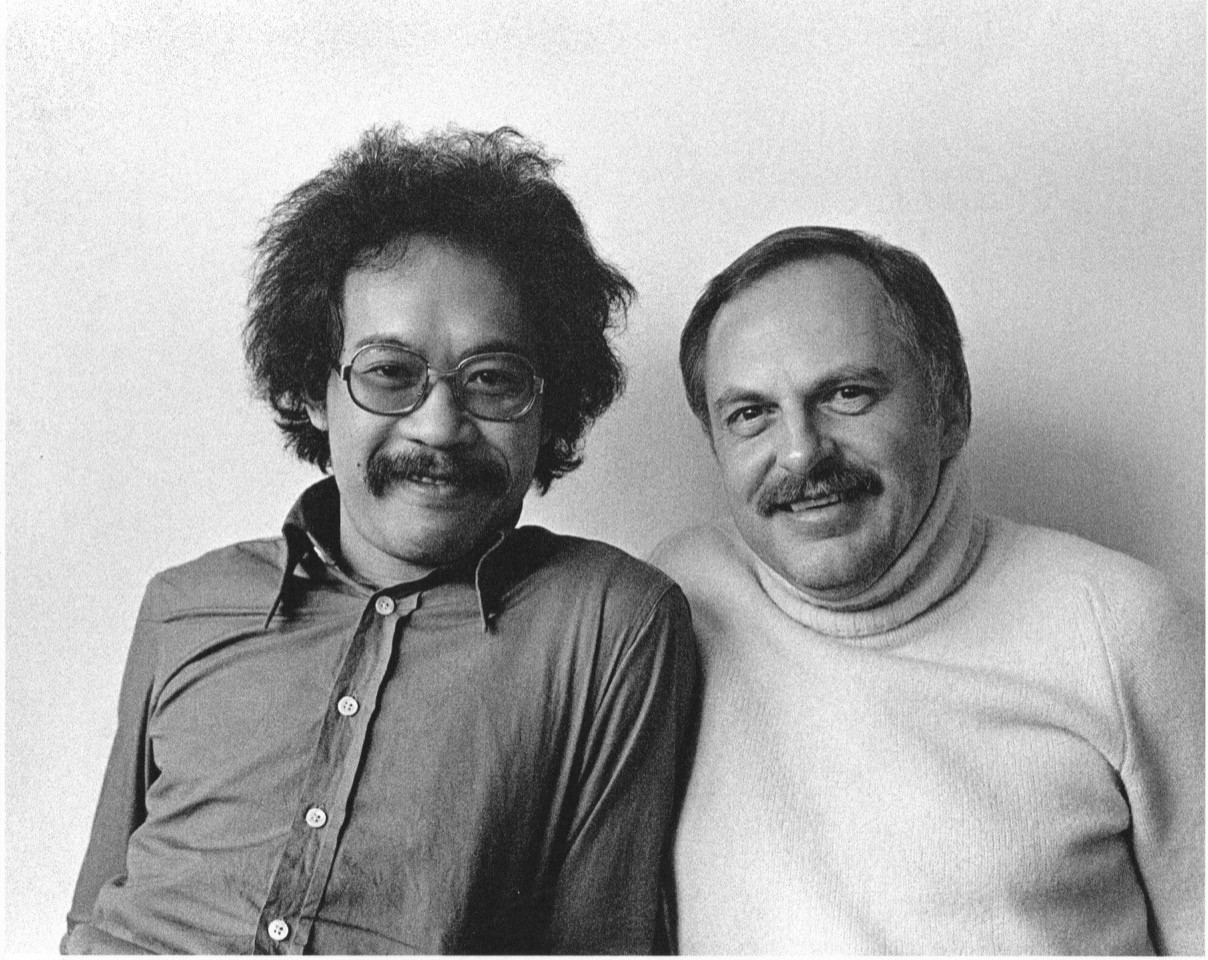
With his partner Ying Yeung Li
© JOHN RUSSELL TAYLOR FAMILY ARCHIVE
Taylor used to say that he never spent more than “300 quid” on a painting, priding himself on spotting artists before their prices rocketed. (Li reckons the £300 must have been adjusted upwards over the decades.) Writing catalogue introductions after his retirement from The Times, Taylor typically asked to be paid in paintings.
• Read more art reviews, guides and interviews
He made no notes when going around galleries, relying instead on a near-perfect photographic memory. If he promised an editor 1,000 words overnight, 1,000 words appeared without fail the following morning. One of the present editors on the Times arts desk recalls ringing with queries and Taylor answering to a chorus of dogs in the background. One of the paintings to be auctioned is a portrait of Taylor with his Jack Russell terrier Fei, named after one of the most famous Chinese concubines of the Tang period.
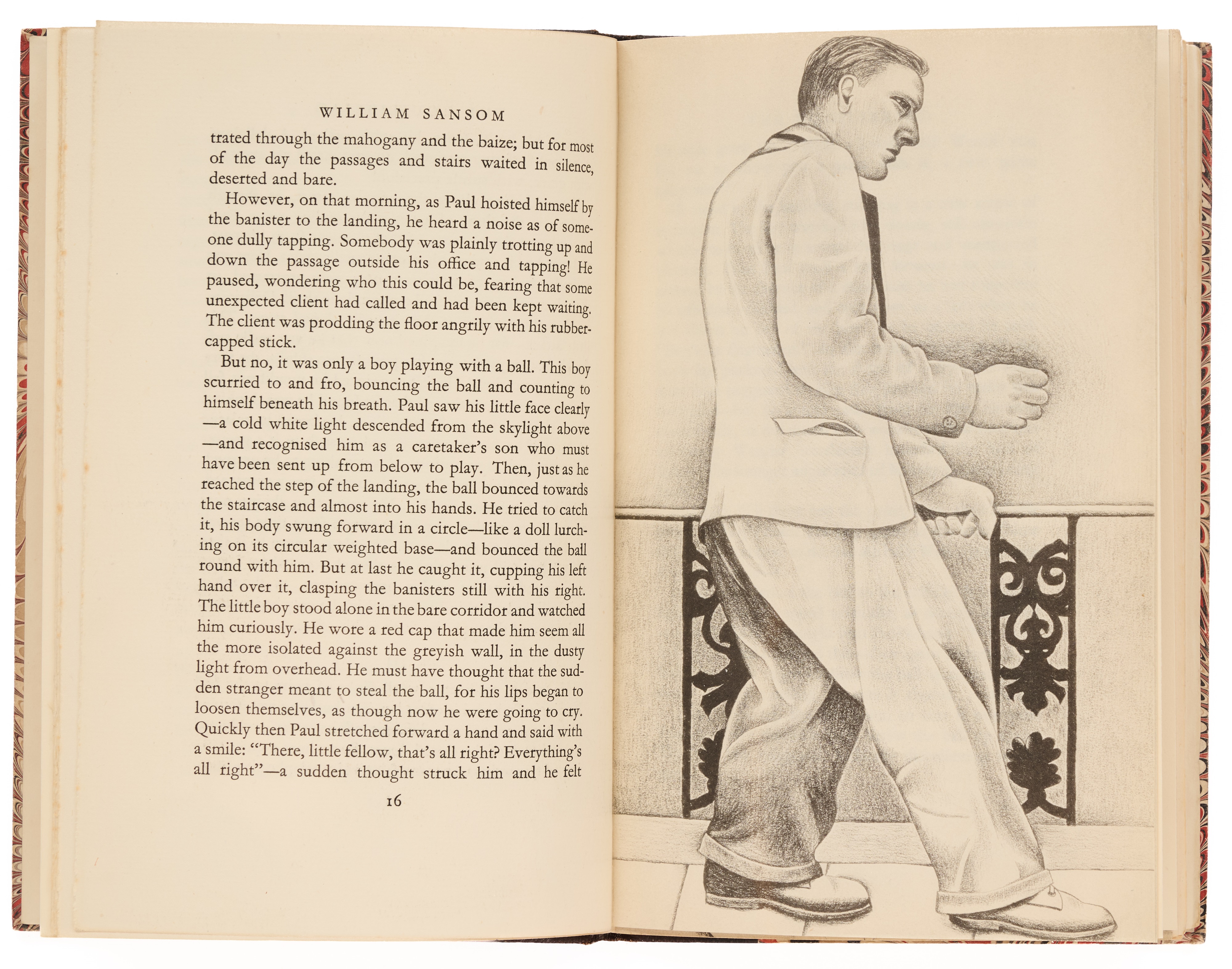
The Equilibriad by William Sansom, First Edition, 1948, with illustrations by Lucian Freud
He was never pompous and he had a wonderful turn of phrase. Li remembers him leaping out of bed to scribble a line that had just occurred to him. Reading Taylor in the Times archive is both a treat and a tutorial. Taylor admired the “fiendish precision” of Van Gogh’s drawings. He regretted that the new romantics of the war years had been “saddled” with such a label, but at least artists such as Denton Welch, John Minton, Michael Ayrton and Vaughan had lived up to it by being so “grandly picturesquely doomed”. Writing of the cartoonist Thomas Rowlandson he praised the “lackadaisical quality” of his line.
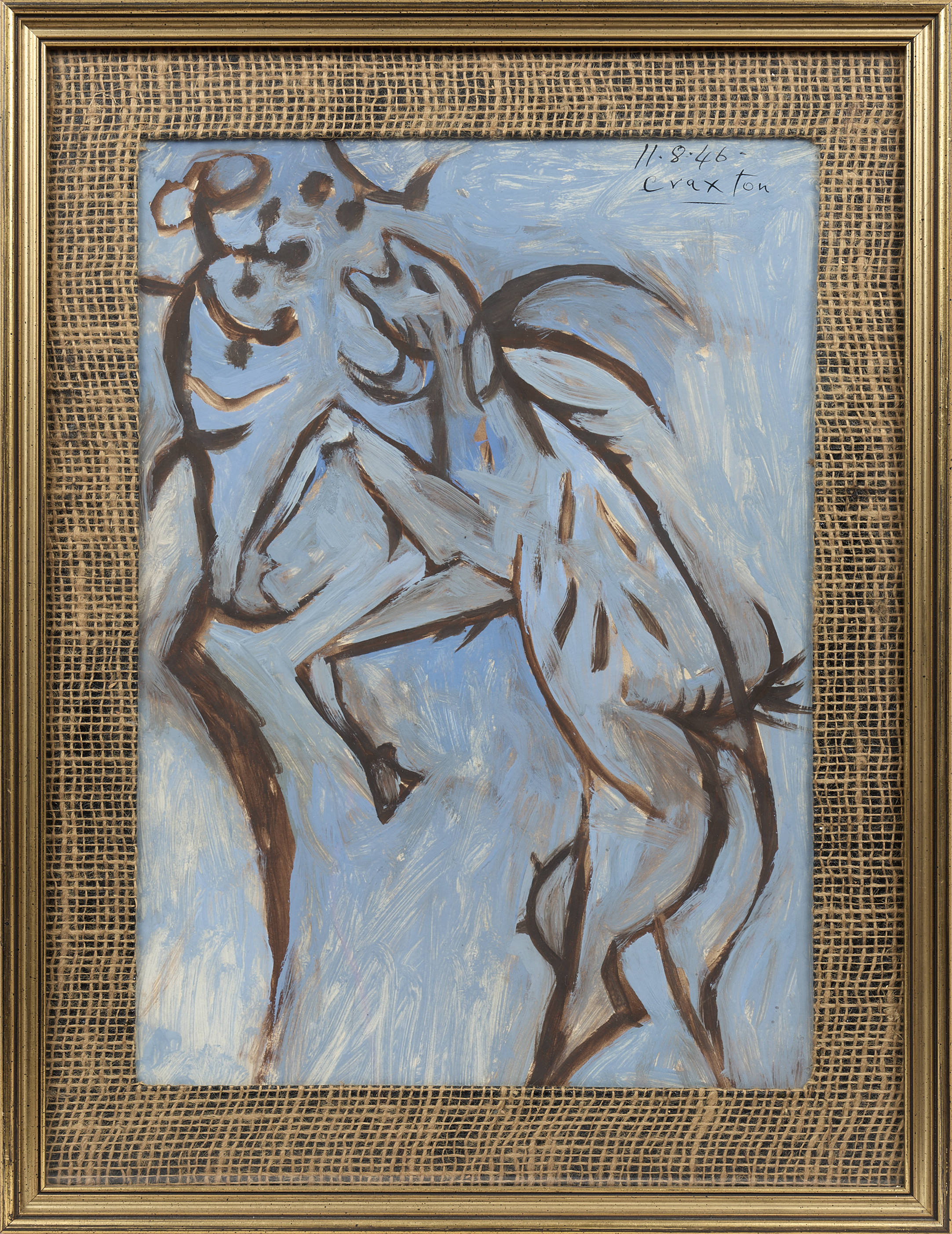
Goat Reaching For Thorn Fruit by John Craxton
He had a knack for putting his finger on exactly what it is that makes a particular artist delightful, transporting or disturbing. The art of Edward Burra, he wrote, “has its horrors but the horror is never so obvious, being banked down, sneaked in, designed somehow to leave you wondering whether it is in Burra’s mind or in yours”. That’s it: banked down and sneaked in.
Of Rex Whistler he wrote: “Despite his darling-of-society beginnings and his war hero apotheosis, Whistler’s reputation did not long survive the end of the war. His particular brand of elegant frivolity rapidly came to seem irrelevant in the drab and earnest postwar period and went out of fashion as quickly as Regency striped wallpaper.” Those seeking to cast Whistler as a monster for outmoded caricatures in his much debated mural at Tate Britain may like to remember that he was driven by silliness and surface rather than menace.
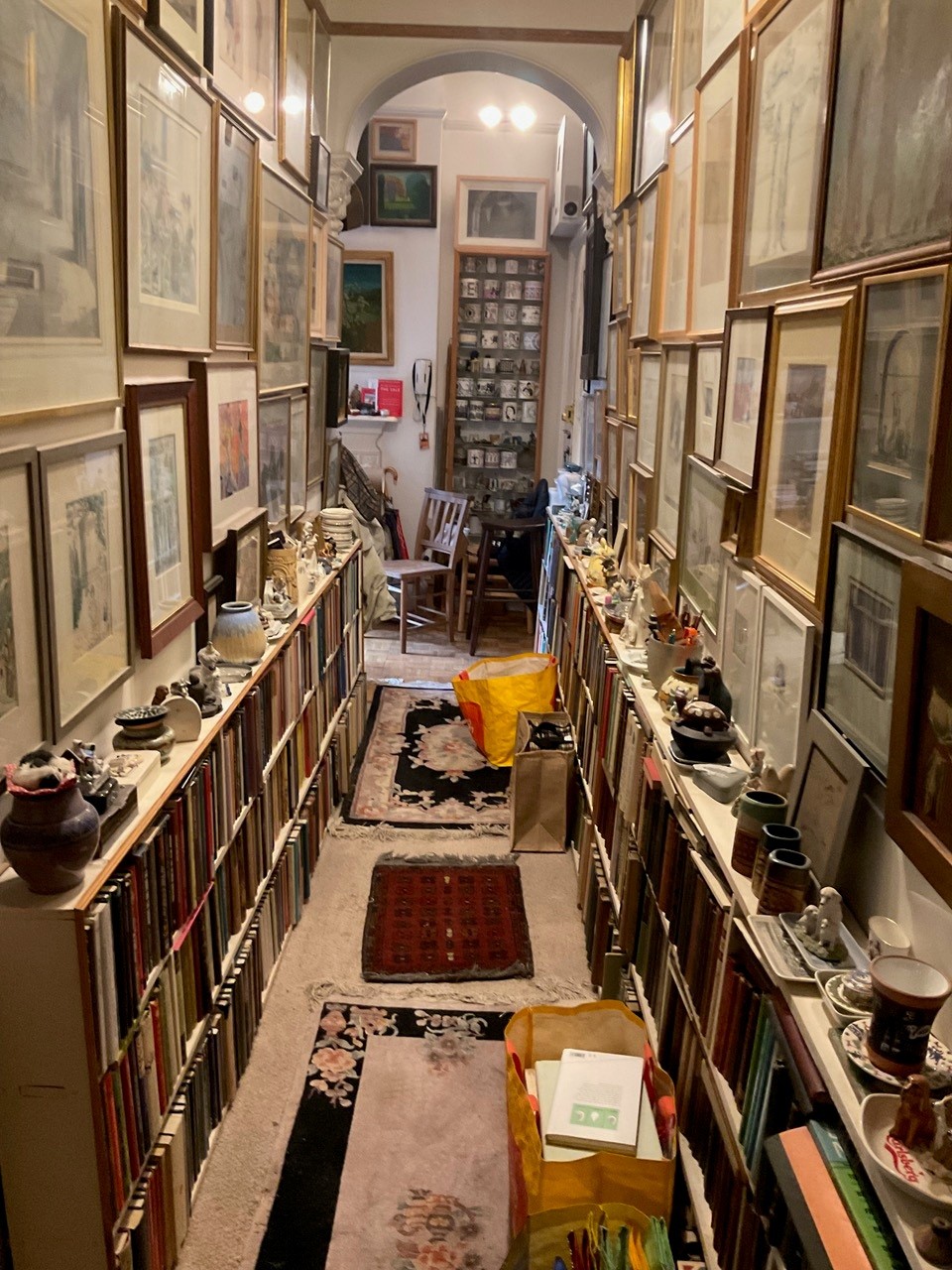
Inside John Russell Taylor’s home
© JOHN RUSSELL TAYLOR FAMILY ARCHIVE
Not everything is for sale. Li remains the guardian of Salvador Dalí’s designs for Alfred Hitchcock’s 1945 film Spellbound: a sinister set of images of staring, floating eyes. Going through Taylor’s letters, Yi has also found “extraordinary things” such as letters from Frank Auerbach, Marlene Dietrich, Harold Pinter and Alec Guinness, all awaiting sorting and cataloguing. Dietrich, who starred in Alfred Hitchcock’s Stage Fright, wrote from the Savoy Hotel telling Taylor that the director “frightened the daylights out of me. He knew exactly what he wanted, a fact that I adore, but I was never quite sure if I did it right. After work he would take us to the Caprice restaurant, and feed us with steaks he had flown in from New York, because he thought they were better than the British meat and I always thought he did that to show that he was not really disgusted with our work.” Taylor liked a star and he loved royal gossip. He started collecting commemorative mugs in childhood and kept going to the wedding of William and Kate and beyond.
In a review for The Times of an exhibition of paintings by Gillian Ayres in 2012, Taylor reflected on one of the (many) consolations of art. It feels apt after a cold, damp run of weather. “On a grim winter’s day, there are many worse things for an artist to do than celebrate the colour and life of the world, to let art act like a storage heater prolonging summer warmth into wintry chill.”
The Estate of John Russell Taylor: Author, Critic, Collector can be viewed at Olympia Auctions, London, and online to Feb 10. The auction is on Feb 11 (olympiaauctions.com)