

The Trump administration continues its AI push, working to defuse public opposition to datacenter energy and water consumption – while dangling a promise to exempt hyperscalers from chip tariffs to help them stock their facilities with GPUs and accelerators.
To address public concerns, Washington wants tech giants to commit that their expanding datacenter estates across the US won’t spike energy bills or drain local water supplies.
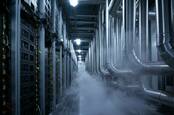
How datacenters use water – and why kicking the habit is nearly impossible
READ MORE
According to Politico, a proposed voluntary pact between President Trump, the datacenter industry and megacorps like Microsoft, Google, Amazon, Meta and OpenAI, would establish principles around energy, water use and local community relations.
The move aligns with recent developments: last month, Trump declared tech companies must fund datacenter power increases rather than passing costs to consumers, securing Microsoft’s compliance. The US Energy Secretary also pressured grid operator PJM Interconnection to hold an emergency auction addressing surging AI datacenter demand.
This appears aimed at containing growing public opposition to server farms popping up all over the US. Research org Data Center Watch found 20 projects were blocked or delayed by local opposition during Q2 2025 alone.
Other reports indicate hyperscalers may be spared from President Trump’s chip import tariffs to avoid impeding their buildouts. In January, the White House said it was imposing 25 percent tariffs on “certain advanced computing chips,” including Nvidia’s H200 and AMD’s MI325X.
According to the Financial Times, these tariff carve-outs may be contingent on chip companies – especially TSMC – committing to relocating more production stateside.
This furthers Washington’s effort to relocate 40-50 percent of TSMC’s manufacturing to US soil, a “massive reshoring” that Taiwan’s vice-premier this week called “impossible.”
TSMC has committed $165 billion to Arizona fabs that will produce some of its 2nm chips, though whether this satisfies Trump remains unclear.
If TSMC meets conditions for hyperscalers tariff exemptions, the US would exempt the largest buyers of products it just tariffed. Reg readers can no doubt spot the irony.
Last month TSMC posted Q4 2025 revenue of $33.7 billion, up more than 25 percent year-on-year. Full-year revenue for the world’s largest chip contract manufacturer came in at $122.5 billion, up 36 percent compared to 2024. ®