
(Credits: Far Out / Alamy)
Tue 10 February 2026 20:35, UK
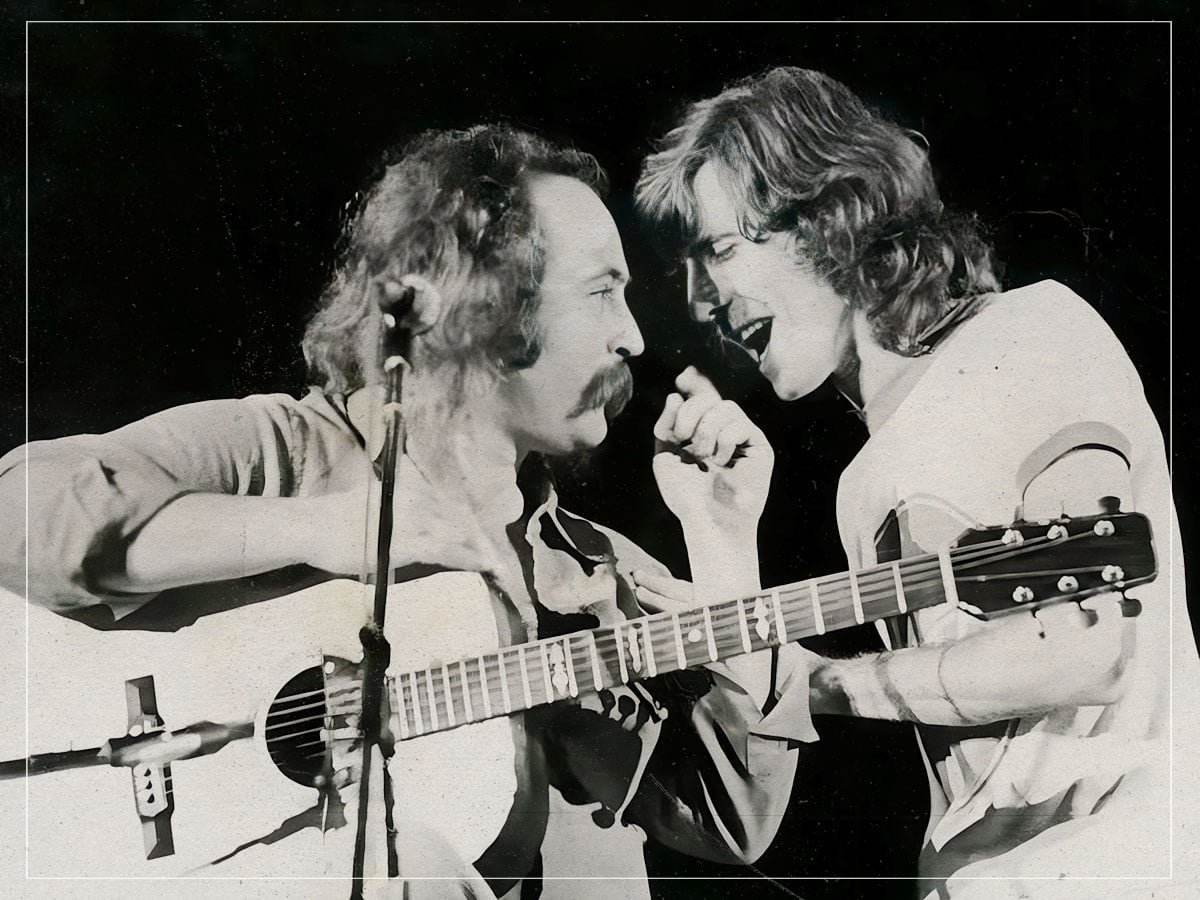
Love between two friends can be the most beautiful thing. Platonic comfort and camaraderie can offer the kind of platforming balance that allows a creative partnership to truly flourish. This is why we not only have so many great bands to listen to, but also why we feel so deeply about them. David Crosby and Graham Nash weren’t just musical partners; they were fraternal artists forever entwined.
For that reason and so much more, it takes more than a few bad sessions for someone to walk out on a band. Even if the people involved in that band come with their own ego and disruptive behaviour, to push such brotherly creatives away from one another usually takes a little more gusto.
It all comes down to chemistry within a group, and once someone feels that they aren’t playing to the best of their ability, that’s normally the time to cut one’s losses and leave with their heads held high. While Graham Nash managed to do everything he could to keep the peace in Crosby, Stills, and Nash, he remembered that one particular recording session led to him giving up on the group in their prime.
At the same time, none of the members claimed to have their supergroup as the number one priority. The whole reason why they named themselves after their surnames is because they only saw these records as stopgaps in between their various other projects, but things started to change after making albums like Deja Vu.
Compared to what any of them had been doing solo, getting Neil Young in the group led to absolute magic when making tracks like ‘Helpless’ and ‘Ohio’. But like anything Young remotely devoted himself to, it didn’t take him long to leave it behind if it didn’t have the same magic anymore.
 (Credits: Far Out / Rhino)
The Canadian rock icon knew that his solo career was bound to be much more interesting, but the line he wrote about his old bandmates being deadweight to him on Rust Never Sleeps might have been more accurate than most people thought. Because while the harmonies were still as soaring as ever, there was one piece that wasn’t working anymore, and that was David Crosby’s dependence on drugs.
While Crosby lived up to the rock and roll lifestyle throughout his career, his debauchery in the 1980s was enough to put Ol’ Dirty Bastard to shame. Outside of brief stints in jail, Crosby could never find time to clean up for more than a few months before finding himself off the wagon again and needing something to get him through the day.
Even though Nash tried his best to work with the group, he admitted that his creative relationship with Crosby fell apart over him using a crack pipe during a session, saying, “The band started to jam, and David was free smoking. The jam session was so vibrant that the amp was shaking, then the pipe fell off the amp and shattered onto the ground, and David stopped. When he stopped that jam, a door shut in my mind, and I told David that I [couldn’t] make music with him anymore.”
Drugs have a sadly nearly ever-present role in the world of music. So often used for mind-expansion or serial escapism that they have often been regarded as a vital part of the music-making process. Of course, this is entirely false, and, for the most part, drugs usually make themselves known as counterproductive to any kind of creative endeavour. That was certainly the case here when Crosby let his narcotic pursuit get in the way of his work and, in many ways, his friend, too.
Although Crosby did eventually kick his drug habits, he would have a long road ahead of him before making it back to the state that he was in the beginning. Regardless of how much goodwill might have been behind it, hearing the band’s reunion album, American Dream, feels sad knowing that Crosby had wasted years of his life and was now slowly picking up the pieces again.
Then again, it’s hard to blame Nash for walking out when he did. Anyone would have done whatever it took to make sure that Crosby beat his demons, but at that point, it was never going to work when the person who needed the most help didn’t want to help himself.