
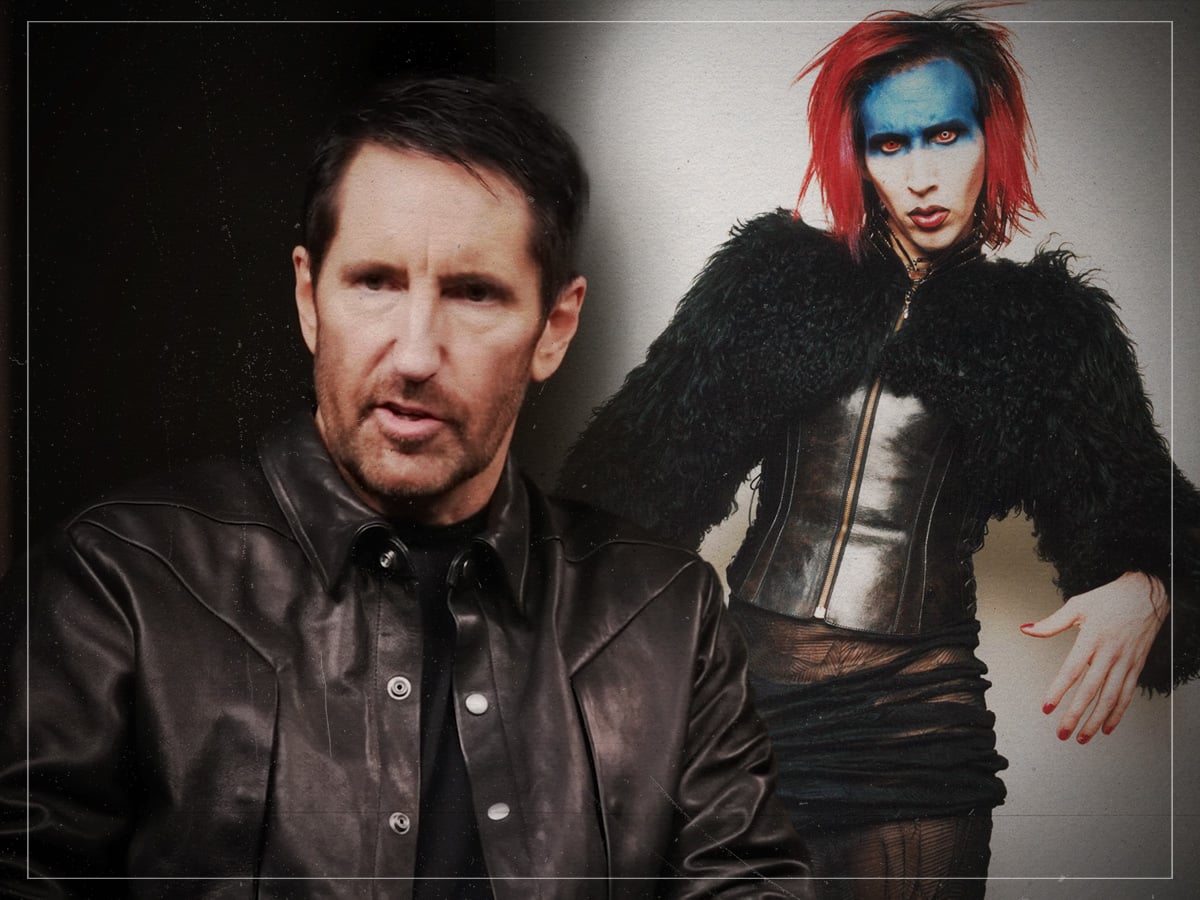
(Credits: Far Out / YouTube Still / Patrick Whitaker / Keir Malem – Whitaker)
Tue 10 February 2026 22:00, UK
No matter who you are or what you’re best known for, if you’re spending any amount of time in the public eye, you’re bound to have detractors who are jealous of you and your work, and given the illustrious career that Trent Reznor has had, he unfortunately has had to deal with many individuals like this.
As a pioneer of industrial rock who has gone on to become an in-demand composer for film, television and video games, it’s hardly surprising that many would be envious of the career that Reznor has managed to carve for himself. For many, this is something to aspire to, but for others, it’s a source of bitterness that they find themselves unable to overcome and harbour ill feelings towards.
If Reznor and his projects, whether his work with Nine Inch Nails or otherwise, are always getting the highest plaudits in the same field in which you’re operating, a little envy is something that might be understandable. However, to try and tarnish the name and reputation of someone who is so crucial to the style of music you’re known for is perhaps taking things to an extreme, and unfortunately for Reznor, someone he chose to work with in the 1990s was unable to see why he was so important to their work.
In 1992, Reznor formed Nothing Records alongside his former manager, John Malm Jr, and the duo specialised in releasing the work of other acts who were operating in a similar vein to Nine Inch Nails. Among the early acts to have been signed by the label were the likes of Pop Will Eat Itself, Coil and Nine Inch Nails themselves, but one particular signing that Reznor ended up adding to the roster would start to cause problems.
Having released Marilyn Manson’s second album, Antichrist Superstar, via Nothing, and also having helped produce the album, Reznor played a significant role in the controversial artist’s rise to fame, and to any onlookers, many would likely have commended him for having brought the artist to more widespread attention at the time.
Manson, on the other hand, viewed things entirely differently, and while Reznor acknowledged when he first signed him that he could end up causing trouble down the line, he possibly didn’t think that Manson would attempt to flip the script and try to claim that he was responsible for helping the label get off the ground, rather than the inverse.
He would end up speaking out against his former boss and colleague in his book, The Long Hard Road Out of Hell, which Reznor understandably didn’t take kindly to. In a 1999 interview with Kerrang, he would eventually fire back a retort in Manson’s direction, arguing that he had fabricated his own version of events that made him look like the superior figure, and painted Reznor as a mere pawn in his rise to infamy.
“I didn’t say anything about it at the time, but that fucking book and those quips about Nothing Records are very irritating,” Reznor furiously declared. “There was a lot of revisionist history going on with the storytelling to make his position seem a little better. Some of these things are the reason there’s now no communication between us.”
While being envious of Reznor’s hard work is clearly petty on Manson’s behalf, the fact that he attempted to totally diminish his reputation by claiming that he was single-handedly responsible for Nothing’s rise as a label is a frankly ludicrous and self-important statement that Reznor was quite rightly incensed about.