
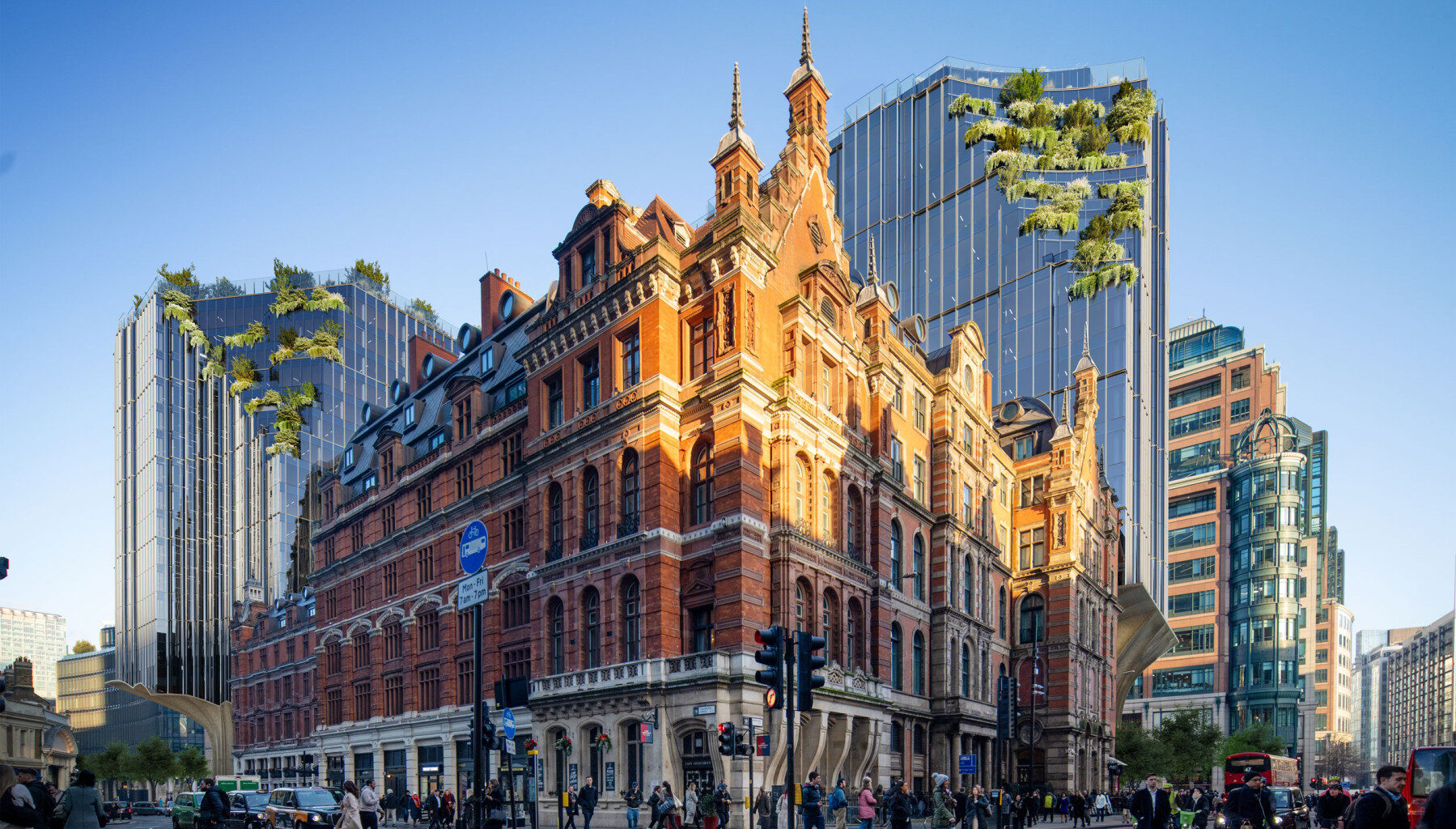
Planning Committee votes in favour of Network Rail’s plans to upgrade Liverpool Street Station
Critical new office space and infrastructure upgrades to make the Square Mile more pleasant to work in and travel through
Designs future proof station to service more than 200 million commuters and visitors in the decades ahead
The City of London Corporation has today approved plans for a major redevelopment of Liverpool Street Station, a landmark project which will secure the long‑term future of Britain’s busiest train station.
Set to unlock new opportunities for growth at the heart of the Square Mile, the proposals will deliver a state-of-the-art, fully accessible station, alongside new commercial, cultural and public spaces. Whilst improving central London’s connectivity to the rest of the country, it will make the local area a much more enjoyable place to visit, work in and travel through.
The approved plans reflect extensive engagement with accessibility advocates, heritage groups and local businesses, with the original designs evolving to better celebrate the station’s remarkable entrances and historic architecture. The scheme also includes new office space and a wide variety of shops and cafes, supported by improved pedestrian routes through the area which is set for extensive pedestrian and cycle friendly landscaping and greening. Energy‑efficient design and low‑carbon construction methods are used throughout.
The completed project will contribute directly to the City Corporation’s ‘Destination City’ growth strategy which aims to keep the Square Mile a globally attractive place to invest and do business, attract current workers and the next generation of talent back to the office, as well as create an environment in which people want to live, work, learn and explore.
In keeping with the City Corporation’s mission to make the Square Mile as inclusive and accessible as possible, step‑free access will be included at every station platform, including the London Underground, and an expanded concourse will greatly improve passenger congestion, as visitor numbers are anticipated to grow by hundreds of millions, in the near future. Upgraded passenger facilities include more ticket barriers, wider platforms, more escalators, lifts, lounges and toilets, to further ease congestion and improve comfort.
Recent data on indicative footfall suggests a strong return to the office after the summer, with the number of workers and visitors coming to the Square Mile reaching 10.8 million in September and rising to 12.1 million in October. Footfall in October surpassed the previous post-pandemic monthly record set in July this year (of 11.5 million). * The latest data by the Office for Rail and Road showed that there were 98 million entries and exits from Liverpool Street in 2024/25. This is a 41% increase on the pre-pandemic peak and means that Liverpool Street is the busiest station in the UK, significantly ahead (27.6 million) of the next busiest, Waterloo.**
Policy Chairman of the City of London Corporation, Chris Hayward, said:
“This redevelopment of Liverpool Street station is a major step forward for the Square Mile. It will support the City’s dynamic business ecosystem with state-of-the-art infrastructure, create new jobs and strengthen our position as a world‑leading destination, while ensuring that residents, workers and visitors all benefit from a modern, inclusive and future‑focused transport hub.
“As competition among global cities increases, we must demonstrate our openness to new investment that will enhance our urban environment and Liverpool Street station will now continue to do just that.”
Chairman of the City of London Corporation Planning and Transportation Committee, Tom Sleigh, said:
“Everyone likes an upgrade, and this astonishing improvement to Britain’s busiest train station is just that; a major improvement by every measure. It’s a late, but very welcome Christmas present for the nation. The soaring Brick arches and bold architecture will cement Liverpool Street’s status as a modern temple to transport.”
‘;