
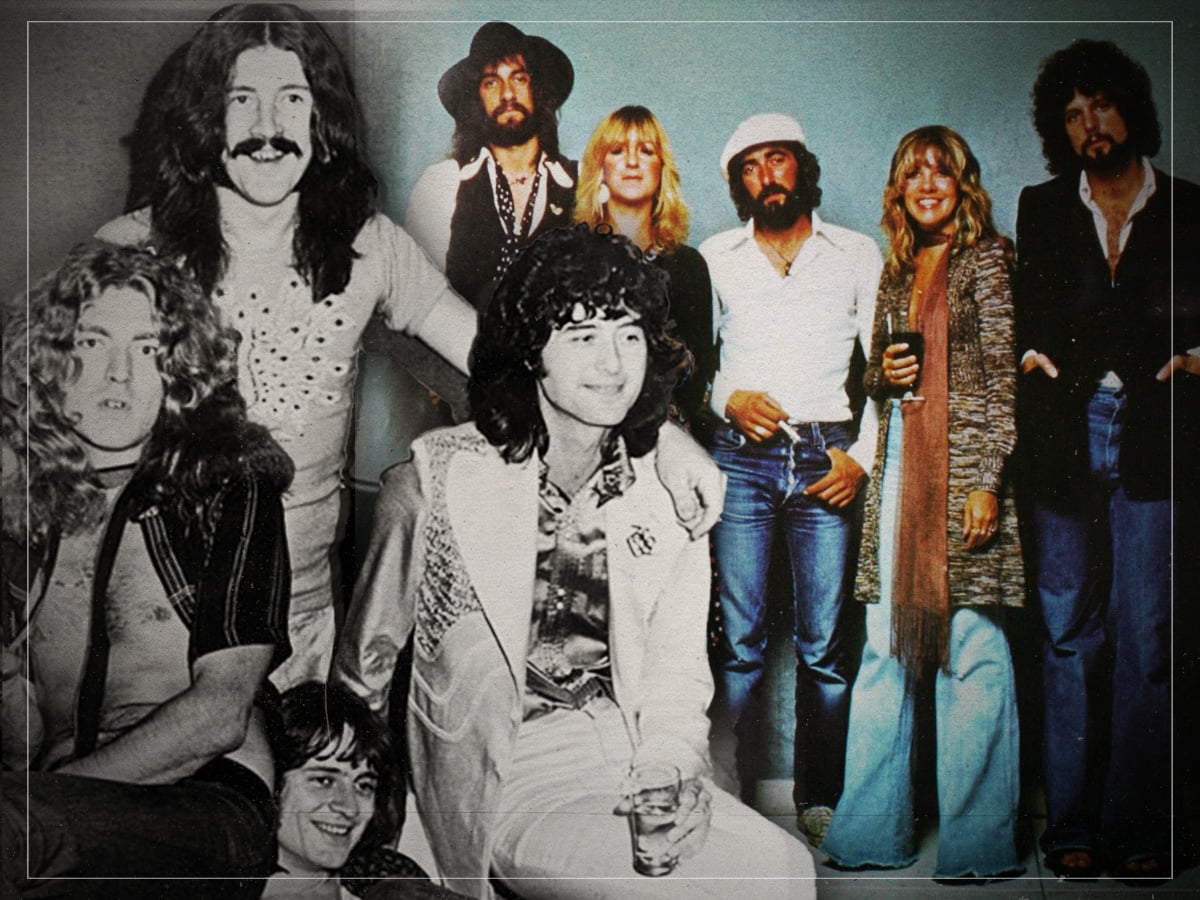
(Credits: Far Out / Led Zeppelin / Warner Bros. Records)
Tue 10 February 2026 20:30, UK
It wasn’t really until 1977 that Fleetwood Mac asserted themselves as one of the world’s biggest bands.
Years of line-up changes, drug-induced breakdowns and genre shifts had finally culminated in Rumours, where, despite the fraught background of the recording nature, the band stumbled upon a sonic masterpiece.
The instant success of the record would have surely warranted a sigh of relief from Mick Fleetwood. Ever since the band’s inception in 1967, he had desperately been pursuing sonic greatness in one form or another. Having honed his craft under the stewardship of John Mayall and his band The Bluesbreakers, Fleetwood had decided he wanted that glory for himself.
But he probably didn’t realise it was going to take ten years to achieve. In 1967. Fleetwood had assembled a band that was ready to conquer the thriving blues scene of England’s capital city. In the dingy bars of London, Fleetwood and his founding partner, John McVie, rubbed shoulders with the soon-to-be great Jimmy Page and the already beloved Eric Clapton.
But, they didn’t do so with tentative ease. They did so with confidence in their own outfit, because in Peter Green, they believed they had a winning frontman. His charismatic performance style and deeply talented guitar playing ability made him a star in waiting, and so at the turn of the decade, into the vibrant new 1970s, Fleetwood was convinced it was a sure thing. That was until another band beat them to the punch.
“I believe we’d have had the same status as Led Zeppelin in America,” he explained. “Led Zeppelin had a schtick; they had a lead singer with an image. I think Fleetwood Mac had a great image, a fun-loving bunch of lads. Peter Green was every bit as much of a talent as Jimmy Page. We would have had our moment in the sun together, the two of us.
“We would have been a less showbizzy version of what they represented – rightly or wrongly, I think some of their earlier music got overshadowed by the bulge in the pants. I think we would have had a modicum of that but, you know, prevailed a little more credibly musically.”
He elaborated on Green more specifically, saying, “I don’t want to use the word ‘genius’, but I was reading this Playboy interview with John Lennon and Yoko just last night, and John was talking about the creative process. Lennon knew the power that he had, Peter knew the power he had. But, unfortunately, Peter let the power feast on him. He didn’t completely lose the battle, but he lost a lot of ground.”
Fleetwood Mac came ever so close to rock supremacy with Green at the helm, but it clearly wasn’t meant to be. Luckily for Fleetwood, fate had something else in store for him, which manifested itself into being upon the arrival of Lindsey Buckingham and Stevie Nicks. With his new American duo at the helm, Fleetwood slowly became the band to overtake Led Zeppelin in the late 1970s and seemingly did it with a lot less “pant bulge”.
The Far Out Led Zeppelin Newsletter
All the latest stories about Led Zeppelin from the independent voice of culture.
Straight to your inbox.