
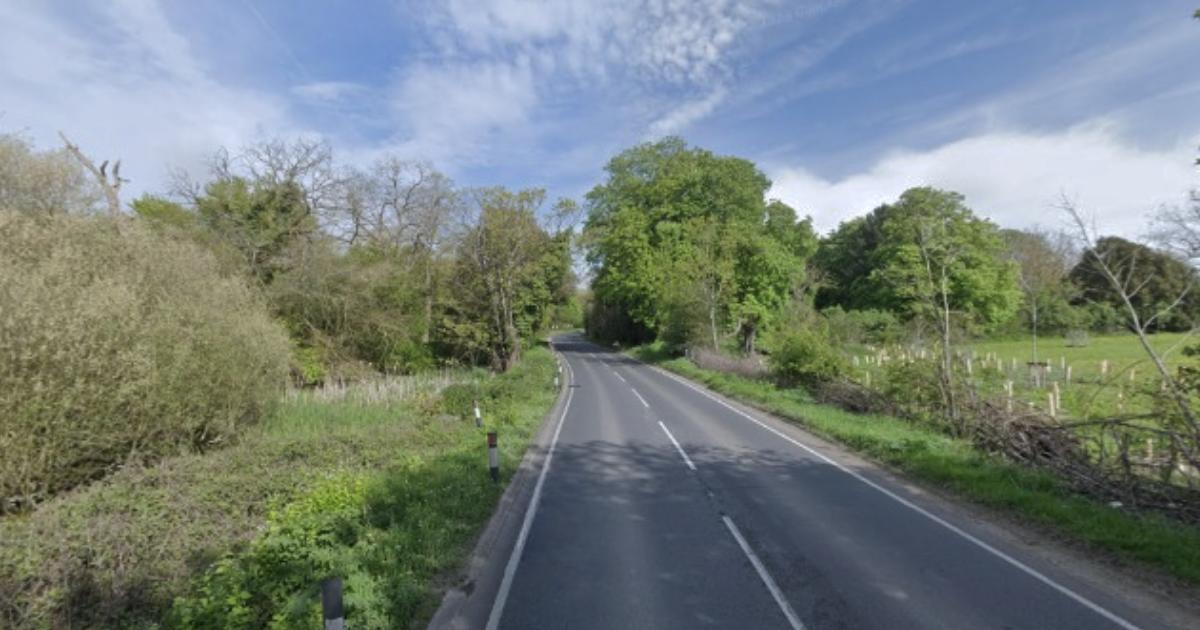
Otter lover Tiffany Walters is warning drivers to slow down after two female otters were found dead by the B1018, Cressing Road.
Ms Walters, who follows the UK Otter Trust, believes the otters were struck by vehicles when they were crossing the busy road on their way to a nearby reservoir.
The first otter was found on January 18, while the second was found on Sunday.
Warning: This article contains an image you may find distressing.
Ms Walters said: “I’ve loved otters for years, I’m a little bit obsessed with them. They’re my guilty pleasure.
“I saw this first otter had been killed and I didn’t want it to just be left in the road, because to me that’s disrespectful. So, I went and picked it up and put it on the side of the road.
“I contacted Essex Wildlife Trust who came along and took the otter. And from what I understand the otter is then taken to Cardiff University for research.
“They’ll look at the health of the otter and it can tell us a lot about the rivers and the quality of the water.”
Sad – The first otter was taken by Essex Wildlife Trust, which may later be used for research about the nearby waters (Image: Tiffany Walters)
Ms Walters said the second otter, which was found on Sunday, was lactating and actively breastfeeding, which is a strong indication there are cubs nearby.
“I did try for three hours to look for them [Sunday] night but no success,” she said.
“I’m not an expert. I know quite a lot about them, but I’ve never actively found a holt in the wild.
“I was a bit out my depth. I couldn’t find them.
“I know 24 to 48 hours is critical after they’ve lost their mum. It’s just a case of looking and hopefully I get lucky.”
Mother – The second otter was lactating, which means there were likely cubs nearby (Image: Tiffany Walters)
Read more:
Ms Walters said a lot of wildlife is killed on Cressing Road, a 60mph road with a river that runs nearby – but rarely otters.
“People do bomb down that road,” she said. “It’s just recently that these otters are crossing – they’re obviously crossing the road to get to the reservoir to hunt.
“Poor little things. They were definitely both female, and this one was definitely actively breast feeding. Which is sad, but it is life.”
The European otter was close to extinction in Britain in the 1950s and 1960s because of pesticides affecting their breeding.
The species has since recovered and are protected in law, so that it is an offence to wilfully kill, injure, capture or disturb otters except under licence.
They are listed as ‘near threatened’ on the global IUCN Red List of Threatened Species.