
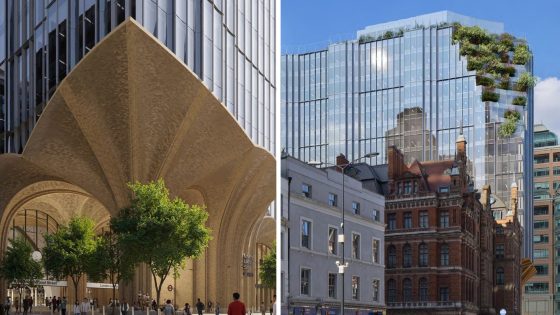
The £1.5 billion project, which involves partial demolition of the listed station, will move ahead despite thousands of objections, criticism from heritage groups, viability concerns, and a rival proposal from SAVE Britain’s Heritage and John McAslan + Partners.
The City of London planning committee voted nineteen in favour and three against the proposal, which features a 97m-tall office tower over the concourse to fund around £500 million of improvements to the station.
The application, which replaced earlier proposals by Herzog & de Meuron, attracted 4,900 written representations from residents, with 3,700 objections compared with 1,100 in support.
Speaking at the planning meeting’s conclusion, committee chair Tom Sleigh said: ‘Why is a new station okay for the Victorians and for people 30 or 40 years ago, but not okay for the people living in the City today?
‘The City of London deserves a new station, so unsurprisingly I am in favour of this excellent application.’
He added: ‘It’s a late, but very welcome Christmas present for the nation. The soaring brick arches and bold architecture will cement Liverpool Street’s status as a modern temple to transport.’
And City of London policy chairman Chris Hayward described the approval as a ‘major step forward for the Square Mile’.
He continued: ‘It will support the City’s dynamic business ecosystem with state-of-the-art infrastructure, create new jobs and strengthen our position as a world-leading destination, while ensuring that residents, workers and visitors all benefit from a modern, inclusive and future-focused transport hub.’
The 576-page planning officer report listed a series of objections, including from the Victorian Society, the Twentieth Century Society, and SAVE Britain’s Heritage, which protested ‘in the strongest terms on heritage grounds’ against the application.
Responding to the approval, the Victorian Society said it would continue to oppose the plans, under the joint Save Liverpool Street Station Campaign umbrella with the Twentieth Century Society and SAVE, stating that they were ‘prepared for the long haul’.
TV presenter Griff Rhys Jones, who is president of the Victorian Society and the Liverpool Street Station Campaign, said: ‘This is a sad day for the City of London. A disfiguring billion-pound office block on top of a major heritage asset is not essential to the City’s development plans.
Those groups, together with the Georgian Group, the Spitalfields Trust, Civic Voice and London Historians, have run a high-profile effort to prevent ACME’s plans, including offering an alternative scheme drawn up by John McAslan + Partners.
The committee heard objections from John McAlsan, who described the ACME scheme as ‘speculative and ruinous’, and argued that it would do ‘irreversible harm to the listed station’ as well as causing a ‘decade of disruption’ to travellers.
ACME’s scheme has also been criticised by the City of London’s own Conservation Area Advisory Committee, which said the proposals were ‘an overdevelopment of the site’ and would ‘adversely affect the building’s setting and its important role in the Bishopsgate Conservation Area’.
The government’s heritage watchdog Historic England did not formally object, but it raised concerns about the ‘loss of natural light, the loss of columns’ and how the new shop units and concourse extension would ‘block views of brick elevations of the train shed’.
The watchdog was also worried about the ‘size, location and design’ of the new entrances and oversite development, which ‘would greatly reduce the ability to appreciate the former Great Eastern Hotel’s landmark qualities, causing considerable harm (in the middle of the range of less than substantial harm in terms of the NPPF)’.
These concerns were echoed by hotelier Hyatt, which owns the Grade II*-listed hotel, built in 1884 and now called the Andaz London Liverpool Street. Hyatt said the ACME scheme represented ‘the worst of all possible worlds in terms of impact and disruption, with no added benefit to the Andaz, which we believe will be threatened by the proposals’.
Network Rail had hoped its reworked proposals, which were submitted last April, would allay some of the concerns raised about the initial plans.
ACME’s 98m-tall scheme, which includes outdoor garden terraces, is slightly shorter than Herzog & de Meuron’s abandoned 15 and 21-storey design, which had itself received more than 2,200 objections, including from Historic England.
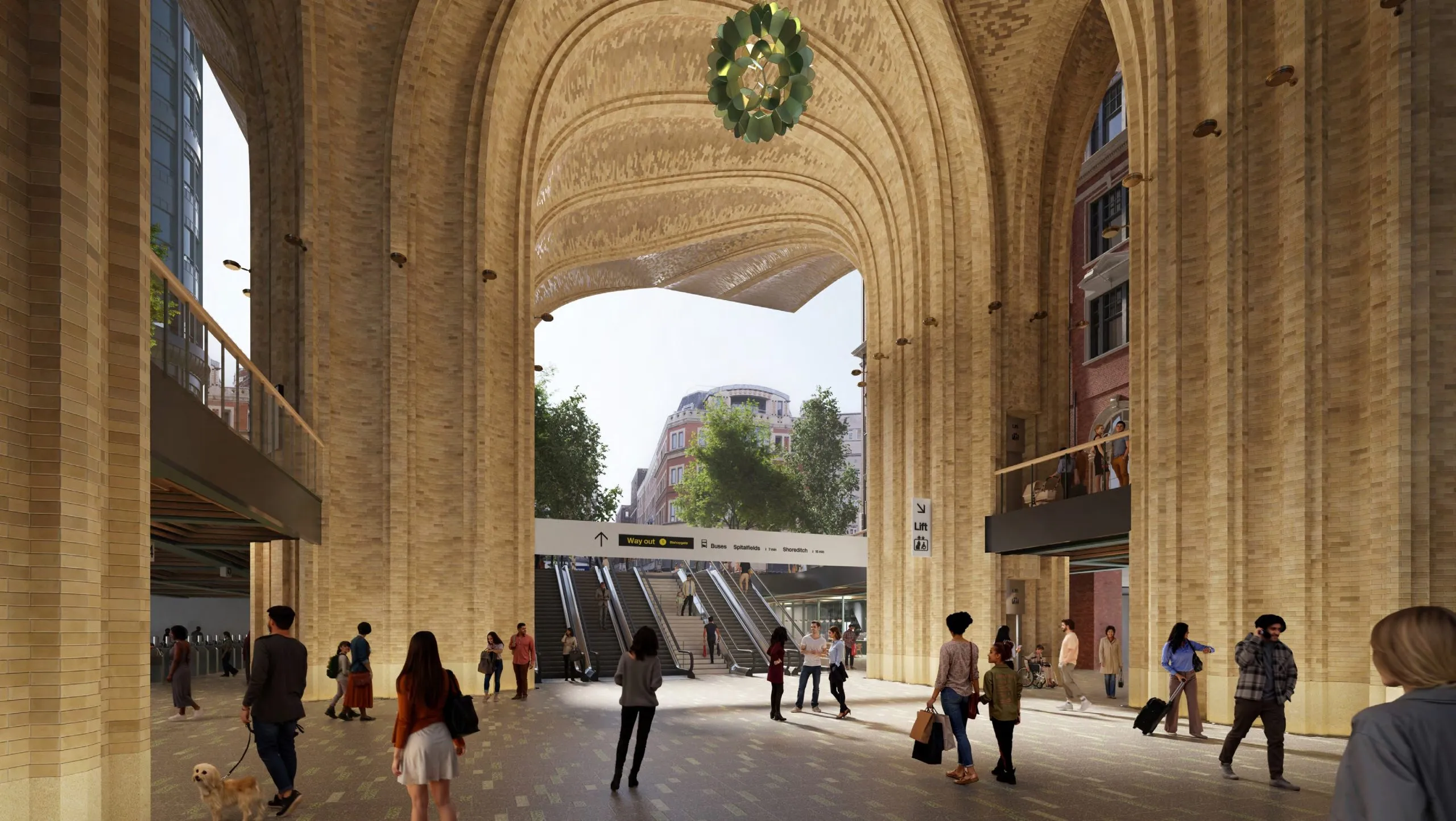
ACME’s consented Liverpool Street application (May 2025)
Unlike the previous plans, ACME’s proposals leave the former Great Eastern Hotel untouched, while the Hope Square entrance has been designed to create a ‘civic gateway into the City of London’, which also ‘brings development back to the historic building line’ from pre-1874, when the station was built.
The City’s planning officer report added: ‘While many development plan policies would be complied with, the range of impacts would result in numerous policy conflicts, but officers consider that there is overall compliance with the development plan when read as a whole.
‘The nature of the site and the ambition of the proposal create a singularly nuanced and complex policy balance. Ultimately, the proposal would significantly upgrade Liverpool Street Station and deliver density in a suitable and sustainable location. As such, it would advance the strategic and business objectives of the City, uniquely so in view of the transformational transport benefits flowing from the proposal.’
It concluded: ‘While there would be numerous impacts, these have been clearly and convincingly justified, and would be of a lesser order of magnitude compared to the benefits.’
Speaking after the committee vote, a SAVE Britain’s Heritage spokesperson said: ‘What a missed opportunity to consider less disruptive and damaging approaches to funding the station upgrades that passengers deserve.
‘We will be carefully examining the committee’s decision and will consider our next steps.’
The campaign group has, separately, lodged an application for the rival John McAslan designs.
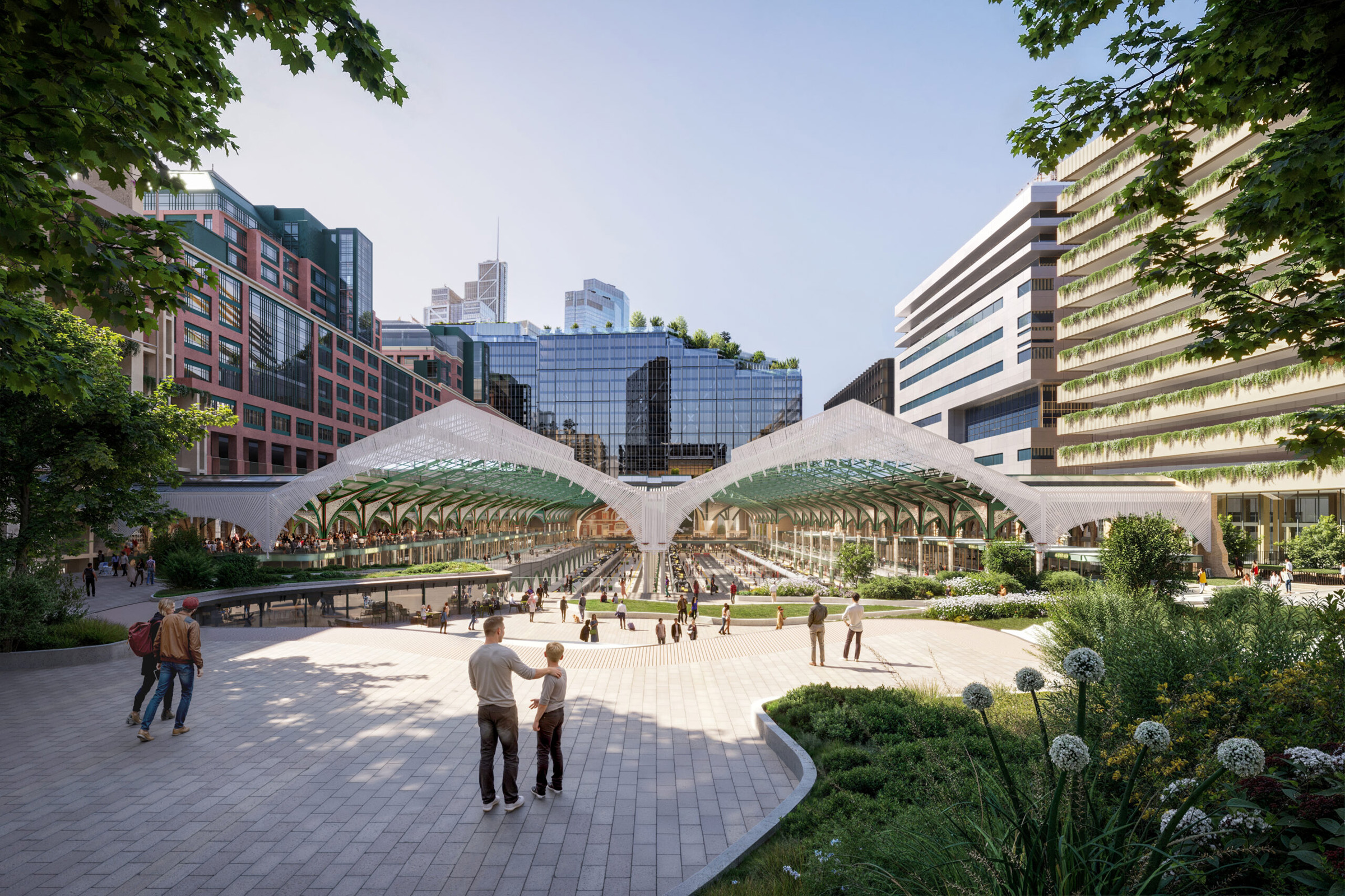
ACME’s proposal: new pedestrian routes to Exchange Square
Previous statement from Network Rail
As Britain’s busiest station, Liverpool Street is long overdue the transformation it deserves. No other development makes such a vast contribution to reduce the carbon footprint in London through the significant upgrade to allow more customers to travel more sustainably.
This investment in sustainable transport will allow the station to grow from 115m to 150m passengers per annum and beyond while enhancing accessibility for all. This equates to 2 billion additional passengers undertaking sustainable transport journeys over the next 60 years.
Network Rail’s planning application:
proposes a new office building in the most-connected location in London, sited directly adjacent to the UK’s busiest transport hub
is designed to emit no carbon in use and use low carbon materiality in construction
will utilise all proceeds from the development to fund transport improvements for the Network Rail and TfL station which are vital for the Capital’s infrastructure.