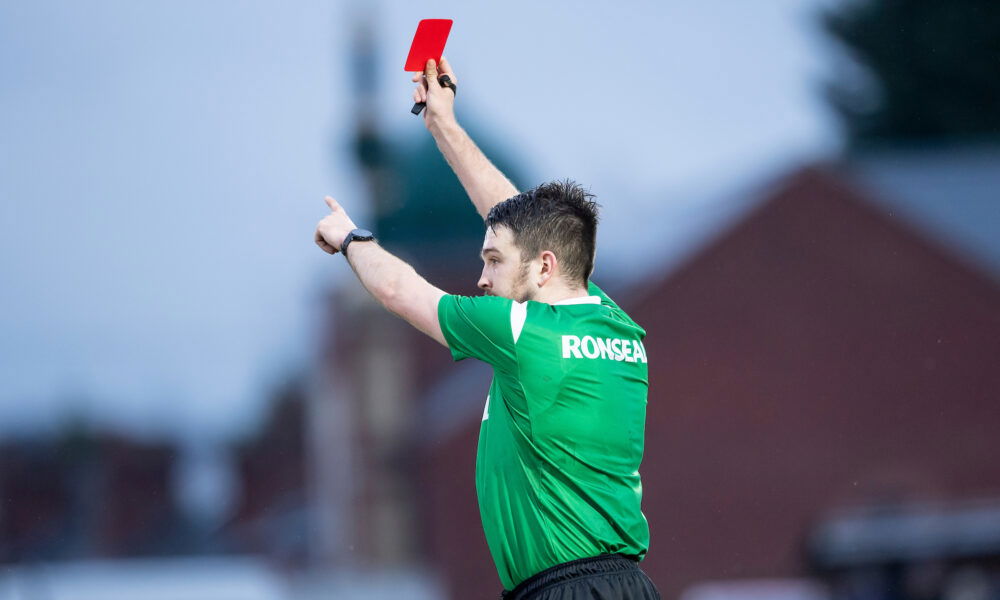
The Rugby Football League have confirmed a number of changes to the disciplinary system on the eve of the Super League season, with the most significant change being what is effectively an exemption period for the play-offs.
At the end of the regular season, existing penalty points will ‘freeze’, meaning that only penalty points picked up in the play-offs can lead to a ban. Once the play-offs are over, those previous penalty points become ‘live’ once again.
The incentive behind this is to ensure that the very best players take part in the very biggest and best games. As an example, a player with 12 penalty points heading into the play-offs will have those points frozen. That means that minor charges that would have previously landed him a ban don’t affect him, with bans only possible in the play-offs for serious misconduct or an excessive number of penalties.
That is just one of the big changes that the RFL have made on the eve of the Super League season a number of others also made.
Know your Super League? Serious About Rugby League have a Fantasy Super League comp. Join it now and compete against our writers. PIN: 12433 Password: SARL2026
RFL confirm major disciplinary overhaul that will impact Super League
After discussions at the Regulatory and Laws Committee meetings in 2025, five main amendments were proposed with all of those implemented for 2026. The play-off penalty point freeze is just one of them.
There is also an increase in ‘grades’, as Grade F returns for the “more serious acts of conduct”. These are described as those incidents that “fall outside of what would be normal and expected elements of playing rugby league”.
Grade E charges now constitute 18 penalty points with Grade F being 36 penalty points. By contrast, 2025 rules had Grade E charges at a higher rate and immediately referred to tribunal.
Another change is that there is no longer an instant referral to the Operational Rules Tribunal, though the Match Review Panel can refer matters if they wish.
The biggest change is how penalty points carry forward. Previously, any charge of three or more points would be reduced by 50% when the sanction was served. For example, a Grade B charge of three points would leave 1.5 points on a player’s record, once the fine was paid.
That reduction will now be 75% and can also apply to Grade A charges of just one point. If a player is charged with a Grade A offence and there is no further action, then just 0.25 points are added to their record. Those points still remain on a players record for 12 months.
They have also retrospectively applied the 75% reduction to any penalty points from 2025 that did not receive it.
Explaining their decision, the RFL said: “It is important to note that tariffs for On-Field misconduct have seen a sharp reduction and also the impact that it has had on sanctions issued to specific players with previous misconduct.
“While the desired effect of keeping players on the field of play has undoubtedly occurred in the 2025 season, a balance must be retained with the disciplinary system carrying a strong enough deterrent to deal with serious and serial misconduct particularly in light of the ongoing information surrounding brain health in contact sports.
“In addition, the disciplinary system should be fair and consistent to all players as opposed to a focus on those who have committed misconduct.”
Click here to watch the latest episode of the Serious About Rugby League Show – where we preview every Super League club ahead of the 2026 season