
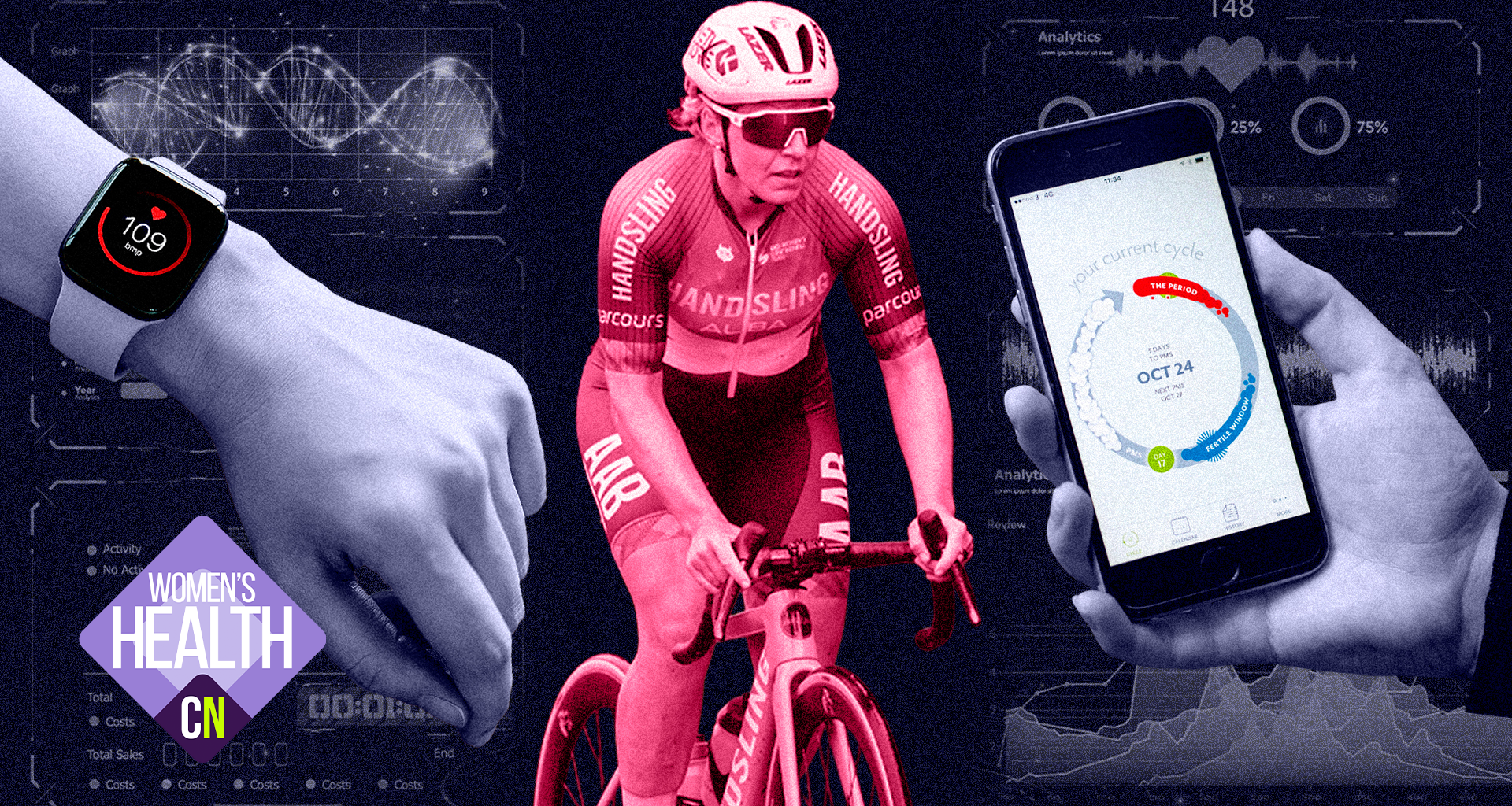
Designed to be worn all the time, a health tracker can provide a comprehensive view of a rider’s health, offering data on lifestyle and recovery metrics. They can be useful for everyone, but when it comes to female athletes, where your monthly hormone cycle and vital stats can play a key part in performance, using tracking technology to really get in touch with your health can be a training superpower, but there are limitations, too.
The most significant factors for female riders are heart rate, heart rate variability (HRV), body temperature, and the menstrual cycle, many of which can be linked to hormonal fluctuations.

Noemi Rüegg and EF Pro Cycling are one of several teams and riders to partner with WHOOP (Image credit: Con Chronis/Getty Images)
Training strain and pregnancy indicators
Let’s start with two commonly used health metrics which can illustrate strain, training readiness and spot signs of illness: HRV and resting heart rate. For female cyclists, HRV data can help indicate signs of pregnancy and hormonal fluctuations, making it particularly useful.
Research on how wearables could monitor hormonal changes in pregnancy has shown that health tracker data could help identify abnormalities, especially heart rate.
Scientists at Scripps Research found ‘compelling’ evidence that heart rate data from devices such as the Apple Watch, Garmin and Fitbit correlated with hormonal fluctuations.
The team concluded that these wearables could offer methods to monitor pregnancy-related physiological and behavioural changes and could also enable early risk assessment for adverse pregnancy outcomes, including miscarriage and preterm birth.
I’ve also seen how a wearable can indicate the first signs of pregnancy: a friend was trying to conceive saw her HRV drop significantly into the red zone on her Garmin, tested and discovered she was pregnant.
Alongside hormonal fluctuations, heart rate data has also proven useful for identifying trends in a rider’s training strain and general health.
World champion track cyclist Neah Evans predominantly has used HRV data to keep tabs on her training and overall health.
“I export that data into a different app called HRV4U because it gives you the minute snapshot just before you wake up, and that’s more accurate for measuring your trend,” said Evans.
“It then automatically uploads onto my Training Peaks, which is also nice because it’s available for my coaches to see if they so wish.”
However, Evans doesn’t let the HRV data dictate her sessions, nor is over reliant on the data.
“I think the apps try to convince you to use that number as a dictator of how refreshed and how ready you are for a big session,” she added.
“That doesn’t work for me because my training is set, and although we have adjustability, I’m not going to turn around to my coach and say I’m not going to do those intervals because my HRV is compromised.
“But it will then mean I’m more aware of why my HRV is compromised, for instance, I know if I do a gym session, the next day it’ll be compromised.
“If it’s down randomly, I’ll spend a little bit more time checking in with myself. I’m not overly reactive to a one-off, but it’s more the trends and understanding where I am in the training block and what it’s going to tell me.”
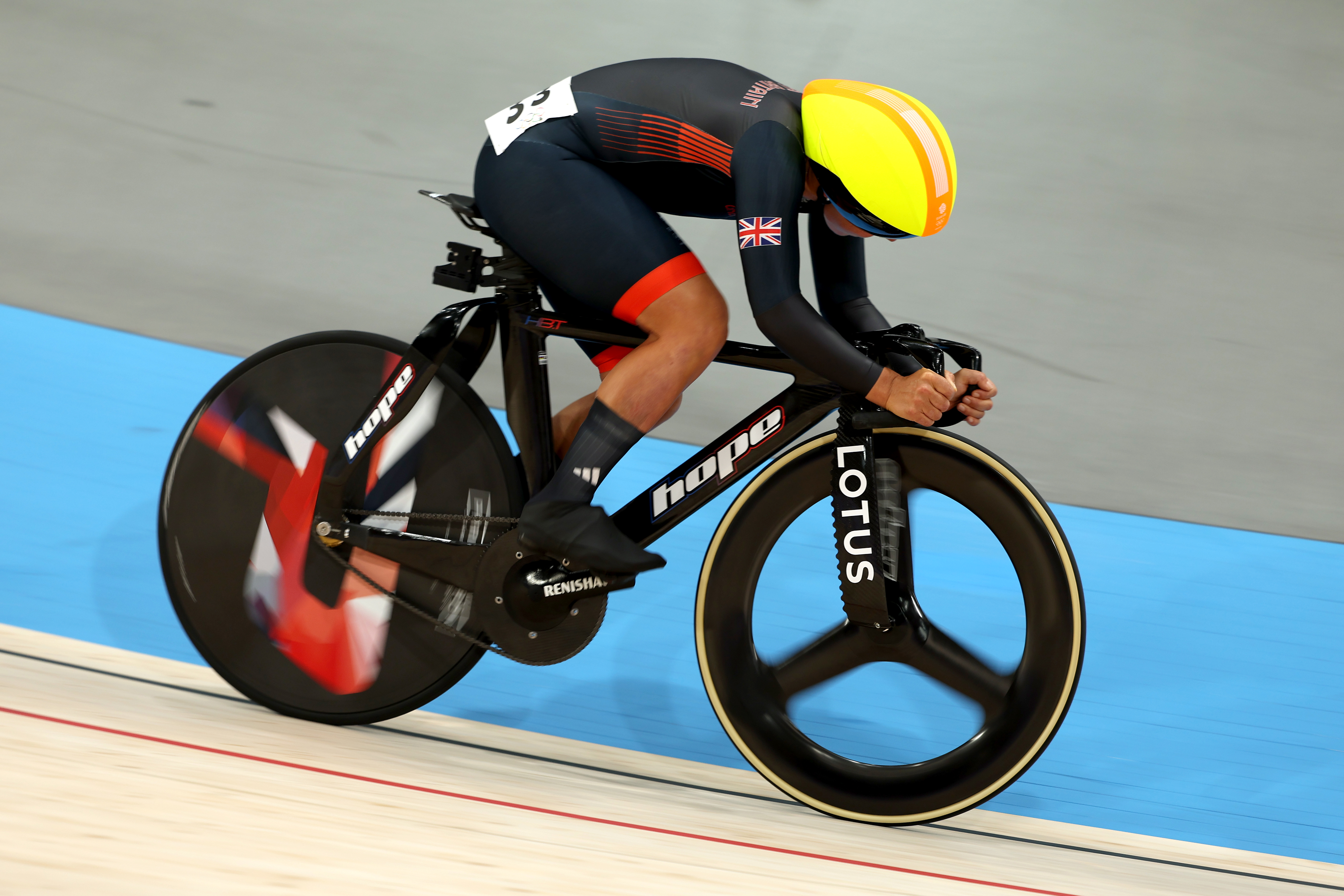
Evans competing in women’s Omnium for Great Britain at the 2024 Olympic Games (Image credit: Tim de Waele/Getty Images)
‘Menstrual cycle tracking apps assume everyone’s got a normal cycle’
Another key area where female riders could benefit from tracking their health data is with the menstrual cycle. Meg Smith is a doctoral researcher at Loughborough University and is writing a PhD on understanding the physiological and perceptual effects of the menstrual cycle in female cyclists.
Smith is currently running a survey exploring the effects of The Menstrual Cycle on Training, Performance and Health in Female Cyclists, and is also a female athlete health consultant for AG Insurance-Soudal, where she encourages riders to track their menstrual cycles.
“At World Tour level, riders have such an incredibly high training demand, and because cycling is so energy demanding they can struggle a lot with energy balance,” explained Smith.
“I think a lot of it is unintentional, but it’s led to several riders suffering from chronic RED-S and amenorrhoea, which is the absence of periods, all of which makes menstrual cycle tracking very important.”
RED-S, also known as relative energy deficiency in sport, was the reason for Veronica Ewers announcing at the end of last year that she was stepping back from pro cycling to focus on her recovery.
Health trackers typically use body temperature to help users track their menstrual cycle, while apps, such as Flo or Clue, rely on user input on cycle dates, as well as options to track many other cycles. Most wearable tracker apps also allow users to input data about their period, which can then be analysed against other stats.
“I’ve had issues previously, with RED-S, some irregular episodes and my body temperature used to just be like a bit all over the place,” said Evans, whose Oura ring helps her predict her period.
“Now, when it gets more regular, I’ve started to see a pattern again, so I know that my body temperature is going to increase and then drop, and then the next day, likelihood is I’ll probably get my period.
“I’m not always the most regular with how long my cycles are, but I can see if I’ve had five or six days of increased body temperature, my period is probably going to come, whereas if my body temperature hasn’t increased, I’m going to be late.”
Smith agrees that body temperature can be a good indicator.
“We had a rider who wasn’t tracking her menstrual cycle or any of the symptoms around it, but she started complaining that at certain points she was feeling really hot,” explained Smith.
“When we realised the points at which she’s feeling hot, it was always two to three days before her cycle. We’ve put something in place to support that, and if she has a race in that phase, we ensure that recovery is slightly different for her compared to the other riders.”
However, she says to get the most accurate data, athletes need to use ovulation strips to show which menstrual cycle phase they are in. This is because women can bleed but not ovulate, which can lead to this being misinterpreted as a normal cycle.
“Menstrual cycle tracking apps assume everyone’s got a normal menstrual cycle, everyone’s different,” added Smith.
“For those who don’t have a normal cycle, and so who may be bleeding but actually going through a menstrual disturbance, the app tells them they’ve ovulated and that they’re in a phase which they aren’t. Without ovulation detection, you’re never going to know that.”
Apps such as Clue or Flo allow users to track their menstrual cycles by inputting data such as period dates and health symptoms (Image credit: Simon Dawson/Bloomberg/Getty Images)
The number one metric to improve
Research has shown that sleep and hormonal fluctuations have a direct relationship, with the menstrual cycle affecting sleep and vice versa. Tracking sleep can also help show a rider’s recovery trends.
Evans has been tracking her sleep patterns since using an Oura ring.
“When I first started with these metrics, one of the biggest things that shifted for me was seeing the tracking of when I was going to bed and when I was waking up,” she said.
“It’s interesting seeing how it shifts with different patterns like time zones and training camps. It’s something I’ve then worked on and found a real positive.”
“It is the number one metric that everyone should try to improve,” added Henry Latimer, cycling coach and coaching partner at Vekta.
“I don’t think people quite understand how much you’re supposed to have and how much they really get so sleep trackers are great as they can help you spot trends and identify where it relates to training.”
Finding a balance
For a health tracker to work best, many brands say you need to wear them all the time to capture an accurate snapshot. They also send notifications and, much like a phone, are addictive to check but this constant surveillance and data output can put pressure on riders.
“I know athletes who will take off their device when they come to major competitions,” said Evans. “They don’t want to know because at that point if you’re two days out from competition, it’s just going to build stress.”
Latimer takes a similar approach and advises all riders to take a balanced view of them.
“These wearables can make extra noise and take away from the clarity of what an athlete is trying to achieve,” explained Latimer.
“From a mental health perspective, removing or not using a tracker can relieve a bit of pressure because it is one less thing to focus on.”
It’s also not just about managing how often riders look at the metrics but also their reliance on them.
“We’ve got so much data, and we live in such a data-rich society, it’s so easy to be over-reliant on these trackers,” said Latimer.
“Health trackers are part of a toolkit, and it’s important to put them in the context of how someone is actually feeling and to inform their training.
“My advice is to use them as a tool and as part of giving context to the way you’re feeling but always use your feeling first.”
Evans agrees and is mindful of over-reliance on her Oura ring.
“I tend to look at it in the morning because otherwise life happens and I won’t go back to it, but I’ll try and check in with myself first and see how I’m feeling,” she said.
“Metrics like HRV are useful but not the definitive. I’ll let them indicate certain things and use them as an extra tool, but I’m not going to let them dictate my life. I always trust what my body’s telling me first.”