
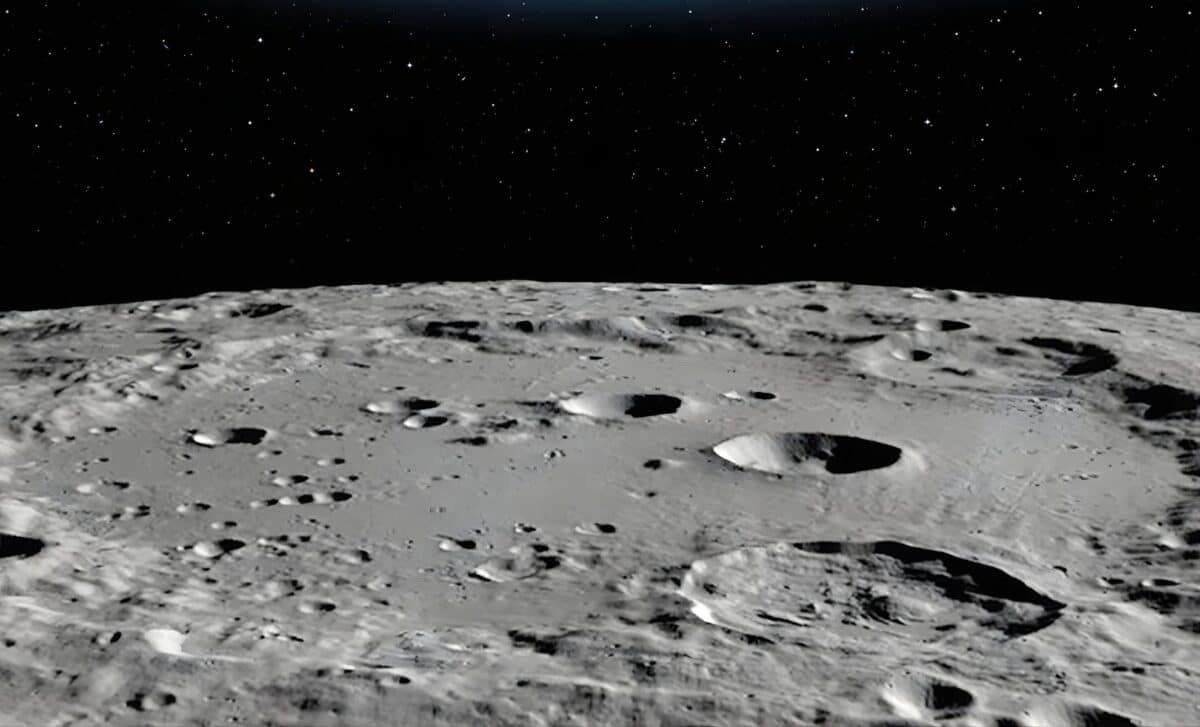
For more than six decades, the exact location of the Soviet Luna 9 spacecraft, the first object to land safely on the Moon, has eluded researchers. Now, with the help of artificial intelligence, scientists are closer than ever to solving the mystery. A team led by Lewis Pinault from University College London has used a machine-learning algorithm to pinpoint several potential landing sites, setting the stage for a possible breakthrough in 2026.
In 1966, Luna 9 made history by becoming the first spacecraft to successfully soft-land on the Moon’s surface and transmit images back to Earth. Despite the significance of the achievement, the coordinates of its landing site were later found to be imprecise, and years of searching using high-resolution lunar imagery failed to find the spacecraft. Now, AI might be the key to finally solving this decades-old puzzle.
Luna 9: The First Successful Moon Landing
Luna 9 was a landmark achievement in space exploration. The spacecraft deployed a 58-cm-wide, 100-kg spherical capsule, which was equipped with inflatable shock absorbers. Upon landing, the capsule bounced several times before stabilizing itself with four petal-like panels. Despite operating for just three days, it transmitted vital data back to Earth, including the first-ever photographs from the Moon’s surface, helping to pave the way for future crewed missions.
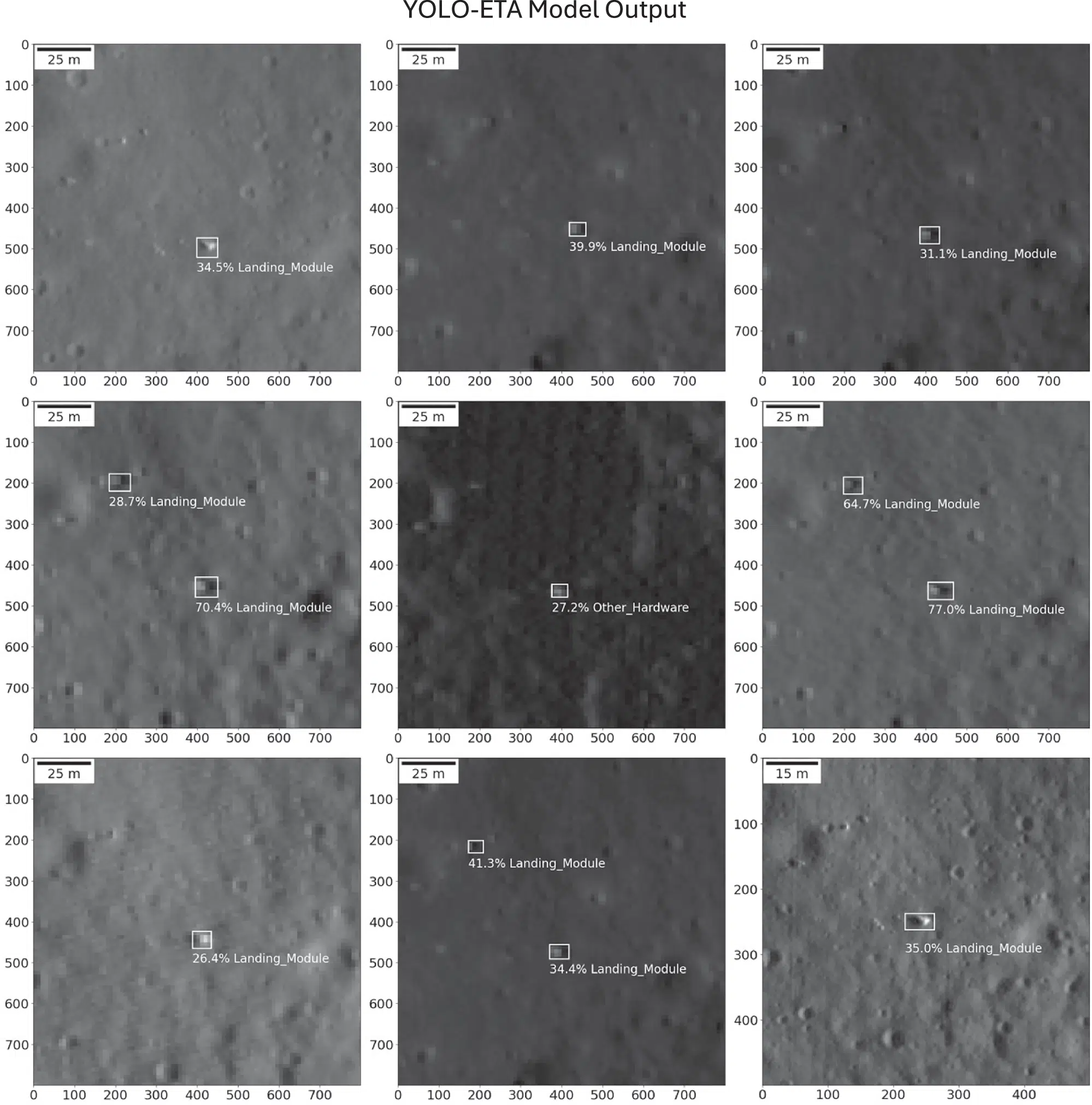 YOLO-ETA identifies possible Luna 9 in LRO images with different conditions. Credit: npj space exploration
After Luna 9’s successful landing, the coordinates were published in Pravda, the Soviet Union’s official newspaper. However, the precision of these coordinates was later called into question. With the advent of NASA’s Lunar Reconnaissance Orbiter (LROC) and its high-resolution images in 2009, astronomers hoped to resolve the mystery. Unfortunately, the coordinates published in the 1960s were found to be inaccurate, with the spacecraft’s true resting place potentially lying tens of kilometers away from the original estimate.
AI in Action: Finding Luna 9’s Historic Landing Site
In their quest to locate Luna 9, researchers turned to a modern tool: artificial intelligence. According to a study published in npj Space Exploration, the team used a machine-learning algorithm designed to identify the subtle surface features left by man-made landers on the Moon. The algorithm, named YOLO-ETA (You-Only-Look-Once–Extraterrestrial Artifact), was trained on images from Apollo landing sites, enabling it to recognize key characteristics associated with spacecraft impacts.
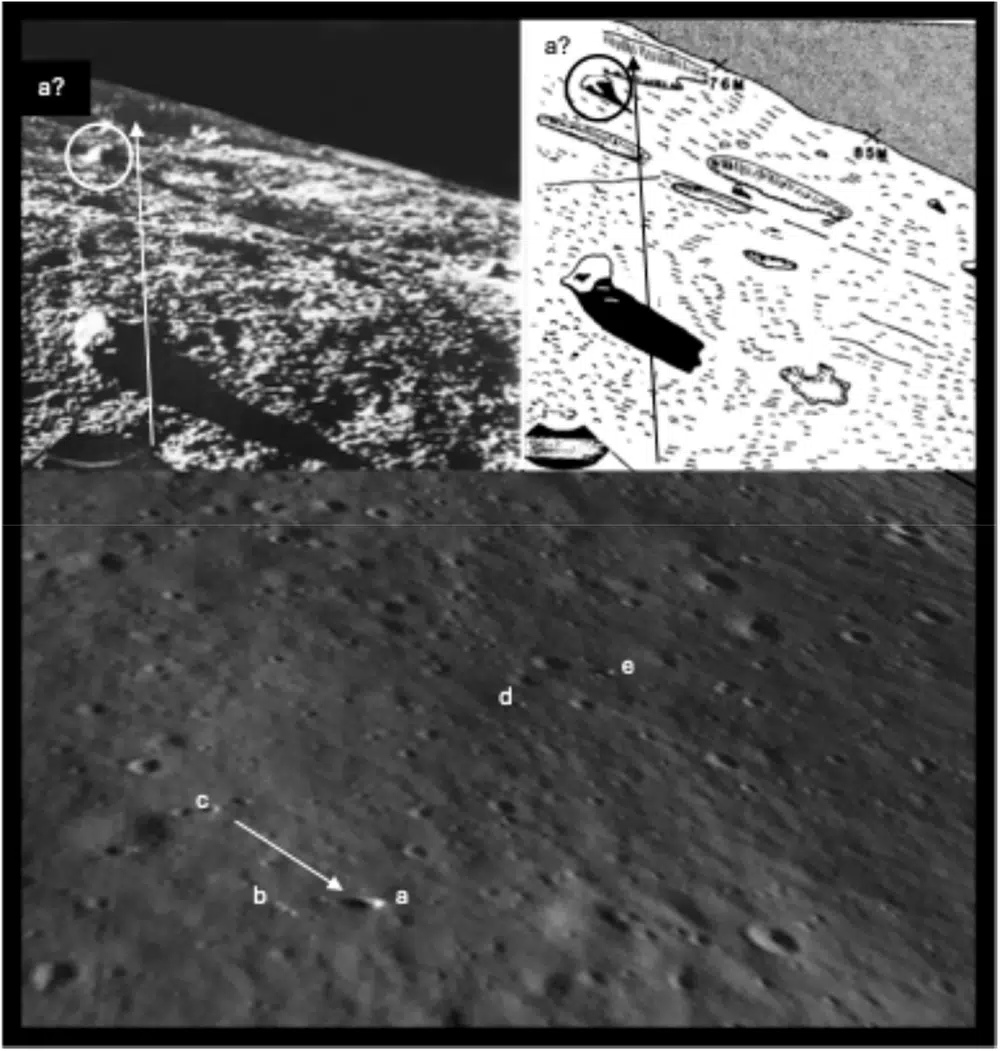 A first match between Luna 9’s camera view and a 3D model, as identified by YOLO-ETA. Credit: npj space exploration
The algorithm was put to the test on images from the 1970 Luna 16 probe, which successfully landed on the Moon. When tested on these known landing sites, YOLO-ETA demonstrated impressive accuracy, confidently identifying the locations. With these promising results, the team applied the model to a 5 × 5 km area close to the published Luna 9 coordinates, identifying several potential sites showing disturbances consistent with man-made landers.
Chandrayaan-2: Bridging the Gap in the Search for Luna 9
In March 2026, the next major confirmation of the AI’s findings will occur when India’s Chandrayaan-2 orbiter flies over the region of interest. The researchers point out that the orbiter’s high-resolution imaging system will be essential for verifying the candidate sites suggested by YOLO-ETA.
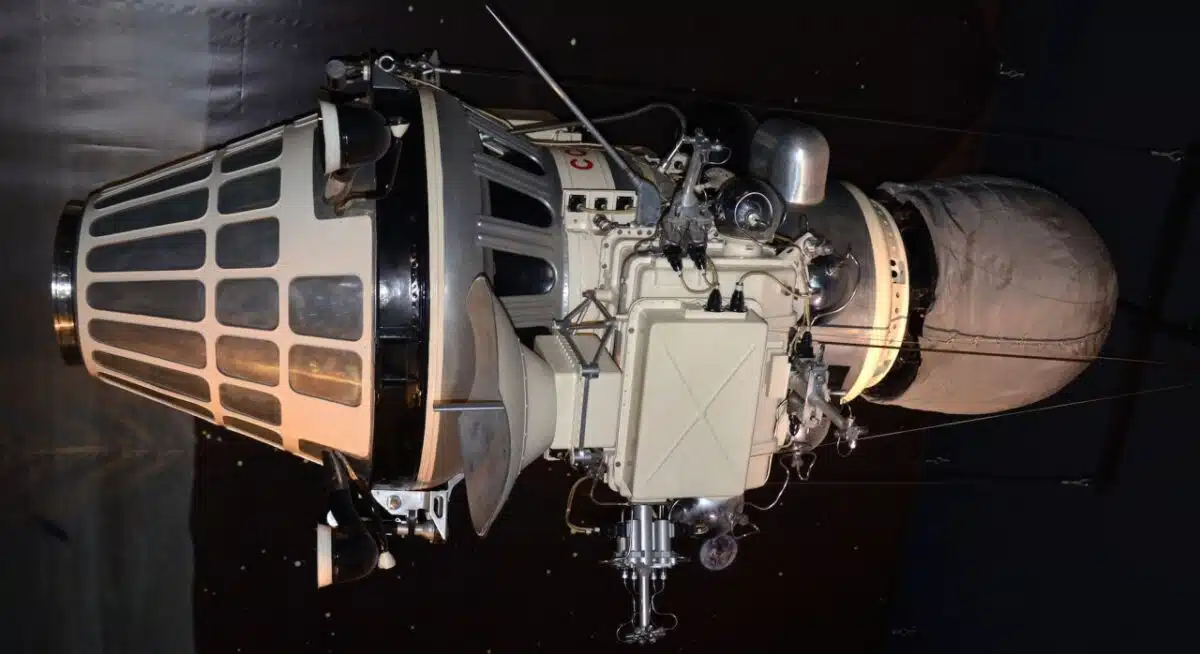 A close-up of the Luna 9 spacecraft. Credit: ESA
If the orbiter’s data supports the AI’s predictions, it could reveal the long-hidden site of Luna 9, solving a mystery that has remained unsolved for over sixty years. With AI taking center stage in the investigation, the elusive location of Luna 9 may soon be revealed. If the discovery is verified, it will showcase the immense potential of AI in advancing lunar exploration.