
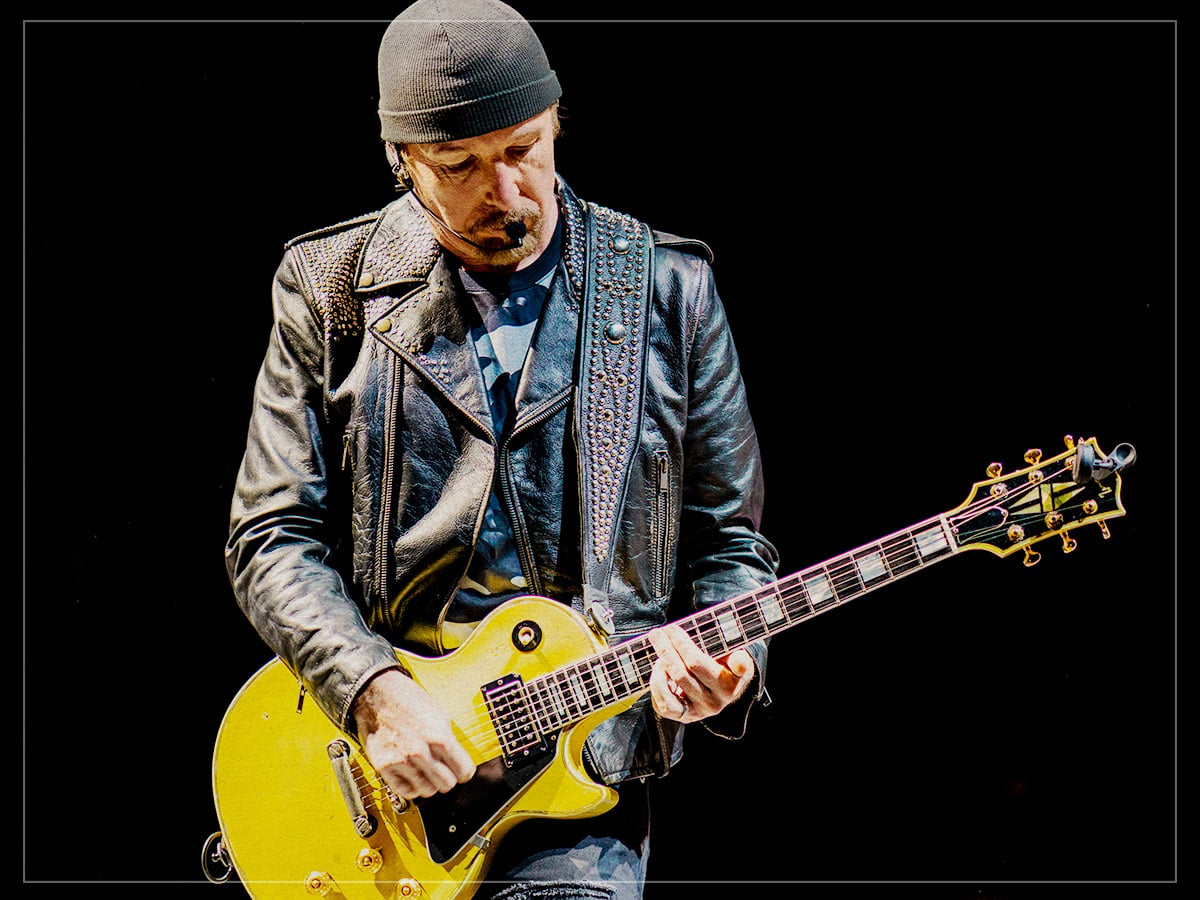

(Credits: Far Out / Joe Ahorro)
Wed 11 February 2026 22:47, UK
If there was ever a band that shouldn’t have survived the 1990s rock and roll shakeup, it should have been U2.
The entire world had changed on a dime the minute that the alternative movement took over, and since the Irish legends had been treated like God’s gift to rock and roll for years at that point, seeing them thrive by shedding their musical skin felt almost impossible in the age of irony. But even if they managed to roll with the punches, The Edge didn’t necessarily have to be a fan of everything that was charting at the time.
Granted, it wasn’t hard to see this kind of change coming, either. There had already been alternative bands bubbling up from underground for years at that point, and everyone from Pixies to The Smiths to The Cure were already beginning to make a dent in the charts amidst the other rock and roll acts coming out of Los Angeles. And that’s not even counting the bands that were slowly infiltrating California at the time, either.
Jane’s Addiction, Rage Against the Machine, and Red Hot Chili Peppers were on the same club circuit that bands like Ratt and Warrant had been playing, but even if their brand of rock and roll worked for the time, U2 were the poster children of everything wrong with the 1980s for many fans. Bono was slowly anointing himself as a rock and roll god, and if you look at any of the footage from Rattle and Hum, there are more than a few times where it looks like they’re waiting for the rest of the world to kiss their feet half the time.
But even for as big as they got, The Edge always kept his head screwed on when it came to his stardom. He was more than happy to be the technological wizard making the best sounds that he could think of, but that’s not how the rest of the world thought. The biggest names in grunge were about playing as authentic as possible, and U2’s resident guitar genius didn’t exactly like the idea of dumbing down his sound.
Compared to every other member of the band immersing themselves in irony, The Edge was never going to try and unlearn everything that he did, saying, “This was the height of grunge, the Seattle heavy rock scene, which (apart from real innovators such as Nirvana) I must confess I found insufferably boring. We were exploring different musical ideas but what we didn’t appreciate was how difficult it was going to be for anyone in America who loved rock music to get to where we had got to.”
Then again, the tones that The Edge was working on during Achtung Baby were wildly inventive for the time. ‘Mysterious Ways’ was rock and roll by way of electronic music, and even when they started moving towards more unconventional soundscapes on Zooropa, a song like ‘Numb’ was at least in tune with what was happening out of the growing industrial scene at the time as well.
It’s not like the rest of the world didn’t follow his lead, either. There were plenty of artists trying to be the next Kurt Cobain, but there were a lot more that were using the same effects that The Edge was using around that time. The whammy pedal wasn’t a new invention by any stretch, but hearing him use it on tunes like ‘Even Better Than the Real Thing’ opened the door for everyone from Tom Morello to Jonny Greenwood to use it when they started making their own masterpieces.
But above all else, The Edge may have had an icy reaction to grunge because of how different it was compared to what he was used to. The whole point of all U2’s music was about making music to give people hope, and it was going to do them any good trying to embrace their inner tortured rock and roll star and complain about how their lives suck.