
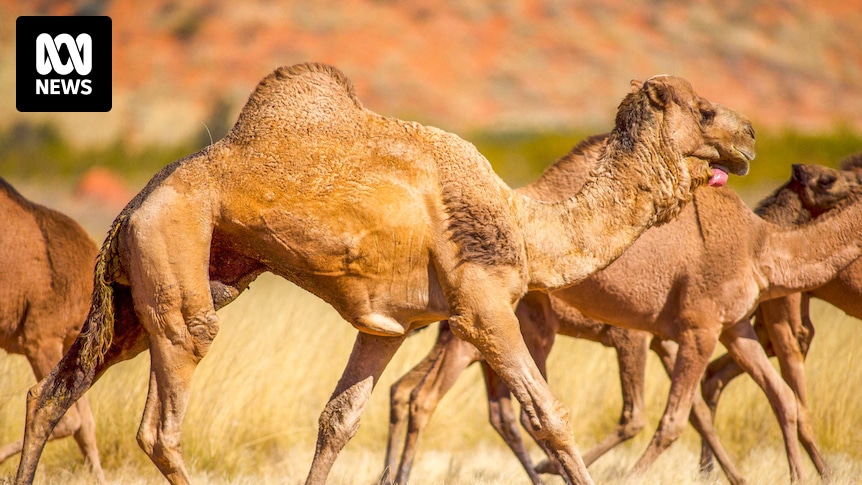
Remote communities across South Australia’s Anangu Pitjantjatjara Yankunytjatjara (APY) Lands are dealing with an unprecedented influx of feral camels as drought conditions push thousands of animals out of desert regions in Western Australia and the Northern Territory in search of water.
Warning: This story contains images readers may find distressing.
While rainfall has been recorded across parts of Central Australia this week, government bodies say it is unlikely to end the ongoing destruction, with hundreds of camels continuing to damage homes, water infrastructure and community facilities.
Remote communities across the APY Lands are dealing with an unprecedented influx of feral camels. (ABC News: Sharon Gordon)
In response, federal and state governments have committed a combined $425,000 of emergency funds to manage the problem.
The scale of the impact is greater than during the last major drought between 2019 and 2022, according to authorities.
In January the NT government reported destruction in the Top End, as camels dug up water mains connected to homes and broke through fences. That prompted an aerial cull of about 600 camels.
Now the animals have moved south into South Australia’s APY Lands.
Photos sent to the ABC show the contorted bodies of camels lying in mud around a damaged demountable building at Murputja Anangu School, in the far north-west corner of SA.
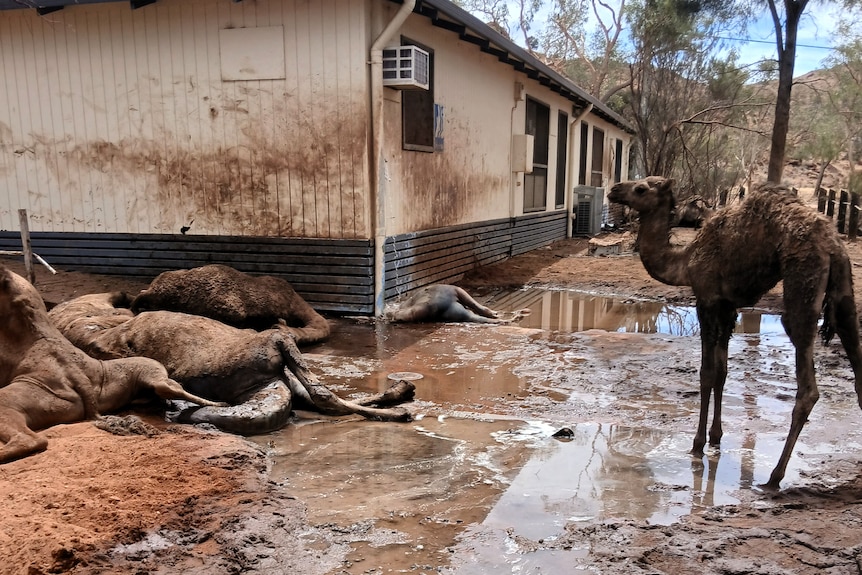
Authorities say more money will be needed to address the problem. (Supplied: Stuart Bickley)
Another image showed damage to fences in the nearby Anangu community of Kanpi, about 460 kilometres south-west of Alice Springs.
In another photo purportedly taken last week, a large number of what appear to be dead camels are pictured in a dry dam or creek bed between the communities of Mimili and Fregon.
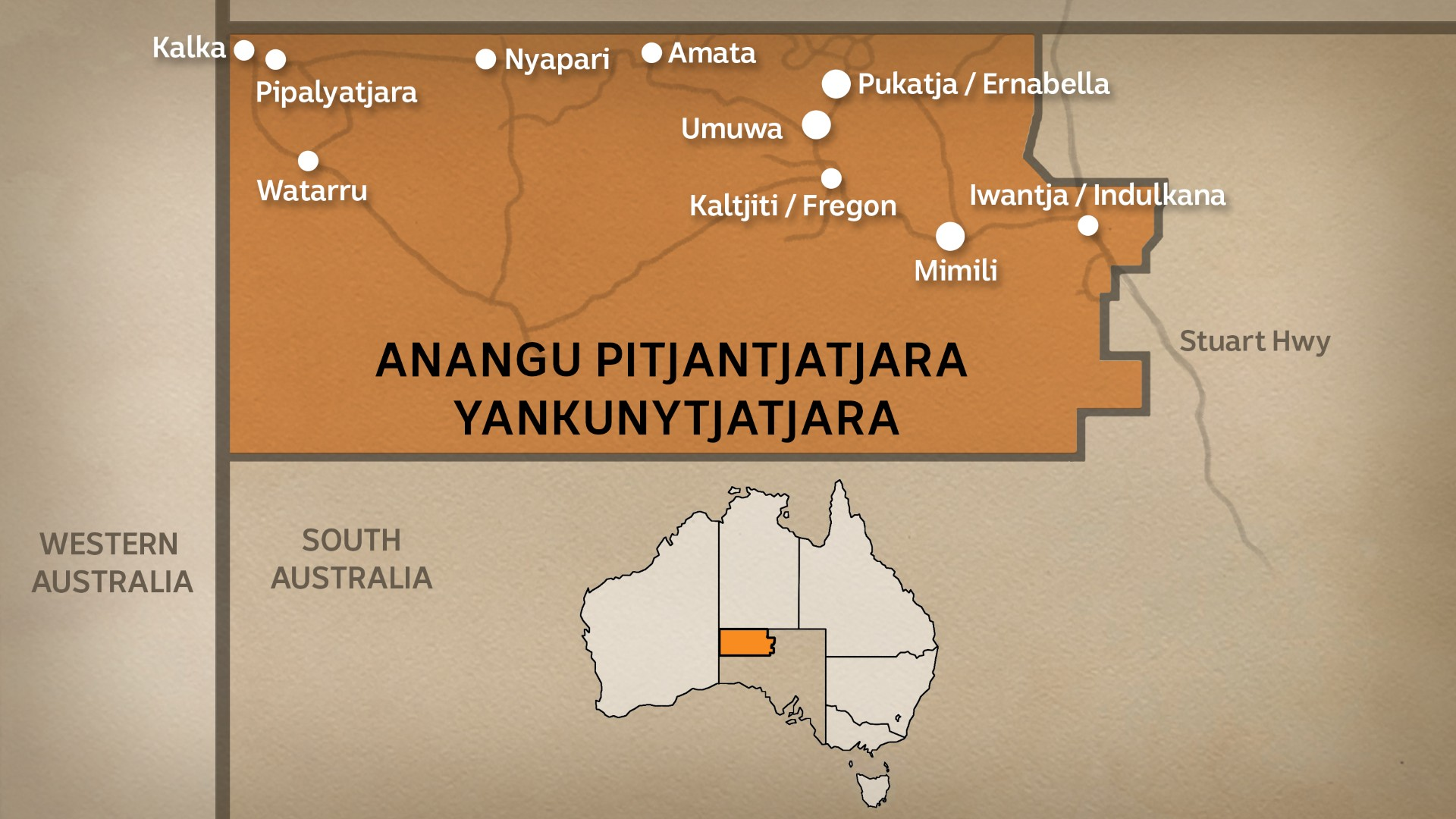
Operations manager Stuart Bickley, who works across the APY Lands, said in the last four weeks the animals had spread over hundreds of kilometres, from Indulkana in the east to Pipalyatjara in the west.
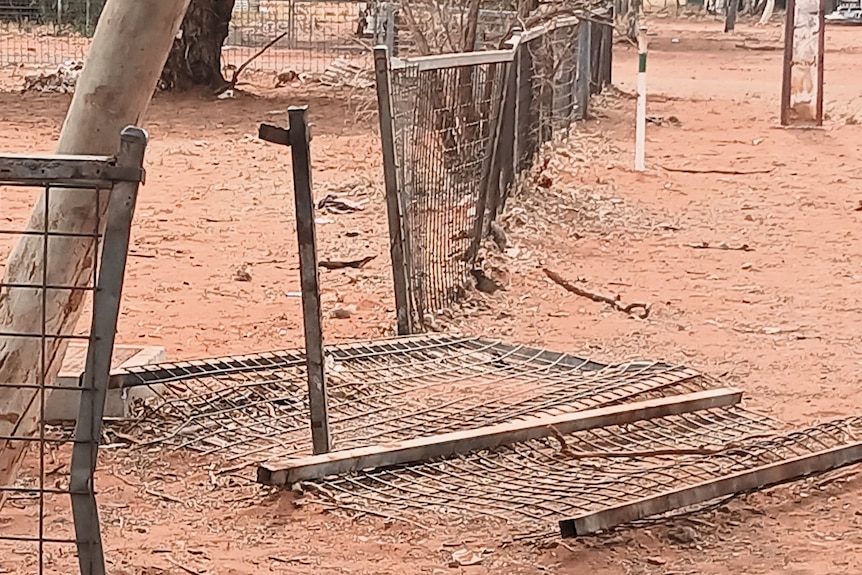
Damage to infrastructure in the Indigenous community of Kanpi on the Pitjantjatjara Lands. (Supplied: Stuart Bickley)
“They’re basically all throughout the APY lands,” he said.
“There’s been hundreds of camels coming in, damaging houses, knocking taps over and breaking fences.”
The APY Board confirmed communities along the Mann Ranges near the border, such as Kanpi and Murputja, were among the worst affected.
Communities located further south of the Musgrave Ranges have also been impacted.
The SA Department for Education said it was working to address damage at the Murputja Anangu School near the NT and WA border, which was currently inactive.
“They’ve gone into the school and damaged air conditioning and handrails, and there are dead camel carcasses laying around there as well,” Mr Bickley said.
The APY Board said a single water source near Fregon used for building and maintenance was estimated to contain more than 1,500 dead camels.
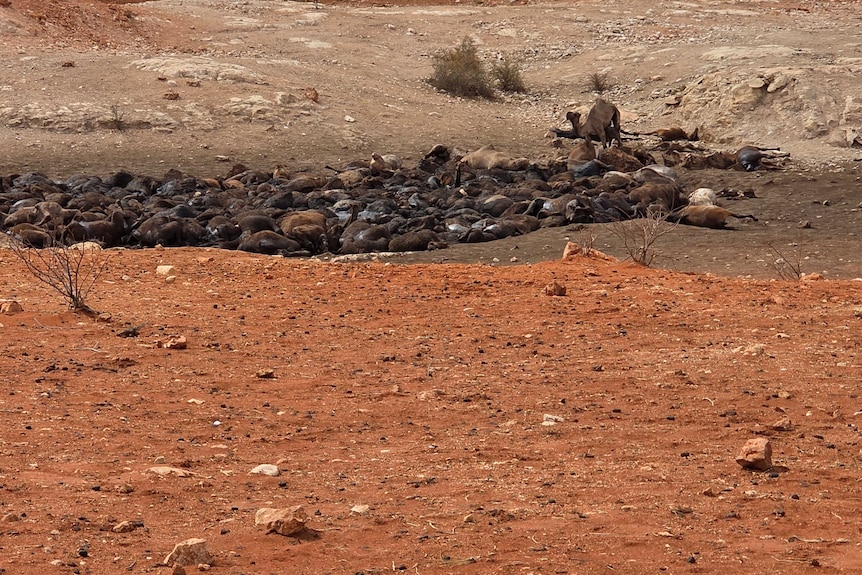
This water source in Fregon is choked with dead camels. (Supplied: Stuart Bickley)
Carcass disposal raises health concerns
The APY Board said it had been working with local, state and federal agencies to address the immediate health and safety issues created by the dead camels since January.
Mr Bickley said initially contractors and community members removed dead camels and put their bodies into piles some 30km away from communities.
The APY Board said Regional Anangu Services Aboriginal Corporation (RASAC) had started removing carcasses where possible but limited staff and machinery were restricting how much could be done.
Loading…
APY Board general manager Trent Wilkinson said getting rid of the bodies involved “a mixture of burying and burning”.
APY is working with the Alinytjara Wilurara Landscape Board to develop a coordinated response, including immediate clean-up and infrastructure repairs.
Meanwhile, the Ngaanyatjarra Camel Company has been mustering and transporting camels to local meatworks, with up to 1,000 animals currently being held and watered.
Response from authorities
SA’s Department of Aboriginal Affairs and Reconciliation has committed $200,000 and APY Land Management has contributed $60,000 in direct funding and $50,000 in “in-kind support” to manage the problem.
Mr Wilkinson said the Australian government had committed $225,000.
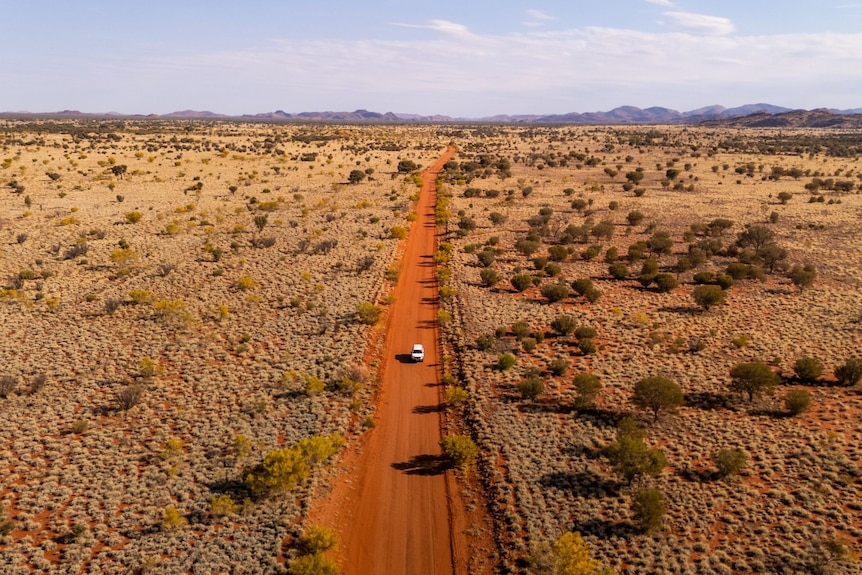
There are seven communities in the culturally-protected APY Lands in north-western SA. (ABC News: Che Chorley)
Authorities said the funding would be used to repair damaged infrastructure and install long-term solutions such as water tanks outside communities.
Mr Wilkinson said the money was not to be “sneezed at”, but was not enough to solve the issue.
“A lot of agencies have come together to pull those dollars quickly but the ongoing problem needs ongoing resourcing for years to come,” he said.
Mr Wilkinson said the installation of water tanks would cost about $40,000 per site.
The Aboriginal Affairs and Reconciliation department said it would continue working with the APY executive on management options.
Mr Wilkinson is calling for a coordinated, cross-border approach to the issue.
“Straight-line state borders mean very little to Aṉangu and all traditional owners across the country,” he said.
“It’s about working together with all available resources.”

Joshua Burgoyne agrees that governments must work together to address the issue. (ABC News: Micahel Franchi)
NT Environment Minister Joshua Burgoyne echoed this call.
“We’re not just dealing with this in one jurisdiction, we’re dealing with it across a lot of areas,” he said.
“All it will take is a couple of months without rain and those feral animals will move back into our communities searching for water again.”
How camels got to Australia
Australia has the largest wild population of Arabian camels in the world.
In the late 19th century thousands of camels were imported to Australia from India to transport goods.
But in the 1920s camels were deemed unnecessary due to the advent of the car and they were released into the wild.
Authorities estimate there are more than a million camels running wild across Central Australia.
It is believed that Australia’s wild camel population doubles every nine years.