
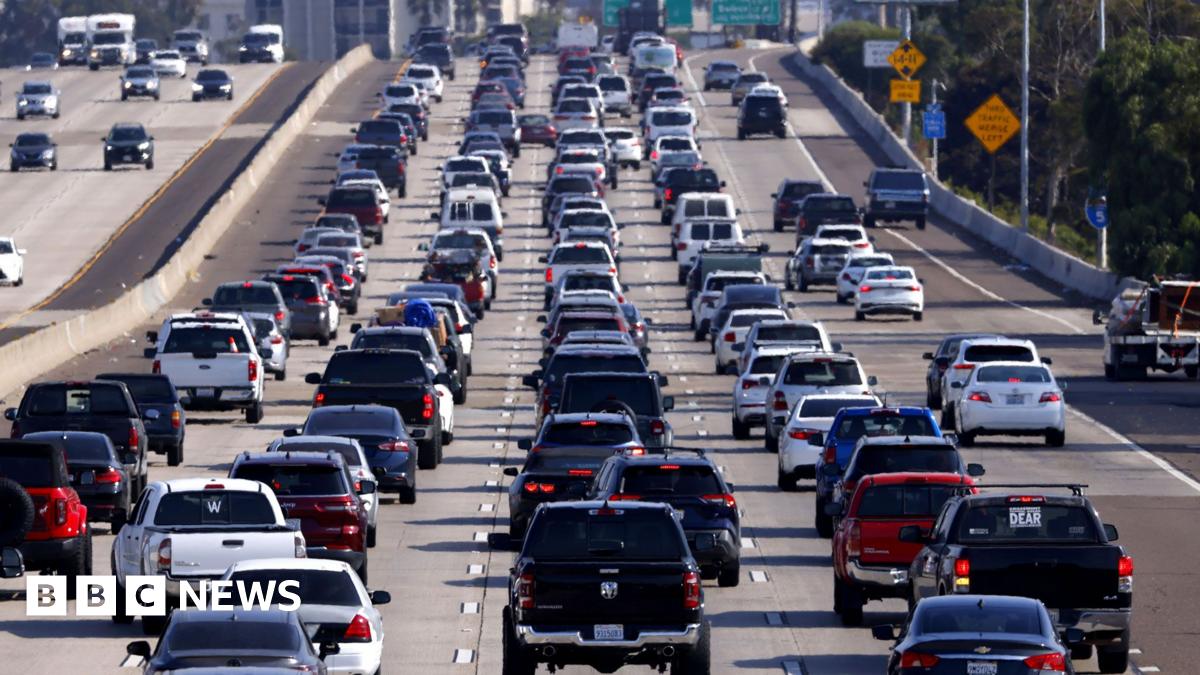
Speaking in the Oval Office on Thursday, Trump said the 2009 ruling was “a disastrous Obama era policy that severely damaged the American auto industry and massively drove up prices for American consumers”.
“This radical rule became the legal foundation for the Green New Scam, one of the greatest scams in history,” added the Republican president, about the Democrats’ climate agenda.
Former President Barack Obama, who infrequently comments on the policies of sitting presidents, said that repealing the finding would make Americans more vulnerable.
“Without it, we’ll be less safe, less healthy and less able to fight climate change — all so the fossil fuel industry can make even more money,” he wrote on X.
The Environmental Protection Agency (EPA) first took a stance on the impacts of greenhouse gases in 2009, in the first year of Obama’s first term.
The agency decided that six key planet-warming greenhouse gases, including carbon dioxide and methane, were a danger to human health.
With a divided Congress unable to agree on legislation to tackle rising global temperatures, the EPA finding became central to federal efforts to rein in emissions in the years that followed.
“The endangerment finding has really served as the lynchpin of US regulation of greenhouse gases,” said Meghan Greenfield, a former EPA and Department of Justice attorney.
“So that includes motor vehicles, but it also includes power plants, the oil and gas sector, methane from landfills, even aircraft. So it really runs the gamut, all of the standards for each of the sectors is premised on this one thing.”
Trump administration officials are stressing that overturning the regulation will save more than $1tn and will help cut the price of energy and transport.
Reversing the finding would reduce automobile manufacturers’ spending by $2,400 per vehicle, White House press secretary Karoline Leavitt told reporters.
Many environmentalists are sceptical of the potential cost savings being touted by the Trump team.
“It’s going to force Americans to spend more money, around $1.4tn in additional fuel costs to power these less efficient and higher polluting vehicles,” said Peter Zalzal from the Environmental Defense Fund.
“We’ve also analysed the health impacts and found that the action would result in up to 58,000 additional premature deaths, 37 million more asthma attacks,” he said.
For some in the US car industry there will be uncertainty about the rollback as manufacturing less fuel-efficient vehicles might limit their sales overseas.
“This rollback is sort of cementing things that have already been done, such as the relaxation of the fuel economy standards,” said Michael Gerrard, a climate law expert from Columbia University.
“But it really does put the US automakers in a bind, because nobody else is going to want to buy American cars.”