
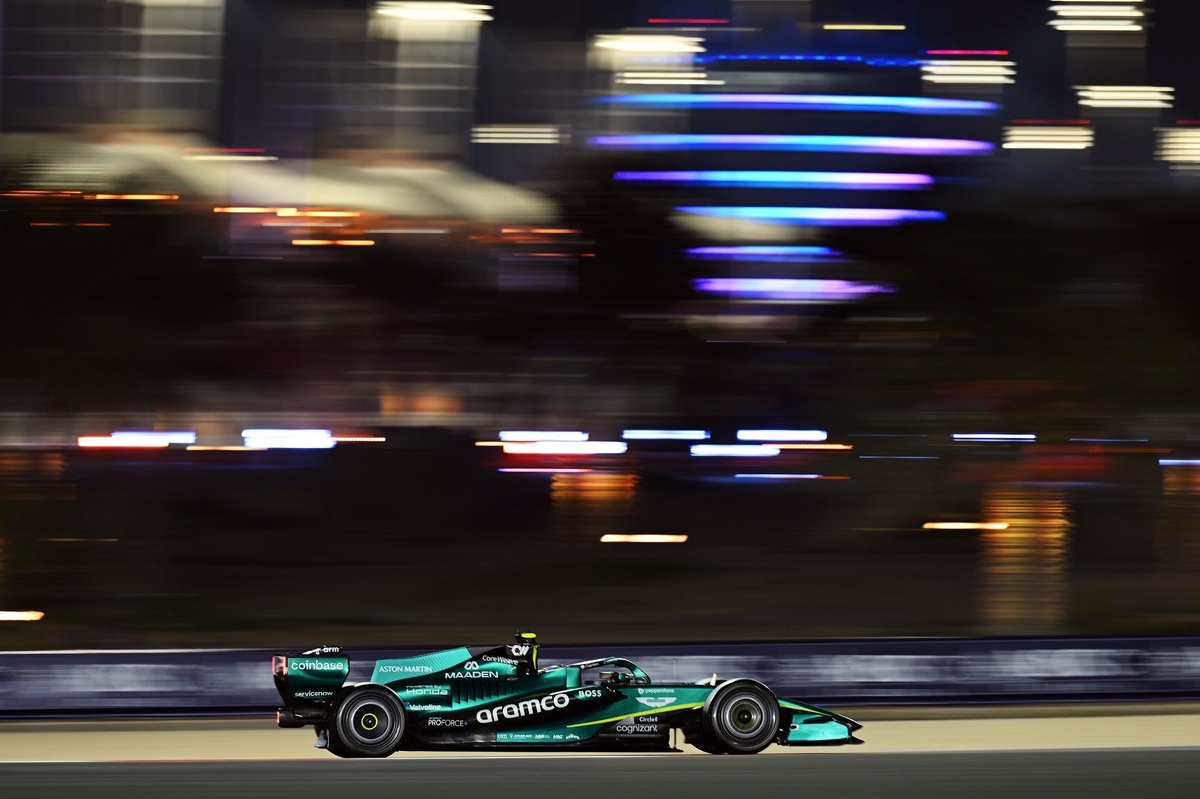
Aside from a couple of stoppages, precious little of interest occurred on track during Bahrain’s second day of testing ahead of Formula 1’s 2026 season. Not that standing trackside and watching cars flash past isn’t interesting; actually, that luxury is why we do this, but it was true that few of the pure ‘storyline’ elements from day two had actually been related to the running itself.
Sergio Perez and Pierre Gasly both pulled up at the side of the road with technical issues, but it’s not like it was a disaster for either of their teams; Cadillac managed 109 laps through the day, and Alpine collected 97 despite Gasly’s sparse running in the afternoon. Instead, the two most talked-about teams took their turn to suffer with system issues and unreliability, on a day when the two teams thought to deflect the newshounds’ gaze towards each other.
Red Bull did one sole lap in the morning as Isack Hadjar was left stranded in the team’s hospitality unit, due to a hydraulic leak found during the car’s early-morning fitting, but at least ended the day with 87 tours. Mercedes, however, had to change its power unit during the ‘morning’ session; Andrea Kimi Antonelli did just three laps before being stranded in the garage, although George Russell at least recovered 54 laps’ worth of data in the afternoon-evening session and managed the fourth-fastest time of the day.
The evening’s action was steady at best: the best two times of the day, those pertaining to Charles Leclerc and Lando Norris, were both set in the four hours before lunch. Oliver Bearman, Russell, Hadjar, and Gabriel Bortoleto moved ahead of Gasly – who’d ended the morning in third, but with a 2.4s gulf to Leclerc’s headliner.
Instead, the stage had been set off-track by two drivers, neither of whom were scheduled to drive on Thursday, and their lamentations of a 2026 season still yet to begin in earnest. Lance Stroll and Max Verstappen both offered explosive views, one from a performance standpoint, the other from a generalised ‘everything is rubbish and I just want to go home’ point of view. Optimism, then, is not particularly plentiful…
Stroll fears four-second deficit between Aston Martin and front-runners
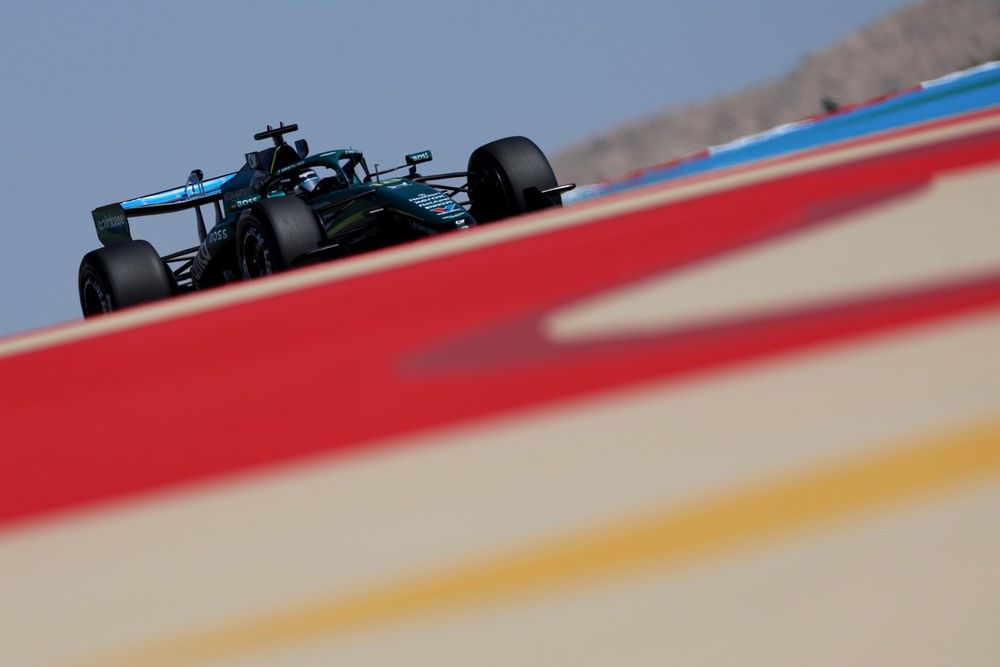
Stroll offered a bleak view of Aston Martin’s early 2026 fortunes…
Photo by: Alastair Staley / LAT Images via Getty Images
Aston Martin had been declared the team to beat as soon as the new AMR26 peeled out of the garage at Barcelona, on the basis that a) Adrian Newey had been involved in the design of the car, and b) some of the bits on it looked different to the other cars. Hyperbole? You need only trawl through the vast recesses of your social media platform of choice to find such conclusions…
But, on track, the early signs haven’t been particularly bright for Aston Martin. The car doesn’t look the easiest to drive, it’s lacking mileage (even compared to Williams at this stage, despite the Grove squad’s absence at Barcelona), and Stroll delivered a stinging rebuke of its apparent pace – or, per the Canadian, lack thereof.
“Right now, we look like we’re four seconds off the top team, four and a half seconds,” Stroll mused glumly. “So, again, impossible to know what fuel loads and everything people are running. But, you know, yeah, now we need to try and find four seconds of performance.”
Let’s also not forget that Aston Martin, per Newey, was already four months behind many of the other teams as its 2026 car was in development. Most teams saw fit to get a representative 2026 model in the wind tunnel by 1 January last year, but it took until April for the proto-AMR26 to see the inside of Aston Martin’s new ‘tunnel
Elaborating on that point (at least, to some degree), Stroll pointed to the weaknesses being “a combination of things: engine, balance, grip”, which pretty much covers the main facets of an F1 car.
Honda had been keen to keep a lid on expectations early on, with HRC president Koji Watanabe noting before the season that “the 2026 regulations are technically extremely challenging, and perhaps we will struggle”, while project leader Tetsushi Kakuda added that the development of the internal combustion engine had “not necessarily” been entirely auspicious. While Honda’s hope was, and is, that it can get on terms with the other manufacturers on the grid, it seems that the Japanese marque more than has its work cut out.
Let’s also not forget that Aston Martin, per Newey, was already four months behind many of the other teams as its 2026 car was in development. Most teams saw fit to get a representative 2026 model in the wind tunnel by 1 January last year, but it took until April for the proto-AMR26 to see the inside of Aston Martin’s new ‘tunnel – costing a colossal chunk of development time.
That’s not to say that the team can’t catch up; indeed, we’ve seen McLaren enact a drastic change in fortunes over the course of 2023, as its early underperformance had been precipitated by a late change in design concept and thus required in-season development to flesh out the new direction. It might pay to be wary of parroting Stroll’s suggestion of a ‘four-second’ deficit to the other teams, given that this is indeed caveated by fuel and engine modes – but at the same time, a seafarer would not complain amid calm waters.
Fernando Alonso was behind the wheel of the AMR26 today and, while times are essentially meaningless at this juncture, his scatter of laps were often comparable to the lower midfielders at best. That said, the Aston run plans are very hard to read; Alonso spent little of the day doing consecutive runs on-track – the snippets he did do suggest that the team sits behind Alpine, Haas, and Audi, for now at least.
Verstappen rails against 2026 regulations
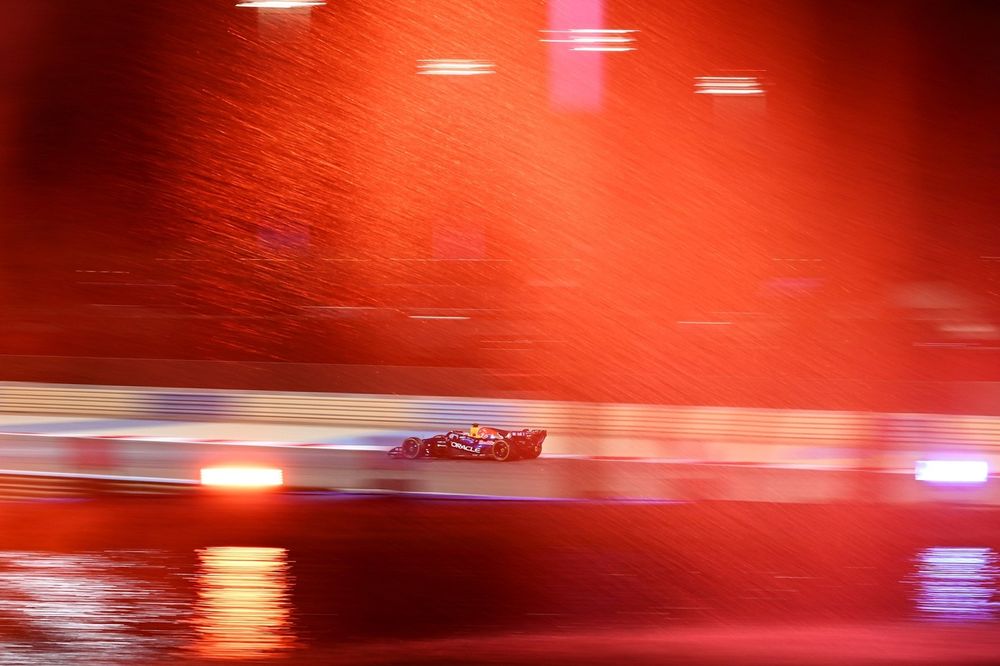
Verstappen is not a fan of F1’s current rules – even suggesting that they might drive him away from the championship
Photo by: Guido De Bortoli / LAT Images via Getty Images
When Verstappen spoke to media in the evening, having turned up to the circuit at lunchtime having missed only one lap of Red Bull running, he offered what can be politely described as a ‘dim view’ of the 2026 regulations. As a driver who likes nothing more than to get into a car and hurl it around a circuit by the scruff of its neck, the charge-and-deploy approach of the new breed of F1 cars sits largely at odds with his idea of enjoyment.
That’s not to say that he’s not brilliant at it – he is, but some folks derive no pleasure from the pursuits in which they find success. Even if he won this year’s championship, Verstappen felt that he would get little joy out of doing so.
“To drive, it’s not a lot of fun, to be honest,” the Dutchman stated witheringly. “I would say the right word is management. But on the other hand, I also know how much work has been going on in the background, also from the engine side, so it’s not always the nicest thing to say. But I also want to be realistic as a driver.
“The feeling, it’s not very Formula 1-like. It feels a bit more like Formula E on steroids. But the rules are the same for everyone, so you have to deal with that. And that’s also not my problem, because I’m all for that. Equal chances, I don’t mind that. But as a pure driver, I enjoy driving flat out.
“And at the moment, you cannot drive like that. There’s a lot going on. A lot of what you do as a driver, in terms of inputs, has a massive effect on the energy side of things. For me, that’s just not Formula 1.”
Speaking to Dutch media later on, he added that “last year, at one point, I deliberately said that I didn’t want to drive it in the simulator any more. It felt so bad compared to last year, so I thought: You know what, I’ll just focus on last year’s car in the sim and we’ll see about the rest this year. It’s just not good.”
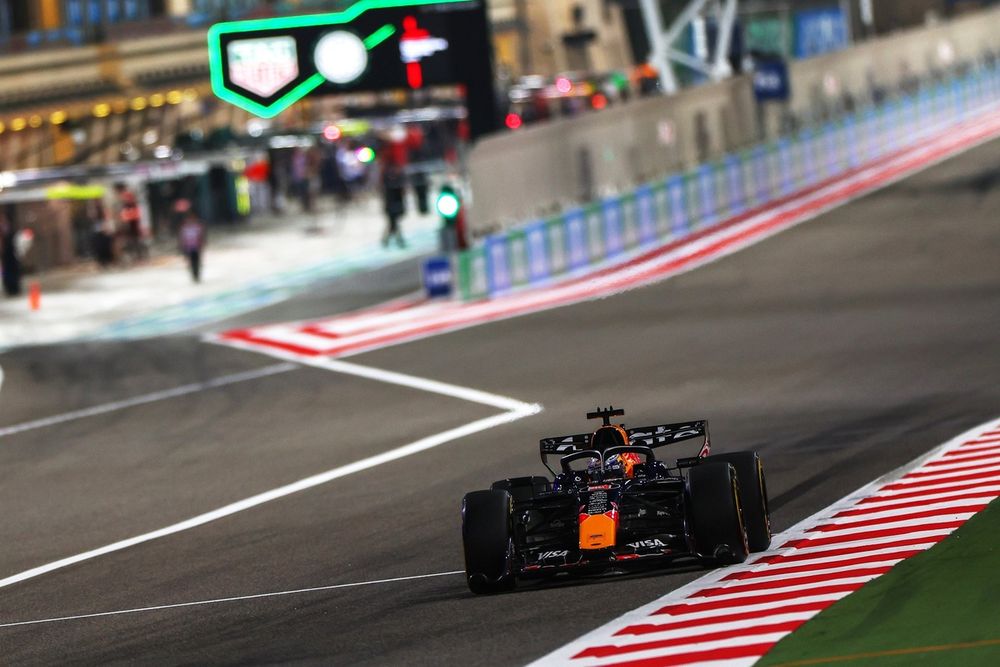
Verstappen currently looks strong in the Red Bull, but he still doesn’t like these cars
Photo by: Andy Hone/ LAT Images via Getty Images
Verstappen’s comments will chime with many. While F1 has taken many forms over its 75-plus-year history, and the lustre of flat-out racing just as ingrained into the championship as tyre, engine, and reliability management, 2026 does supply a rare extreme. As a viewing spectacle, we don’t know how 2026 will shape up – it could be utterly tedious to watch, but equally could be a thrill-a-minute ride. Some believe that F1 is at its best when the drivers feel enfranchised to drive to the limit, others feel that a field of uncomfortable drivers is more conducive to more exciting racing.
It depends where you stand: should F1 stand for excitement or racing purity, and is there a world where the two can coexist? The side on which Verstappen’s bread is buttered could not be more apparent; he suggested that, if the energy deployment side remains a critical factor rather than a side-effect managed by the engineers, he would not necessarily hang around. He’s got other fish to fry – and his flirtations with endurance racing and the Nurburgring 24 Hours will only continue to develop over the coming months.
Verstappen is right in that he’s got nothing left to prove; for him, enjoyment is the only concern. One imagines that he won’t be the only driver to feel that way.
Trackside musings
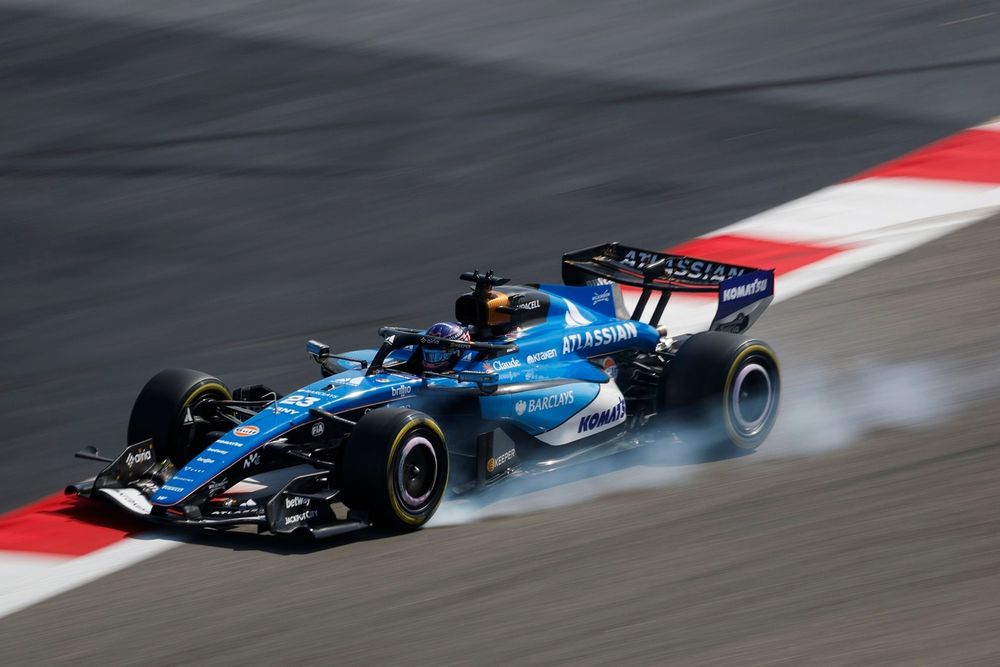
Albon found the Williams a strange contender when running in first gear
Photo by: Sam Bloxham / LAT Images via Getty Images
After the field had taken note of Red Bull’s method of maximising its energy deployment through using first gear in many of the slower corners around Bahrain, it was only natural that the other teams would try to explore that.
The explorations of the lower gear range through Turns 1, 4, and 10 – the tightest corners on the circuit – help to keep the MGU-K flooding energy back into the battery. There is a limit on what you can recover over a lap – this being 8.5MJ – but it’s naturally worthwhile for the teams to maintain that per-lap recovery as much as possible. Charge more, deploy more – but the engineers want to find the sweet spot of energy recovery without losing too much time.
Williams’ Alex Albon explained that he had tried to explore that effect in the simulator, but the first-gear cornering in the real world levied a very different sensation.
“It’s almost like by the time you arrive to the track, you’re in tune with what needs to be done, let’s say. But second to first, and driving these corners at such high RPM, it does weird things to the car,” he noted. “And they’re not as refined when you do that.”
The gusts around the circuit didn’t help the drivers with the front-end locking, as the instability was evident here. It was also interesting to hear the Audi approach Turn 10 in first gear, as the power unit made a knocking sound at that rev-range.
You could thus hear the R26 approaching with your eyes shut – and you could smell it, too; clearly, BP’s new range of sustainable combustibles comes with its own distinct scent of wild garlic and rubber. None of the other cars came with such a pungent aroma…
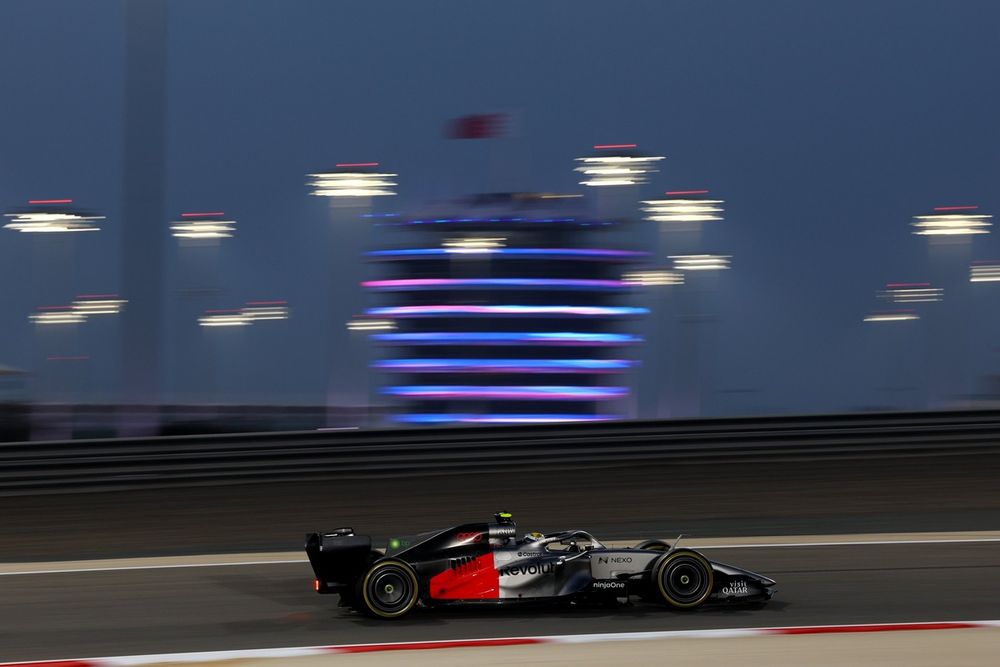
Every car has a unique engine note – but Audi’s 2026 car comes with a unique smell!
Photo by: Zak Mauger / LAT Images via Getty Images
We want to hear from you!
Let us know what you would like to see from us in the future.
– The Autosport.com Team