
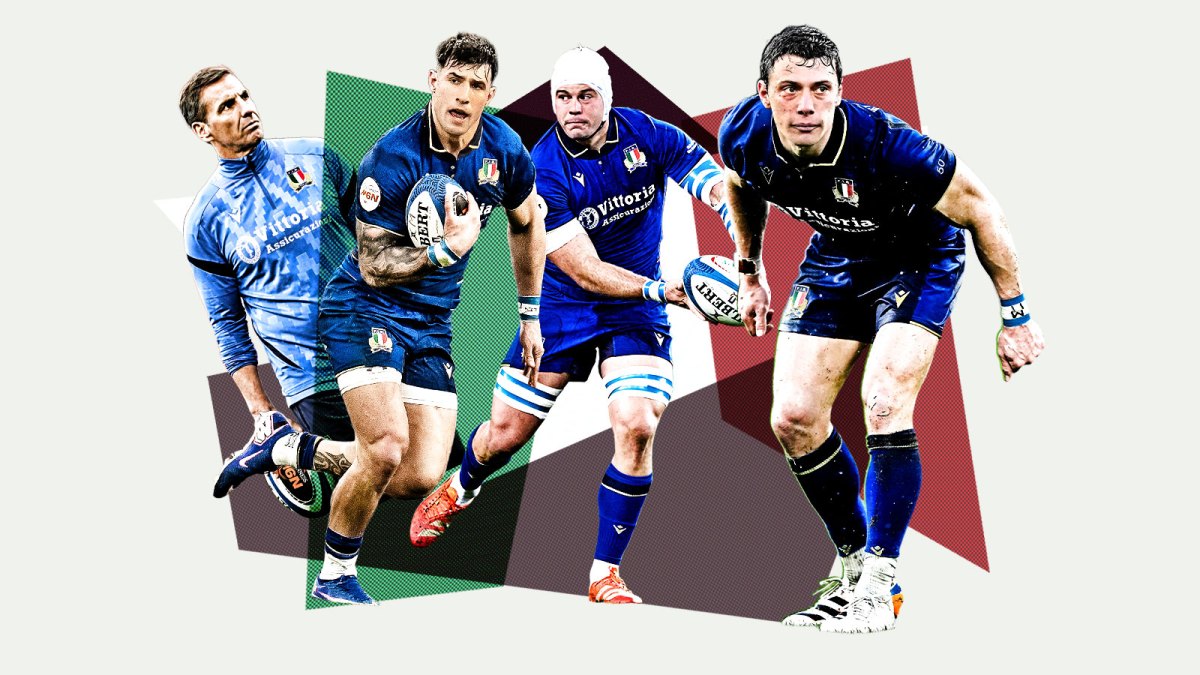
Rassie Erasmus has said a lot of things. One of the bolder prognostications came in November. “Italy will finish two or three in the Six Nations,” the South Africa head coach said. “For me, they are a team that is on the up from what we’ve experienced from them. We didn’t have an easy ride.”
Erasmus volunteered this after the Springboks had beaten Italy twice at home and once away. In Turin and at Loftus Versfeld, the Azzurri had a good crack at their opponents without success. Even now, after they have risen to No9 in the world rankings above Wales and Scotland, it is an adventurous suggestion that Italy could finish higher than fourth in the Six Nations, never previously achieved, but they couldn’t have started much better.
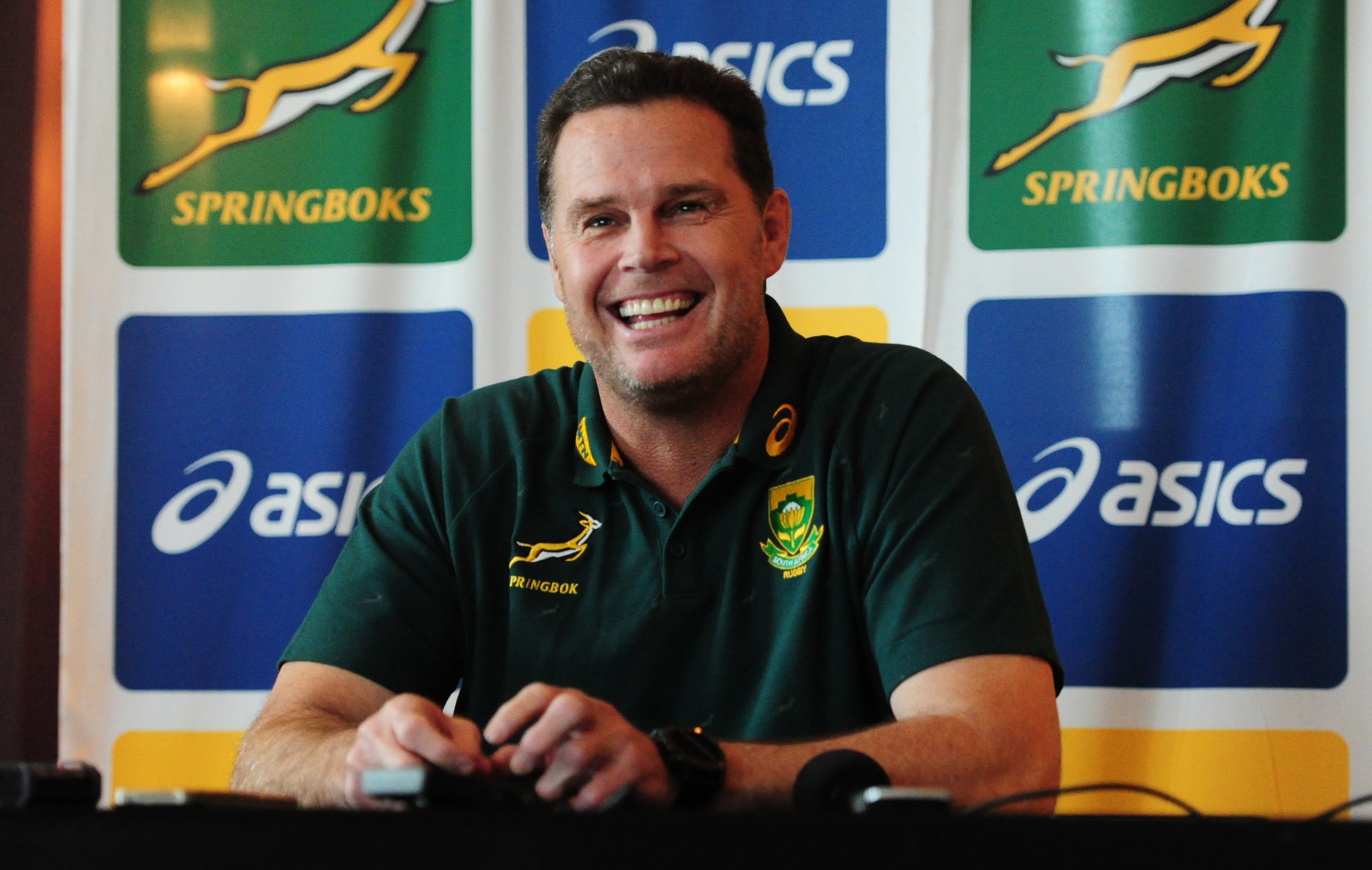
Erasmus was taken aback by Italy’s strong showing against South Africa in the autumn
ATHENA PICTURES/GETTY IMAGES
It is not a sensation with which the Italian rugby team is familiar. Three times it had happened before and the most recent was in 2013, before any of this crop had taken to Test rugby. That sensation is approaching the second round of the Six Nations with a victory secured. Michele Lamaro, the captain, began his tenure in the tradition of his forebears, pontificating on defeat after defeat, but increasingly he has a result to savour. With the 18-15 triumph in Rome against Scotland, Italy have won four and drawn one of their past nine matches in the Six Nations.
The man in charge of this upgrade is Gonzalo Quesada. Argentina and Italy have an established kinship in rugby, represented now by Ignacio Brex at outside centre and their head coach. Quesada has spoken of rediscovering Latin DNA.
The manner in which they destroyed Scotland at scrum time inspired memories of a forgotten Italy, limited out wide but strong up front. The Italy of Martin Castrogiovanni and Andrea Lo Cicero.
However, the manner in which they held on as Scotland pushed for victory — they made 226 tackles, more than twice as many as their opponents, and had only 36 per cent possession — was a new show of resilience. They also dominated despite a lengthy list of absentees: Ange Capuozzo, Tommaso Allan, Marco Riccioni, Sebastian Negri, Ross Vintcent, Martin Page-Relo and Stephen Varney. They were not the weekly gossamer of old.
Intangible as it may be, you wonder whether Italy should never stray from Argentina, France or Italy for their leader. When the nation emerged in the 1990s, Bertrand Fourcade and Georges Coste were in charge. The two best Six Nations campaigns prior to Quesada came under Pierre Berbizier and Jacques Brunel. Other coaches struggled to build on that in the 21st century and even Franco Smith, Scotland’s saviour-in-waiting for his work with Glasgow Warriors, endured a brief tenure of 13 defeats and zero wins.
Where Castrogiovanni and Lo Cicero once ploughed, Simone Ferrari and Danilo Fischetti drove in their tracks, though the wide limitations of 20 years ago are no longer true. In Tommaso Menoncello, they have a genuine star.
Already a Six Nations player of the championship, the centre is set to join Toulouse next season from Benetton. Menoncello is 23 and already has 35 caps, so swift has been his elevation. He remains one of the babies in a squad whose age profile is not too high and not too low. At 33, Brex is the oldest and only three more are north of 30. Brex won his 50th cap last weekend, as did Paolo Garbisi, 25, and Lamaro, 27.
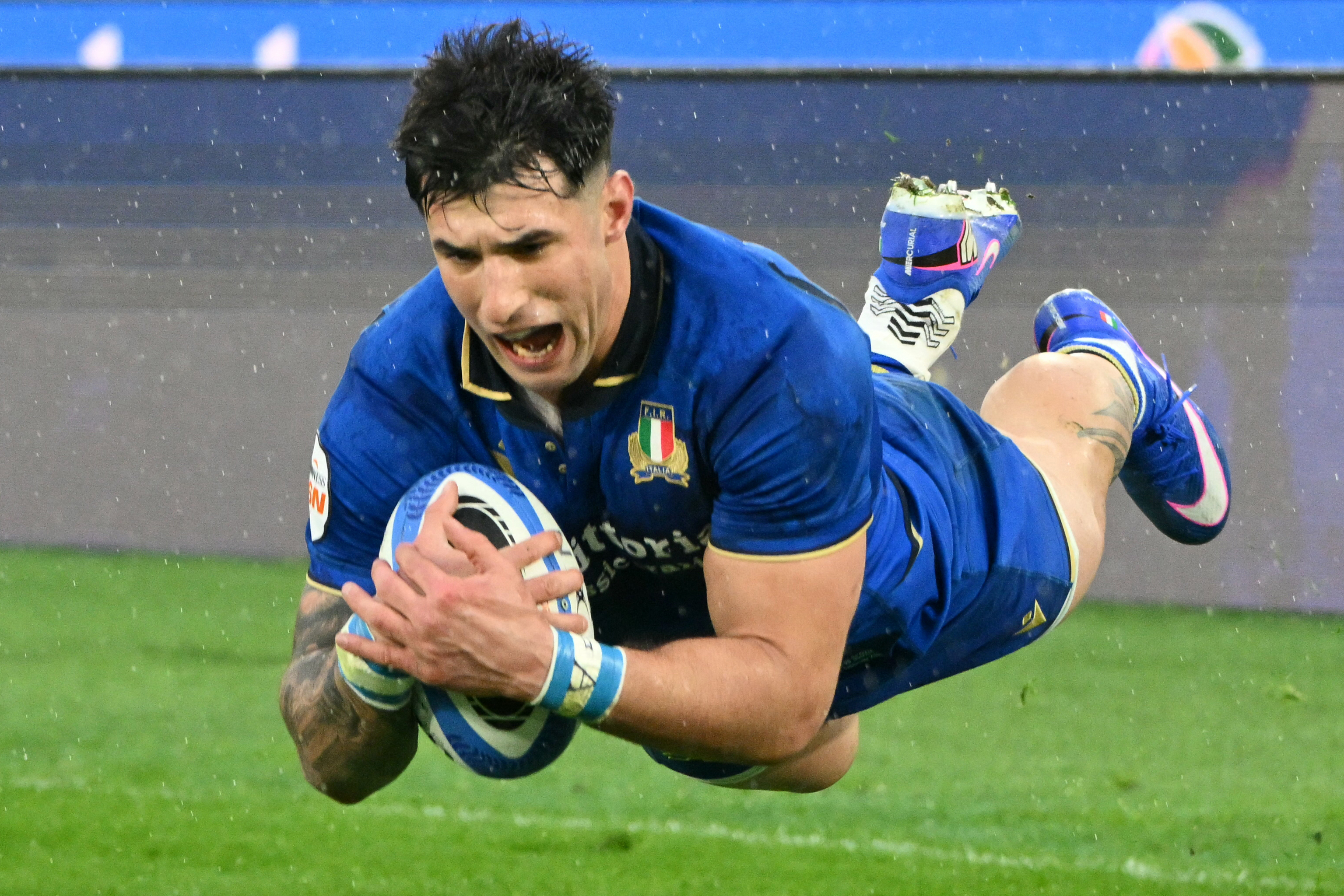
Menoncello touches down for Italy in their 18-15 defeat of Scotland last weekend
ALBERTO PIZZOLI /AFP
Brex’s absence for personal reasons means Menoncello wears No13 on Saturday, with Leonardo Marin shifting up to inside centre and Lorenzo Pani, aged 23 like the midfield combination, coming in at full back. Paolo Odogwu comes on to the bench, which now has a 6:2 split of forwards to backs. David Odiase, another 23-year-old, will cover the back row as No21.
Quesada keeps two or three spots for youngsters at training camps and Edoardo Todaro, the 19-year-old Northampton Saints wing, was a beneficiary in making his debut last autumn, so too Enoch Opoku-Gyamfi, the Bath lock. Todaro might have played last weekend were it not for injury, while Opoku-Gyamfi is back in the under-20s.
We may have reached a moment long promised. A moment where observers view Italy as a threat every week, four years on from the conclusion of a 36-match losing streak in the Six Nations. There are caveats to any talk of a renaissance. Wales’s collapse means Italy are no longer the also-rans, winning three of the past four encounters in that clash. It was only in 2023 that Italy shipped 96 points against New Zealand at the World Cup, and France racked up 73 in last year’s Six Nations. Frailty is still in the rearview mirror.
Almost 30 years have passed since Italy hammered down the door. Between January 1997 and January 1998, they beat Ireland at Lansdowne Road and in Bologna, France in Grenoble and Scotland in Treviso. The Six Nations milestones have dripped through: first wins at home to Scotland (2000), Wales (2003), France (2011) and Ireland (2013), and at Murrayfield (2007) and Cardiff (2022). They have never won a Six Nations match in France (they drew 13-13 in Lille two years ago) or Ireland, and have never beaten England anywhere.
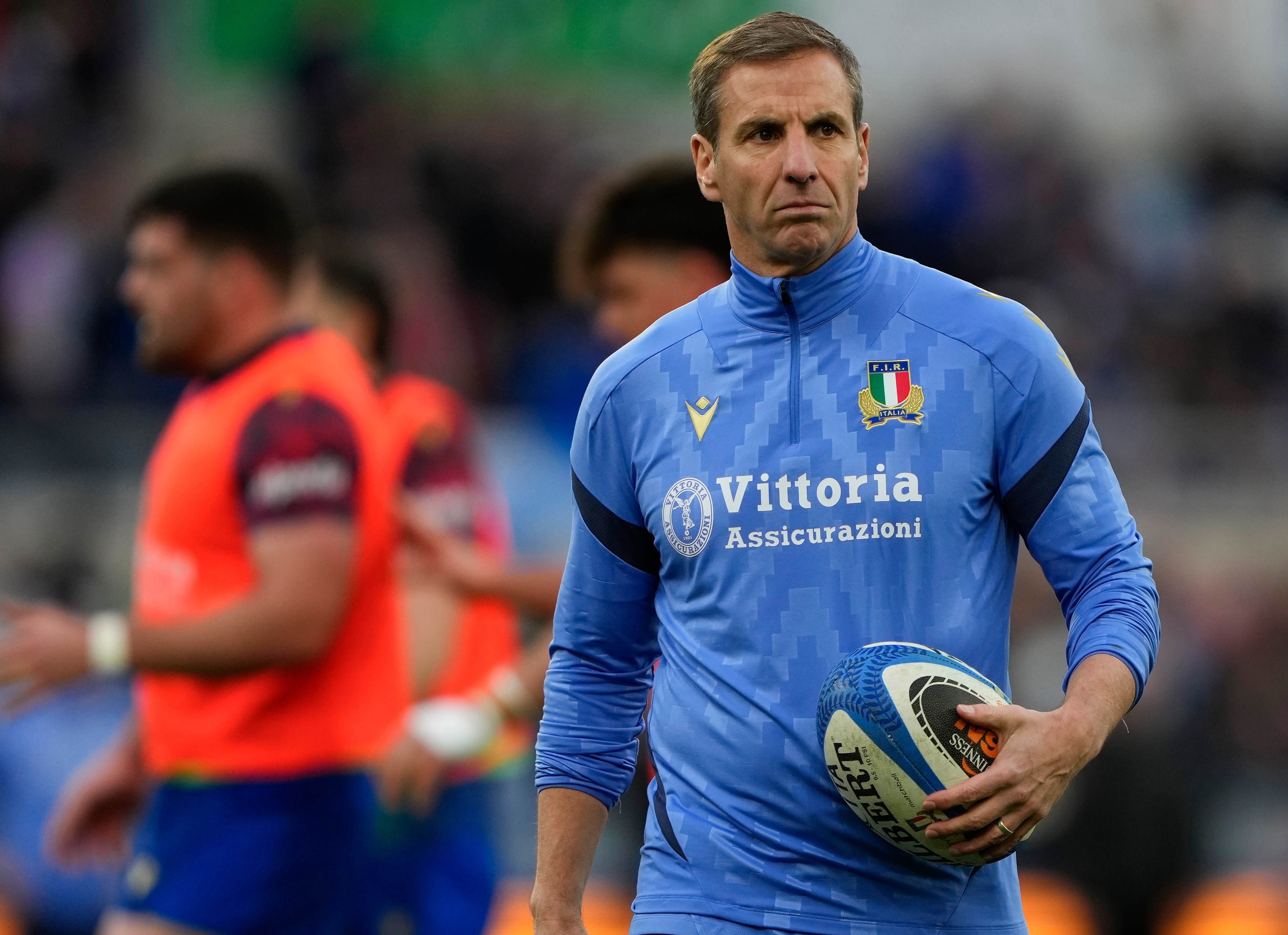
Quesada has history in his sights, though Ireland are 17-point favourites for Saturday’s game
DANILO DI GIOVANNI/GETTY
Saturday’s fixture at Aviva Stadium offers a chance for the latest milestone. Before we go fully Erasmus, let’s remind ourselves that the bookmakers have Ireland as 17-point favourites. Even that, though, is a vast improvement because Dublin has not been kind to Italy: since Lansdowne Road returned as the rebuilt Aviva, the average Six Nations scoreline has been 49-11 in the home team’s favour. But Italy have the spring and Ireland are wounded, dismantled by France and requiring regeneration, showing six changes to their XV.
For Ireland, it is unthinkable that they would lose this weekend. Defeats by Italy have come at cavernous junctures for the national side. Amid talk of doom following the France defeat, David Walsh wrote in these pages about the 1992 tour to New Zealand, when Ireland were smashed by Auckland and Manawatu. They weren’t much better in early 1997, losing to Italy at home not long after they had been beasted by Western Samoa.
By 2013 they weren’t nearly as bad, and still had the coach who had delivered a grand slam. In that fixture, on the final weekend, the team was being kept together by bandages. Peter O’Mahony spent most of the game on the wing and three players received yellow cards as discipline fell apart. Italy won 22-15 in Rome, finishing in fourth, one place above Ireland.
The Ruck Podcast: LiveDon’t miss tough tacklers Courtney Lawes and Serge Betsen on March 9 as they compare notes on France v England and the biggest moments of this year’s Six Nations at Twickenham Stoop. Book tickets here
The 1997 defeat ended Murray Kidd’s stint as head coach and Declan Kidney was sacked within three weeks of the 2013 loss. Andy Farrell will count his lucky stars that his name isn’t Andy Kiddell. He won’t be going anywhere before the third-round visit to Twickenham.
By securing victory at the first opportunity, new possibilities await Italy. Expected to beat Wales on the final weekend, any extras between now and then would place 2026 alongside 2007, 2013 and 2024 as their best campaigns. If Erasmus is proven to be a great sage, then we will be in for something special on Saturday afternoon. Even a tight defeat would represent an improvement, yet they have to aim for more. They are earning the right to be in the conversation.
Ireland v Italy
Aviva Stadium
Saturday, 2.10pm
TV ITV1
How they line upIreland J Osborne; R Baloucoune, G Ringrose, S McCloskey, J Lowe; S Prendergast, C Casey; J Loughman, D Sheehan, T Clarkson, J McCarthy, J Ryan, C Izuchukwu, C Doris, J Conan. Replacements R Kelleher, T O’Toole, T Furlong, E Edogbo, T Beirne, N Timoney, J Gibson-Park, J Crowley.Italy L Pani; L Lynagh, T Menoncello, L Marin; M Ioane; P Garbisi, A Fusco; D Fischetti, G Nicotera, S Ferrari, N Cannone, A Zambonin, M Lamaro, M Zuliani, L Cannone. Replacements T di Bartolomeo, M Spagnolo, M Hasa, F Ruzza, R Favretto, D Odiase, A Garbisi, P Odogwu.