
Open water swimming is becoming increasingly popular.
And now there are 13 proposed designated bathing spots to open across England in May – and one of them, Ham and Kingston, is on the River Thames.
It is set to become the capital’s first river bathing site on the major river.
However, pollution levels in the area could vary and regular tests will determine if the water is safe for use.
Water between the Royal canoe club and where the Kingston parkrun is held will be checked for E. coli and other bacteria.
It will be classified as excellent, good, sufficient or poor to determine how safe the water is for swimming in.
A ‘poor’ result will mean swimmers will be advised to stay away from the water.
Previous tests completed by locals have produced a range of results from ‘excellent’ at times to ones that would fail.
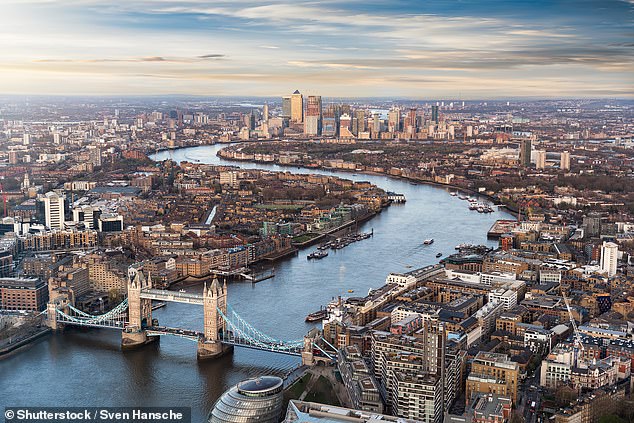
Amongst the 13 proposed designated bathing spots being considered across England, one of them is on the River Thames
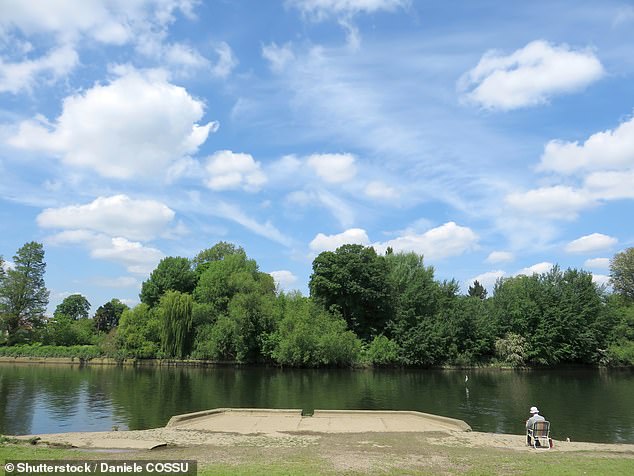
London locals see the possible Ham and Kingston bathing site (pictured) as a ‘celebration’ of the river and hope it will lead it to being a ‘place for recreation’
Local resident and founder of Outdoor Swimming magazine Simon Griffiths told The Times: ‘We know it can be excellent here but we also know that it can be very bad, particularly after a heavy rainstorm and we get the storm overflows [which release sewage spills].
‘If it’s not meeting bathing water standards, then we can identify what is causing the problem and hopefully take some action to fix it.’
Ham and Kingston is one of 13 bathing areas that are being considered across England before opening in May.
Some of the other potential sites are Little Shore, Amble, Northumberland, Canvey Island Foreshore, Essex, and River Dee at Sandy Lane, in Chester.
London locals see the possible Ham and Kingston bathing site as a ‘celebration’ of the river and hope it will lead it to being a ‘place for recreation’ instead of somewhere to dispose of sewage.
In 1957, the Thames was so polluted it was declared ‘biologically dead’ by the Natural History Museum.
The Thames has come a long way since then and research by the Zoological Society of London in 2021 found an increase in a range of bird species, marine mammals and natural habitats such as carbon-capturing saltmarsh – a crucial habitat for a range of wildlife.
But the study also revealed the impact of climate change and temperature rises, as well as plastic waste and litter.
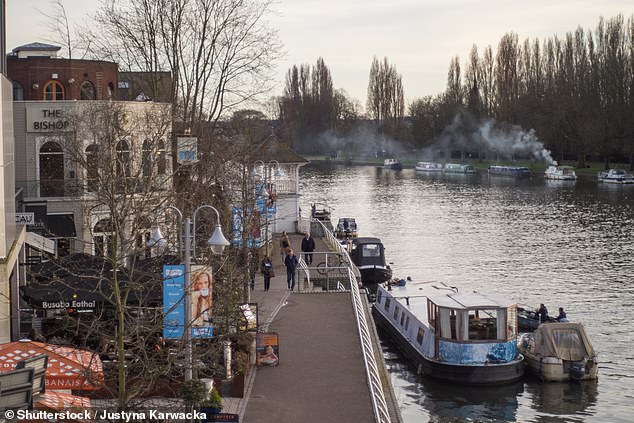
However, pollution levels in the area could vary and regular tests will determine if the water is safe for use
Just last year, a group of Olympic and world-class swimmers were forced to halt a swim raising awareness of river pollution after they found raw sewage in the water.
Athletes from across England, Scotland, Wales and Northern Ireland set off on the Thames Swim Against Sewage in a bid to highlight the crisis affecting the UK’s waterways.
The challenge saw eight swimmers take part in a 200km nonstop relay down the River Thames, from Lechlade to Westminster.
However, when they arrived at Henley, the group was forced to stop the swim after readings showed there was a dangerous amount of harmful bacteria such as E. coli in the water caused by overflowing raw sewage.
The pollution concerns meant the swimmers had to skip about 15 kilometres of the route, while a young boy, who had patiently been waiting for his family to join in with the swim, also had his hopes crushed.
Share or comment on this article:
Would YOU swim in the Thames? Bathers will be able to take a dip from May – but pollution levels could vary