
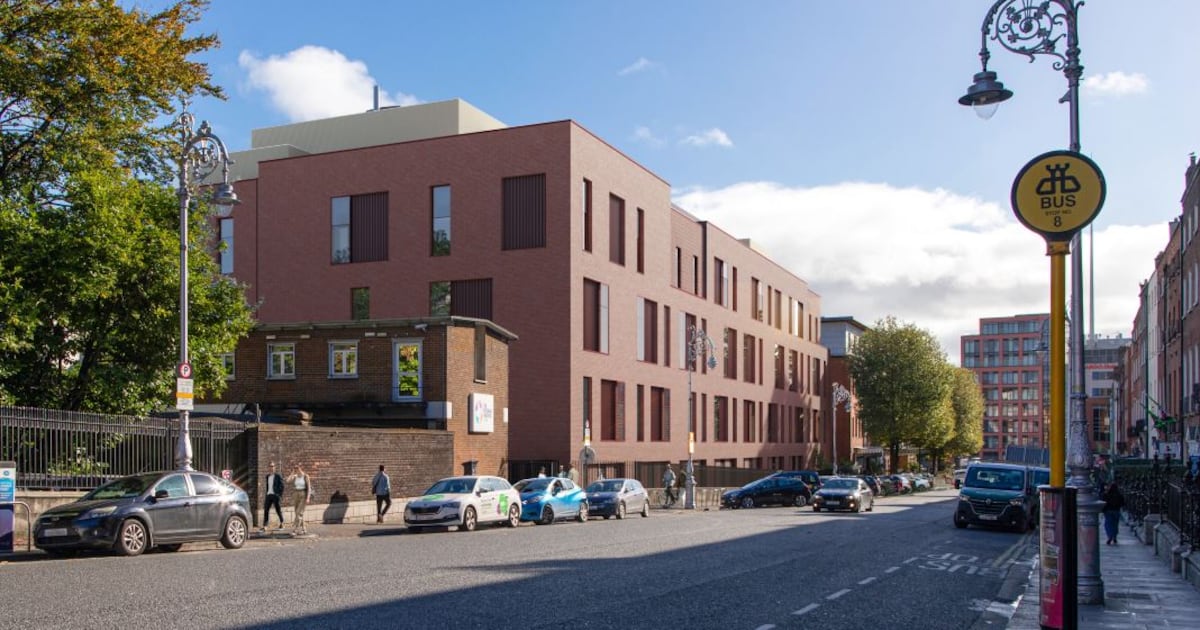
An Coimisiún Pleanála has struck down plans for a €100 million extension of the Rotunda Hospital intended to care for critically ill women and infants. It decided the four-storey critical care building would cause irreparable damage to the character of Parnell Square.
Planning permission was originally granted by Dublin City Council in late July 2025, but was appealed to An Coimisiún Pleanála by two third parties.
The proposed new critical care wing was envisaged to provide nearly 10,000sq m of additional gross floor area and would contain 80 additional hospital bedrooms, including a 16-bed labour ward and a 20-bed neonatal intensive care unit.
A 25-bed special care baby unit was also included in the planning application, alongside a 19-bed postnatal unit, a new operating theatre and additional healthcare facilities. The construction would necessitate the demolition of a one-storey outpatient building to be replaced by the four-storey critical care wing.
While the Rotunda is partly based in the O’Connell Street Architectural Conservation Area, the city council inspectors noted that changes to protected structures did not involve the development of any new gross floor area, a change of medical use or changes to the external facades.
Permission had been granted following a request for further information, but An Coimisiún Pleanála subsequently received two objections to the plan – one from the Dubin Civic Trust, an architectural conservation society, and another from nearby resident of a Georgian home and conservationist, John Aboud.
Both objectors were invited to visit the hospital by management.
The appellants contended that the development would impact the character of Parnell Square and would not represent the limited expansion permitted within Georgian Conservation areas.
The planning commission agreed with the appellants that the development would not represent the “limited expansion” and would fail to protect the “existing architectural and civic design character of the site, or Parnell Square generally”.
The construction of the wing, it said, “would encroach upon and further compromise the architectural and historical integrity of Parnell Square”, which it said was one of five Georgian Squares in Dublin, “recognised for their spatial relationships between the buildings and open space”.
The development, it contended, would “fundamentally alter [the square’s] character by creating a street frontage along the majority of the west side of the square, thus changing its composition and its relationship with the adjacent protected 18th-century houses opposite, and failing to respect the historic urban character and built heritage of the surrounding area”.
Disagreeing with its own inspector’s report, the appeals board said the proposed development did not represent “an overwhelming public benefit sufficient to justify the degree of heritage harm identified”.
The board noted that Government policy was to co-locate the Rotunda with Connolly Hospital in Blanchardstown in the medium term, “by which time the adverse impact caused by the development, as proposed, to the character and setting of protected structures and the Georgian Conservation Area, could not be undone”.
In October 2025, the master of the Rotunda, Prof Sean Daly, urged the Government to “review the planning process, with respect to healthcare-related infrastructure, where delays are costly both in human and financial terms”.
The Rotunda warned that planning objections could delay the development of a new wing for critically ill women and infants. It said this would result in “significant risk in terms of providing optimum care” to patients transferred to it from all over the State.