
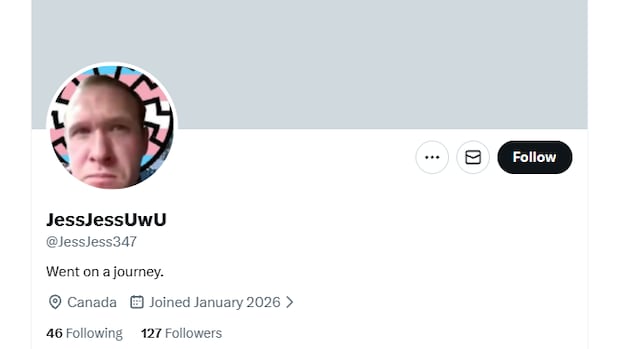
A social media account that some initially believed belonged to the Tumbler Ridge shooter turned out to be a fraud — and even briefly fooled a prominent non-profit organization.
The username and display name on the X profile, which featured numerous racist, white supremacist and antisemitic posts, appeared to match the ones on a YouTube channel belonging to the person RCMP identified as the shooter, 18-year-old Jesse Van Rootselaar.
People online used the YouTube account in their efforts to find the suspect and uncover possible motivations for Tuesday’s mass shooting in a northeastern B.C. town that left eight people dead and two more seriously injured. Police said the shooter also died by suicide.
The New York-based Anti-Defamation League (ADL) published a report Wednesday that initially referenced the X profile and said the shooter had an interest in “gore, guns, and white supremacy.”
But the X account, which was soon removed, turned out to be somebody pretending to be the shooter.
Disinformation experts told CBC News that intentionally spreading false information, especially in the wake of tragedies like mass shootings, can not only harm victims, but also further marginalize already vulnerable groups and contribute to polarization.
“We often take the information that we see and we allow it to enter into some preconceived notions we have about others without us actually knowing if the information is accurate,” said Valérie Kindarji, a visiting researcher at The Montreal Centre for International Studies who focuses on the impacts of disinformation on democracies.
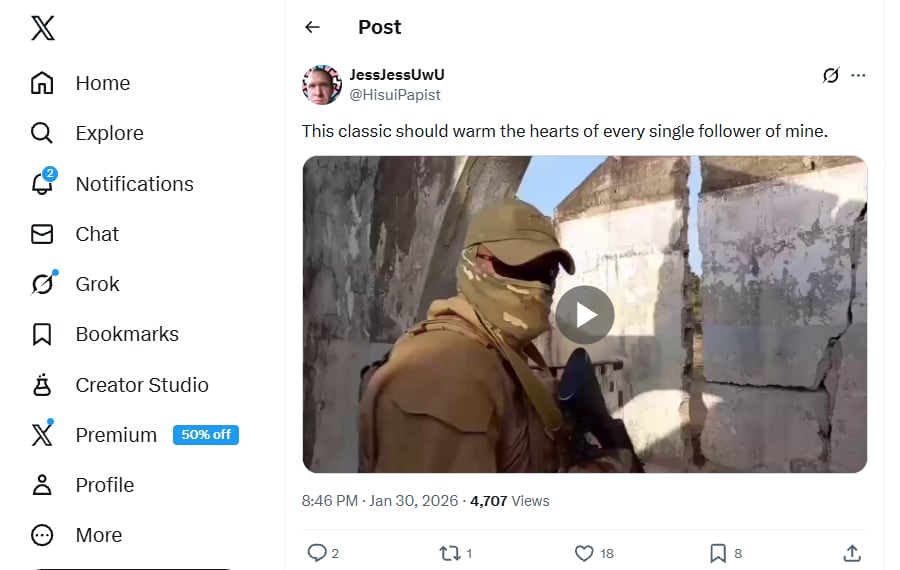 Some posts on the X account impersonating the shooter showed the user’s past handle, @HisuiPapist (HisuiPapist/X)
The posts on the fake X account included graphic videos that showed Black people being beaten or killed, an AI-generated short of an animated Muslim woman being whipped and a white supremacist training video with the caption, “The 2nd civil war is coming.”
But on Wednesday, a day after the shooting, some posts from that account appeared to have a different username (@HisuiPapist) suggesting that whoever owned it had changed the name to match the YouTube account in an apparent effort to impersonate the shooter.
The fraudulent X account was suspended by the platform late Wednesday afternoon, but it’s unclear on what grounds. Under X’s policies, “excessively gory” content or explicitly “glorifying, or expressing desire for violence is not allowed.” Neither is impersonating individuals “to mislead, confuse, or deceive others.”
Later that night, a new X account also named @HisuiPapist made a post that bragged, “THE ADL THOUGHT MY ACCOUNT WAS REAL LMAO.”
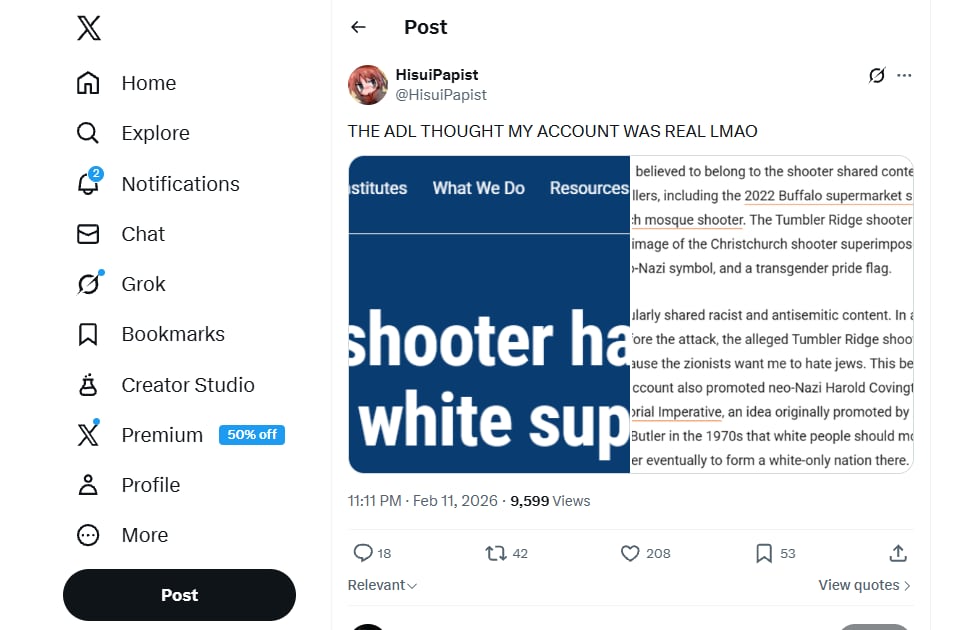 An X user posts screenshots of an Anti-Defamation League article they say they tricked into believing their account belonged to the Tumbler Ridge shooter. (HisuiPapist/X)ADL issues correction
The ADL, a prominent nonprofit organization founded to combat antisemitism, did not respond to a request for comment.
However, it did issue a correction Thursday afternoon after being contacted by CBC. The organization removed “white supremacy” from the headline and wrote that, “Upon further investigation, that X account has been found not credible.”
An article published on the Canadian Jewish News based on the ADL report’s analysis of the X account had been removed as of Thursday evening, and a Jerusalem Post article also based on the report now leads with the ADL’s retraction.
In an email to CBC News on Friday, The Canadian Jewish News said the article was syndicated from the wire service Jewish Telegraphic Agency, and that they stand by their decision to remove the article from their website given the inaccuracies.
Esli Chan, a senior research fellow at the Centre for Media, Technology and Democracy’s Media Ecosystem Observatory, says the public should be “wary” of untrue information online created by those seeking to monetize views or attract attention by “intentionally trying to be controversial.”
 Esli Chan, a senior research fellow at the Centre for Media, Technology and Democracy’s Media Ecosystem Observatory, says people should be ‘wary’ of false information online created by bad actors. (Submitted by Esli Chan)
“A lot of the information out there isn’t being distributed out of goodwill. It’s being distributed because people want a degree of attention online,” said Chan, a doctoral candidate at McGill University.
How the hoax happened
The ruse became possible after people found the Facebook page belonging to the shooter’s mother, Jennifer Strang, identified by police using her legal name, Jennifer Jacobs. She was also among those killed on Tuesday.
In a post from 2021, Strang publicly shared Van Rootselaar’s YouTube channel, noting that Van Rootselaar “doesn’t go on much other social media.”
That account was taken down by YouTube within a day of the shooting.
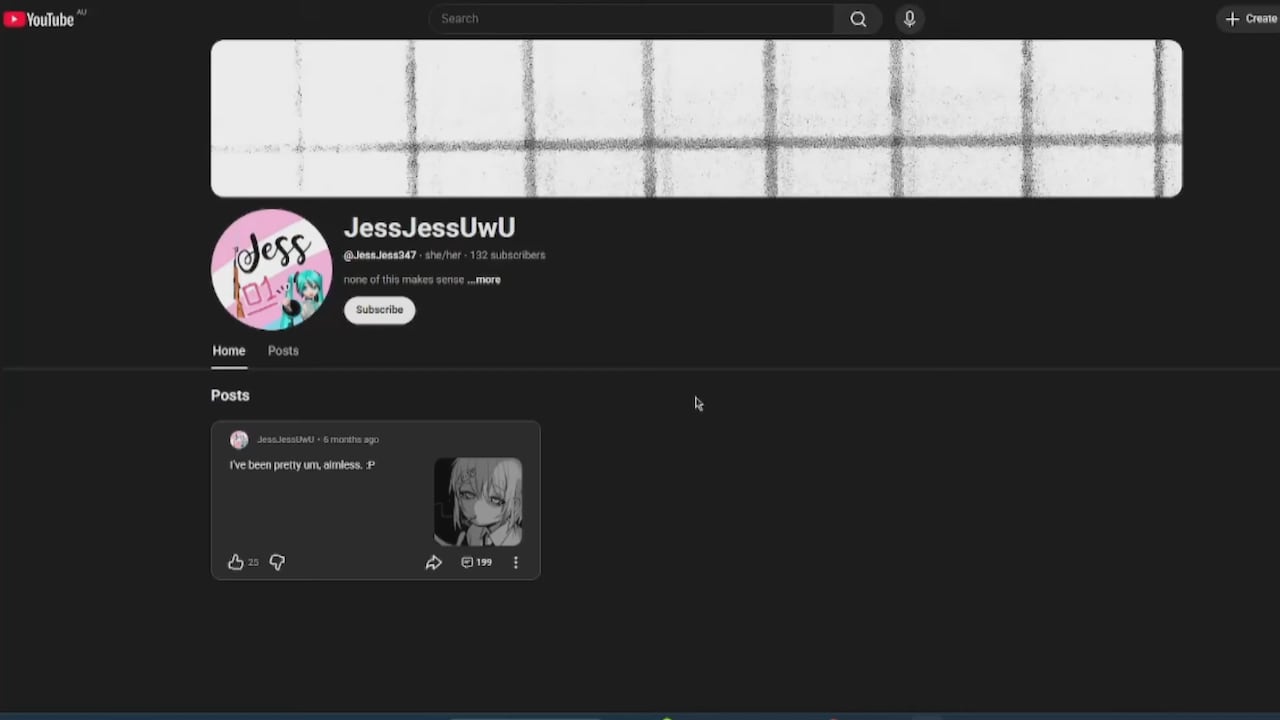 This YouTube channel linked to the Tumbler Ridge shooter was taken down the day after the mass shooting. (JessJess347/YouTube)
In a statement to CBC News, YouTube said that it removed a channel “associated with the alleged suspect in accordance with our Creator Responsibility Guidelines.”
But a digital archive of the YouTube account showed a profile name and handle that matched the X profile, which was created in January.
It’s not clear who the X accounts really belong to.
Sometimes, ‘it’s just a troll’
Kindarji says her initial impression was that while the person behind the X account might have an ideological agenda, they “might also just be bored.”
“We have this conception of disinformation that it’s usually done by these shadowy actors with strategic goals. But sometimes, the reality is so banal. It’s just a troll.”
Still, regardless of intention, she says the effects are the same — disinformation shifts how we perceive other groups by leveraging our desire for easy answers over nuanced explanations.
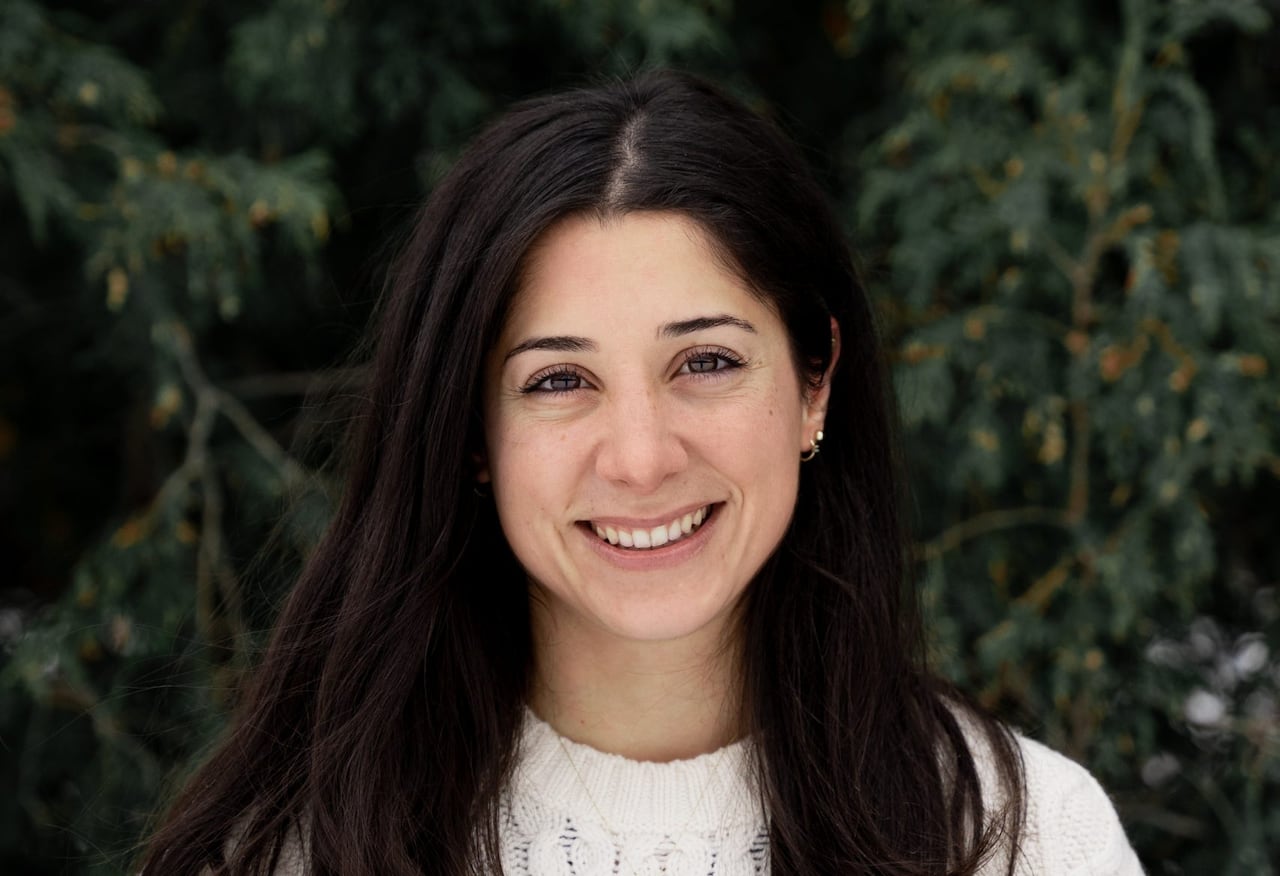 Valérie Kindarji, a visiting researcher at The Montreal Centre for International Studies, says disinformation stories spread when everyday people engage with them. (Ashley Delaney)
“It makes us think that other people are a lot more extreme than they are.”
A 2018 MIT study found that falsehoods were “70 per cent more likely to be retweeted,” with false news travelling about six times faster than the truth.
“We often forget that we are not only consumers of information, but we also contribute to the online information ecosystem,” said Kindarji.
“If a disinformation story spreads … it’s because people are clicking and people are engaging with it, and we all have a role to play in that.”
The increased scrutiny and speculation can also be “really overwhelming” for a small community like Tumbler Ridge, says Chan.
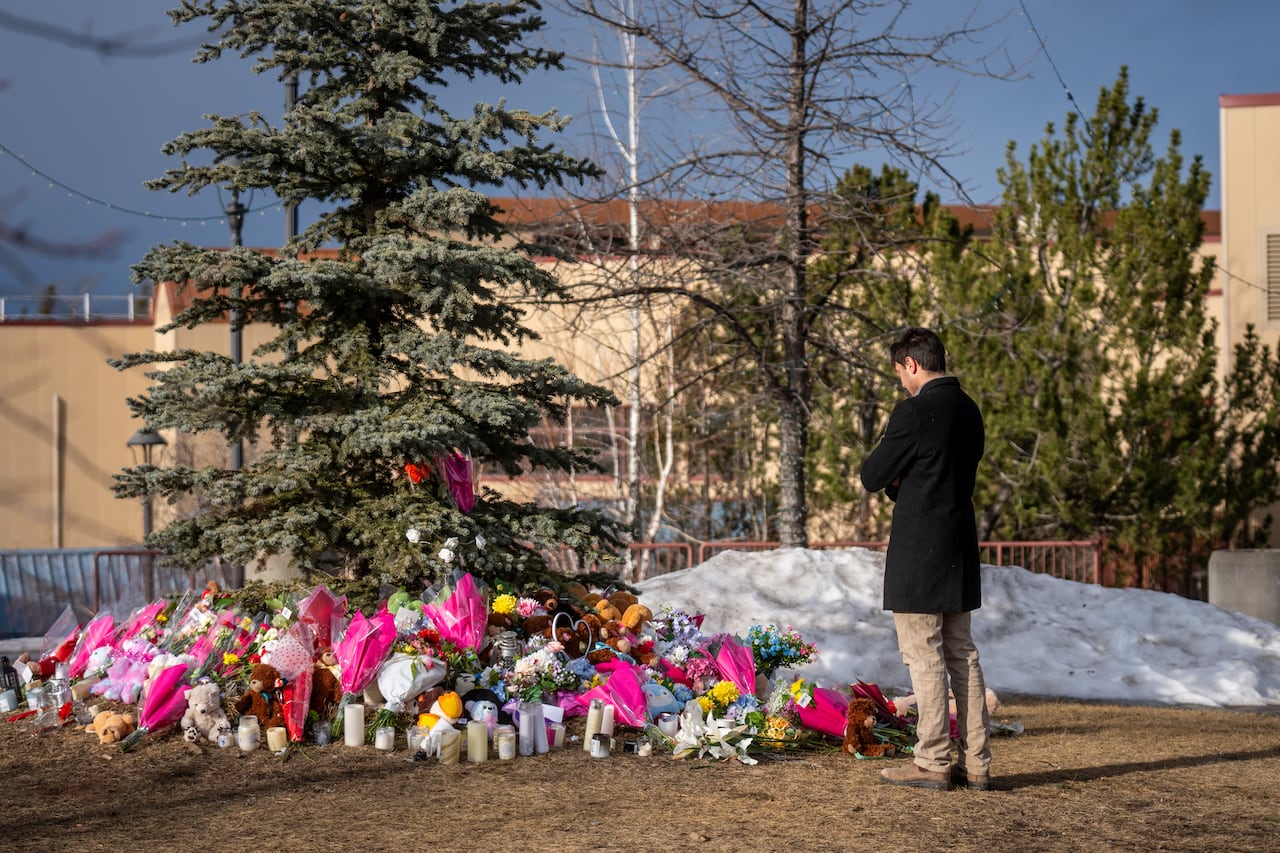 A memorial to the victims of the Tumbler Ridge Secondary School shooting is pictured n Tumbler Ridge, British Columbia, on Thursday, Feb. 12, 2026. (Ben Nelms/CBC)
She pointed out that a transgender Ontario woman was misidentified as the suspect in the hours following the shooting.
The woman’s photo went viral and was picked up by several news outlets, including Radio-Canada, which removed the photo and issued a correction on Thursday.
The woman’s mother told Agence France-Presse that her daughter was “devastated” by the situation and was afraid to go outside after being misidentified.
Chan says the rush to amplify unverified claims about the shooter to support a political narrative is “particularly dangerous in this scenario when we have a historically marginalized community being implicated.”
Wait for verified information
According to Kindarji, the viral spread of false or misleading information about the Tumbler Ridge shooting is a symptom of “how impatient we’re becoming.”
She encourages people to “take a beat and wait” until verified, official information is released.
“The reason why information trickles slowly from institutions, from news organizations, from police … is because they have processes in place to validate and to check the information before publicizing it. There are no incentives for people online to do the same.”
WATCH | Avoiding online speculation in the wake of a mass shooting: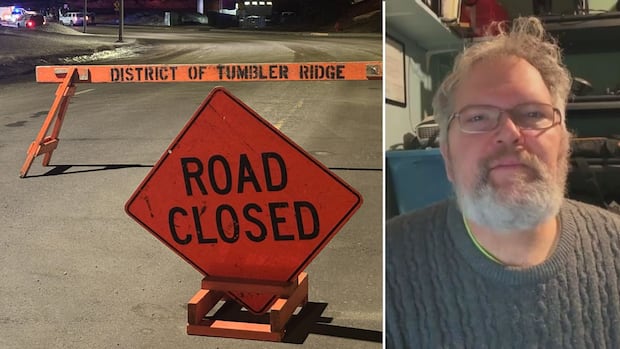
Tumbler Ridge journalist on sticking to facts amid online ‘murk’
Trent Ernst of Tumbler RidgeLines, who livestreamed from Tumbler Ridge, B.C., amid the active shooter situation, says discussions online can devolve into ‘finger-pointing and recrimination,’ so he’s doing his best to avoid ‘getting involved in any of the speculation.’ (UPDATE FEB. 11, 2026 | RCMP on Wednesday provided an updated death toll for the mass shooting on Tuesday in Tumbler Ridge, B.C., saying that there were a total of nine dead, including the suspected shooter, not 10 as initially reported.)
As of Thursday night, the new @HisuiPapist account was still live and had boasted that it made over half a million people “believe Jesse Strang was a nazi.”
A different X account that matches Van Rootselaar’s original YouTube username is still online but has no posts and no activity since 2020.