
In the early summer of 2019, Spokane real estate magnate Harlan Douglass walked into the office he founded decades earlier, and stood still.
He was lost.
Douglass, who with his late wife, Maxine, built a billion-dollar real estate empire, struggled that day to find his office. His longtime employee, Deanna Malcom, stood up and reached out.
“I walked him, by hand, to his office,” Malcom said. “Then we both cried for a while.
“I had never been around anyone with dementia. It was so hard watching someone you loved, who you looked up to, decline.”
Several months earlier, two of Douglass’ adult children, Lanzce Douglass and Stacey Douglass Boies, found a way back into their father’s life after a decade of estrangement.
It’s also when Harlan, who died in 2023, cut contact with his eldest son, Harley, with who m he had worked for years.
Harley helped his parents for some of the five decades they built a financial empire of several hundred properties that currently generate millions of dollars every month in rent and lease payments, according to court records.
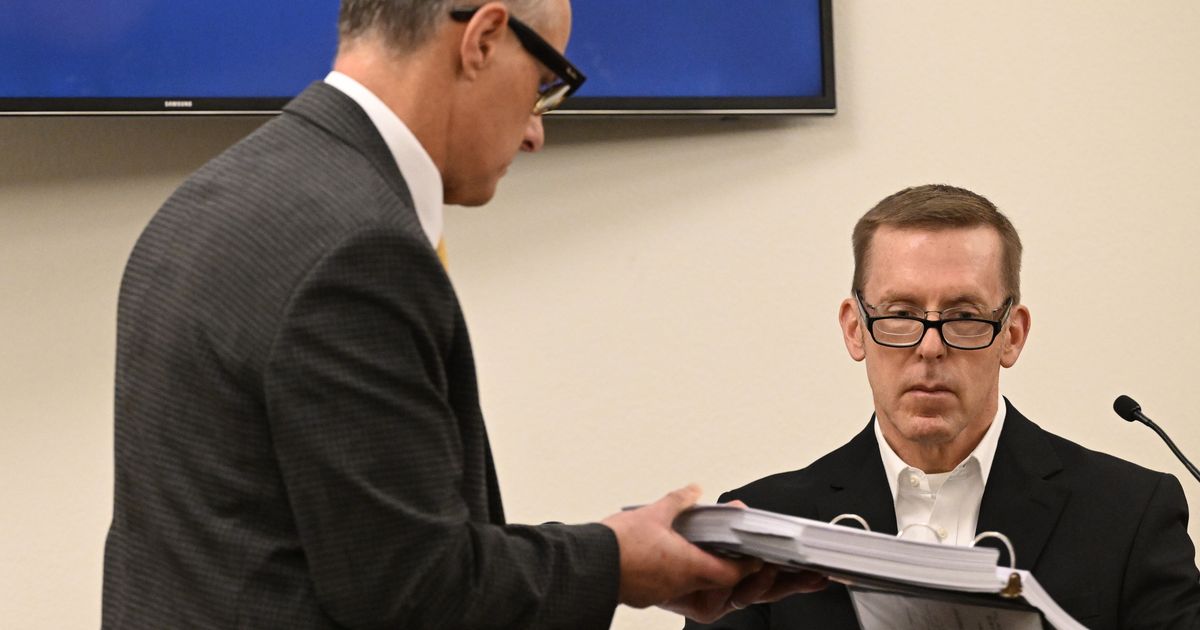
Those changing relationships are now at the heart of a legal fight, currently in a weekslong trial in Spokane County Superior Court, that offers a rare window into the inner workings of one of Spokane’s most powerful families as the siblings seek to secure sums of money that most Lilac City residents would find unimaginable.
The trial, before Superior Court Judge Jacquelyn High-Edward, centers on the circumstances by which Harlan Douglass changed his will in 2019.
Two meetings in the spring of that year shaped the current dispute.
Lanzce and Stacey joined Harlan on April 22, 2019, at the Tacoma office of a lawyer Lanzce hired, where Harlan signed documents that gifted Lancze and Stacey promissory notes valued at $45.9 million each, and other notes that gave $13.9 million to each of the siblings’ five children.
The notes, totaling $155 million, would be payable upon Harlan’s death. But other documents, signed by Harlan, also made Lanzce and Stacey his durable powers of attorney.
In a second later meeting with those two siblings, Harlan then signed documents to void an earlier will that would have split his estate, estimated in court testimony to be valued between $600 and $700 million, equally among Lanzce, Stacey and eldest son Harley.
The new will, signed in May 2019, changed those shares each child would receive.
The updated will provided 65%, or more than $400 million, to Lanzce, and 35%, or more than $200 million, to Stacey. Any other monies from investments or life insurance policies would be split evenly between Lanzce and Stacey.
Harley wasn’t invited to either of those 2019 meetings where documents were signed by his father, who was diagnosed with vascular dementia and Alzheimer’s disease, according to court records.
But Harley wasn’t left out of the new will that was signed in the presence of Lanzce and Stacey.
The new will left Harley $1,000.
The current lawsuit, filed by Harley, seeks High-Edward’s approval to revert to their father’s earlier will, signed in 2018, which would have split his estate equally between his three children.
“The evidence will establish that during a year-long scheme ending in August of 2019, Lanzce and Stacey executed (a) plan, the goal of which was to gain control of not only their father’s estate, but of their mother’s as well,” attorney Steven Hassing wrote in court records. “In his diminished state, Harlan could no longer distinguish the truth from the lies Lanzce and Stacey were telling.
“By exploiting his cognitive impairment, Lanzce and Stacey succeeded in turning their father against the one child with whom he had consistently shared a genuine and enduring relationship.”
But attorneys for Lanzce and Stacey, Jason Burnett and Karolyn Hicks, have put forth an argument that essentially is “prove it.”
“Harley will not be able to prove these claims because he lacks sufficient evidence to prove that Harlan D. Douglass executed his May 2, 2019, will under the undue influence of Lanzce, Stacey or Jeri Via, or that Harlan was fraudulently induced by any of these parties,” Hicks and Burnett wrote. Via became Harlan’s partner after Maxine died.
“Rather … the May 2019 will reflects Harlan’s intent to treat his children differently based on substantial lifetime gifts to Harley, and Harlan’s ever-fluctuating relationships with his three children.”
‘Crush you’
Harlan died on Nov. 26, 2023, at the age of 86. He was born in Electric City, Washington.
His mother was a schoolteacher, and his father, Harold Douglass, helped build Grand Coulee Dam. After falling and breaking his back, Harold moved the family to Spokane where the patriarch started a home-foundation business.
“That’s how my dad was exposed to construction people,” Harley said in a 2023 interview. “He always admired people who were in construction. He made more money on his first house than his dad made in a year of putting in foundations.”
Harlan became friends with another home builder, Vern Ziegler, who founded Ziegler Lumber, which later changed its name to Ziggy’s. Ziegler’s wife, Mary, worked with Maxine Hilby.
She set up Maxine with Harlan on a blind date, Harley said. The new couple married on Nov. 14, 1959.
Maxine died on Nov. 14, 2016, on the couple’s 57th wedding anniversary. She spent her last several years in a care facility as she battled Alzheimer’s.
“My mom and dad were totally self-made,” Harley said. “Both came from parents who didn’t make a lot of money. But they both worked together as a team. They were always unified. They had plenty of hard times.”
In court testimony, Lanzce said he worked during his high school years for his father, a bare-knuckle brawler of a businessman who had an eye for turning properties into profitable ventures.
“He was not a really affectionate person. He was more passionate about his business,” Lanzce testified. “He took things very personally.”
Asked whether Harlan displayed anger, Lanzce replied: “He had no problem showing you that one.” Just not “affection, love, that type of stuff.”
After graduating from Washington State University with a degree in construction management, Lanzce said he found himself in his father’s crosshairs.
“From his perspective, I think he did think I was a competitor,” Lanzce said.
The founder of Lanzce Douglass Properties, which is separate from his father’s Douglass Properties, noted that Harlan kept track of how many properties Lanzce owned and how many apartments he rented.
“He definitely was not someone you wanted to slight or have him perceive a slight,” Lanzce said. “He would do whatever he needed to do to crush you.”
As a result of his father’s aggressive business tactics, Lanzce said he sought projects in Ellensburg, Olympia and Tacoma.
“He wouldn’t follow me over there,” he said. “It was safe to build there.”
The two men had a falling -out in 2008 and largely did not communicate until Via reached out to Lanzce in 2016, he said.
“That was the start of the thaw,” Lanzce said, referring to his relationship with Harlan.
Stacey Douglass Boles testified that she used to work with her father at Douglass Properties until they had a disagreement.
Asked why she became estranged from her father, Stacey said: “Because he didn’t like me.”
Harlan fired Stacey from the business in 2008.
“He told me, ‘You can babysit your mother’ ” who had been diagnosed with Alzheimer’s.
After years of not returning a single phone call, text or written correspondence, Harlan came back into her life.
“He invited me to the Christmas party in 2018,” Stacey said.
Lisa Bonnett Douglass, Harley’s wife, testified about how Harlan had earlier implored her to come back to work at Douglass Properties after he fired Rachel Murphy, his office manager, in 2017.
Lisa said she would be available to help out but remained reluctant to commit full time because she had her own career and family.
“He had already done so much for Harley,” she said of Harlan.
She also testified that Harlan several times had told her that he wanted Harley more involved because he stood to take over the company. But Harlan never specified a date for that transfer.
Then the day after Thanksgiving 2018, Lisa was, at Harlan’s request, helping clean out an apartment where Maxine’s sister had lived when she got a phone call from Harlan.
“He asked me, ‘What are you up to? I know you are up to something,’ ” she testified. “I was kind of taken aback by it.”
Hassing, the attorney, asked Lisa: “Did you ever hear from Harlan again?”
She replied: “No.”
Second legal defeat
The legal fight over Harlan’s will is the second time Lanzce tried to largely write Harley out of the family inheritance.
While Harlan’s will was signed in May 2019, an earlier lawsuit centered on Lanzce’s effort in August 2019 to alter how much the siblings received from Maxine’s will.
Prior to that case, Maxine wrote a will in 2008 that split the estate in half: Harlan would retain one half, and the rest would be given to her three children. Harley would receive 50%, Stacey 40% and Lanzce 10%.
Then in August 2019, Lanzce hired Seattle attorney Michael Murphy to draw up what was later referred to as the “Hamilton Deed.”
Lanzce took what Murphy wrote, transferred the writing onto Harlan’s letterhead, and then had his father sign it, according to court records.
During the signing on Aug. 14, 2019, witnesses said that Harlan kept falling asleep and didn’t always appear to follow what was happening, according to court records.
The deed was signed, transferring much of Maxine’s estate to Stacey and Lanzce and removing Harley as a beneficiary.
Spokane County Superior Court Judge Raymond Clary in 2023 ruled in favor of Harley’s challenge to that deed, writing: “Lanzce Douglass, with the help of his attorney, Michael Murphy, conceived of a plan to disinherit Harley Douglass through the powers of the Special Trustee, Thomas Hamilton, and certain staged documents.
“The scheme was not only shown by the totality of the evidence,” Clary continued, “but it was clear, convincing, and inescapable.”
On Tuesday, while witnesses were testifying in the case regarding Harlan’s will, appellate judges from the Washington State Division III Court of Appeals released their decision denying Lanzce’s appeal of Clary’s earlier ruling.
As part of the same decision, appellate judges also approved attorney fees for Hassing, who represented Harley then and now, totaling about $600,000.
In that trial over Maxine’s will that occurred in the fall of 2022, Lanzce claimed he wasn’t upset that his portion of the inheritance from Maxine’s trust was just 10%, compared to Harley’s 50% and Stacey’s 40%.
“I was grateful to get anything out of it because I was always raised that we weren’t going to get anything, and if that if we were ever going to amount to anything or accumulate anything in this life, we had to earn it ourselves and not be waiting for Mom and Daddy to give us money,” Lanzce testified.
But Judge Clary wrote he didn’t buy Lanzce’s explanation for why Harlan wanted the transfer “both because of his interest in the deed and because of his demeanor at trial and actions following the Aug. 14, 2019, deed demonstrate that the deed was part of his plan to gain $200 million dollars, plus or minus.”
The trial pitting the siblings against each other over Harlan’s estate continues next week.