
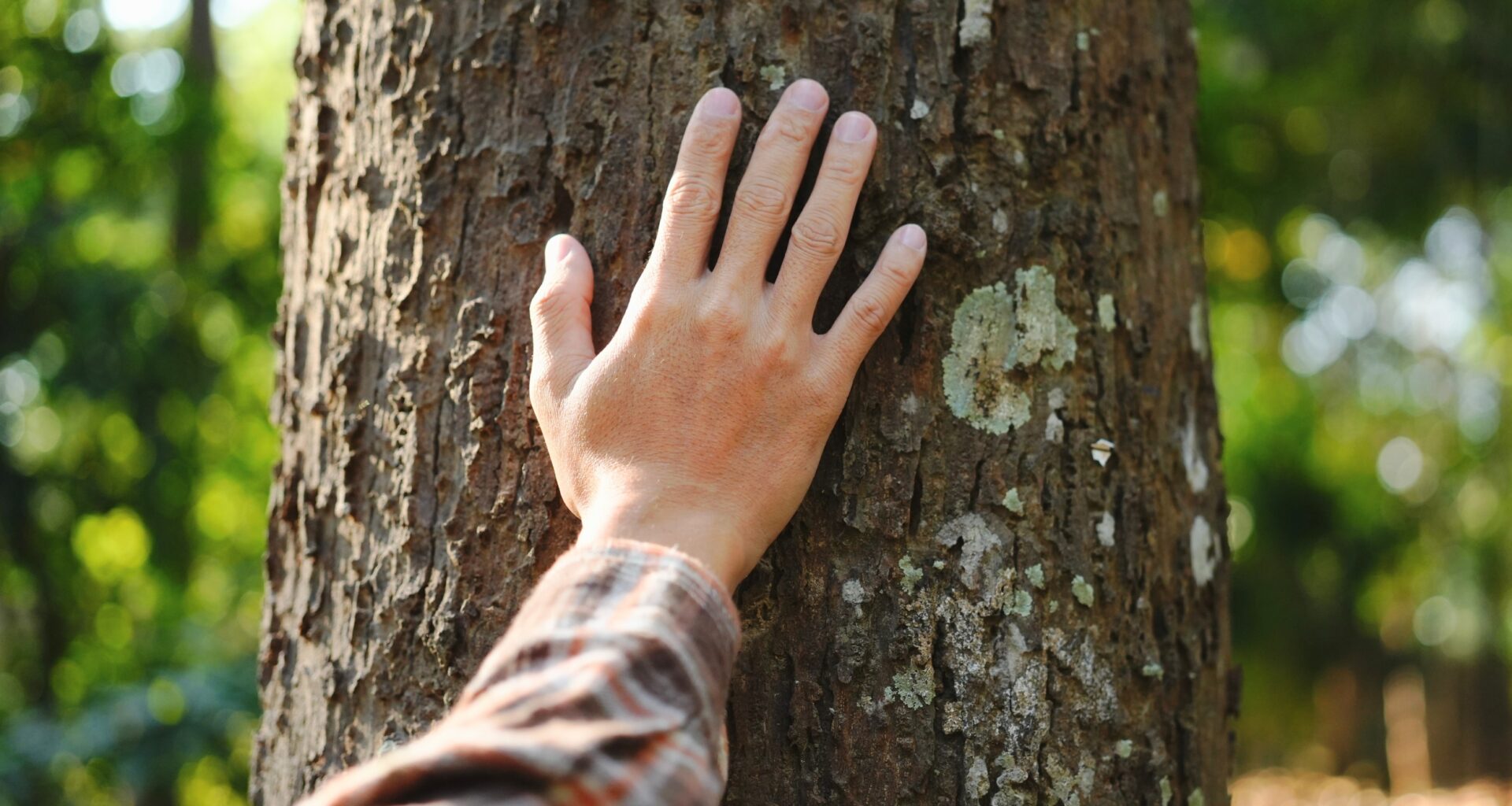
When environmental problems feel bigger every year, one question keeps coming up: what actually makes people care enough to defend nature?
It sounds simple, but it isn’t. People can love forests, fear them, rely on them, ignore them, romanticize them, or treat them like a resource to be managed.
Those differences aren’t just personal quirks. They can influence everything from voting behavior to support for conservation policy.
A new study has investigated this question using survey data from 745 participants in Japan.
The researchers weren’t trying to measure whether people “like nature.” Instead, they looked at how people value nature, and what those values connect to in terms of worldview, psychology, and cultural beliefs.
Three ways of valuing nature
The study used a framework that’s become common in environmental psychology and sustainability research. It breaks “nature’s value” into three categories.
Intrinsic value is the idea that nature has worth in and of itself, regardless of whether humans benefit from it. This is the least human-centered view: a wetland matters even if nobody visits it, uses it, or profits from it.
Instrumental value is the opposite angle. Here, nature is valued as something useful, a provider of food, water, raw materials, recreation, economic activity, or ecosystem services that support human life.
Relational value sits in a different place. It focuses on the relationship between humans and nature: meaning, identity, responsibility, belonging, and mutual connection.
Nature matters not just because it has “rights,” and not only because it’s “useful,” but because it’s part of how people understand themselves and their place in the world.
One reason researchers like this three-part model is that it captures the fact that two people can both be “pro-environment” for totally different reasons.
Someone may fight to protect a river because it’s sacred. Someone else may do it because it supplies drinking water. Someone else may do it because the river has a right to exist, period.
What the data showed
One of the most basic takeaways is that these three values didn’t blur together in Japan. The study showed that they were clearly distinct.
Participants could hold different combinations of intrinsic, relational, and instrumental views rather than treating them as one general “attitude toward nature.”
That matters because sometimes people assume these categories are Western academic ideas that won’t translate well elsewhere.
But in this sample, the same overall structure found in many Western studies also showed up clearly.
Beliefs about nonhuman beings
One of the key findings was that relational value is closely tied to beliefs about nonhuman beings.
People who emphasized relational value were more likely to think of nature as having agency – not in a strictly scientific sense, but in the sense that nonhuman entities can be actors in the world rather than passive objects.
Ryosuke Nakadai, senior author of the study, is a researcher at Yokohama National University.
“We found that valuing the relationship between humans and nature is strongly linked to attributing agency to nonhuman beings, while placing greater importance on the intrinsic value of nature is associated with rejecting human-centered thinking,” said Nakadai.
“These findings suggest that views of nature do not exist in isolation, but are connected to cultural, social, and psychological perspectives.”
This is where ideas like animism and anthropomorphism come in. The researchers expected that people who believe (even loosely) that animals, landscapes, or natural objects have spirit, intention, or human-like qualities would lean toward relational valuing.
That prediction held up: relational value was positively related to those beliefs. In plain terms: if you tend to feel that the natural world is something you’re “in relationship with,” you’re also more likely to imagine it as more than a mute background.
Nature’s value and human survival
Intrinsic value showed a different pattern. It was linked to rejecting anthropocentrism – the idea that humans are the center of moral concern and everything else matters mostly insofar as it serves us.
Intrinsic value also correlated positively with “connectedness to nature,” a psychological measure that captures how emotionally close someone feels to the natural world.
That makes intuitive sense: if you deeply feel nature’s importance, you may be less comfortable seeing it treated purely as a tool or commodity.
Interestingly, this study reported that instrumental value did not show a clean link with anthropocentrism. You might expect “nature is a resource for humans” to strongly correlate with human-centered beliefs, but in this sample, that relationship wasn’t clear.
That could mean instrumental valuing isn’t automatically selfish or dismissive. Many people may value nature instrumentally while still supporting protection, simply because they see human survival and wellbeing as tied to healthy ecosystems.
Psychology and culture
Another thread running through the findings is that nature values seem woven into broader life orientation.
Relational value, for example, was associated with more traditional, religious-oriented worldviews. It is also linked to psychological scales like “identity fusion,” which is a sense that your identity is deeply intertwined with a group or entity – in this case, the natural world.
So the study’s message isn’t just “people value nature differently.” It’s that these differences reflect deeper patterns: culture, belief systems, and how people emotionally place themselves in the world.
Why this matters for conservation
If you’re trying to encourage pro-environment behavior, policy support, or conservation action, it helps to know which kind of value you’re appealing to.
A campaign built around “nature has rights” might resonate with people who lean towards the intrinsic.
A campaign focused on stewardship, belonging, and reciprocity might land better with people who think relationally. And messages about clean water, food security, and long-term economic stability might speak to instrumental value.
The researchers want to expand this work beyond Japan to see what patterns hold across cultures and what seems culturally specific.
The larger goal is practical. If we understand how people build their relationship with nature, it becomes easier to craft policies and public messages that actually connect – not just in theory, but in the real emotional and cultural languages people already live by.
The study is published in the journal Current Research in Ecological and Social Psychology.
—–
Like what you read? Subscribe to our newsletter for engaging articles, exclusive content, and the latest updates.
Check us out on EarthSnap, a free app brought to you by Eric Ralls and Earth.com.
—–