
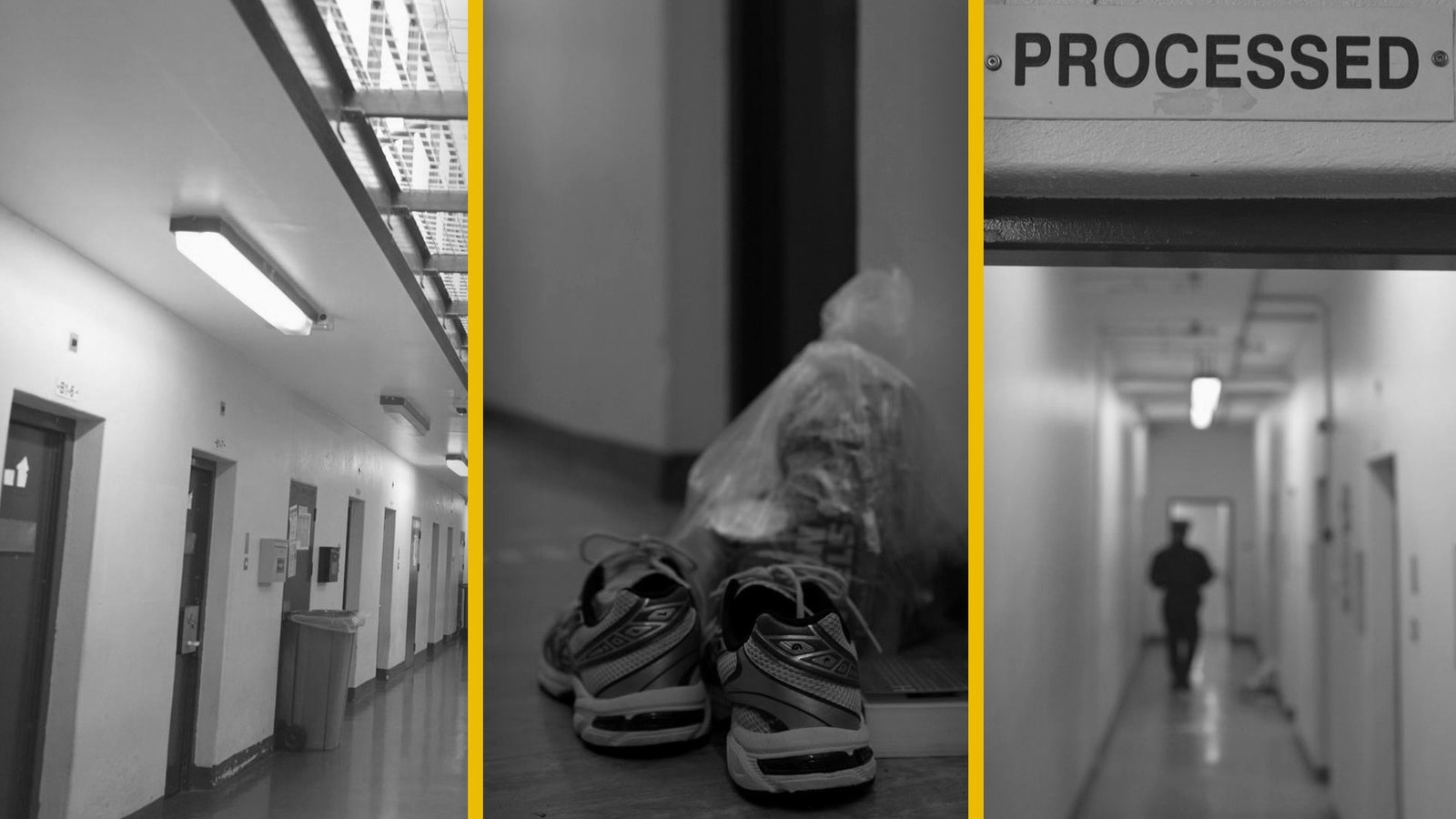
In the days following RTÉ Investigates’ two-part documentary on acute psychiatric care, questions about how the State treats its most vulnerable patients moved quickly to what needs to happen next.
The investigation examined the growing number of people with severe mental illness being held in prison, often because no appropriate hospital bed was available.
Within hours of the final episode airing, ministers were being asked whether their priorities now need to change, writes Conor Ryan from RTÉ Investigates.
Eleven hours after the RTÉ Investigates series on acute psychiatric care concluded those responsible for the country’s mental health policy gathered in the basement of Leinster House.
Minister for Health Jennifer Carroll MacNeil and Junior Minister Mary Butler were appearing before the Oireachtas Health Committee to discuss spending priorities for the year.
Inevitably they were asked whether revelations regarding the growing numbers of acutely mentally ill people being kept in prison would change their plans.
Dealing with the prison population, Minister Butler defended the Government’s approach. She said there were in-reach psychiatric services available in ten of the 12 prisons, and the service would be expanded to the other two.
Minister Butler said the Programme for Government included plans to develop an “approved centre” on a wing of a prison, effectively creating a hospital inside a prison where anti-psychotic treatment could be administered in all circumstances where it was clinically required.
Those working in the sector told RTÉ Investigates: The Psychiatric Care Scandal that there are many people who should not be in prison in the first place, including some who are on a growing waiting list for the Central Mental Hospital (CMH).
WATCH: RTÉ Investigates: The Psychiatric Care Scandal on the RTÉ Player
Ms Butler said overall “there is not a lack of services” and people should remember that “there are many people in prison who have committed crimes”.
Labour Party’s health spokesperson Marie Sherlock immediately asked to what extent were apparent crimes a symptom of a mental illness.
“There is a difference between a minor crime because of your mental health condition and actually murdering somebody. And that is the critical thing here. People are ending up in jail because of disorder. Somebody was talking to a wall in Dublin Airport, and they ended up going to jail,” Deputy Sherlock said.
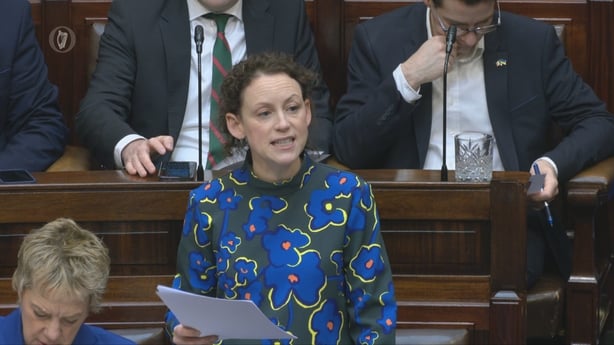
Labour Party’s health spokesperson Marie Sherlock
‘Red flag’
Her question referred to the case of Johnbull Omoragbon, who was arrested and imprisoned after he refused to leave Garda offices in Dublin Airport and was observed talking to a wall for a lengthy period.
Mr Omoragbon later died in Cloverhill Prison. His case was one of hundreds reviewed by RTÉ Investigates going back to 2012.
He was psychotic at the time and unable to understand or engage with the court process and was essentially free to leave prison if he could prove himself well enough to sign a bail bond.
He was too sick to do so. Instead, he was detained in Cloverhill Prison because a bed was not available at a psychiatric hospital in Fairview, Dublin.
Johnbull Omoragbon was a 52-year-old Nigerian-born Spanish citizen and a father-of-four. He was buried by the Nigerian community in Longford. At his funeral service his daughter, Victory, spoke about how he used to help her with her maths and her fond memories of him at home.
“I also miss how you always played with us and thought us how to be nice to others, I am grateful for all the things you have done for us, I love you,” she said.
His death was reviewed by the Office of the Inspector of Prisons and the Council of Europe’s Committee on the Prevention of Torture (CPT).
Both of these bodies highlighted, anonymously, a man they referred to as “Mr O” and “Prisoner D.D.” respectively.
The CPT reported that the man, who was mentally unwell, was arrested at Dublin Airport in July 2022 for a public order matter. It was noted that he was psychotic.
He was brought to Cloverhill Prison, he was disciplined for not following instructions and he was placed in a Close Supervision punishment cell (CSC) on D2 landing. The CPT report said its “review of the relevant registers indicates that he was, in all likelihood, placed in a CSC because he was mentally ill, rather than because he had been disruptive in the prison”.
The CPT’s president, Alan Mitchell, explained its concerns.
“A very obvious red flag was that this was a man who was mentally unwell, who had been placed in a closed supervision cell who was noted by prison staff not to be eating or drinking in the 48 hours prior to his death…. and that is a red flag that is very prominent,” he said.
While those reports were anonymised RTÉ Investigates gathered evidence that allowed us to make contact with Mr Omoragbon’s family. Speaking to us from Spain, they gave permission to identify him.
His wife, Edith, said her husband was a devout Christian and how he died particularly upset them. She said he would have given anything to help others, yet when he needed help himself nobody was there for him.
She said he had medical needs. He was diabetic and had a history of psychiatric illness but it was managed. He had been visiting family in Cork when he had a relapse. He was trying to get home to Valencia, Spain to get hospital treatment when he was stopped from boarding a plane because he was unwell.
By that stage he was undergoing a mental health episode. He was not making sense and was fixated on religious messaging and chanting. Gardaí had just wanted him to leave the airport, but he did not and he was observed talking to a wall.
Records show that all arms of the criminal justice system would have preferred not to detain Mr Omoragbon but there was nowhere in the health system available if he was released in the condition he was in.
He died in Cloverhill Prison a day before a bed was to become available in the hospital and having stopped eating or drinking in his cell.
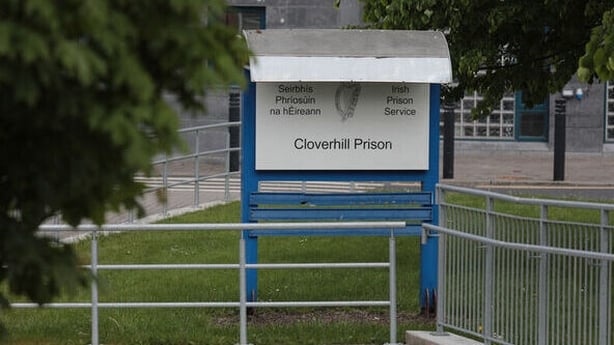
Johnbull Omoragbon died in Cloverhill Prison in 2022 (Pic: Collins)
In his report, the Chief Inspector of Prisons, Mark Kelly, included an observation from a treating psychiatrist in the case. This said that 20 years ago there was a Government policy to help address such cases. It was called A Vision for Change.
But Mr Kelly’s report noted it had not been implemented and because of problems accessing health care in the community prisoners needing community care were still “not receiving the mental health treatment they require”.
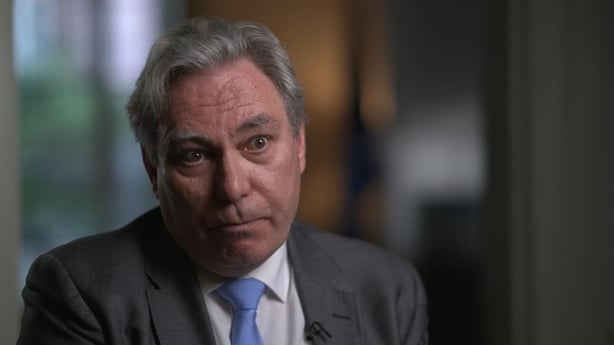
Chief Inspector of Prisons, Mark Kelly
A Vision for Change
Back in Leinster House on Wednesday, Minister Butler said the Government could not be held to account for what was promised in A Vision for Change and that it was focused on its refreshed 2020 version, Sharing the Vision.
“What I am saying is, A Vision for Change was uncosted and it was unfunded. I am dealing with Sharing the Vision. And the difference with Sharing the Vision is that there is a national implementation and monitoring committee that sits over me, sits over the Minister for Health, it sits over the HSE.
“They meet regularly and they have a website. And they produce documents every quarter showing exactly what we are doing in the short, the medium, the long term,” she said.
A Vision for Change was not costed, but it included a plan to access funding. The land the vast old psychiatric hospitals sat on was to be sold and the proceeds ringfenced for new facilities.
This included four regional Intensive Care Recovering Units across the country with a total of 120-beds and four regional forensic mental health teams and other services like 80 high-support intensive care residences.
There are less than 20 Intensive Care Recovery beds in operation in the country today. There are no regional forensic mental health teams.
Without such services those working in prisons gave RTÉ Investigates an insight into what was happening. This included Professor Conor O’Neill who leads the in-reach psychiatric and court liaison service in Cloverhill Prison.
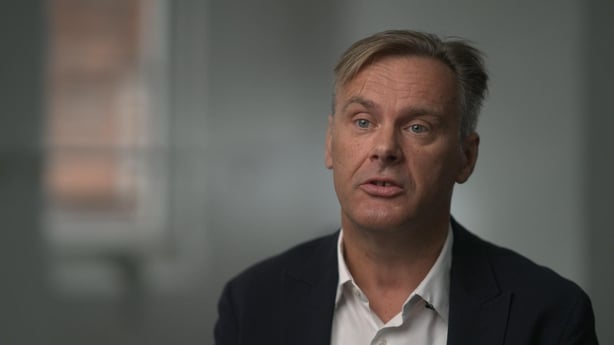
Professor Conor O’Neill leads the in-reach psychiatric and court liaison service in Cloverhill Prison
In this overcrowded facility, the number of actively psychotic people in the prison at any one time has risen so that it is now more than double the 27 supported medical beds on the protected D2 landing. There are more than 70 psychiatric patients spread across the facility, part of more than 340 held in prisons across the country.
Many are being kept on remand having been arrested for low-level crimes but with no alternative hospital bed to go to.
“Some of these people are very severely mentally ill. Some people have brain injuries and dementias and are unable to look after themselves,” Prof O’Neill said.
“Some will express their distress by urinating and defecating on the floor. These are people that should be in hospital, not in prison.”
Without the families who chose to speak publicly as part of the documentaries, the consequences of this situation might otherwise have remained unknown.
‘They have the answers’
Courtney Rosney, a 23-year-old mother, spoke with fondness about her own father Ivan, who died two days short of turning 37.
He suffered from schizophrenia and had setbacks if his medication slipped. He was involved in an episode outside his father’s house and ended up in Cloverhill Prison rather than the local hospital where he had been treated many times.
He was scheduled to appear before Mullingar District Court from a video link booth in Cloverhill one Monday morning.
For years all his family knew was that he died after being restrained by prison officers. There has been no inquest.
Gardaí investigated and a file was sent to the Director of Public Prosecutions, but no charges were brought. RTÉ Investigates learned that an investigation report into his death was completed in October 2024 but was never published.
This prompted Courtney to speak publicly and appeal to the Justice Minister Jim O’Callaghan to release the report so that they could understand the full circumstances of how her father died.
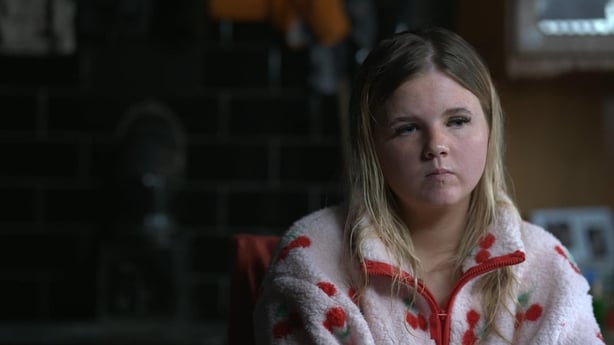
Courtney Rosney called on the Justice Minister to release the report into her father’s death
“I’m not asking them difficult questions or questions that they have no answers to. They have the answers to the questions I have but they’re just refusing to give me those answers,” she said.
Following the programme the Rosney family were informed that, following advice from the Attorney General, the report would be published.And on Friday, more than five years after Ivan Rosney’s death, some it was published.
The report expressed “deep reservations” about how he was restrained and “the extent of the external and internal injuries” he suffered.
The Death in Custody report by the Office of the Inspector of Prisons said the man died after a 12-minute restraint incident that began when nine officers dragged him enroute from a court room video link booth back to his cell.
According to the report, Mr Rosney had a history of mental illness, was prescribed anti-psychotic medication and told staff that, before his detention, An Garda Síochána had “made attempts to have him admitted to mental health services. He reported that he was turned away”.
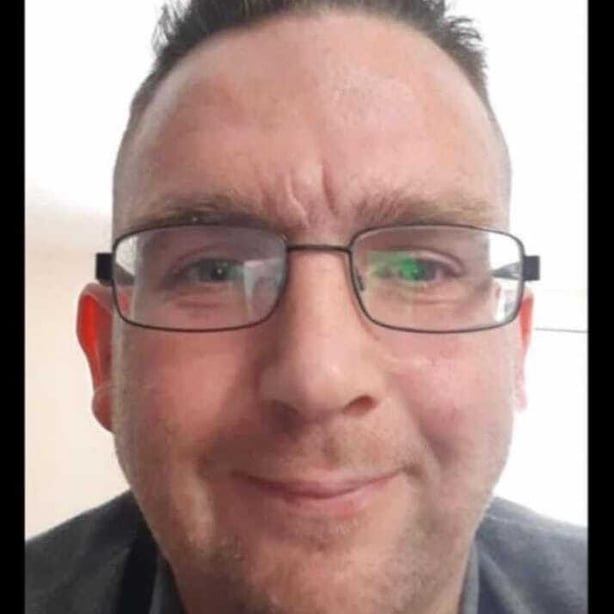
Ivan Rosney died two days short of turning 37
In response to the broader issues of mental health services highlighted in the documentary series Minister Butler gave her assessment on what needs to happen.
“If you are asking my honest opinion, I genuinely believe there has to be a layer in between National Forensic [the Central Mental Hospital], and people in prison who might have low level mental health issues,” she said.
Twenty years ago the high-level group that drafted A Vision for Change had a similar belief.
It said back then forensic services in the country were “largely centralised in Dublin and hospital-based at the CMH”. It proposed the creation of “four multi-disciplinary, community-based forensic mental health teams be provided, one in each of the HSE regions”.
In the documentary, Professor Brendan Kelly offered his assessment on what happened.
“A Vision for Change was a good policy in 2006. It is a good policy in 2026. It simply hasn’t been implemented in full.”
If you have been affected by the issues raised in this article, visit Helplines – RTÉ or Supporting People Affected By Mental Ill Health.
RTÉ Investigates: The Psychiatric Care Scandal is available to watch here in full on the RTÉ Player.