
As nightfall grasped the Bahrain skyline, the opening week of official Formula 1 testing in Bahrain drew to a close. For those perched beyond the cusp of F1’s inner circle, this week had offered the first look at 2026’s new cars, regulations – for those within it, it offered new problems to explore and solutions to raise internally and with the FIA.
There’s a middle ground between the Lando Norris-Max Verstappen points of view explored on Thursday, as Norris’ surplus of optimism clashed with Verstappen’s catastrophising over the 2026 regulations, and most drivers sit in this middle ground – they’re willing to be open-minded, although one wonders if some of the more extreme views have been tempered by a whisper in their ear from F1’s stakeholders. The picture is continuing to change day-by-day with the teams’ understanding of the new rules, and it will continue to evolve deep into the season.
But that’s something to explore on another day. For all of the wanton self-deprecation across the grid, as the teams are keen to play down expectations and grandstand on behalf of their rivals, there is a pattern forming with regards to the competitive order. It’s not a definitive pattern, as we’ve still got another week to go and there have been very few performance runs in this opening week.
That said, when looking at the overall long runs and in speaking to the teams, we can begin to group the constructors based on what we’ve seen and what was said.
It goes without saying that you should take this with a few pinches of salt, and the picture could change dramatically next week once those proper performance run attempts begin to unfurl. “Some teams have done a really good job, some teams are behind, that adds to the surprise, but people will converge very, very quickly,” said Haas team principal Ayao Komatsu. “Remember 2022, the first year of the ground effect, there was a big difference. Then after four years, people are talking about thousandths.
“Again, 2014, with the new hybrid era, some people couldn’t even do a lap. Some people are struggling more than others, that’s normal. But I think it’s just an amazing thing about Formula 1, how quickly people develop.”
Komatsu’s words of wisdom aside, we can take a snapshot of how things stack up – and it should at least offer a platform to refine those rankings once the second Bahrain test is in the books.
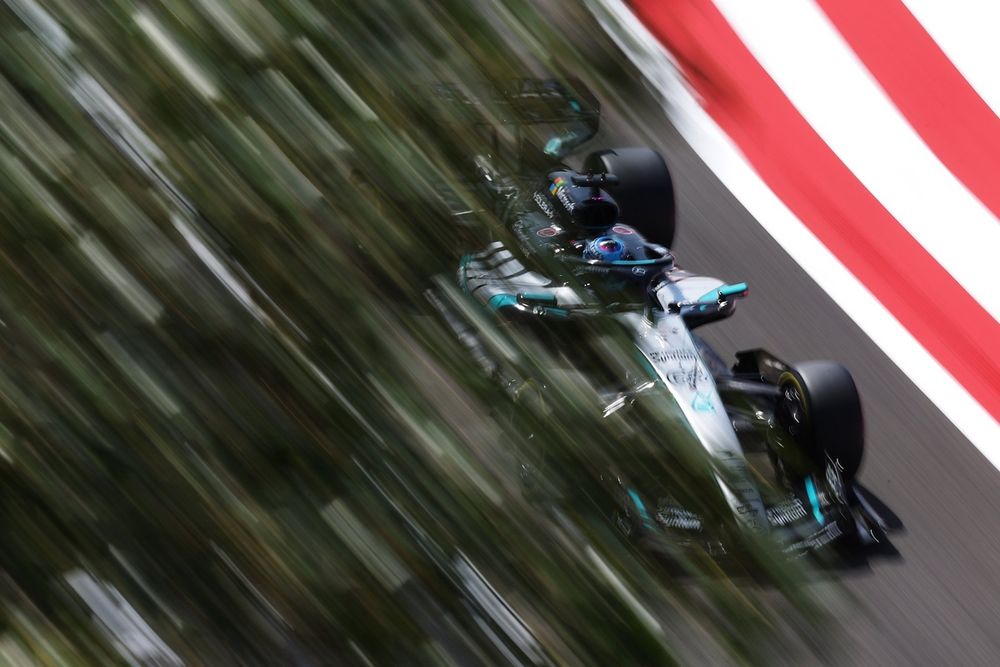
Mercedes was pegged as the early runaway leader after Barcelona – but competition is very much in the offing
Photo by: Glenn Dunbar / LAT Images via Getty Images
For now, hopes of watching a fifth team upset F1’s current Big Four have been left dashed. Again, it could all change as we delve deeper into the season, but it’s evident that the top four teams have not only remained within the lead group, but have a gap over the rest of the field.
The gamesmanship between them, particularly between Mercedes and Red Bull, has escalated. Mercedes has been keen to highlight the Red Bull’s ability to harvest and deploy more energy over a lap, while Red Bull’s figureheads have retaliated by suggesting that Mercedes has run with the touch of the sandbag about it.
Ferrari and McLaren have quietly gone about their business and racked up the laps, but they’re both in the mix too. Amusingly, all four teams seem keen to suggest that they’re currently fourth-best when it comes to predicting their own position within the group.
“I invite everyone to just be careful looking too much into what we see in testing. However, early indications from a competitiveness point of view, I think definitely put Ferrari and Mercedes at the top of the list”
Andrea Stella
“What I’ve seen so far is that definitely we can say that Red Bull, Ferrari and Mercedes, they seem to be very well equipped,” McLaren’s Andrea Stella remarked at the end of the third day. “They seem to be fast in both the exploitation of the first lap and then in the race simulations. So I think in terms of the big names that we used to hear before, they seem to be there as well for this new era of Formula 1.”
It is widely believed among the other powertrain manufacturers that, indeed, Mercedes is yet to turn on the taps properly. The feeling is that the teams running Mercedes’ power units are keeping a lid on their true pace while the murmur over compression ratios continues, although the works team’s final day 1-2 on the timing board probably won’t do much to keep the allegations in check. Reliability did not seem quite as bulletproof compared to the Barcelona shakedown, but the team appeared to get through the issues that forced Antonelli to run just three laps on Thursday morning.
Engines aside, the Mercedes looks relatively predictable in the more difficult sections of the Bahrain circuit. The Ferrari has also grown into that mould, as the SF-26’s rear-end waywardness is slowly dialled out. “I think clearly in low-speed traction they look very strong,” Red Bull’s Pierre Wache reckoned. “Some straightline speeds are also interesting from Ferrari and Mercedes, especially on low fuel.”
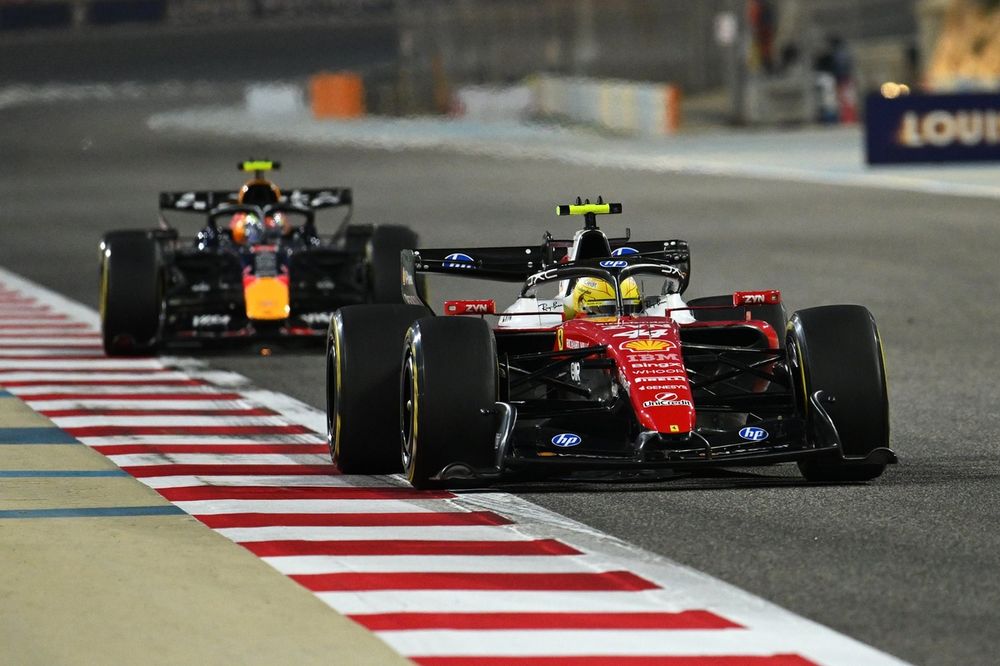
Hamilton leads Hadjar on-track, and demonstrated impressive Friday race pace
Photo by: Sam Bagnall / Sutton Images via Getty Images
Wache’s note about straightline performance is interesting, given that Red Bull has unwillingly taken the spotlight for its deployment on the straights. Deployment isn’t the sole ingredient here since aero efficiency in straight mode is another crucial part of this, and energy is ultimately wasted if the car is too draggy.
And then there’s race pace. The unfamiliarity with the energy deployment aspect and limitations has largely taken some of the attention away from tyre chat; Pirelli’s transition to a range of narrower tyres seems to have been largely seamless, although it’s also true that the cars haven’t been pushed too hard yet. Ferrari and Mercedes both seem to have a good grasp of the tyres now they have calmed down some of the more errant rear-end behaviour.
“In terms of race pace, I can confirm that the race pace of Ferrari looks pretty competitive,” Stella added. “In the simulation that [Lewis] Hamilton did today, and then there was at the same time one from [Kimi] Antonelli and one from Oscar [Piastri]. I think Antonelli and Hamilton were quicker than us today, the race simulation.
“When you look at the times, and still I would say that Charles [Leclerc]’s one [on Thursday] was quite competitive and at the same level as today’s simulations. At the same time, I just invite everyone to just be careful looking too much into what we see in testing. However, early indications from a competitiveness point of view, I think definitely put Ferrari and Mercedes at the top of the list in terms of those that seem to be ready from a performance point of view in particular.”
Unsurprisingly, Leclerc begged to differ: “From where I stand now, it’s Red Bull and Mercedes in front and then us.”
Given that the order is likely to be any combination of the four, depending on the circuit and whether the McLaren is able to shed a couple of kilos (Ferrari reckoned that the McLaren was slightly overweight), it’s fair to say that we don’t have clarity at the moment.
The first midfield group: Alpine, Haas, Williams
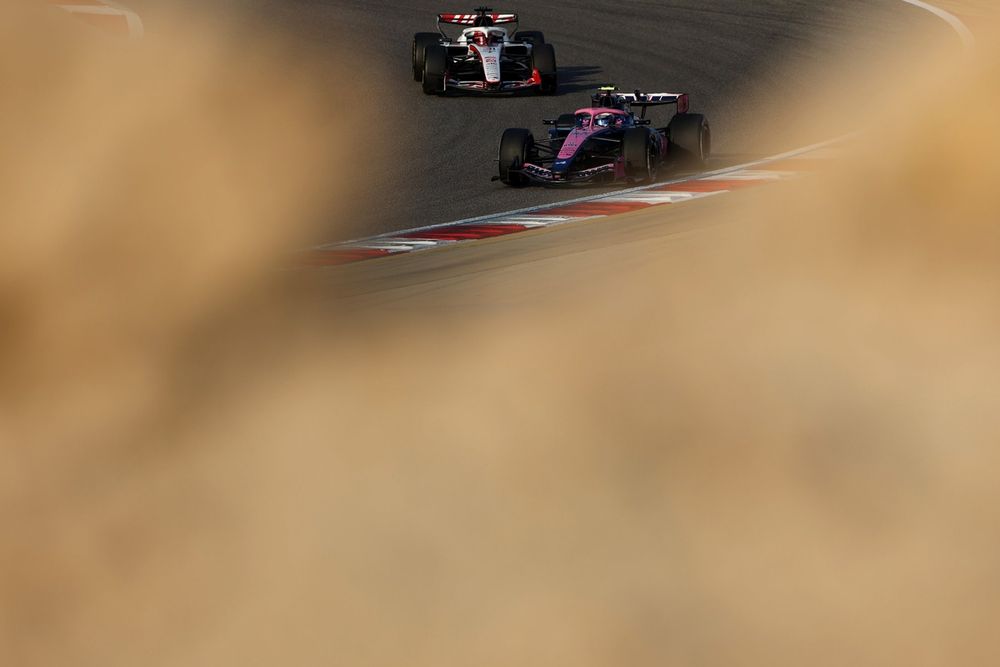
Haas and Alpine appear to be the early picks amid the midfield
Photo by: Alastair Staley / LAT Images via Getty Images
After the top four teams, there’s a gap of over a second – then you’ve got those looking to occupy the lower reaches of the points on a regular basis. Although hardly leagues ahead of the second midfield group, the trio of Alpine, Haas, and Williams all seem pretty evenly matched at the moment.
Pierre Gasly‘s longer runs on Thursday were noteworthy as the Frenchman looked relatively strong throughout the day, as Alpine is hungry to atone for a bruising 2025. That said, almost all of 2025’s resources had been poured into the 2026 project, as the team sought to make the most of its switch to Mercedes powertrains. The A526 features a series of interesting design decisions, demonstrating that the team had been eager to push the boat out; the spoon-shaped front wing and transition into the less-popular pull-rod front suspension shows that the team has not been afraid to experiment with its aero package.
“I think we’re reasonably happy,” team manager Steve Nielsen explained on Friday. “Of course, you always want to be a bit quicker, but I think we’re coming off the back of a year that was very tough for us last year where we were not competitive at a lot of races, and I think we’re reasonably comfortable that we’ve moved on from that.
Williams’ early showings suggest that it could be the link between this pack and the second group of midfielders
“So we’re happy we’re in the fight, but your perspectives and your targets change. We’re now looking at a couple of teams that we think we’re in the mix with and trying to be better than them.”
While Gasly demonstrated that he was getting to grips with the 2026 formula, Franco Colapinto had been a more variable presence through the test. Although it’s difficult to read the efficacy of his Friday race stints given the secretive nature of fuel loads and engine modes, it didn’t seem that he had quite the same zip in his step in comparison to his more experienced team-mate. He was at least on par with the Williams pair throughout the day – although the Grove squad’s early showings suggest that it could be the link between this pack and the second group of midfielders.
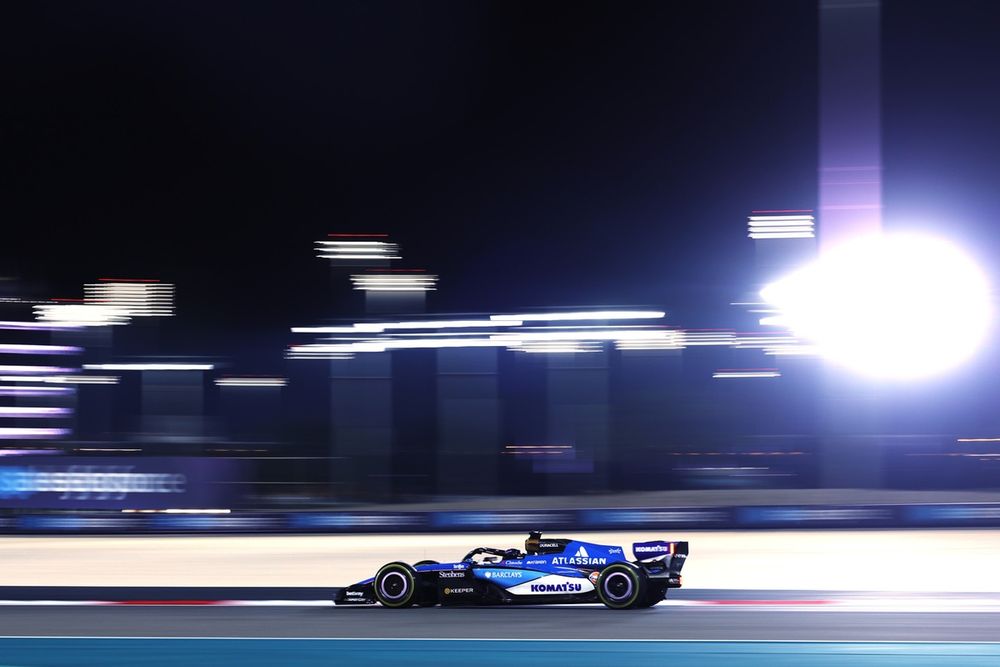
Although Williams missed Barcelona, reliability had been strong throughout Bahrain’s first week
Photo by: Mark Thompson / Getty Images
Much to Williams’ relief, it was incredibly reliable throughout the first week of the Bahrain test. After missing the entirety of the Barcelona shakedown, it needed the new FW48 to rack up the miles; helpfully, Williams logged 415 laps, the most of any across the three days in Bahrain. It does appear that the car is a bit overweight at this stage, which will be a hindrance in the early rounds until it can put the car on a diet.
It was effectively a learning experience for both Carlos Sainz and Alex Albon; although the drivers had experienced the car in the simulator, and Sainz noted that the correlation from factory to circuit had been strong, the quirks of the 2026 cars were not entirely brought to bear until they had hit the track.
“Even if we were podium finishers last year, P5 in the championship, we’re still not at the level of where we want to be in terms of comparing ourselves with top teams and the way they execute their winters, their preparations, their change of set of regulations,” Sainz reckoned. “We know there’s a massive margin of improvement in many, many areas and yet when I came to Williams I knew this was going to be the case and I’m here for trying to help in every area.”
Haas also appears to sit within this group. Watching the VF-26 on-track was largely uneventful, as the car seemed to be responsive and receptive to the drivers’ inputs. Oliver Bearman confirmed that hypothesis after his final runs on Friday morning, explaining that the driveability of the car and the Ferrari power unit had been strong in the early phases of the test.
From here, it’s about what the team can do to optimise that; having a well-behaved, reliable car is all well and good, but its top-end pace remains an unknown. Even so, that Bearman and Esteban Ocon seemed to be able to reel off competitive laps consistently will be of great comfort to the team.
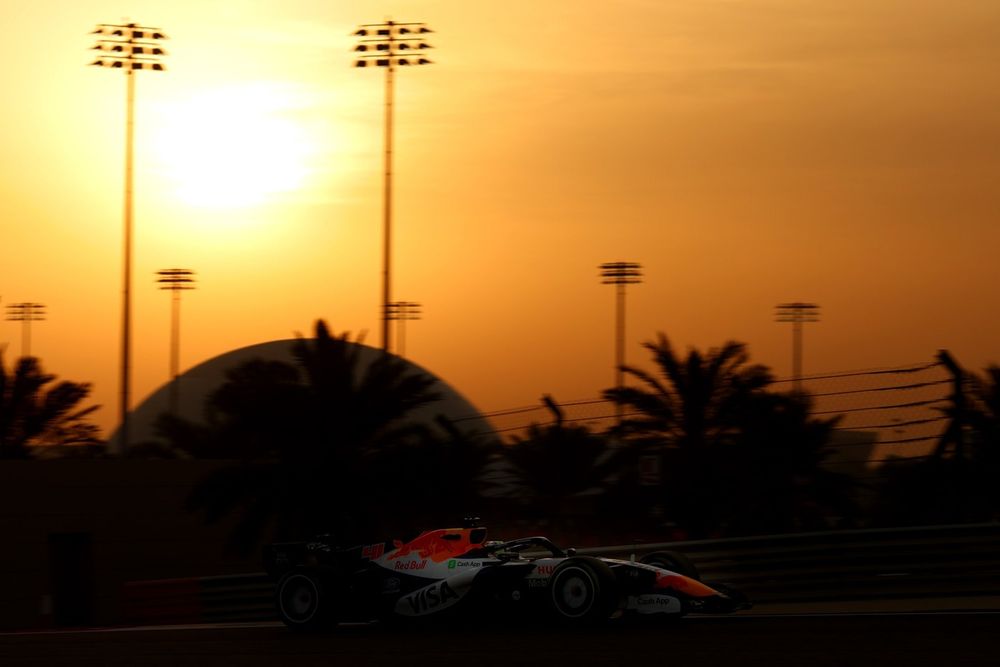
In the shade: the true pace of Racing Bulls currently remains veiled
Photo by: Zak Mauger / LAT Images via Getty Images
The definition of this group is a bit more nebulous than the one above, largely because there are a lot more unanswered questions with the two teams here. While Racing Bulls does share the apparently-monstrous straightline deployment with Red Bull, the VCARB 03 does look incredibly difficult to handle in these early stages. In watching the car in Turns 10 and 11, a low speed and a medium-speed corner, the rear end was noticeably loose and both Liam Lawson and Arvid Lindblad had to contend with frequent sliding.
If the team can tighten this up, then it’ll be knocking on the door of the group above; team principal Alan Permane suggested that it might have been more of a circuit-dependent feature, given the rear-limited nature of the Bahrain circuit. It’s also difficult to judge the driving line-up; Lawson was chewed up and spat out by Red Bull last year and needed 2025 to recover his mojo, and Lindblad is a rookie. It’s very hard to pinpoint where the Racing Bulls team stacks up overall.
Audi is a similar story, although the obfuscation here primarily lies in its transition from a long-time customer outfit to a works manufacturer entity. The new power unit has a much more raucous, throaty timbre versus the other manufacturers, and it looked difficult to get the R26 to work well with the first-gear shifts into Turn 10. The noise seemed to smooth out on Friday, and Nico Hulkenberg had been able to turn in some solid stint times throughout the afternoon session.
“We have a bold approach to these technical regulations. I think people are looking at us and they can see the ambition in the team” Jonathan Wheatley
But Audi is very much a work in progress. The arrival of new sidepods for the Bahrain test turned heads, and team boss Jonathan Wheatley noted that this was a signal of its ambition – the German marque is not in F1 simply to make up the numbers.
“We passed the crash test early. We put a car together early. You define an aerodynamic package to run the car in an early state,” Wheatley began. “Compared with this sophisticated package we have in the car now, it’s quite crude. But we’re out there, we ran. We were putting mileage on the car and learning all the time.
“I’m encouraged, we have a bold approach to these technical regulations. I think people are looking at us and they can see the ambition in the team. I keep talking about this ambition because we’re starting from humble beginnings.”
The early tail-enders: Aston Martin, Cadillac
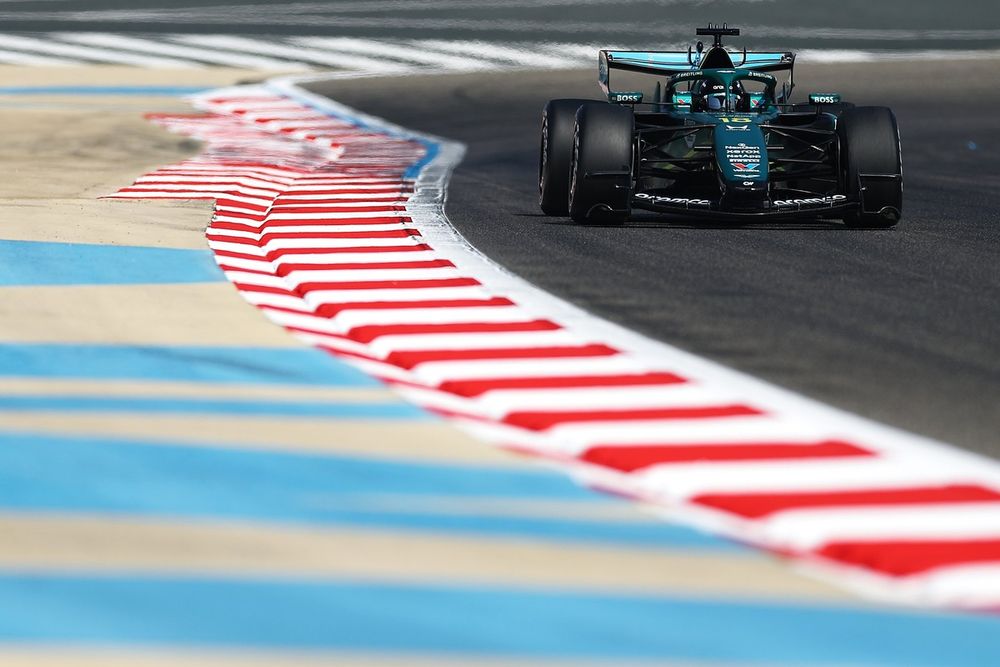
Aston Martin came into 2026 with great expectations – but is now keen to play them down
Photo by: Zak Mauger / LAT Images via Getty Images
A gargantuan roar of excitement over the start of Aston Martin’s Adrian Newey era was swiftly deafened when Lance Stroll dropped the bombshell that the new AMR26 was apparently “four seconds” shy of the front-running pack. For all of the hype about the car and the aerodynamic liberties that had been taken, the team is now keen to manage expectations as the team appears to have a lot of work on its hands.
Both drivers have been seen to struggle with the handling of the car. The new Honda powertrain is apparently overweight and lacking power. Fernando Alonso has waited for years to get his mitts on a Newey-designed car, and hadn’t foreseen that it would quite play out like this.
“Looking back is always easy in terms of what we should have – but it doesn’t work [like that] in motorsport,” said team ambassador and ex-F1 driver Pedro de la Rosa. “If we had possibly started earlier, if Adrian would have been here, not the 2nd of March, but a few months earlier, if Honda wouldn’t have gone and then come back… it’s ifs and buts.
“The bottom line is we are slow, we are not where we want to be. So let’s get a plan together. We know exactly what’s wrong and work on it. Let’s look ahead, not look back. What went wrong? What did we do? It’s very easy to blame the time and that we started late. There were many reasons. The important thing is that we know what they are, really.”
That’s not to say that the situation cannot be rectified. While Honda has some work on its hands to get the most out of this year’s power unit and feed the “learnings” into the next one, Aston Martin needs to refine what it has and ensure that the chassis development does not waver. There’s a lot of time to claw back (and one suspects it’s not quite as bad as Stroll’s doom-spiral suggests) but it’s certainly doable – even within the remit of the cost cap regulations; don’t forget that updates for a relatively undeveloped ruleset can offer multiple tenths, rather than thousandths, of seconds.
It’s no surprise that Cadillac is currently propping up the order, given that it’s entered F1 during one of its most complex rulesets. That the American squad has got its first car running reliably and sits just outside of the top 10 teams on race pace is a monumental achievement for a start-up outfit.
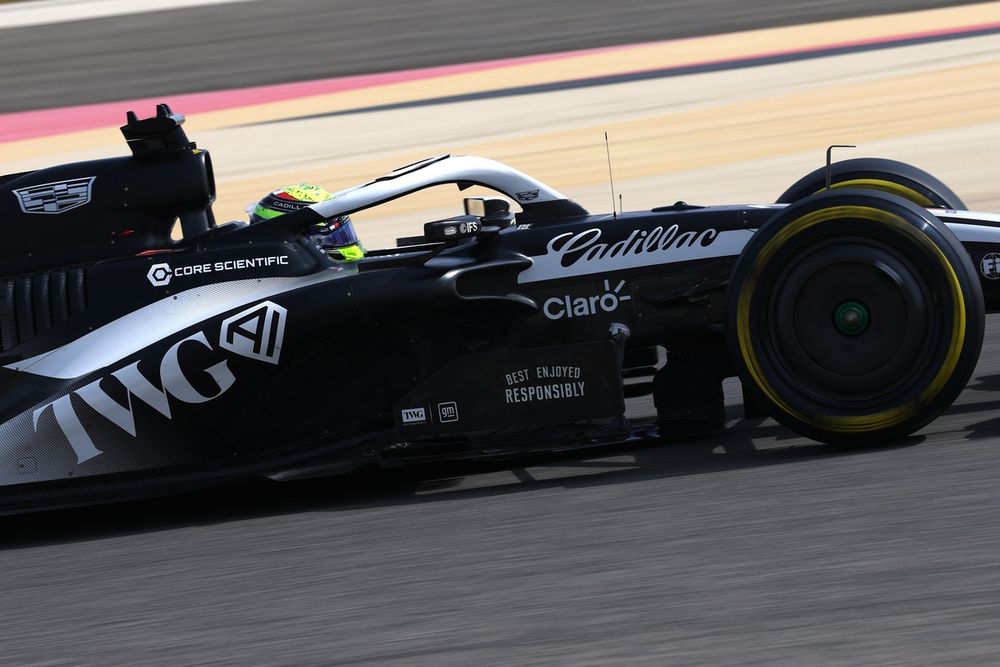
Cadillac can be buoyed by its solid running in the first pair of F1 tests
Photo by: Zak Mauger / LAT Images via Getty Images
There’s still hundreds of boxes for the team to tick off before Melbourne. “We’ve never done a pitstop, so we need to focus on things like that as well,” explained Graeme Lowdon. “So there’s a lot to go at, but I’m very happy with the mood within the team and really happy with where we’ve started.
“The way we’ve gone about solving problems as a team has been really in a very calm manner. In the garage, you see that. It’s very easy to assess it in the garage, but also in the engineering meetings and the like. And actually, it’s one of the attributes about the team that I really noticed, first of all, at the shakedown in Silverstone. We walked in the garage that morning, and what I saw was a calm, collected Formula 1 team ready to go to work. And if you’ve got that as a platform, you can really, really build.
The Cadillac does not appear to be a tricky car to drive, but it’s missing the more refined elements and the peak downforce that the more established teams have garnered
“We’re realistic and we’re grounded, and we know how difficult this game is, but we didn’t want to just be here. We really want to try and build something, and I feel that we’ve got that. I think the car reflects the team. The car’s a good platform we can build on.”
The Cadillac does not appear to be a tricky car to drive, but it’s missing the more refined elements and the peak downforce that the more established teams have garnered through their development into 2026. But it’s a learning year – and if Cadillac can flesh out its development programme, it’s looking like a solid addition to the F1 grid.
Read Also:
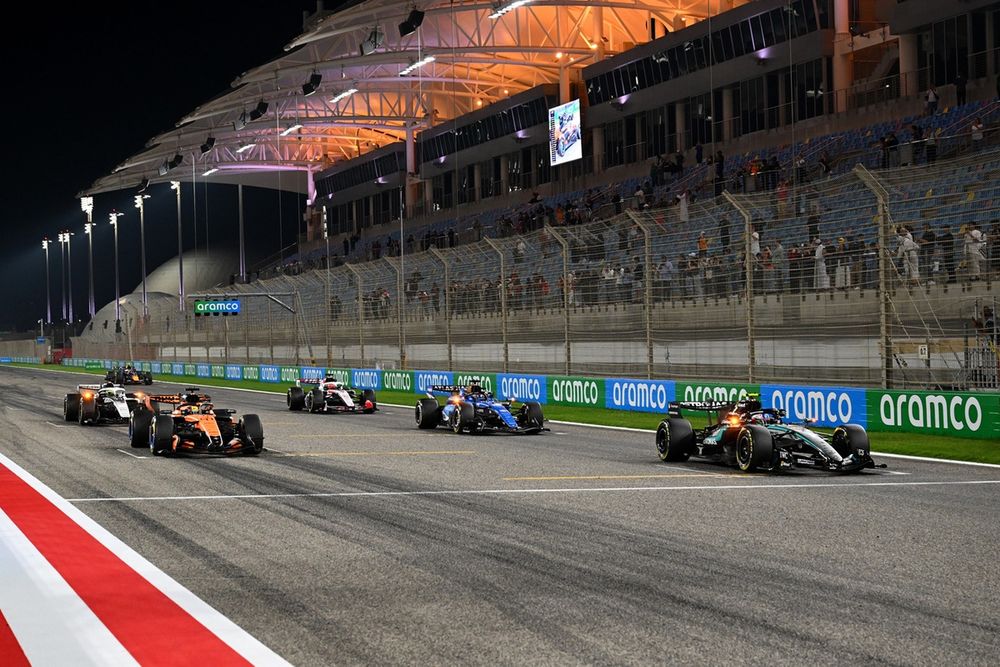
The real grid in Melbourne should look a lot less sparse than this – but what will be the order?
Photo by: Mark Sutton / Formula 1 via Getty Images
We want to hear from you!
Let us know what you would like to see from us in the future.
– The Autosport.com Team