
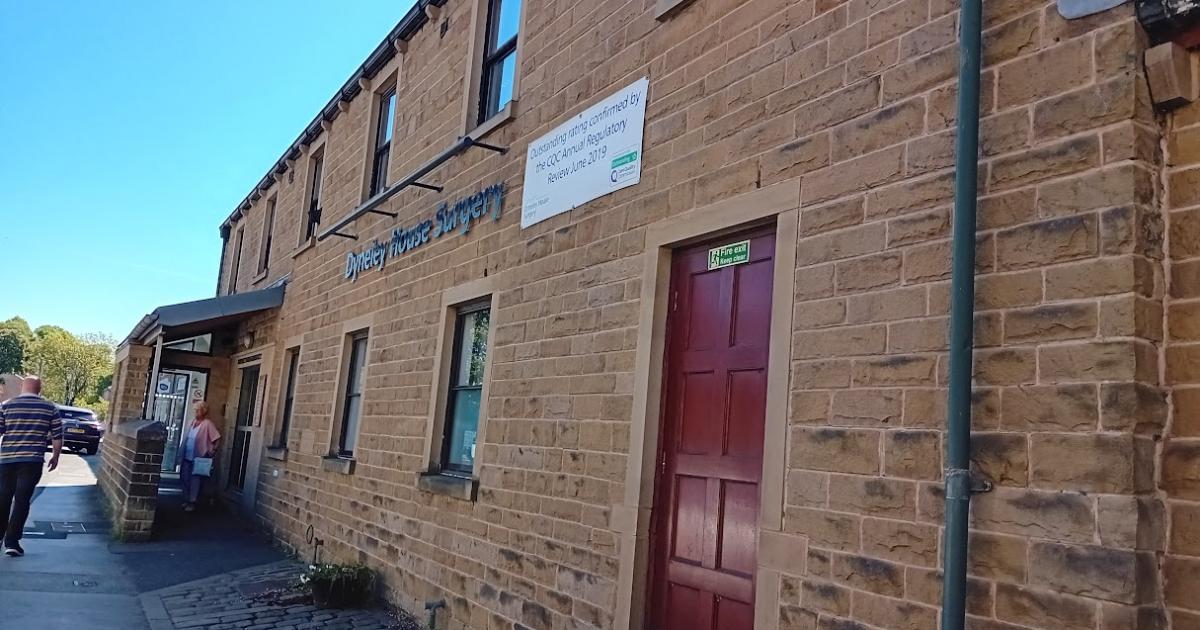
Nearly a year after Dyneley House Surgery, in Skipton, revealed its plan to double the size of the practice building, it has been given the approval of North Yorkshire Council.
The annual town meeting in May heard that the surgery in Newmarket Street had seen a 20 per cent rise in patients from 12,800 in 2020 to 15,200 and expected it to rise to 20,000 in the next 10 years.
Its continuing growth was put down to new homes being built in the area along with the transfer of patients from other practices in Skipton.
Architects image of the practice plans (Image: Dyneley House Surgery)
Why expand the current site?
Built in 1982, the building had started to look old and was too small for its growing number of patients, the meeting was also told.
After considering other locations, including St Andrew’s Church, also in Newmarket Street, and Skipton general hospital, the surgery decided it would be better to expand its current site.
Mark Bennett, the surgery’s business manager, said the practice was pleased by the council’s decision to grant planning permission.
He added: “We are now working with the West Yorkshire Integrated Care Board to identify funding to take forward this exciting development for our patients and Skipton residents, which would enable Dyneley House Surgery to continue to provide high quality primary medical care in the centre of Skipton, and to host a range of hospital and community services in a more convenient location for residents of Skipton and Craven.”
The proposals include alterations and extensions to the surgery buildings and the reconfiguration of the surgery car park, along with ‘associated renewable technologies’ and landscaping.
Architects image of the practice plans (Image: Dyneley House Surgery)
What will be added?
The scheme was approved by officers with delegated powers and did not go before councillors at the area planning committee.
The final officer report says ‘limited harm’ of the scheme, including the loss of some parking spaces and trees, is outweighed by the ‘substantial community benefits’ to primary healthcare.
The extension will be at the back of the building ‘within the existing car parking area’ and will be three storeys high.
Access will remain, via Petyt Grove and through an existing gap in the boundary wall.
There will be ten parking spaces, including two accessible spaces, and two will have EV charging. There will also be ambulance parking.
The roof of the extension will have space for up to 28 solar panels and air source heat pumps are also proposed.
Six trees at the site will have to go to make way for the extension plans but there will be ‘hard and soft’ landscaping.
Skipton MP Sir Julian Smith visited the practice last year to discuss its expansion plans (Image: Submitted)
20,000 patients
The report says when reviewed against current NHS standards, the surgery is “significantly undersized when compared to its patients.”
It adds: “In addition, the surgery is currently old and too small thus not providing an acceptable environment for patients and staff.”
“The projected increase in list size to 20,000 patients would require a building of approximately 1,714sqm.
Architects image of the practice plans (Image: Dyneley House Surgery)
“The proposed expansion to just over 1,500sqm would enable the practice to operate at an acceptable level in the short term and to accommodate increased patient numbers through a combination of additional floorspace and operational efficiencies.
“The proposed extension is therefore considered necessary to support primary healthcare provision in the area.”
In summary, the report says: “The proposed extension introduces a contemporary but sympathetic design, using high-quality stone and complementary materials, and sits comfortably within the established pattern of development.
“The site’s highly sustainable location, within walking distance of public car parks, bus services and Skipton railway station supports and reduces reliance on private car use.
“Taking these factors together, the proposal is considered to minimise congestion, support sustainable travel choices and ensure safe, accessible movement patterns.”