
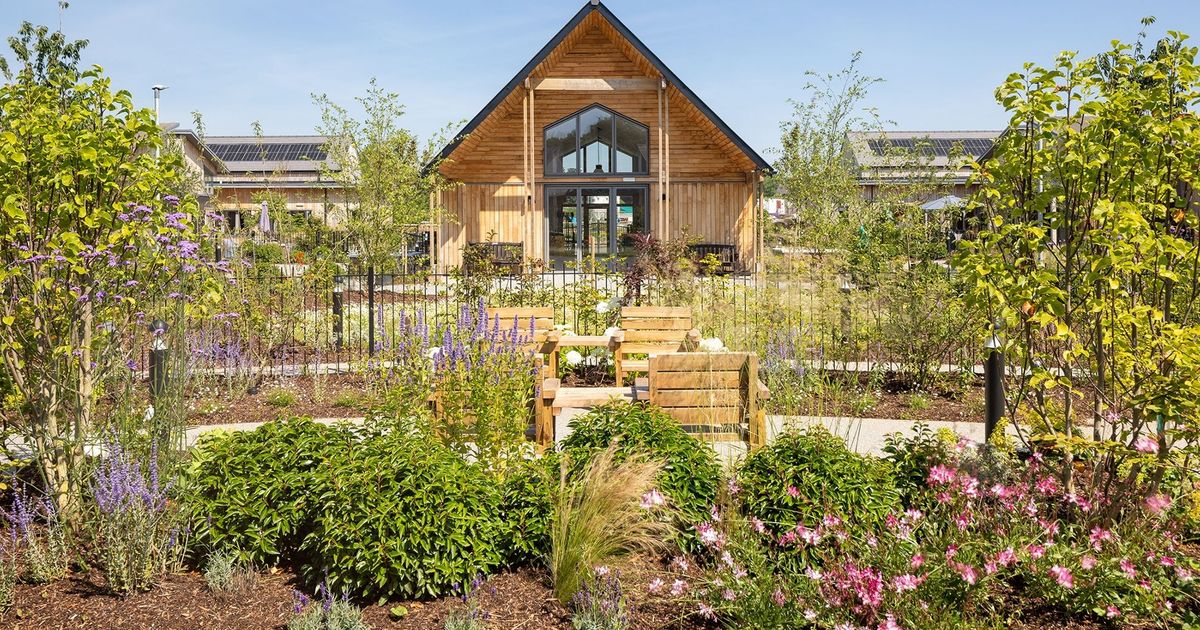
Six projects, including a contemporary clifftop home, a total rebuild of a country house, an energy efficient affordable housing development, and a new way of approaching care home design with freedom and wellbeing at its core, have been shortlisted for the Royal Society of Architects in Wales (RSAW) Awards 2026.
RSAW jury chair, Martin Hall, director at Hall+ Bednarczyk, said the projects show the breadth of talent and skill in the architecture and building industries in Wales.
He said: “Covering the length and breadth of Wales, the shortlisted projects exemplify the talent shown by their architects and construction teams.
“Whether solving important social needs in elder care and housing with high standards and compassion, responding creatively to historic buildings, or showing virtuosity in the design of one-off dwellings, the six shortlisted buildings are a credit to the nation’s building culture.”
All projects shortlisted for RIBA Awards will be visited by a regional jury, and the winning projects will be announced later this spring. For more property stories sent to your inbox twice a week sign up to the property newsletter here.
READ MORE: The future of home building in Wales might surprise you because it’s flat pack
YOU MIGHT ALSO LIKE: The ordinary-looking home with an unexpected treat in the tiny back garden
The winners will then be considered for several UK-wide RIBA special awards, including the RIBA Sustainability Award and RIBA Building of the Year, before being considered for a highly coveted RIBA National Award, which will be announced in summer 2026.
The shortlist for the RIBA Stirling Prize – given to the UK’s best new building – will be drawn from the RIBA National Award-winning projects and announced in September. The Stirling Prize winner will be announced in October 2026.
The UK national RIBA Awards have been running since 1966 and are considered to set the standard for great architecture all across the country and are for buildings in the UK designed by RIBA Chartered Architects and RIBA International Fellows.
The mission of the organisation is to champion better buildings, communities and the environment through architecture and through their members.
Ensure our latest news and sport headlines always appear at the top of your Google Search by making us a Preferred Source. Click here to activate or add us as Preferred Source in your Google search settings
Alma House by Benham Architects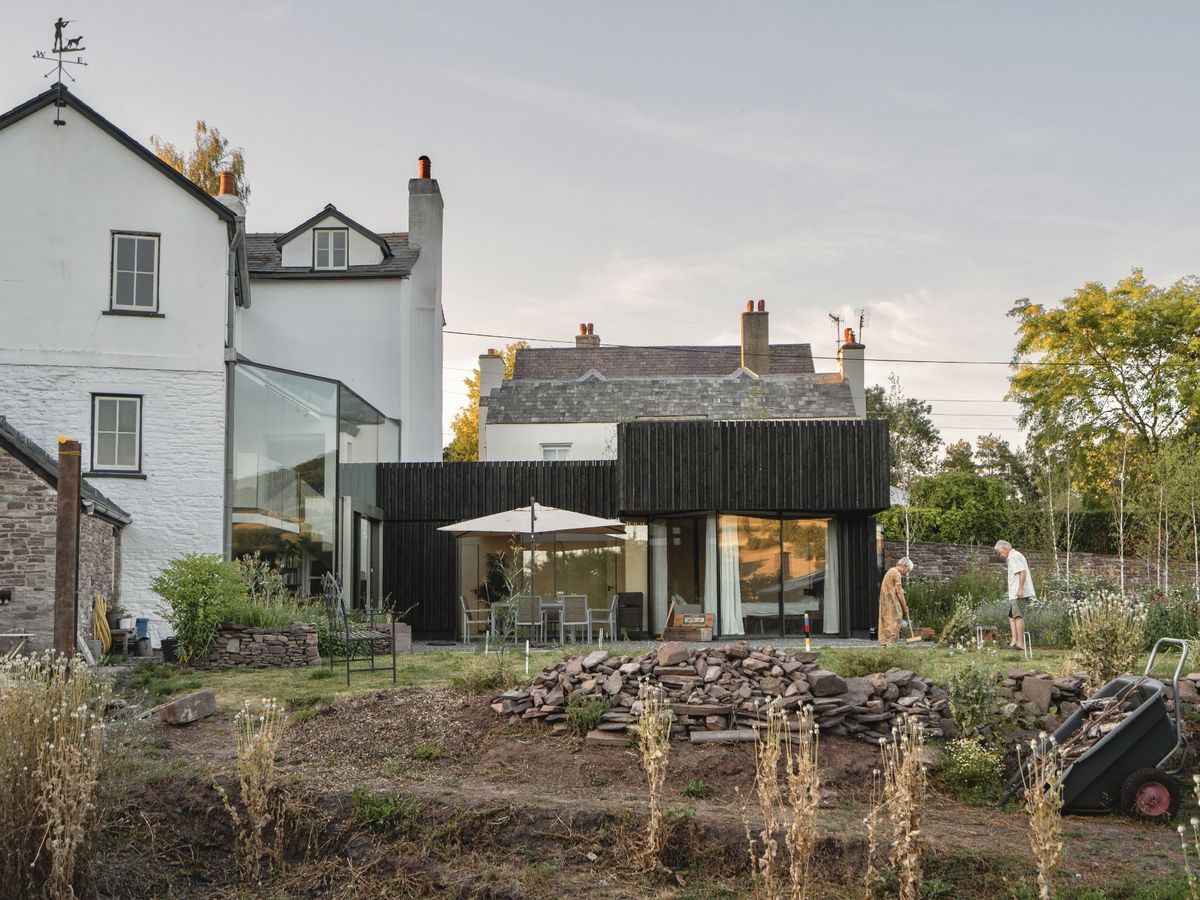
New extension to Grade II listed Alma House(Image: RSAW / Tom Sharpe)
Alma House is a Grade II listed house dating back to the early 1800s nestled into the Monmouthshire countryside. The original house design is a delightfully symmetrical frontage with a central door and windows either side and three on the first floor, plus chimneys at each end.
The brief given to Benham Architects was to ‘create a light-filled dining area that connects seamlessly with the garden, alongside a new bedroom and ensuite to enable level access across the ground floor’.
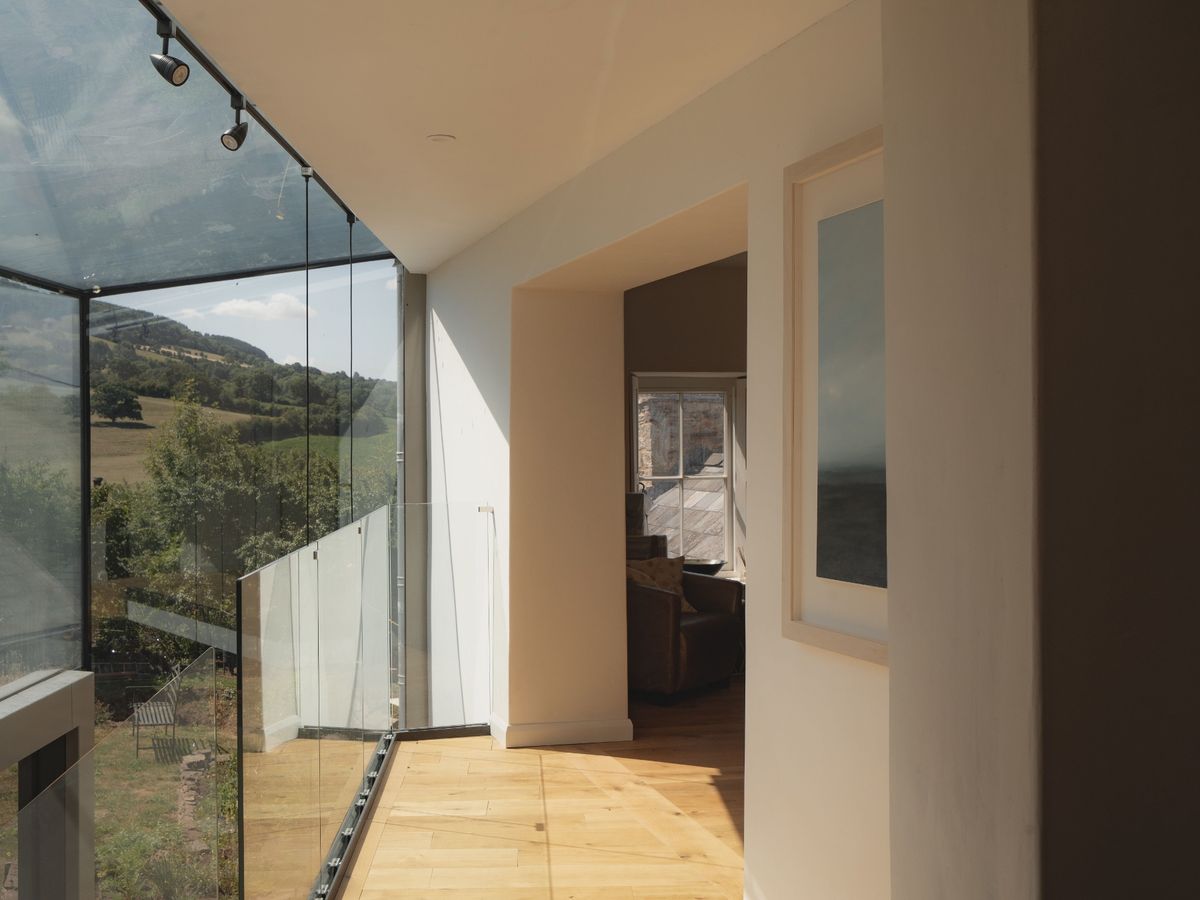
Glass connection between old and new(Image: RSAW / Tom Sharpe)
The company stated that given the sensitivity of the historic fabric, the design had to minimise its impact from the street. The extensions not only improved circulation horizontally and vertically but also transformed once dark rooms with small openings, flooding them with light and framing views across the rolling hills beyond.
Pantybara by Rural Office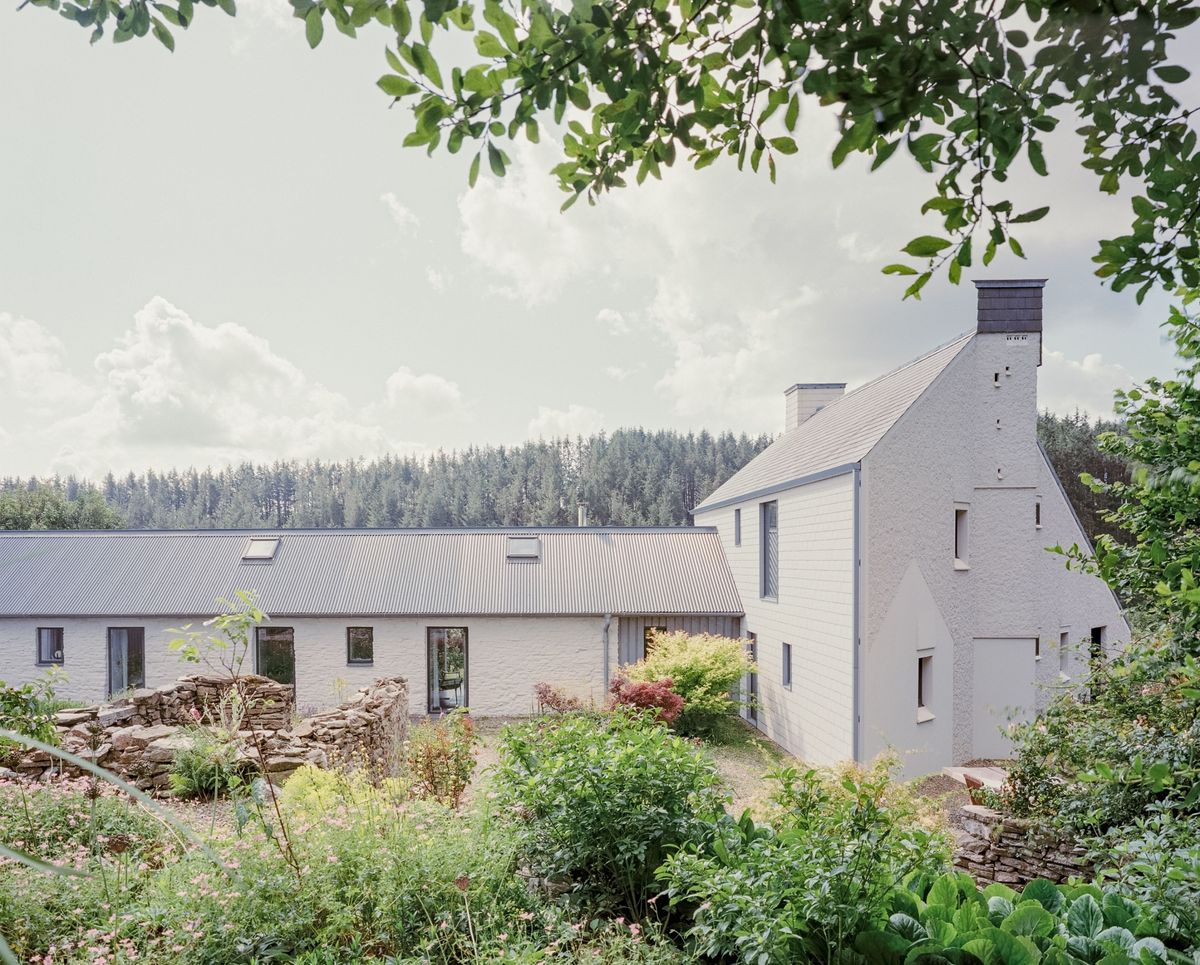
Carmarthenshire home on site of old farmhouse(Image: RSAW / Building Narratives)
Pantybara represents the restoration and reimagining of a traditional Welsh farmstead in Carmarthenshire, created by Rural Office for the practice’s principal, Niall Maxwell, his wife Helen, and their two sons.
The original farmhouse on the site had undergone extensive alterations and required demolition, having fallen into disrepair after years of inadequate upkeep. However, nearly all materials were salvaged for alternative uses – for example, tons of reclaimed stone now comprise garden walls.
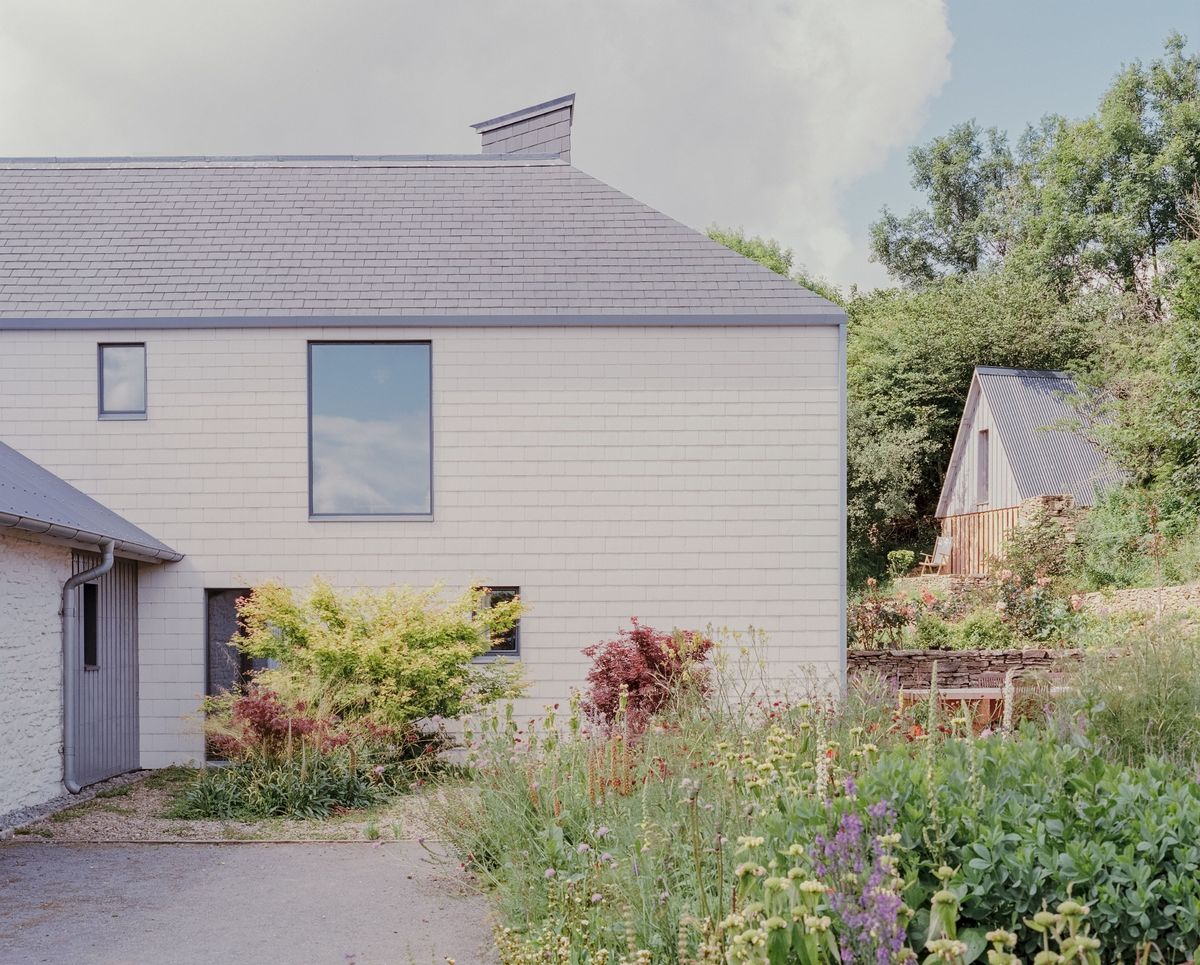
Much of the old property was salvaged and reused(Image: RSAW / Building Narratives)
Moving away from the previous four-square layout, the new dwelling features a triangular footprint. This configuration offers protection from the dominant wind and unveils vistas across the valley beneath, with each side facing a different garden: a courtyard to the north, terraces to the west, and a pond and woodland garden to the south.
The front elevation serves as an architectural statement, drawing inspiration from the gentrified frontages of Georgian farmhouses, becoming apparent when viewed from the corner where a 45-degree angle exposes a more modest dwelling behind.
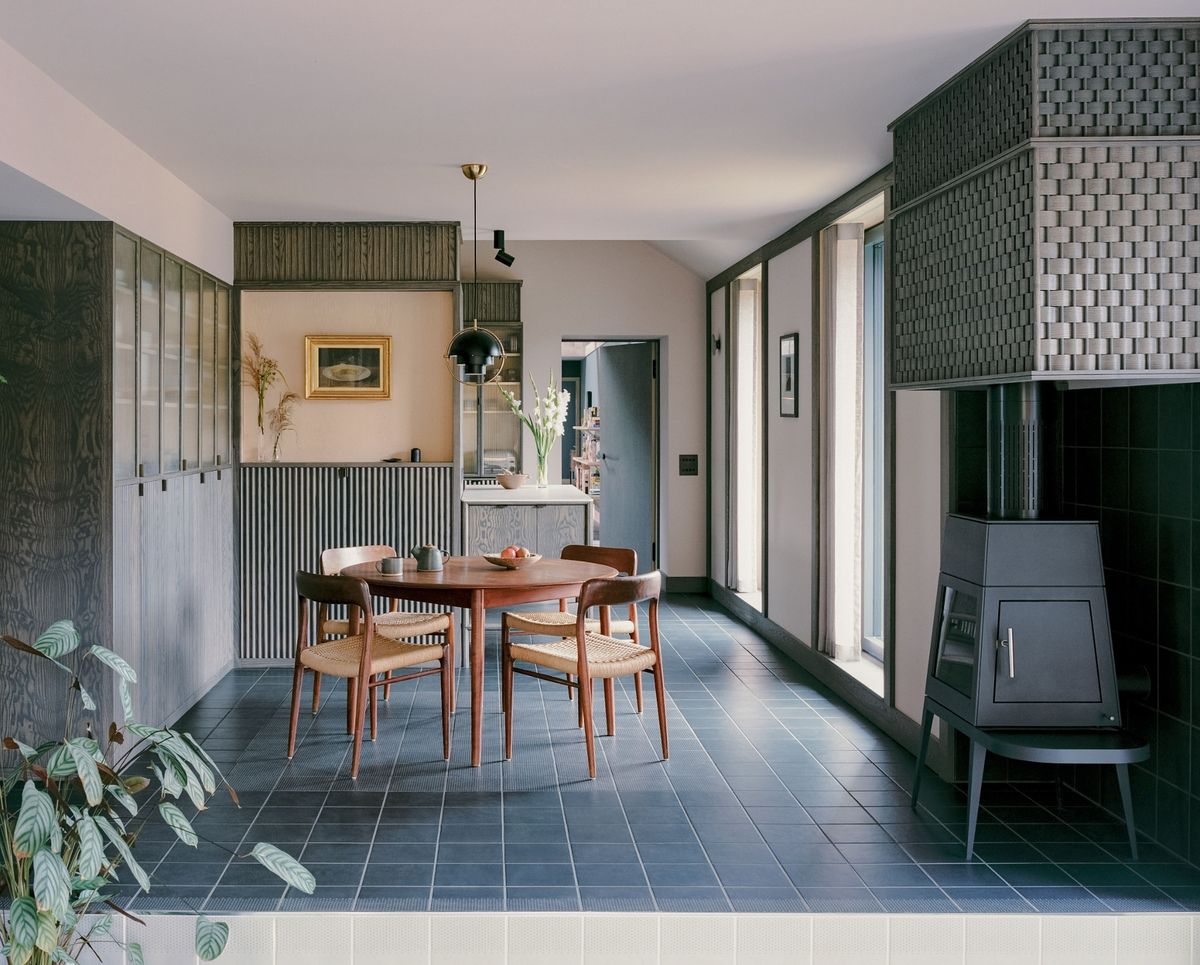
Inside is a blend of character and sleek modern design(Image: RSAW / Building Narratives)
The new structure links to a former milking parlour, now transformed into a hall, guest accommodation, and utility areas. Its extended shape mirrors the traditional Welsh longhouse, merging domestic and agricultural traditions.
The interiors showcase skilled workmanship and vernacular touches, featuring threshold markings to repel malevolent spirits and woven fire surrounds inspired by original bwthyn (bothy) wicker hoods.
Iorwerth Jones by Pentan Architects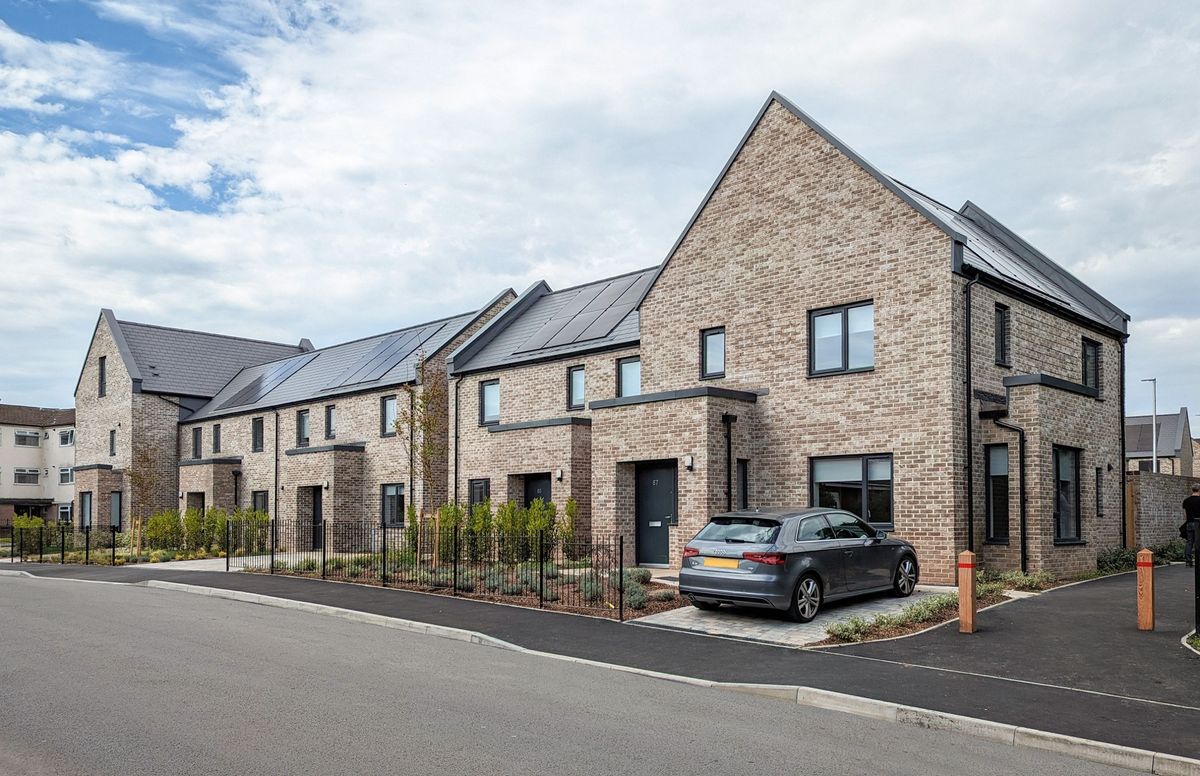
Twenty new affordable homes designed for Cardiff County Council(Image: RSAW / Pentan Architects)
This affordable housing project for Cardiff County Council comprises twenty new properties that are a mix of two, three and four bedroom homes and, to make best use of the site, the dwelling designs have been carefully considered from the outset with care given to the local character of the area.
Every home within this new development in the capital has been designed to satisfy the Cardiff Design Standard, Lifetime Homes criteria, and the Welsh Government’s Development Quality Requirements. The architect practice says that the scheme will also achieve gold standard certification in Secured by Design.
The design takes an inventive approach to challenging site conditions, where multiple boundaries required addressing with active frontages. This has resulted in a distinctive development that presents an outward-facing character in all directions.
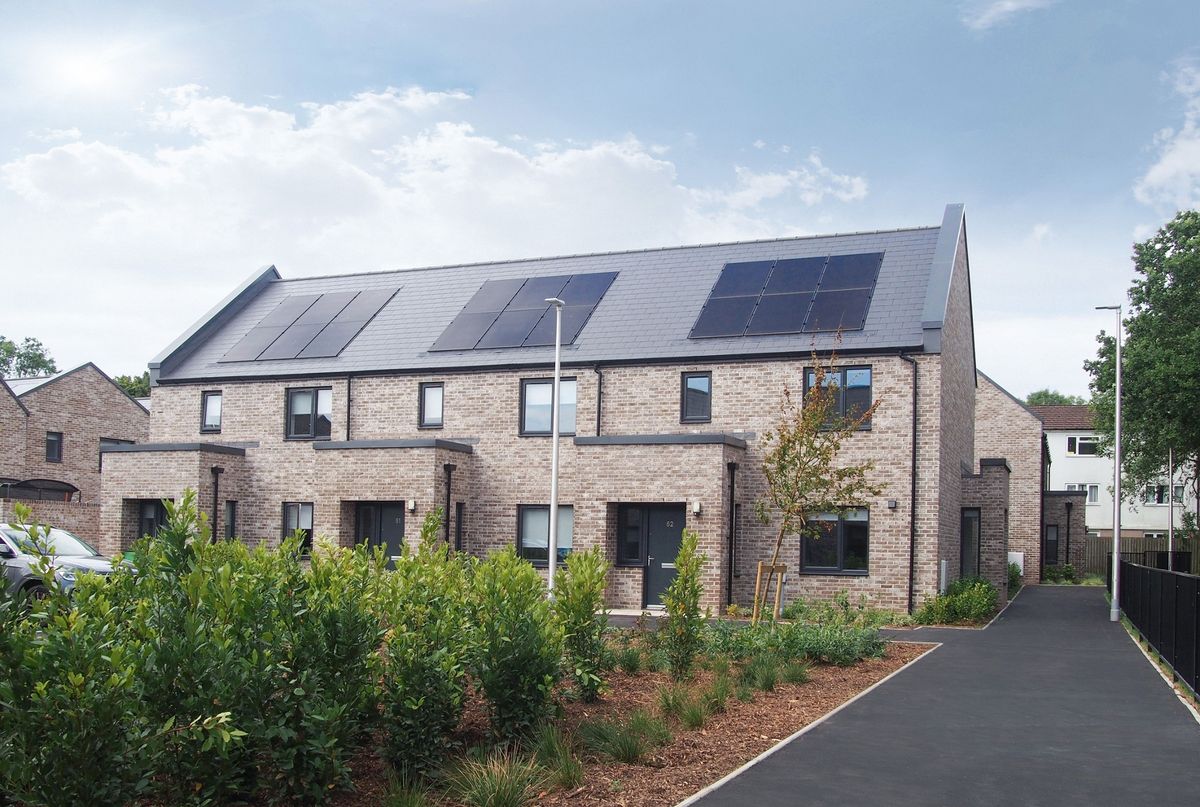
The homes are highly energy efficient(Image: RSAW / Pentan Architects)
A key objective for the Council is to deliver energy-efficient properties that will help combat fuel poverty across the city. Each home has been designed with a fabric-first methodology to ensure energy performance surpasses current building regulations, with all properties achieving an EPC A rating.
Heating and hot water in the houses is provided via an air source heat pump (ASHP), which will contribute to lower fuel bills and reduced carbon emissions. In addition, sustainable drainage system (SuDS) features form an integral element of the design to ensure efficient land use and enhanced ecology.
Porthmadog House by Strom Architects
Nestled into the north west Wales coastline(Image: © James Silverman Photography)
Porthmadog House is a replacement dwelling situated on a sloping coastal plot in rural north-west Wales. The impressive location boasts panoramic views across the bay towards the Irish Sea, as well as overlooking the estuary in the direction of Eryri Snowdonia.
The property therefore possesses a dual character: embracing and maximising the sweeping sea vistas, whilst simultaneously taking inspiration from the dramatic countryside and inland terrain.
Two slate-clad structures at ground floor level serve as a shield against the dominant winds and rainfall, offering protection and seclusion to the entrance courtyard on the inland portion of the plot. These structures accommodate more enclosed and functional areas such as the snug, gym, plant rooms and similar spaces, whilst the more communal functions are positioned between these substantial slate structures.
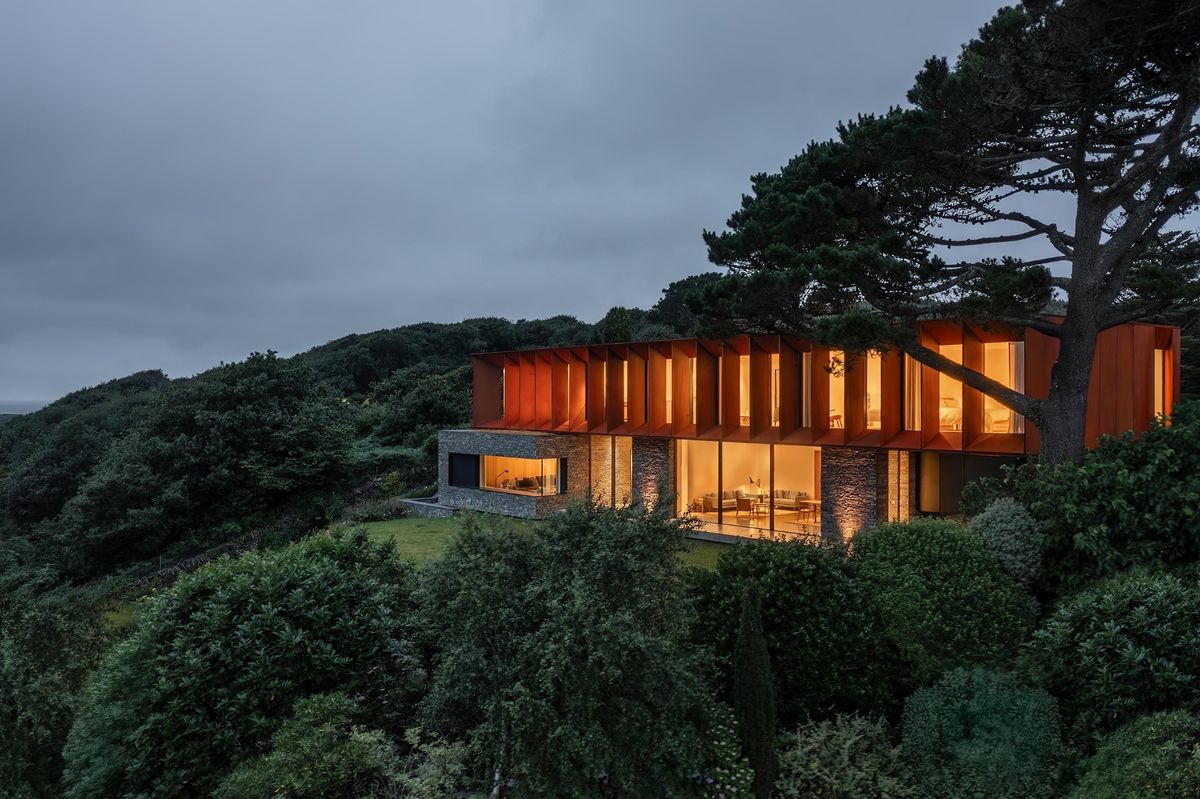
Two slate-clad structures at ground floor level act as a shield against the weather(Image: © James Silverman Photography)
Extensive glazing enhances the brightness and showcases the spectacular coastal panoramas while a lighter first floor structure bridges over the slate walls, generating sheltered areas beneath to occupy and enjoy.
This first floor feature is a corten steel container, with a sequence of fins offering protection, privacy and defining the glazed elevation. The substantial slate anchors the structure to its location, while the corten steel provides a bold visual juxtaposition.
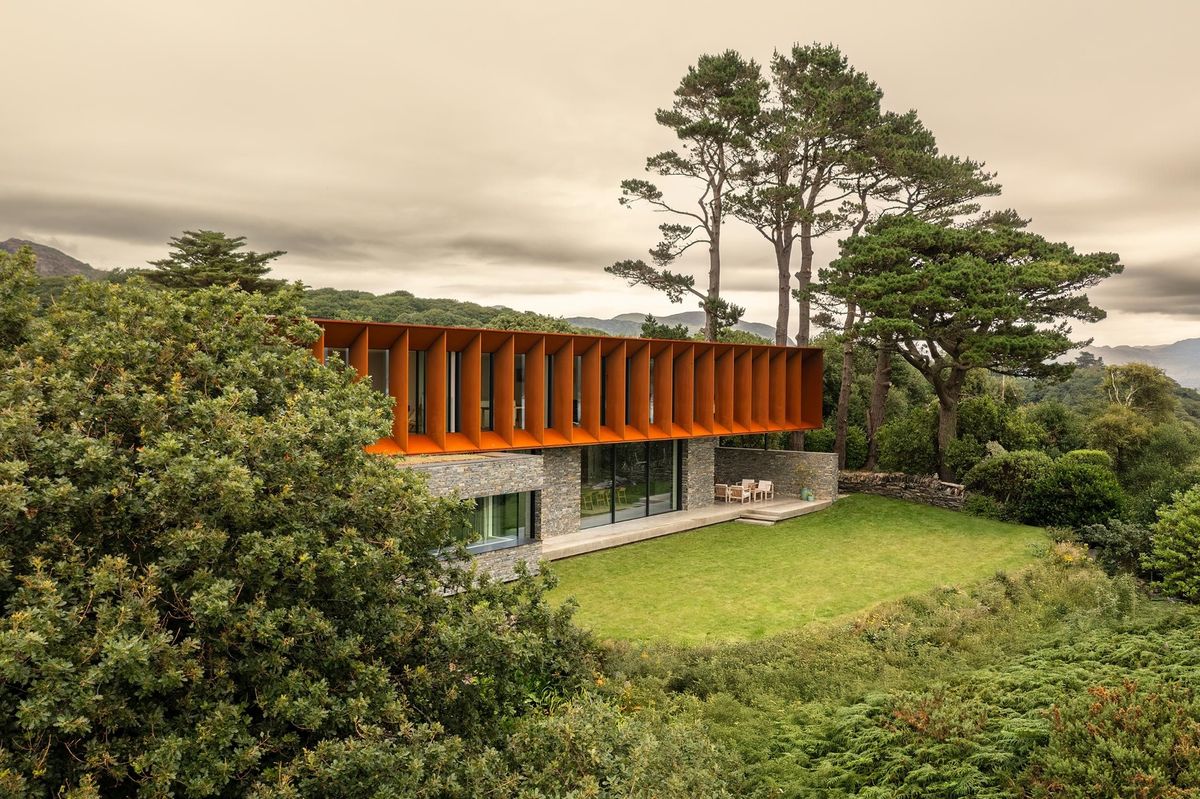
One of the stand out features is the corten steel container(Image: © James Silverman Photography)
Both materials pay homage to the area’s industrial heritage – including its iron foundries and slate quarries – yet are deliberately employed in a modern manner to enhance the architectural design. Given the exposed nature of the site, it was essential to select materials that were sufficiently durable and would age elegantly without requiring upkeep.
Severn View Park by Pentan Architects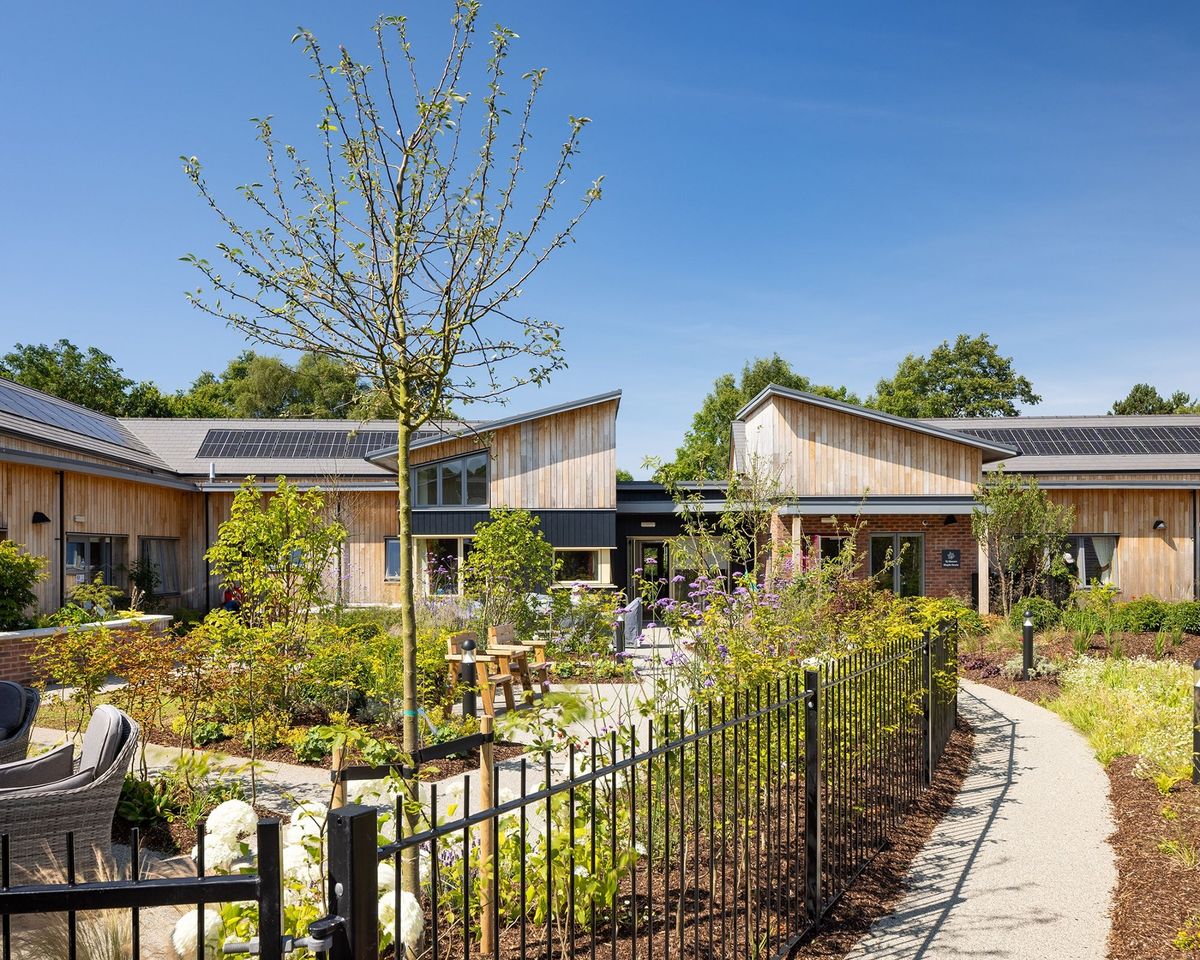
The design has freedom of movement and wellbeing at its core(Image: Craig Auckland / Fotohaus Ltd / RSAW)
Monmouthshire County Council took the decision to replace the ageing Severn View facility with a modern care home, underpinned by an ambitious vision for dementia care. The design champions freedom of movement, connection with the natural environment, social interaction and a reimagining of conventional staff responsibilities.
The building comprises four separate households, each creating a homely, non-clinical environment where residents, staff and visitors actively participate in everyday life without restrictions and can accommodate 24 long-term residential care bedrooms alongside 8 short-term rooms designated for respite and rehabilitation care.
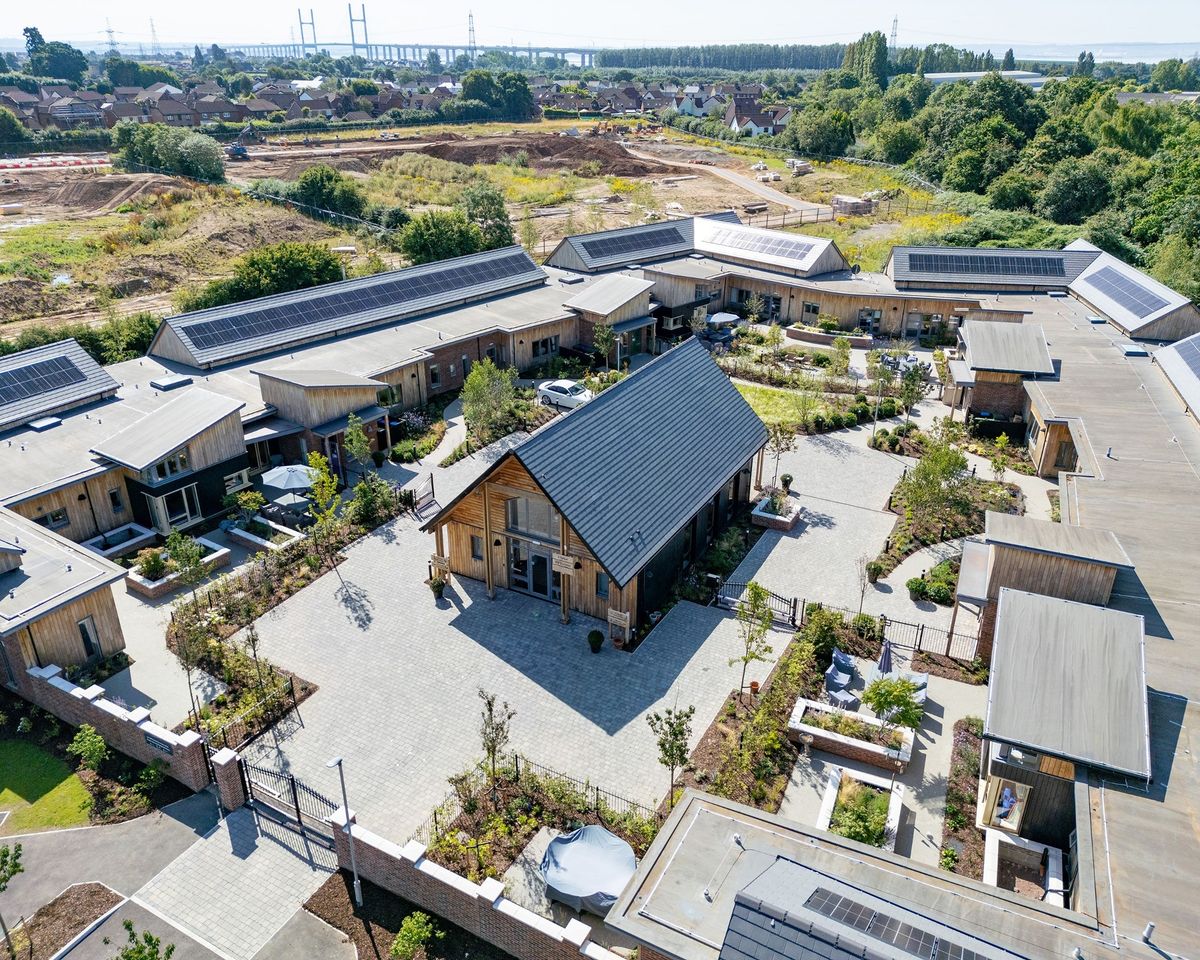
The building comprises four separate households and a central hub (Image: Craig Auckland / Fotohaus Ltd / RSAW)
The scheme represents a move towards wellbeing through autonomy, prioritising residents’ quality of life via thoughtful spatial planning and the architectural approach is integral to the care philosophy, featuring single-storey living spaces.
There is direct garden access to a courtyard garden that lies at the heart of the site plus a communal ‘village hall’ for both residents and the wider community.
With easy, unrestricted access, it offers residents diverse experiences including sensory activities, horticultural opportunities and group pursuits, all centred on connection and participation. The household spaces and garden combine to create a sense of belonging and deep emotional connection, supporting residents to retain their independence.
St Beuno’s Jesuit Spirituality Centre, East Wing by Chambers Conservation Limited
The new entrance of the East Wing of the Jesuit Church retreat centre (Image: RSAW / T G Williams)
The centre is a Grade II* listed collection of buildings and registered landscape situated near Tremeirchion in Denbighshire. The site has been occupied by the Jesuit Church since its construction, originally functioning as a college before transforming into a retreat centre that now hosts visitors from across the globe.
Following the development of a comprehensive site-wide masterplan and Conservation Statement, the architect practice oversaw the £2.6m renovation of the East Wing.

The work included a redesigned chapel entrance at (Image: RSAW / T G Williams)
This work incorporated a series of modern, purpose-built meeting spaces, a redesigned chapel entrance and areas dedicated to spiritual guidance.
The contemporary additions complement the site’s natural beauty through the use of environmentally conscious, organic materials, featuring an oak framework and Anglesey limestone flooring. The scheme additionally delivered cutting-edge catering facilities, accessible accommodation and retail areas.
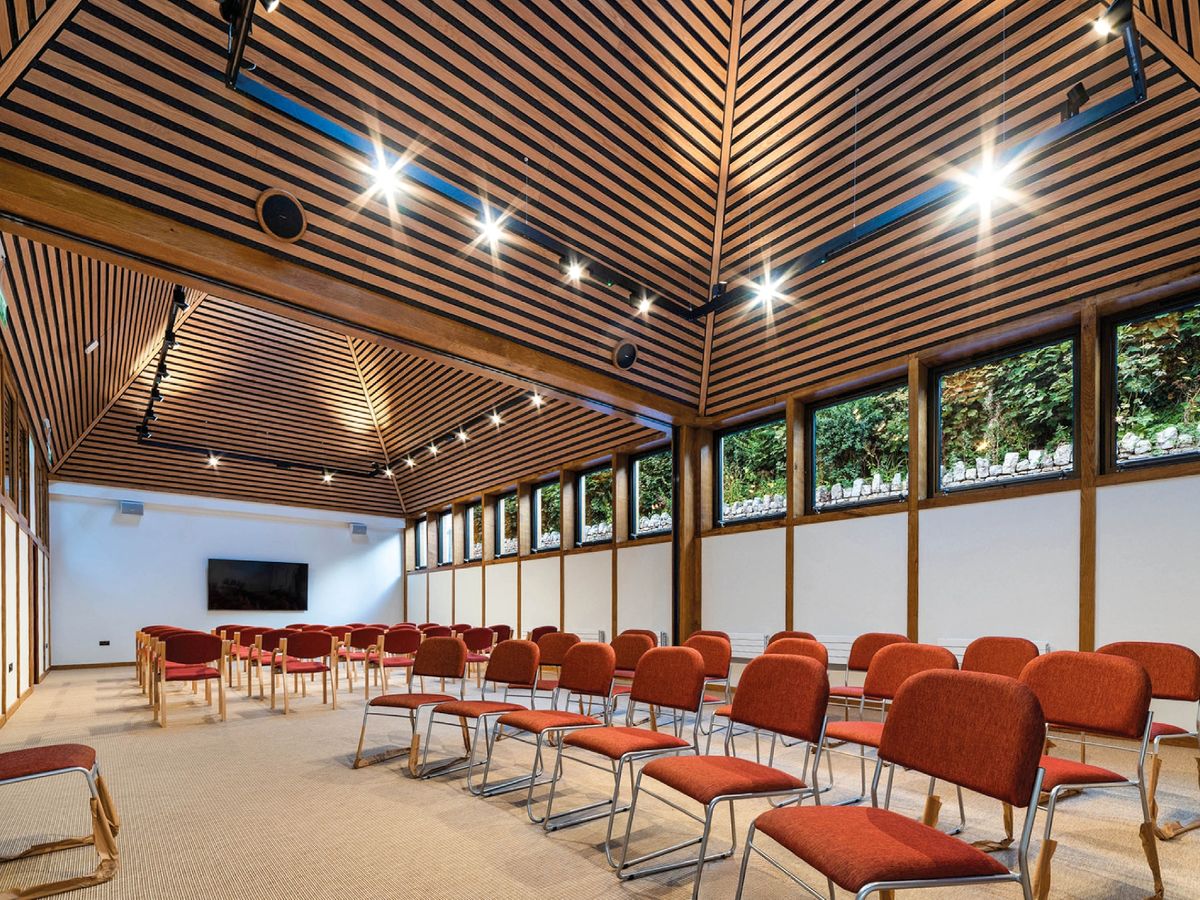
The project included designing meeting spaces and areas dedicated to spiritual guidance(Image: RSAW / T G Williams)
Chambers Conservation Limited have a portfolio of working on some of the country’s most historic and unique buildings including Gwrych Castle, Waunfawr Welsh Highland Railway station, and St George’s Hall Liverpool. For more property, renovation, and interior design stories join our Amazing Welsh Homes Facebook group here.