
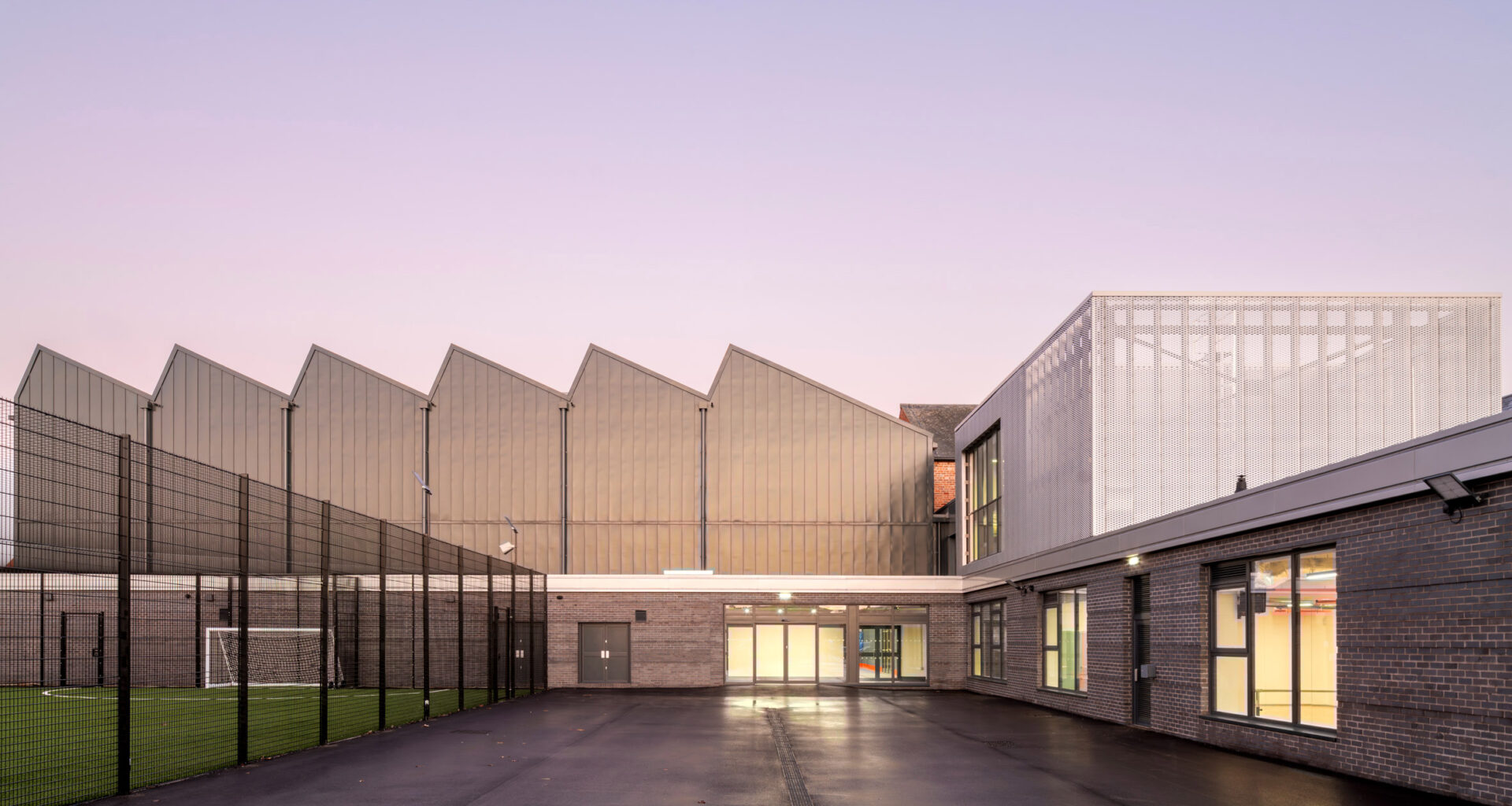
UK studio John Puttick Associates has refurbished a group of disused Victorian warehouses in Grimsby to create the Horizon Youth Zone, adding a sawtooth-roofed sports court that nods to the site’s industrial past.
Forming part of the wider regeneration of Grimsby’s town centre, the Horizon Youth Zone provides 2,995 square metres of arts, performance and sports space for young people in the area.
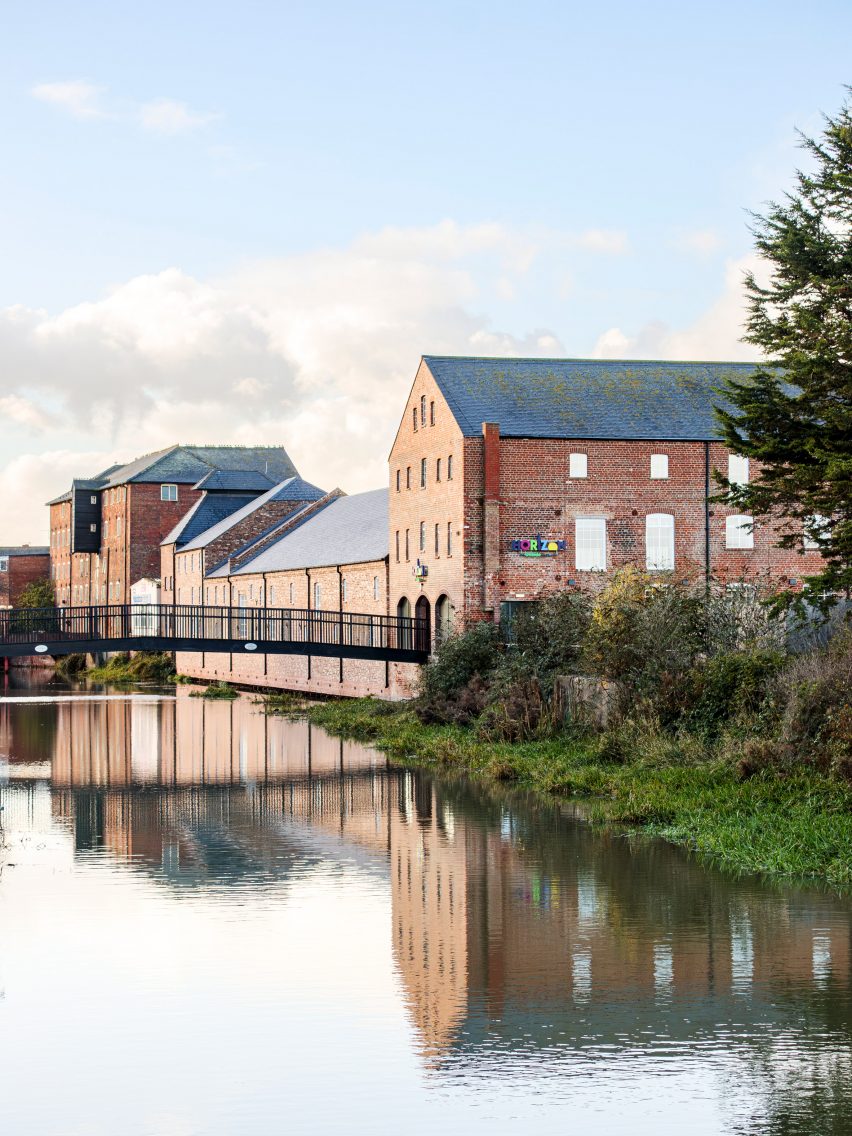 John Puttick Associates has created Horizon Youth Zone in Grimsby
The disused Grade II-listed structures overlooking the River Freshney date back to 1821. Originally designed as granary warehouses, they were converted into a maltings and later a sawmill, before closing in the 1990s.
Building on what John Puttick Associates called the “strong civic presence” of these warehouses, their brick-and-timber frames have been carefully restored and expanded with a zinc-clad sports hall topped by an industrial-style sawtooth roof.
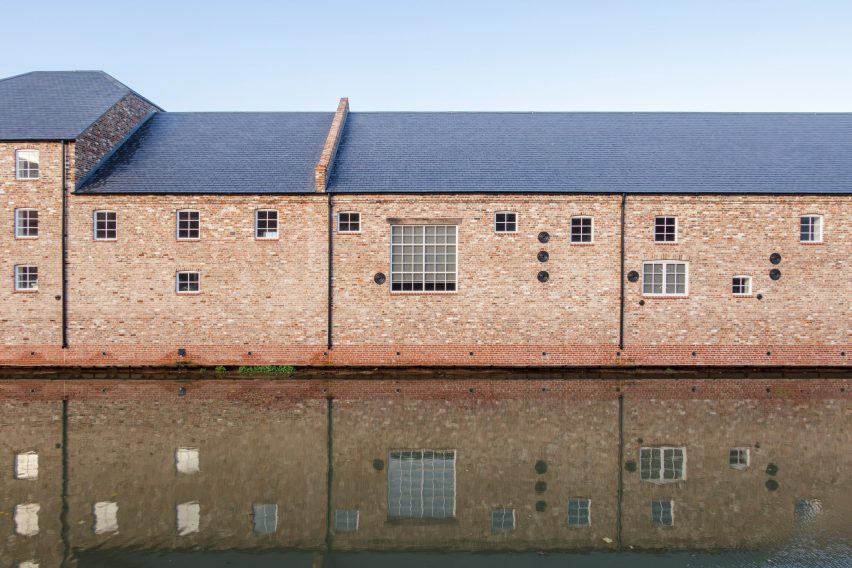 The youth centre has transformed a series of Victorian warehouses
“The Victorian warehouses directly face the River Freshney and form an important piece of Grimsby’s townscape,” founder John Puttick told Dezeen.
“The project involves a complex mix of restoration and rebuilding to reimagine the industrial heritage as an exciting destination for young people,” he added.
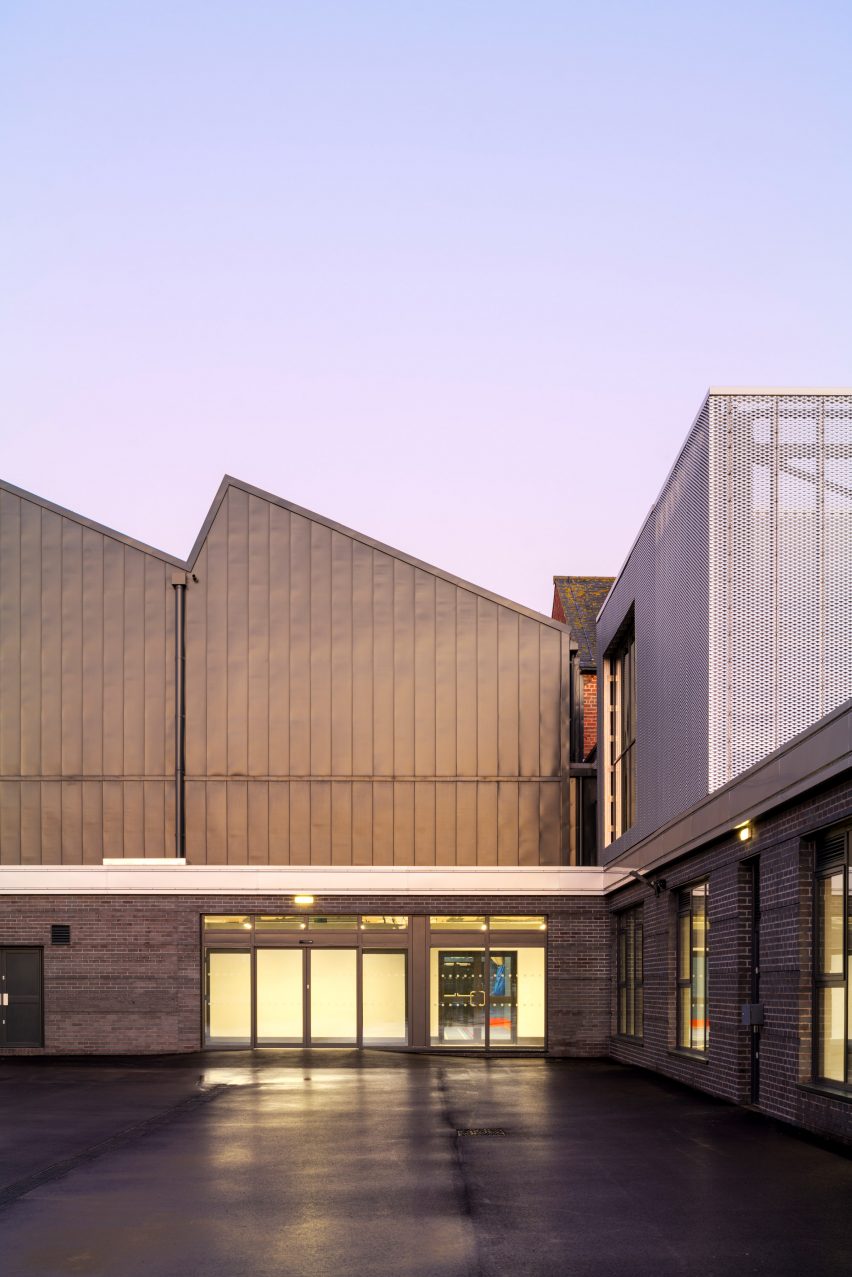 A sports court with a sawtooth roof has been added
A refurbished footbridge across the river strengthens the site’s connection to the city and leads directly into the largest warehouse building, which has been opened up to create a dramatic, triple-height entrance framed by black steelwork.
From this orienting space, an L-shaped plan sees the sports court to the north and a mixture of more compartmentalised performance, art and craft, meeting and mentoring spaces to the west.
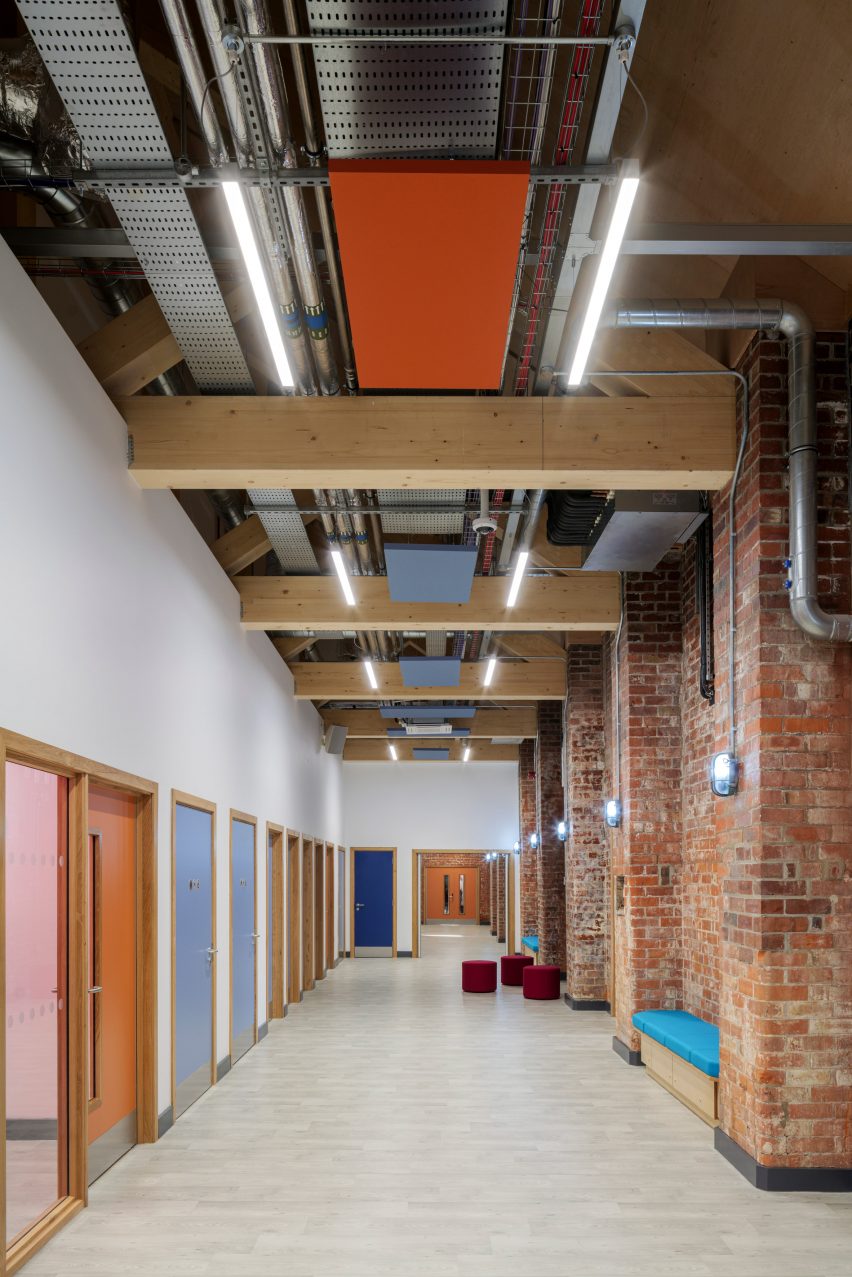 Original brickwork is exposed throughout
Two smaller floors above the reception area include offices, a recording studio and a music room, accessed via corridors that overlook the triple-height atrium through fully glazed walls.
The poor condition of large parts of the site required John Puttick Associates to reconstruct the site’s southern river wall and replace several roofs with glued-laminated timber (glulam) trusses, left visible overhead in the interiors.

Rede Architects and Moguang Studio turn abandoned factory into youth activity centre
Wherever possible, existing masonry was reused, while in areas that required new construction, a matching shade of brick was used.
This brickwork is complemented by the zinc-clad sports court, as well as a smaller climbing wall housed within a mesh-wrapped cube.
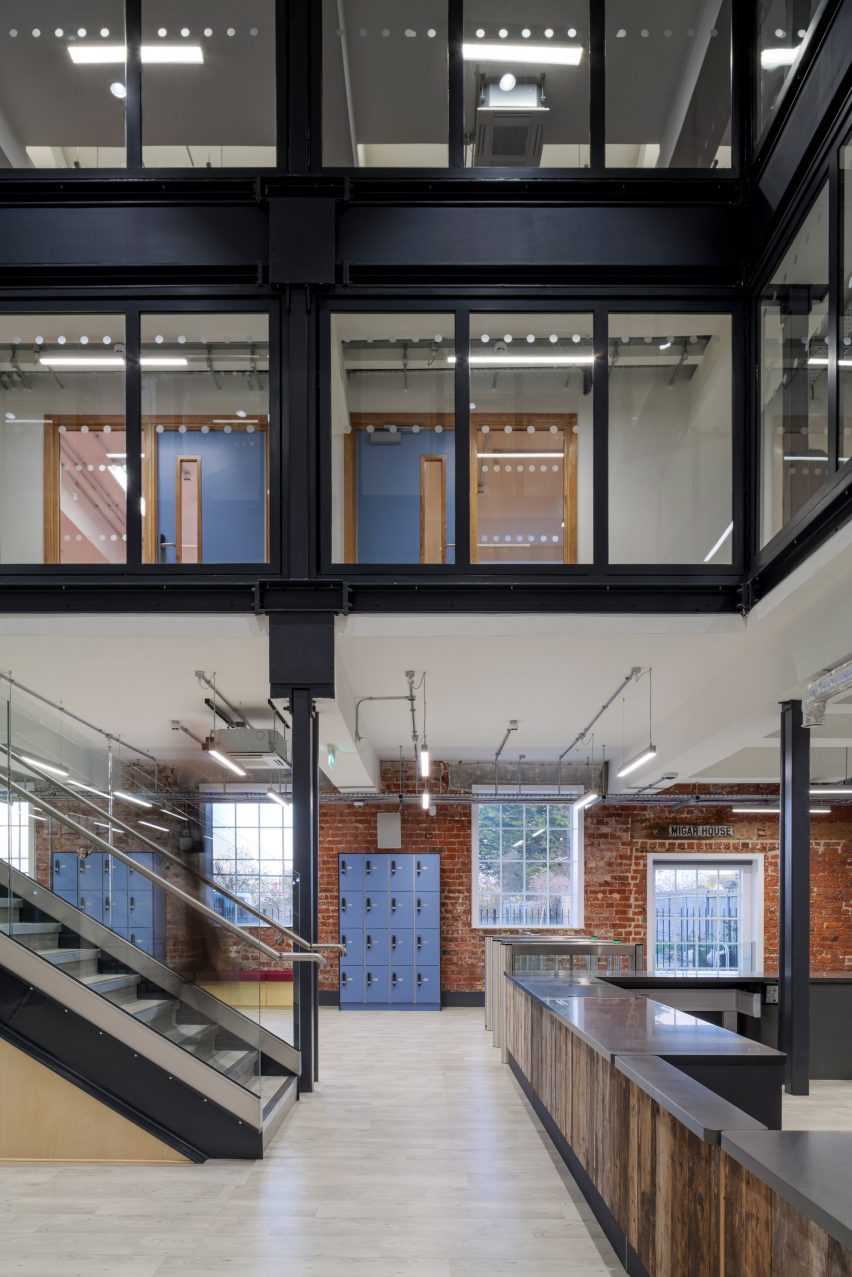 There is a triple-height atrium
Inside the communal and sports spaces, areas of brickwork have been left exposed, while in the centre’s other spaces white walls are paired with a bright palette of blues, greens and purples.
“We wanted the new additions to be contemporary, announcing the new activities of the site, but also responsive to the industrial heritage,” Puttick said.
“New-build elements – the sports hall and performance space – are contemporary in character but chime with the industrial context, creating a rich mix of forms and materials.”
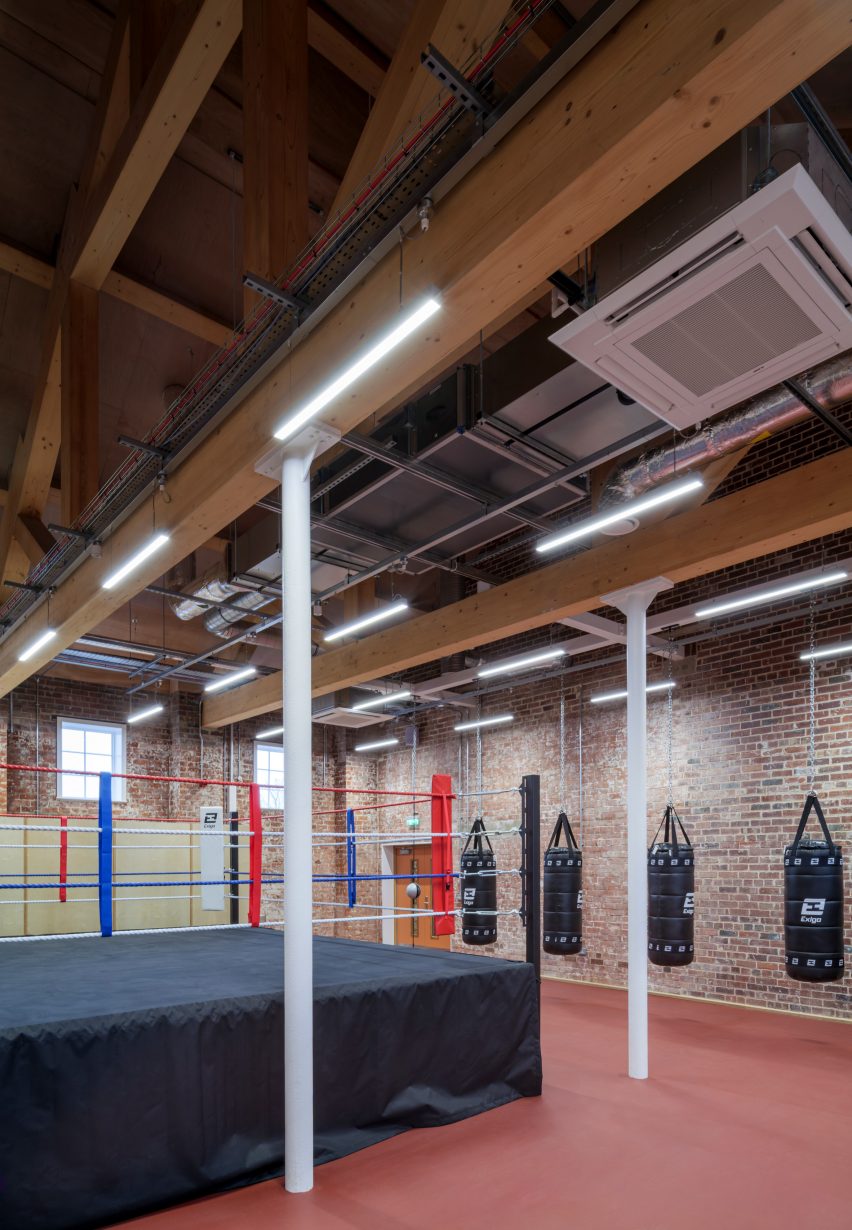 The project celebrates the site’s industrial past
Externally, the L-shaped form of the warehouses hugs an outdoor recreational space and sports pitch, overlooked by large windows in the performance space and kitchen.
John Puttick Associates is a London-based architectural studio founded in 2014. Previous projects by the studio include the extension of a Grade II-listed church in East Sussex and the refurbishment of the brutalist Preston Bus Station.
The photography is by Gareth Gardner.