
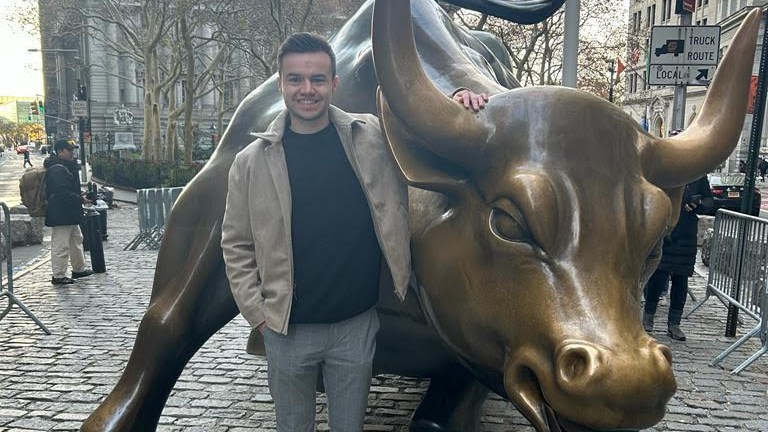
Alex Finch is 28. By the time he is 45 he wants to have built up enough savings to be financially independent and able to retire — if he wants to.
Finch, a management consultant from Hertfordshire, aims to build a pot of £1 million across Isas, pensions and cash savings by his late fifties, which would provide him with an income of about £40,000 a year.
Finch will not be able to access his private pension until he is 57, but plans to take money from his Isas or cash savings to pay himself an income before then. Or he may decide to continue working — for him, it’s all about freedom and choice.
“I’d like to be financially independent at 45, although this may not mean I retire. I could choose to reduce my hours or even stop working altogether. I started thinking about this when I was 21 and on holiday and read a book about how to create long-term wealth,” said Finch, who has a YouTube channel, Finch Finance UK.
The Fire basics
Finch’s strategy is known as Fire — financial independence, retire early. The Fire movement started in the US and has grown in the UK over the past decade, particularly among younger workers who are hoping they do not have to wait until their late sixties before they can retire.
As a simple rule of thumb, Fire followers aim for a total pot that is 25 times their annual spending. This would allow withdrawals of 4 per cent a year, rising with inflation after the first year. Withdrawals of 4 per cent are generally said to be sustainable, meaning that you should not run out of money in retirement as long as you leave your funds invested.
• It costs £800,000 to retire well — workers say it’s impossible
So if, for example, you were hoping for an income of £30,000 a year, you might aim for a total pot of £750,000. When the state pension kicks in (the age at which you can claim it is going up from 66 to 67 by 2028 and is due to rise again to 68 by 2046), it could reduce the amount you need to take from your pot. A full new state pension is worth about £12,000 a year at the moment.
A Fire strategy requires a high level of diligent saving from a young age. There are blogs, online communities, podcasts and courses to help. One is the Rebel Finance School, run by Katie and Alan Donegan, who achieved financial independence at 35 and 40 and now run free online courses.
The school began with 133 people on a course in 2020 and by last year some 40,000 people had signed up, Katie said. Its Facebook group has more than 56,000 members discussing their retirement-planning strategies.
“Some come to us because they are overwhelmed, confused, or had simply never been taught how money works. They want to get out of debt, understand investing, take control of their pensions, and build a clear plan for financial independence. Many are shocked to realise that they can retire far earlier than they ever imagined, once they understand the maths,” Katie said.
• Five simple things most savers don’t know about their pensions
How to save enough
Anthony Villis, the co-founder of the financial planning firm First Wealth, said the most common characteristic among those who had retired early is a sense of direction. They have a clear strategy and know what they want to achieve and by when. Consistency is also key, he said.
“You have to commit to saving regularly over the longer term and be able to ride out market volatility and inflation — especially as stocks and funds have the potential to outpace both over time. Consistency may be simple, but it is one of the most effective ways to make early retirement possible. When you’re in your twenties, thirties or even forties, retirement can seem a long way off, but starting early gives you the room to build the financial future you want.”
Starting early also means you can make the most of compound growth. A quick way to illustrate this is the “rule of 72”, which is a rough calculation used to estimate how long it will take your investments to double in value through compounding. To work out how long it will take, divide 72 by the expected rate of return — for example, if your investments grew at 7 per cent a year, it would take about ten years for their value to double (72÷7). On growth of 10 per cent a year, it would take about seven years.
Les Cameron from the investment manager M&G said retiring early can be incredibly rewarding but it involves planning and a clear-eyed view of how long your money needs to last. “People often reference the rule of 72. Because real investment returns are rarely smooth, the more reliable strategy is simply to start early and give compounding as many years as possible to work in your favour. Begin early, stay invested and plan deliberately for the long road ahead.”
• The 62-year-old grandmother of 14 who made £20,000 investing
Where to invest
The other tip for Fire savers is to use tax-efficient accounts wherever possible to help you keep more of your money. This includes Isas, into which you can pay £20,000 a year and benefit from tax-free growth and withdrawals for life.
Pensions are also valuable because you get tax relief on contributions and employer contributions, although you will pay tax on withdrawals if your income is above the £12,570-a-year personal allowance. Pensions cannot be accessed until you are 55 (rising to 57 in 2028), so those looking to retire before then will have to rely on other savings or investment income to bridge the gap.
This is the approach being taken by Finch. He pays the maximum £20,000 a year into a stocks and shares Isa, which is now worth £75,000. He also pays 6 per cent of his annual salary into his workplace pension, which his employer matches, giving a total contribution of 12 per cent. At the moment his pot is worth about £55,000. Assuming total deposits of about £2,000 a month in his Isa and pension over the next 16 and a half years, with average growth of 6 per cent a year, he expects to have a pot of about £1 million by his 45th birthday.

Finch makes sure he can still afford to go to games, including a visit to the San Siro to see AC Milan
Finch has an emergency fund, equivalent to three months’ salary, and bought a flat with his partner last year. Despite saving hard, he still enjoys life. He goes on holiday at least twice a year and travels to Suffolk regularly to watch Ipswich Town play as often as he can.
“I’m not really bothered by material things such as clothes or going out for nice dinners, so I’m happy to cut back there to increase how much I can save. But I do like spending money on experiences. For me it’s all about balance. Although I can dedicate a significant amount towards my investments, I still want to enjoy life at the same time,” Finch said.