
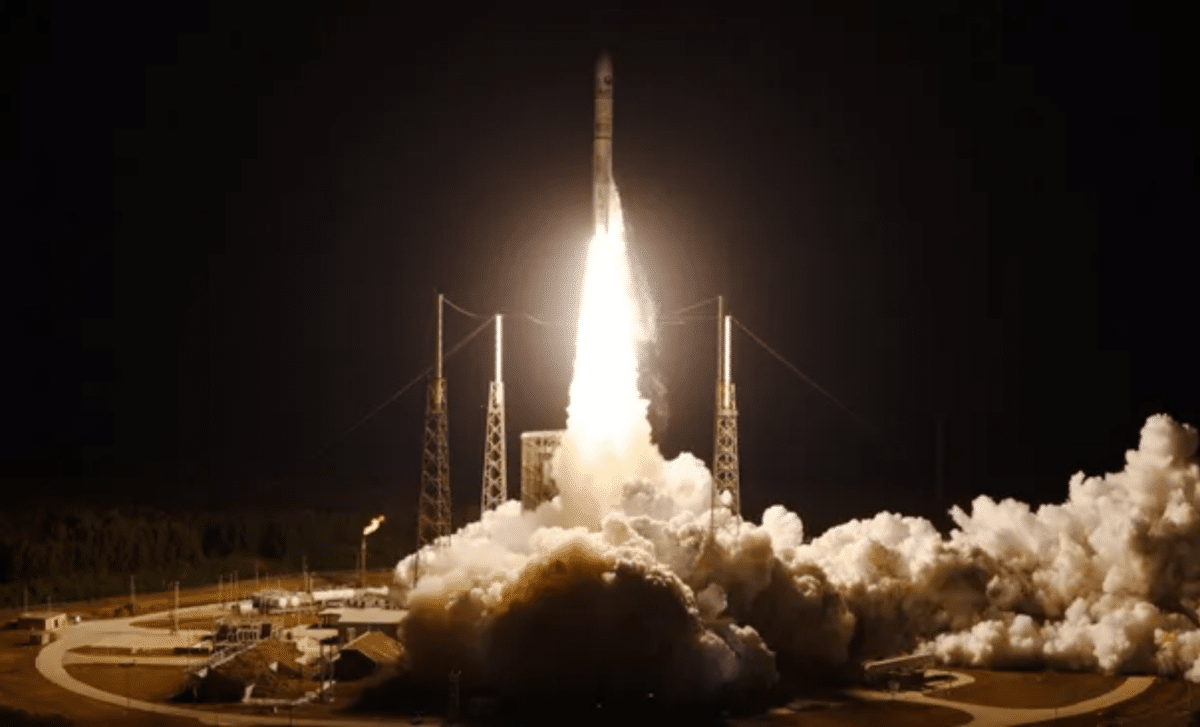
On February 12, 2026, United Launch Alliance (ULA) successfully launched its Vulcan Centaur rocket, completing its fourth mission while contending with an unexpected anomaly. This mission, which carried two spy satellites for the U.S. Space Force, marks a pivotal moment in the development of the Vulcan Centaur rocket, a next-generation spacecraft designed to replace ULA’s Atlas V.
Challenges Faced by Vulcan Centaur
The Vulcan Centaur rocket’s performance anomaly represents the latest in a series of hurdles the rocket has faced since its inception. Although ULA’s new rocket technology performed successfully overall, the anomaly observed early in the flight required quick adjustments and careful monitoring. The performance issue centered around one of the four solid rocket motors that are a key component of the Vulcan’s first stage. ULA’s ability to overcome the anomaly without jeopardizing the mission’s success is a testament to the rocket’s overall design. As Gary Wentz, ULA Vice President of Atlas and Vulcan Programs noted,
“Despite the observation, the Vulcan booster and Centaur [upper stage] performed nominally and delivered the spacecraft directly to geosynchronous orbit.”
The ability of the rocket to stay on course and meet its mission objectives in the face of an unexpected issue is a significant achievement, yet the anomaly raises questions about the consistency and reliability of the solid rocket boosters (SRBs), which have already presented challenges during earlier test flights.
In addition to the anomaly, the successful delivery of the satellites to orbit demonstrates the capabilities of the Vulcan Centaur when operating without major issues. However, this early performance hiccup cannot be overlooked, as it underscores the challenges that come with testing new technologies. The integration of solid rocket boosters in the Vulcan Centaur design aims to enhance its payload capacity, but as seen in this latest mission, there are still kinks to iron out. ULA has committed to reviewing all available technical data and imagery to identify the root cause of this anomaly. As Wentz emphasized, “The integrated U.S. government and contractor team is reviewing the technical data, available imagery, and establishing a recovery team to collect any debris,” signaling ULA’s thorough approach to problem-solving.
Next Steps for ULA and Vulcan Centaur’s Future
As ULA proceeds with its investigation into the anomaly, the company must address the underlying issues with the solid rocket motors to ensure the Vulcan Centaur’s future missions are not affected. Following the investigation, ULA plans to implement corrective measures to prevent such problems in future launches. The results of this investigation will be closely monitored, particularly by the U.S. Space Force, which is heavily reliant on the Vulcan Centaur for future national security missions. ULA has stated its intent to make necessary changes before the next Vulcan mission, as ensuring the reliability of the rocket is critical for the success of future operations.
“We will conduct a thorough investigation, identify root cause, and implement any corrective action necessary before the next Vulcan mission,” Wentz confirmed.
The Vulcan Centaur’s upcoming missions, particularly those that are national security-related, will be of great importance. If the anomaly turns out to be an isolated event, the rocket could continue its path toward becoming a primary workhorse for ULA and the U.S. Space Force. However, if further issues are discovered, ULA may face delays or modifications in its launch schedule. This will be particularly concerning for the Space Force, which has already entrusted the Vulcan Centaur with its satellite delivery missions. The military’s System Delta 80 team at Cape Canaveral will work closely with ULA to ensure that the rocket meets all space flightworthiness criteria before future launches.