
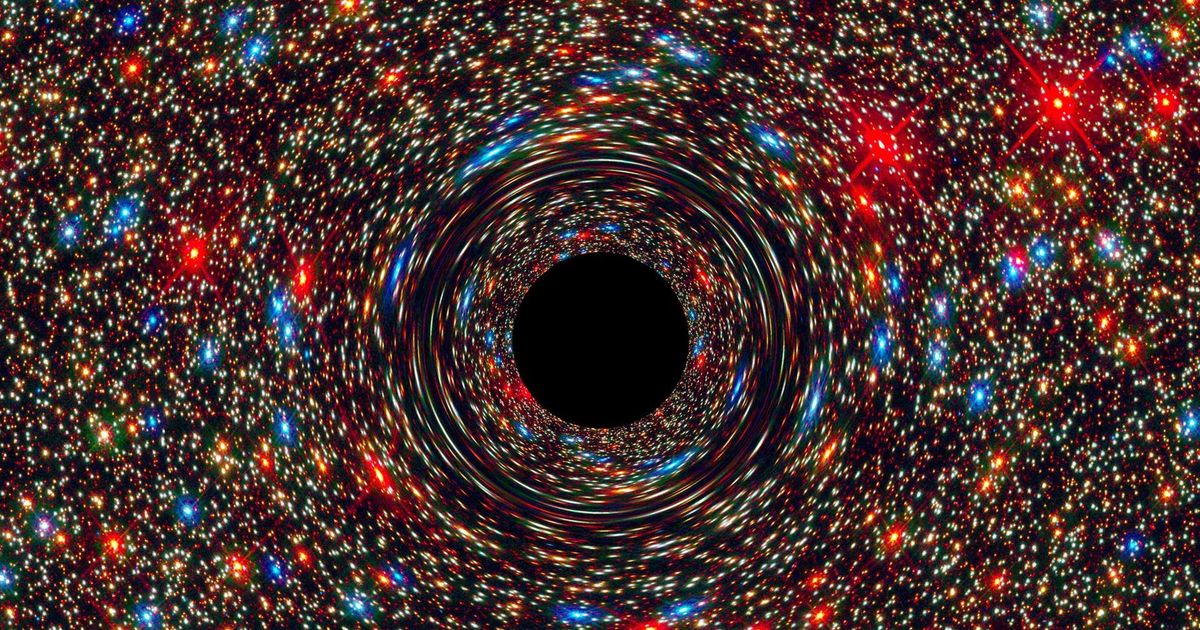
A scientist has revealed the terrifying – and surprising – reality of what you might see and feel if you fell into a black hole
16:35, 14 Feb 2026
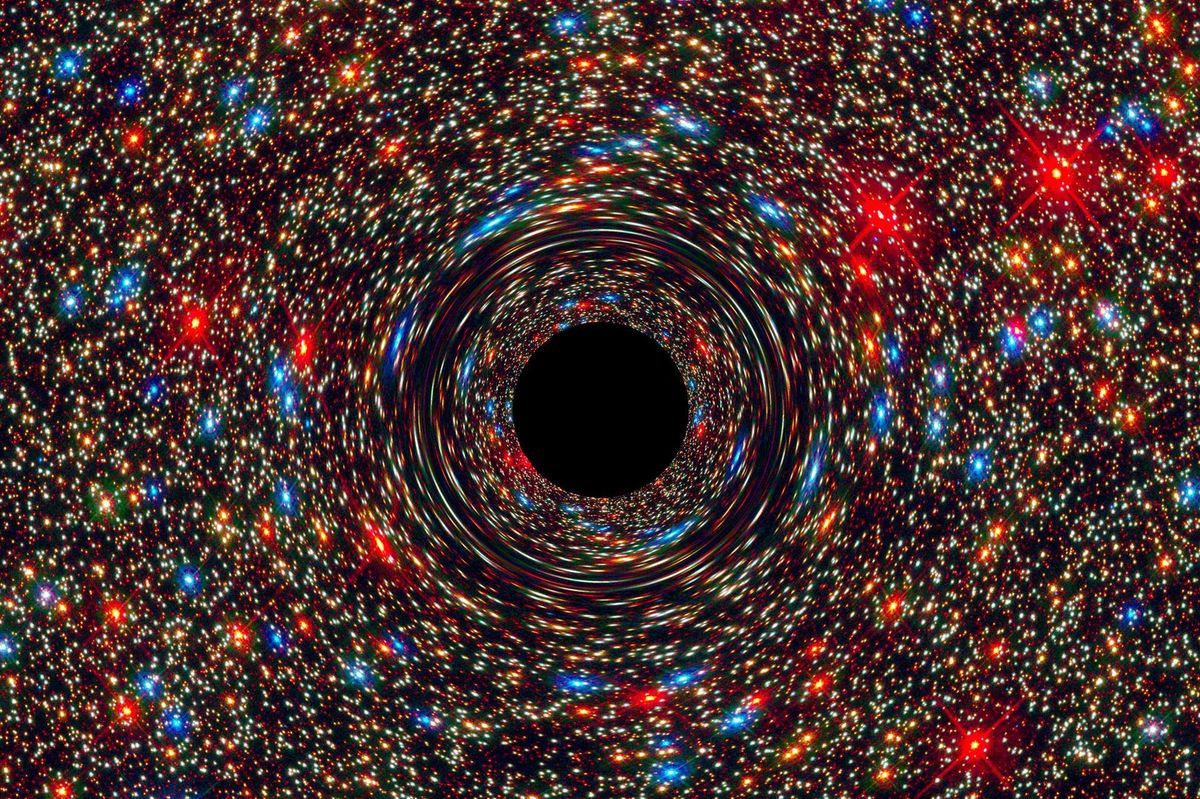
Scientists have revealed what would happen if a human ever fell into a black hole(Image: NASA, ESA, and D. Coe, J. Anderson, and R. van der Marel (STScI))
I spend too much time thinking about black holes. They have long haunted my imagination. Lurking in the depths of space, they swallow stars, bend time and could theoretically rip humans to shreds.
But despite their fearsome reputation, the reality of black holes is far more complex than most people can imagine. At its simplest, a black hole is a region in space where gravity is so strong that nothing, not even light, can escape from it.
According to Dr Ziri Younsi, Lecturer in General Relativistic Astrophysics at University College London (UCL), black holes are characterised by something called its ‘event horizon’ – the theoretical boundary surrounding it.
“You can’t see a black hole because if it has a surface, it will be inside its event horizon,” he explains. Because no light escapes, black holes are effectively invisible, meaning scientists are only able to detect them by recording what happened around them – as it pulls matter from nearby stars and emits radiation.
Dr Younsi spoke to the Manchester Evening News as part of our Science Spotlight series. Each week we chat to a different researcher to answer burning science questions. We’ll shine a light on the wonders that shape our Universe, remarkable technology, and the mysteries of the mind and body.
Black holes may sound like cosmic destroyers, but scientists say they play a crucial role in shaping the Universe itself. At the centre of almost every galaxy – including our own – lies a supermassive black hole, which Dr Younsi describes as a ‘gravitational anchor’.
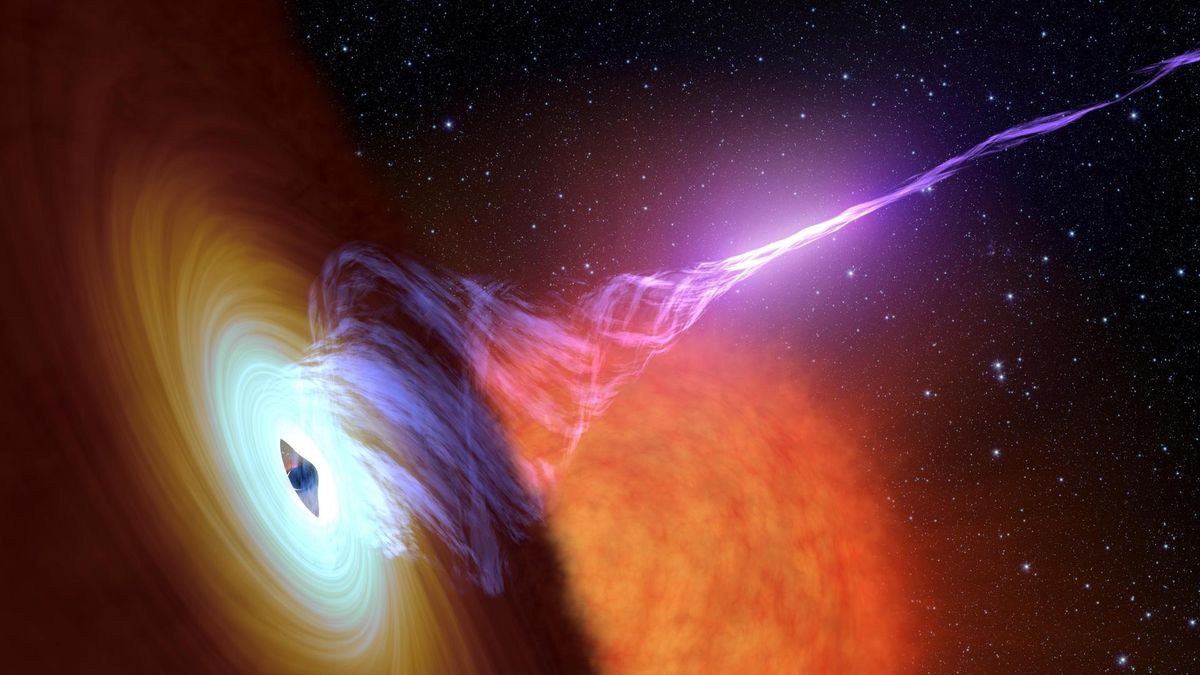
Scientists aren’t entirely sure how many black holes formed(Image: NASA/JPL-Caltech)
And far from simply comsuming everything around them, black holes also release enormous amounts of energy back into space.
“A black hole isn’t just swallowing up matter. Actually, they throw out and eject more matter than they consume…in the form of these huge relativistic jets that we see from a lot of galaxies,” Dr Younsi explains.
These jets blast energy across vast distances, helping to regulate how galaxies grow and evolve. Black holes effectively help shape the cosmos itself.
So, what would happen if you fell into one?
It’s a question that fascinates astronomers and the public alike, and the answer – no surprises here – isn’t simple. Actually, it depends entirely on the size of the black hole and, ironically, the biggest black holes may offer the least dramatic outcome.
Most black holes are born when massive stars reach the end of their lives. “If you have a star that’s maybe 20 times the mass of our Sun, at the end of its life, it runs out of hydrogen…and eventually it runs out of fuel and it will collapse,” Dr Younsi says. “That collapse will crush all of the matter inside the star down to a very small size. And because that star is really big, there’s enough force in that collapse to compress it down into a black hole.”
READ MORE: What would happen to Earth if the Moon suddenly disappeared?
Other observations, including those from NASA’s James Webb Space Telescope, suggest some black holes may have formed directly during the early stages of galaxy formation, rather than from individual stars collapsing. Research is still ongoing, but this might explain how supermassive black holes – millions or billions of times the mass of our Sun – appeared very early in cosmic history.
So let’s say you’re travelling through deep space and stumble across a smaller stellar-mass black hole, if you happened to fall in, your prognosis might look very different to if you fell into a monster black hole.
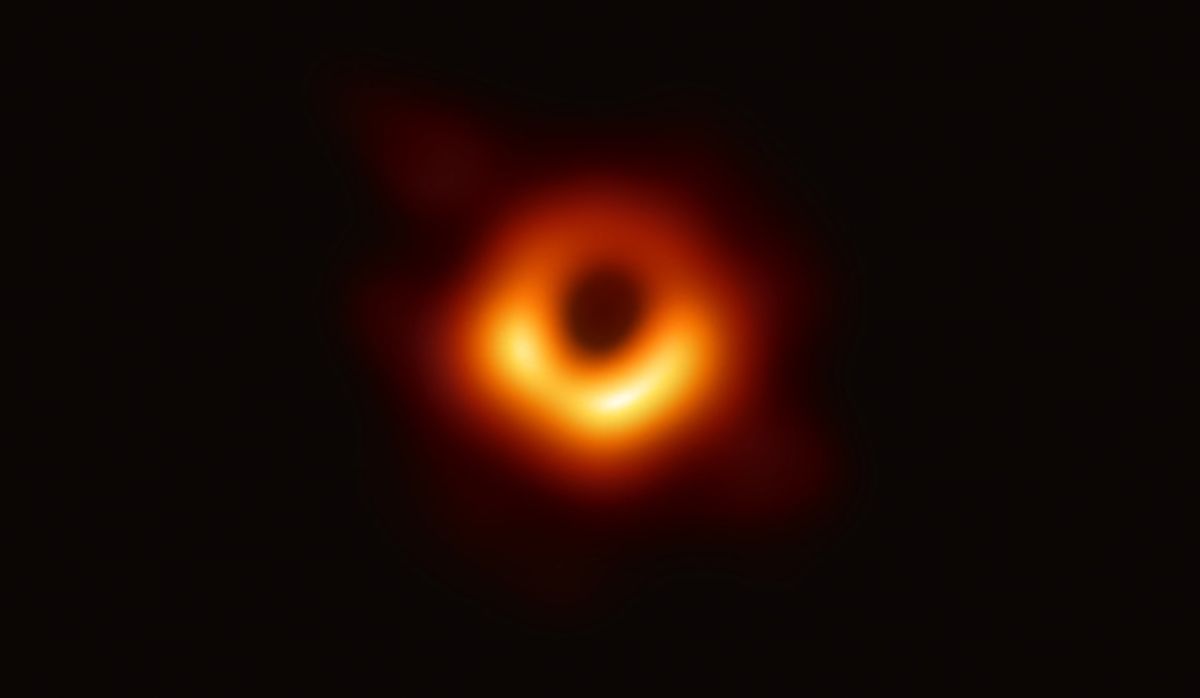
Dr Younsi was involved in research that imaged the black hole at the center of galaxy M87(Image: Getty Images)
For supermassive black holes billions of times heavier than the Sun, like the one at the centre of the M87 galaxy about 53 million light years from Earth, the ‘event horizon’ boundary is so large that the gravitational force would initially be relatively small.
“The tidal force, which is the force of the pulling between your head and your feet, is about the Earth’s gravity,” Dr Younsi says. “So you could actually cross the event horizon of a billion solar mass black hole and it wouldn’t be that uncomfortable.”
“It wouldn’t be any worse than taking off in an airplane,” he adds, assuming there’s no ‘ultra-hot matter or radiation’ that gets to you first. However, once you had passed the event horizon, it would be impossible to escape.
“You wouldn’t feel very much at all, but it would take you a lot longer to die,” warns Dr Younsi, who has even created a virtual reality movie of what you would see if you were unfortunate enough to fall into one.
Paradoxically, smaller black holes are far more dangerous. If you fell toward one just a few times the mass of the Sun, Dr Younsi says you wouldn’t make it past the event horizon intact.
“If you fell into one of those, it’s bad news because the tidal force there is really strong,” he says. “You wouldn’t even get near the event horizon before you got shredded into nothing, basically.”
This violent process has a surprisingly fun name: spaghettification.
“You would get stretched out, so you’d see your own feet moving further away from you,” Dr Younsi explains. This happens because gravity pulls much more strongly on the parts of your body closer to the black hole than those further away, stretching you into a long, thin shape – like spaghetti!