
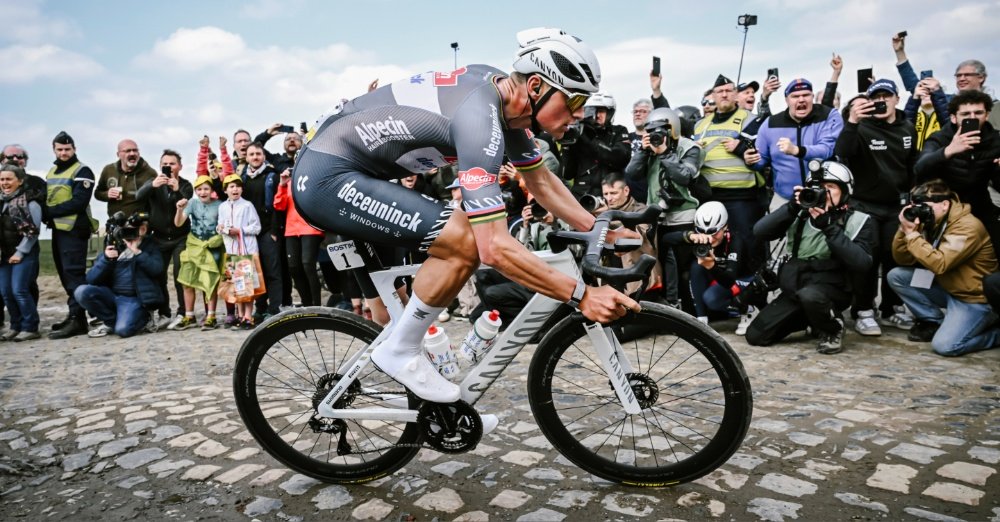
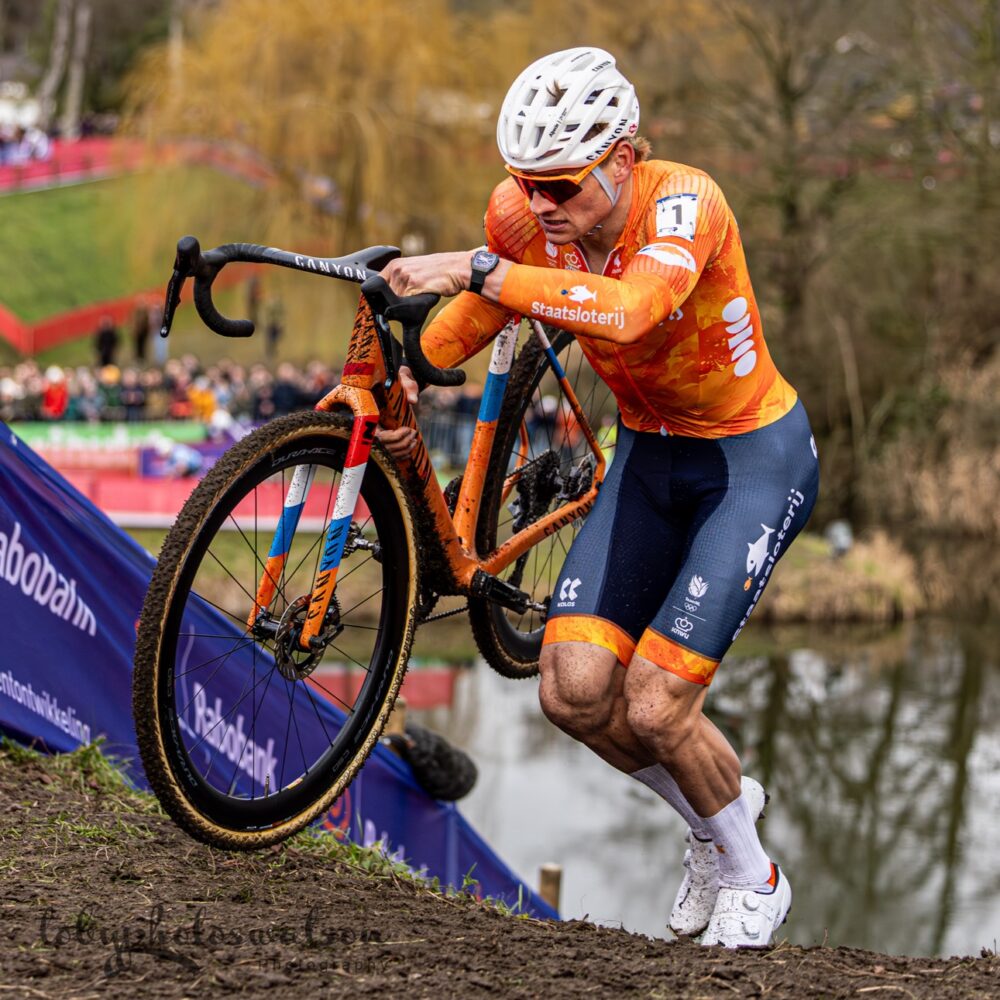
 Mathieu van der Poel on his way to his eighth senior gold medal at the cyclocross Worlds two weeks ago, capturing his 13th world title, junior and senior, in the road, cyclocross and gravel disciplines (Photo: Toby Watson)
Mathieu van der Poel has been one of the stars of cycling – both road and cyclocross – since he was a teenager, winning the junior World Championships in cyclocross as a 16-year-old in 2012 and the following year winning junior gold at both the cyclocross and road race Worlds.
And now the Alpecin-Premier Tech rider says he believes his genetics significantly influence his cardiac capacity – for recovery and performance – revealed in his latest Whoop data. That perhaps comes as no surprise as his father is Adrie van der Poel, a former elite cyclocross world champion and classics winner.
And his grandfather, on his mother’s side, was Raymond Poulidor, who won the Vuelta, among 73 wins in an 18-year career. He was 2nd at the Tour de France three times – 1964, 1965 and 1974.
On a podcast with Whoop, Van der Poel said his resting heart averaged at 34bpm and the lowest he ever recorded was 31bpm. He said his heart rate variability (HRV) score was over 200, compared to the average male on Whoop of 65.
The HRV is the measure of the millisecond-level variation between consecutive heartbeats and is a sign of a person’s ability to recover, and their fitness levels. Whoop terms it a “readiness indicator”, or how well recovered and physically trained a person is for stressful, difficult exercise.
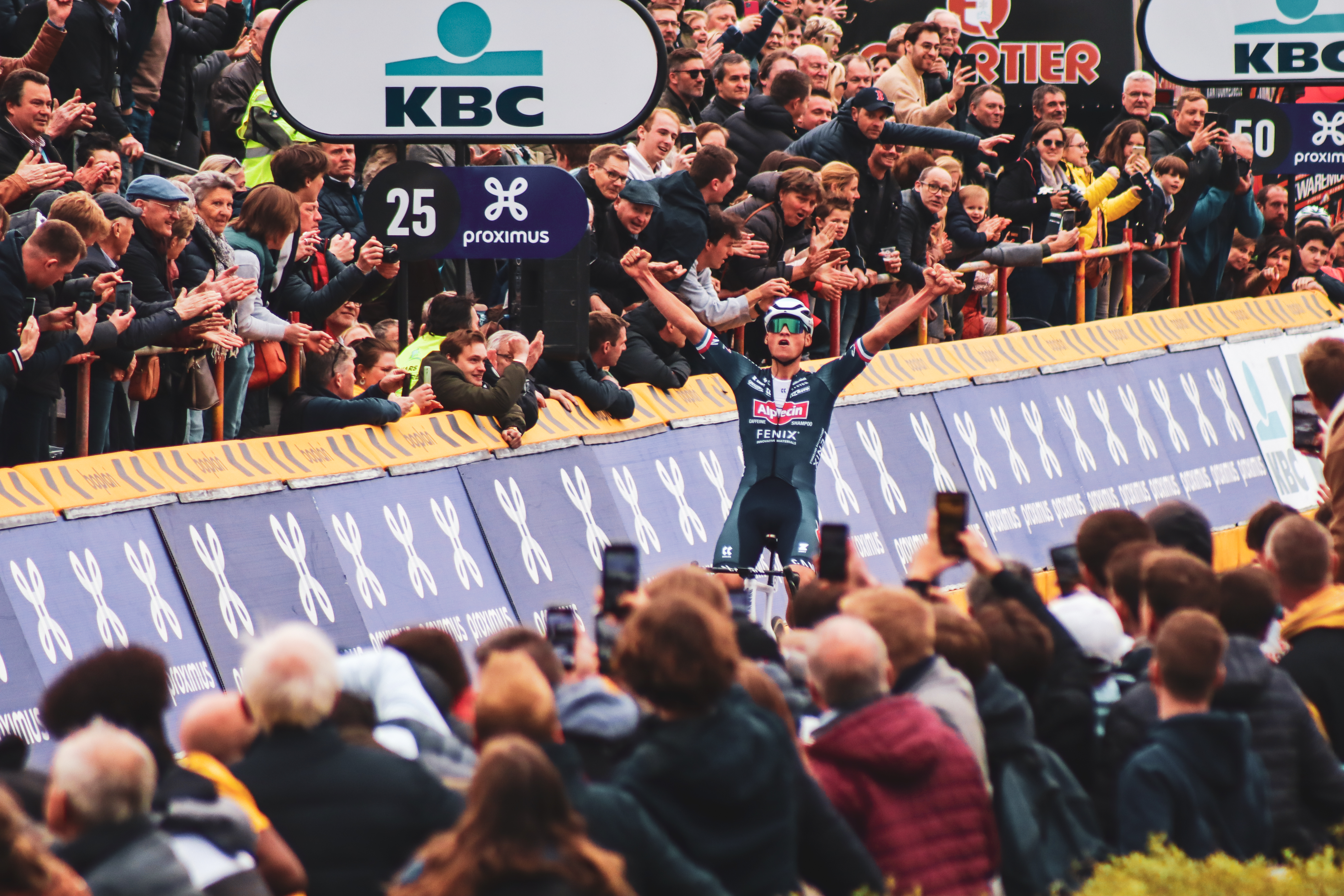 Van der Poel winning Tour of Flanders in 2020, the first of the three victories in the race that he has collected so far
“I’m really high in HRV,” the Dutch rider told the podcast. “I think it’s a bit genetical, but fitness is important also. For sure, it’s something that makes me stronger and better recovered.”
He added his HRV and average heart rate are the two most important pieces of data he collects and the ones he watches most closely.
“The average is 38. The lowest I have on Whoop recorded is 34. So, it’s really low,” he said. “But it’s something a lot of endurance athletes have, the heart is really well trained. In general, cyclists are quite low on the heart rate.”
He added while some pro athletes very closely guard their data, he was more relaxed about it as he believed sharing his data did not offer his rivals any advantage over him.
Old school rules still apply
While he discussed the importance of informing his training and recovery with the kind of tech the cyclists of his father’s and grandfather’s generations couldn’t comprehend, Van der Poel said the rules to racing have, in many ways, not changed. And one of those was the important of positioning in a group at key moments in classics.
“We go from big roads to smaller climbs, and you have to be in the top twenty riders. Because, if there’s a move and you’re too far back, it’s impossible to respond,” he said.
“Even with the best numbers, it’s impossible to be in the leading group if you don’t know how to position yourself. You need numbers, but you can also win races by riding smarter or doing the right things at the right time.”
He said things like positioning and tactics were much more important in the classics than in Grand Tours, where the strongest riders normally won.
“On the climbs, the power numbers speak for themselves. Most of the time the strongest wins,” he explained of the Grand Tours. “In the classics you have so many different race situations, so many tactics. That’s what makes it exciting.
“There are 180 of us and everyone knows exactly where to be. So it’s always a great battle to stay at the front. You need a good team, good teammates. And you need experience to know how to get there.”