
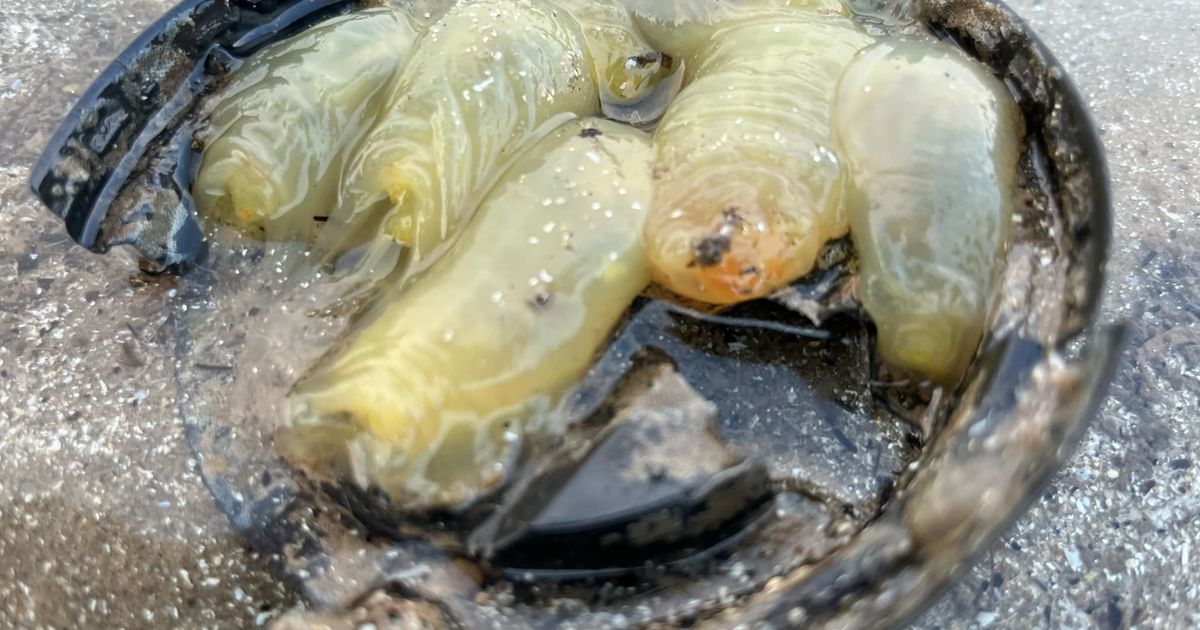
A mother and daughter made an unusual discovery when walking on a Welsh beach leading to the involvement of an underwater expert.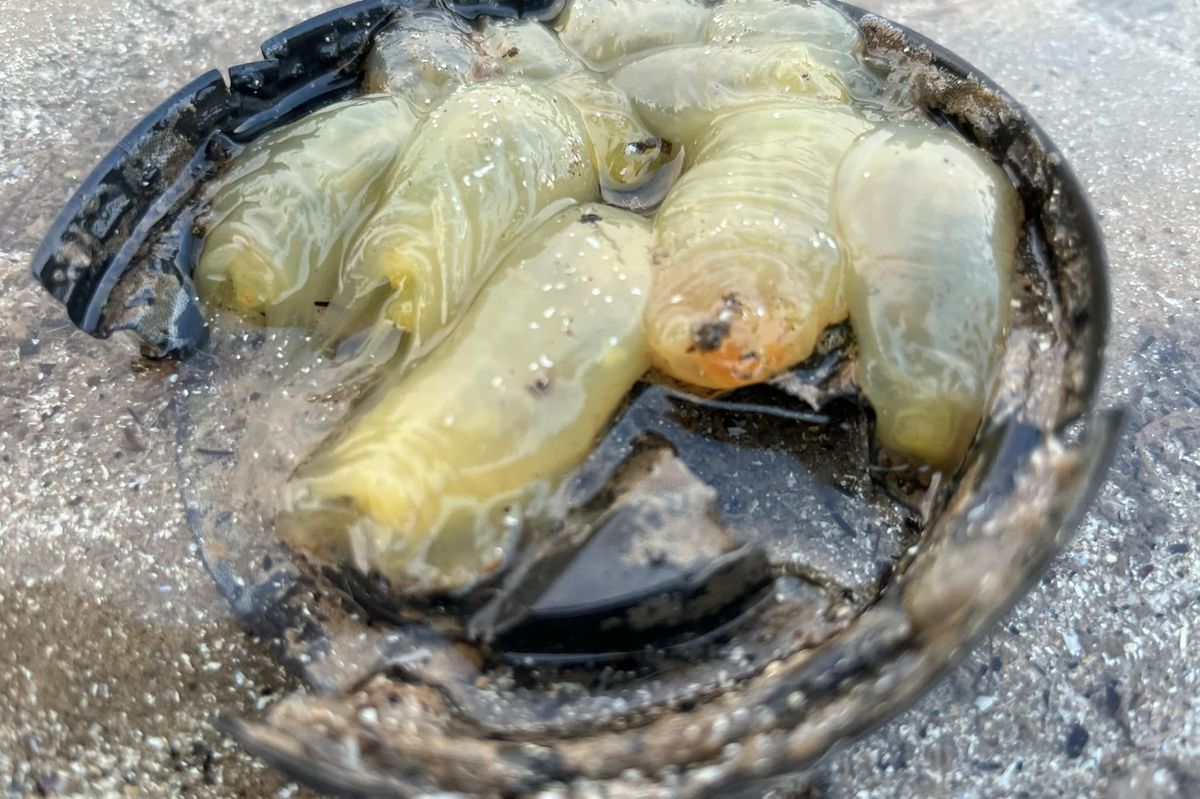
A mysterious creature has been found on a beach in Wales(Image: Chloe Heuch / Media Wales)
A mysterious jelly-like fish has been discovered by a mother litter picking with her daughter on a popular beach in Wales.
Teacher and author Chloe Hench was helping to clean Llanddona beach in Anglesey beach of rubbish when she lifted a coffee cup off the sand to discover the unusual creatures hiding there.
She recalled the moment, saying: “The plastic lid was upside down in the wet sand – it looked as though it had been dropped. I picked it up to put it in the bin not realising realised there were creatures inside.”
At first, the mother and daughter duo, who were confused but intrigued by their discovery, presumed the odd, sci-fi looking blobs were sea slugs but later realised that they were wrong.
Chloe said: I was a bit surprised by their weirdness. My daughter touched one gently as she didn’t believe me they were alive, and it sort of shrank into itself a bit.”
READ MORE: American man in the UK issues four-word verdict after trying cheese in Cheddar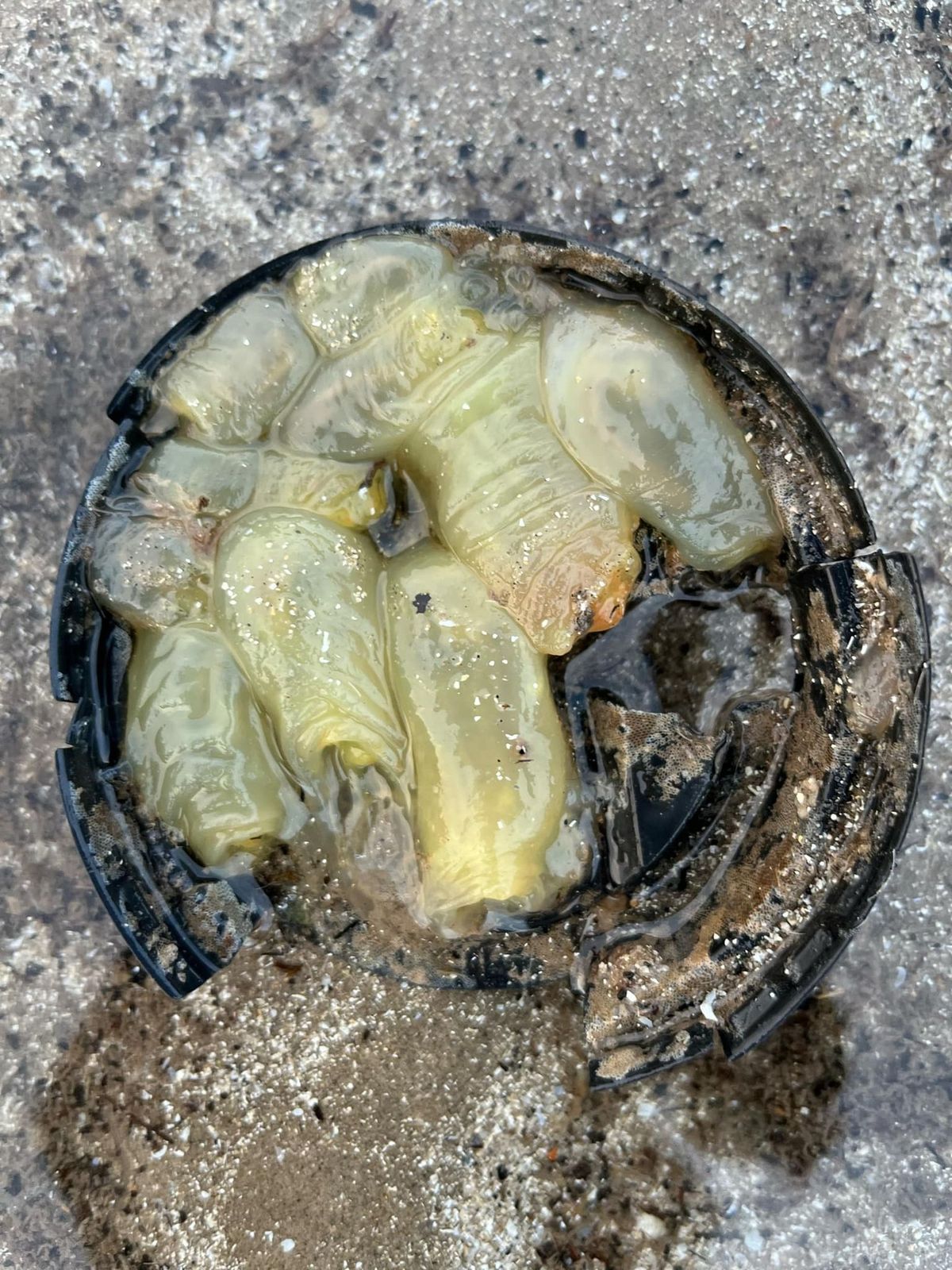
The jelly-like blobs were found nesting in a discarded coffee cup lid by the mother and daughter (Image: Chloe Heuch / Media Wales)
It was only when Chloe posted a picture of the animals to social media that an underwater photographer was able to shed some light on what the pair had really found.
The expert explained that jelly-like creatures are in fact sea-squirts, more specifically a large type called Ciona intestinalis, a species popular in shallow waters around the UK, according to reports by North Wales Live.
The soft, almost translucent tubular shaped organisms can grow as long as 20cm and although they may look harmless, they are considered an invasive species and can cause harm to the local ecosystems.
The photographer explained the nature of the sea creatures as “opportunistic colonisers” that settle on almost any surface they can “hasn’t got something else growing on it.”
‘They’re much prettier when expanded and filter feeding. Totally harmless but can aggregate in huge quantities,” they added.
Chloe and her daughter took pity on the creatures but decided to leave them be in their coffee cup home, event if it meant leaving a piece of litter on the beach.
“I left it where it was, which I felt bad about, but I didn’t want to upset them” she said.
“They did seem very happy. There were a few of them in that tiny space!”