
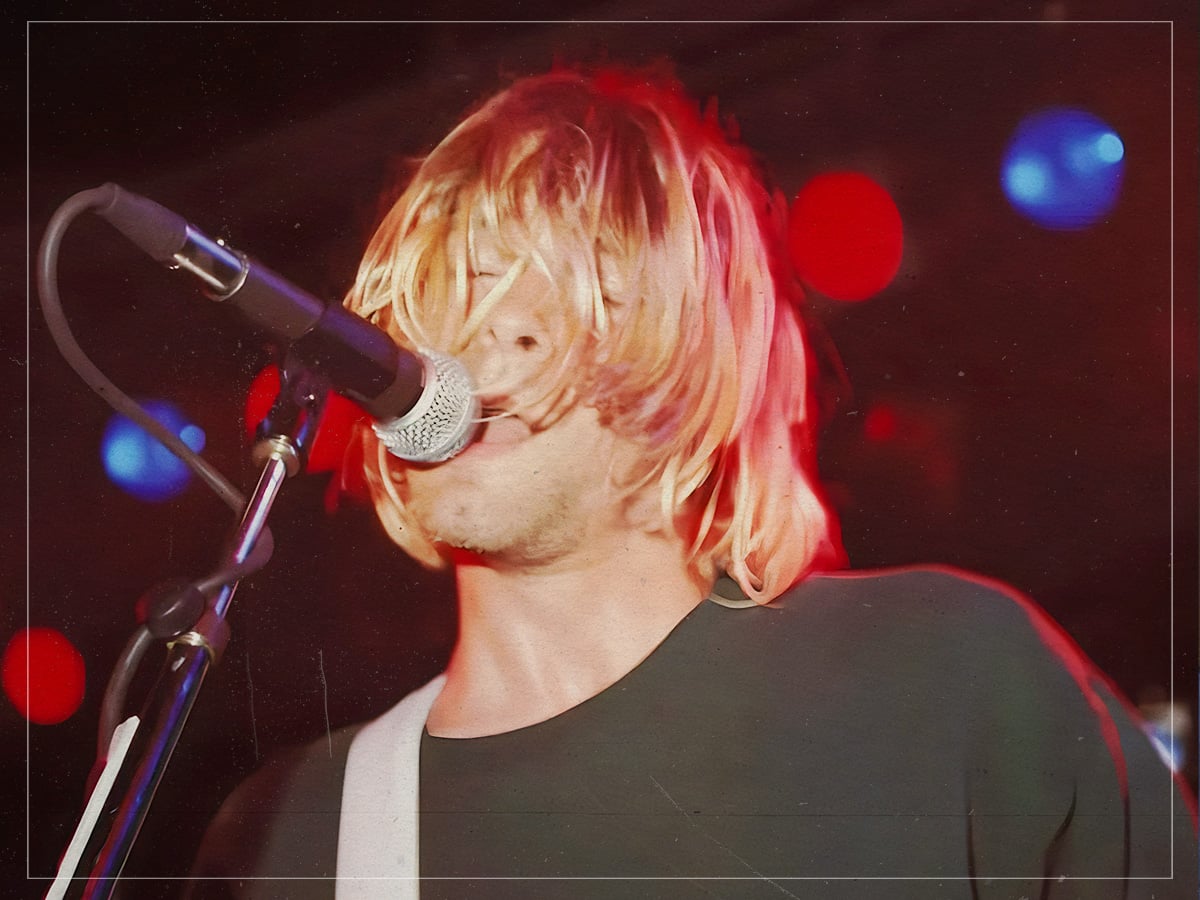
(Credits: Far Out / Alamy)
Sun 15 February 2026 19:30, UK
In a world full of the biggest rock and roll stars in the world, Kurt Cobain was bound to stand out when Nirvana first hit the big time.
The entire music world was reshaped the minute that ‘Smells Like Teen Spirit’ came out, but the real sea change happened when people started to like different flavours of rock and roll than they did before. Most A&R men weren’t ready for the underground scene to rise to the top so fast, but Cobain was more than happy to bring some of his friends to the top of the charts alongside him.
Because if there was one thing for sure, there was no way in hell Cobain was going to be making the same kind of music he heard on the hit parade. He liked his fair share of heavy music, but when looking at how dumb the hair metal scene was getting, there was no way that he was going to open up for a band like Warrant or go anywhere near the misogynistic posturing that Axl Rose was doing whenever Guns N’ Roses performed.
But even for a hipster of his time, Cobain was unwilling to compromise on a lot of his tastes. He was open about his love for bands like The Beatles and REM, but there was a good chance some of his all-time favourite bands were never going to get on the charts. He could try as hard as he could, but it would be a cold day in hell before bands like Buttholes Surfers became one of the biggest names in music, even if ‘Pepper’ was a decent radio single.
Then again, if it weren’t for those bands, Cobain probably wouldn’t have had the desire to play music in the first place. He disowned a lot of his Led Zeppelin and Aerosmith records once he learned what they were talking about, and even if bands like Sonic Youth were carrying the torch for punk rock throughout the late 1980s, the Seattle scene had a lot more exciting bands coming to the forefront.
Cobain was already an outspoken fan of bands like Soundgarden, but it was hard to nail down any major trend between any of the Seattle bands. Mudhoney was far more punk rock than anyone else, and Mother Love Bone was like a hair metal act that actually bothered to have some self-respect, but if you wanted to categorise a band as distinctly ‘grunge’, it was probably Melvins.
Buzz Osborne had all the habits that you’d expect out of a grunge outfit, and with Frank Zappa’s sense of humour, the frontman was everything Cobain was looking for when he first saw them in their natural habitat, saying, “I’ve seen hundreds of Melvins practices. I drove their van on tour. Everyone hated them, by the way. Our biggest fear at the beginning was that people would think we are a Melvins rip-off.”
You can definitely hear that sludgy influence on a lot of Cobain’s early songs from Bleach, but once he started writing more pop-flavoured material, he had hit on something more powerful than anything Osborne created. This was the sound of rebellion, and with Dave Grohl acting as their alternative John Bonham, they took what Melvins had started and turned it into one of the biggest rock and roll movements since the glory days of punk.
That might have been an extremely mixed blessing, and Cobain himself would have problems dealing with it later down the line, but there’s a reason why those songs have resonated for so long. He wasn’t going to spend the rest of his life ripping off his favourite band, so the least he could was try to make the most of channelling people like John Lennon and Michael Stipe whenever he could.