
Just when you think England have paved over the potholes on their development path, suddenly they hit one they did not see coming, giving them a destabilising jolt.
Missing now, for the first time in just over a year, is that mood of momentum as England regather for a must-win home game against Ireland, suddenly scratching their heads.
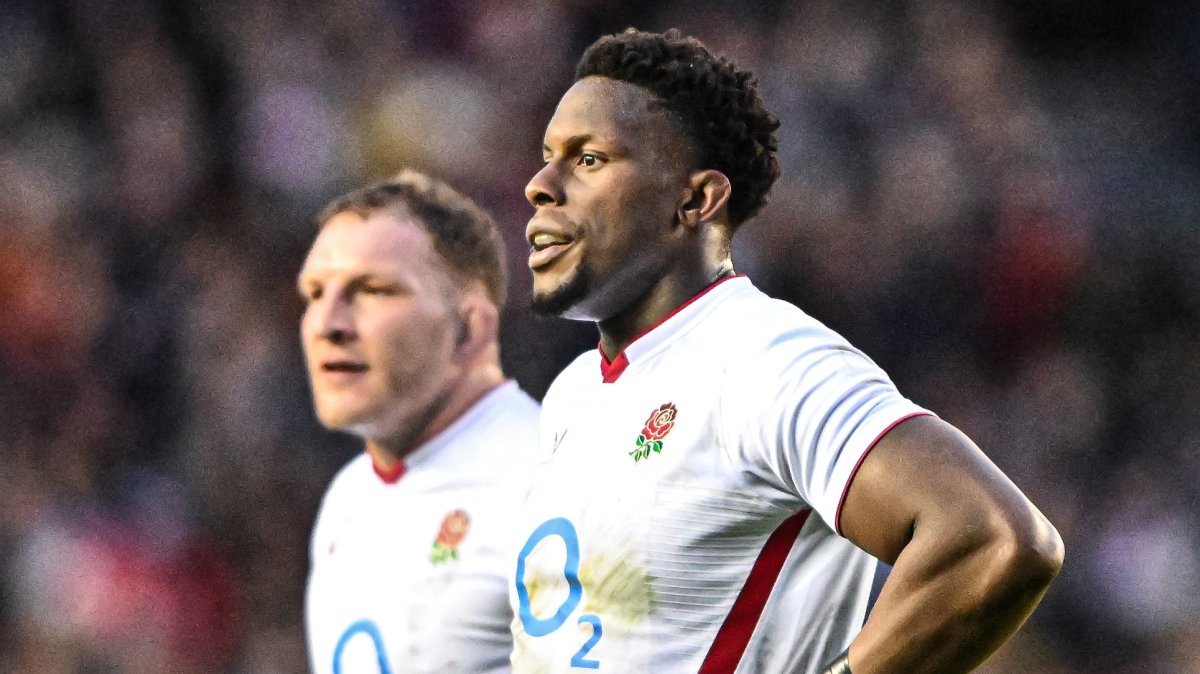
Questions centre on their senior players, who encapsulated a scrappy, muddled performance at Murrayfield on Saturday. Outsmarted by the excellent Scots once again, for the third consecutive time in Edinburgh, Maro Itoje, George Ford, Ellis Genge and Sam Underhill will have the most furrowed brows as England conduct a painful review into yet another away defeat.
With 330 caps combined, none of them have immediately become bad players, poor leaders or should fear for their long-term positions — remember, this is one defeat in 13 Tests for Steve Borthwick’s side — but all had moments that will sit like pebbles in their shoes.
England’s wash-up, a mix of all-in chats, individual conversations and unit analysis, will be clinical but should be laced with self-critical fire from senior figures.
Why, they should ask themselves, for all the talk of being unfazed in “hostile” environments, do England play so poorly away from home? This 31-20 loss was their ninth defeat in 16 away days under Borthwick; against France and Wales, Scotland and New Zealand twice each, and Ireland three times. The wins were all against lower-ranked teams save for Argentina who, like England, were shorn of their full side in the two-Test series last summer.
They must work that out, because after Ireland next Saturday the trips stack up ominously, rated like increasingly difficult Sudoku puzzles: Rome, medium; Paris, hard; Johannesburg, fiendish.
Why too did they prove unable to adapt their plan mid-game? Did they not leave this tactical inflexibility behind in 2024, when regularly losing tight games?
And why, when favoured, fancied and full of beans, do England still have a shocker in their system? Quick answers are required, to power the side on.
Borthwick’s teams have previously reacted well to adversity. They responded after a poor 2023 World Cup warm-up phase by making the semi-finals in France; beat Ireland at home the last time they returned stung from Scotland in 2024; and after they came back defeated from Dublin in 2025 they went on a long winning run that came to an end only on Saturday.
So how do they turn this latest setback into a useful learning experience? The painful process should begin with the most experienced starters owning up to uncharacteristic errors.
Senior moments
Borthwick has never been afraid of a punchy selection call. He moved on from Manu Tuilagi, Ben Youngs and Owen Farrell, regularly pushes Ben Earl into the centres and axed the ever-popular Jamie George as captain.
On Saturday he did something no one else has ever dared to do: substitute Itoje in a Six Nations Test. The England captain departed, forlornly, after 56 minutes. He had looked leggy and sounded breathless when speaking to the referee, Nika Amashukeli.
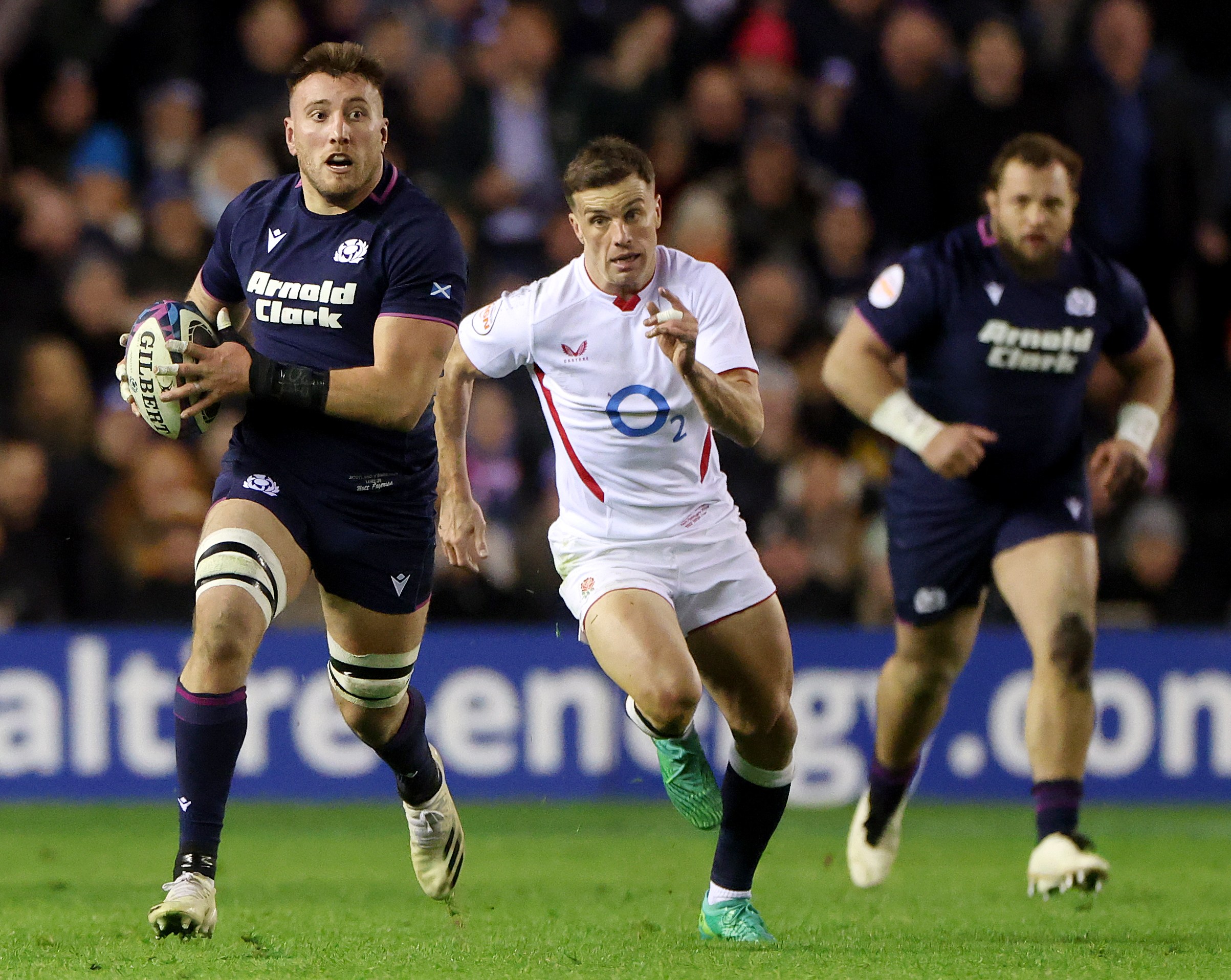
Matt Fagerson breaks away from Ford after the fly half’s poorly executed drop-goal had been charged down
DAVID ROGERS/GETTY IMAGES
It was the great lock’s 47th game in the championship and the first time he had been tactically removed. In the Six Nations he was last substituted on February 2, 2019 after 54 minutes when he injured a knee as Eddie Jones’s side were putting Ireland to the sword in Dublin, winning 32-20.
Perhaps still carrying some post-British & Irish Lions tour fatigue, and the effects of the grumbly knee he had around Christmas, Itoje lacked energy against Scotland.
The Lions trip has clearly affected Ireland, with so many of their tourists now groping for form and fitness. It will be fascinating to see which of Andy Farrell’s Lions, now in green and white jerseys, kick on and who continues to fade after several heavily loaded seasons.
Scotland’s wide-wide game tired England, who believe they are supremely fit with the new head of performance, Phil Morrow, managing the top 25 players through the enhanced elite player squad contracts.
Itoje was exposed on the edge for Huw Jones’s first try, was sloppy in contact — one of three players to misplace a ball when England attacked in the Scottish 22, leading to an incredibly profligate score of 1.4 points taken from their 12 entries — dropped one high-ball catch under little pressure during the first half, and missed clear-outs as Rory Darge and his back-rowers dominated the breakdown.
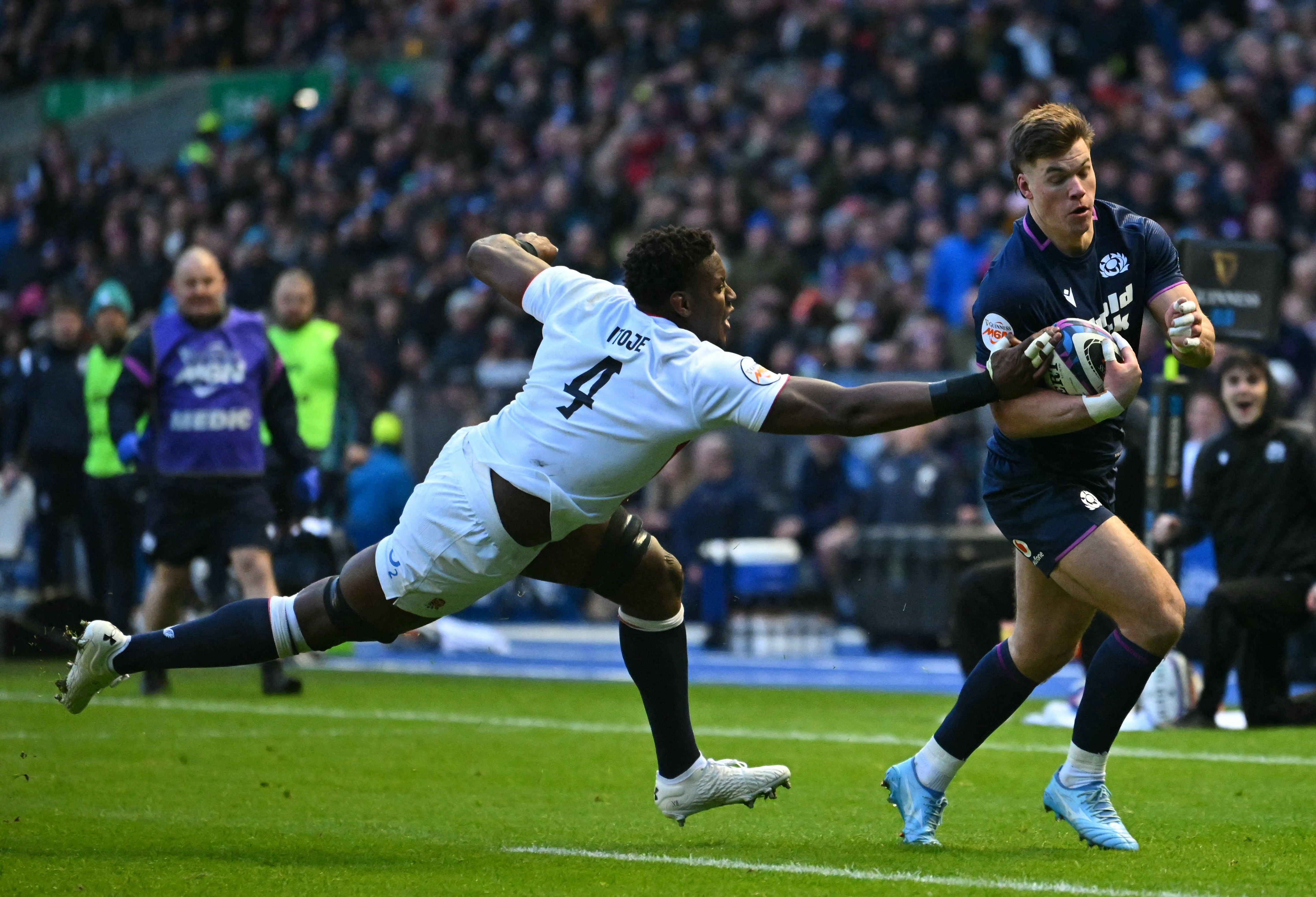
Itoje is exposed by Jones, who races past the England captain to score Scotland’s opening try
ANDY BUCHANAN/AFP
Itoje was not alone. Underhill was taken off even earlier, replaced by Tom Curry at half-time. He had departed at the break only once before in an England shirt, the 2021 November Test against Tonga when he injured a shoulder. His two other earlier substitutions — against Australia in 2017 and Japan in 2024 — followed injuries too.
This rug-pulling was also a correct call from Borthwick, as Underhill had missed four tackles — two on his Bath team-mate Finn Russell in one passage which led to Ben White’s try, when Genge fumbled a bobbling ball at the back to let the scrum half in.
Genge would not have had to clear up if Underhill had done his job. Genge was strong at the scrum, but loose in contact, as another fumbler in the Scottish 22. England made a criminal 11 handling errors all told. Another Lion, Luke Cowan-Dickie, was also at fault, releasing pressure with a no-arms tackle on Zander Fagerson 12 minutes in, which gave Scotland the position to score their superb coast-to-coast second try through Jamie Ritchie on the left wing.
If England are to kick on, Borthwick cannot afford to be let down by his most reliable players. At least he can still hang his hat on the tireless work of No8 Earl, who never caved, carrying 22 times for 78 metres and beating three defenders. He also topped the charts in defence, with 14 tackles, three of which were dominant.
He was spent by the end, and Earl’s epic work exposed another English flaw — a lack of midfield punch — as he had to take on so much trying to dent the gainline. England were not at their best in almost every facet.
Be more Boks
There are two hallmarks of modern Test rugby. One, the new laws that remove protection for catchers have randomised aerial contests. Two, the best sides find an area of dominance and hammer it home.
Against Scotland, England fell on the wrong side of both, let down by their own skillset and tactical nous. They kicked 26 times, actually less than Scotland’s 28, and 19 kicks between the sides were “contestable”. England won only three of them, the first after 38 minutes from the eighth hoisted ball.
Evidently, while all the “crumbs” fell England’s way as they ruled the skies in the autumn, here everything dropped for the Scots for whom Kyle Steyn was outstanding. Henry Arundell took him out in the air for his second yellow card, which led to a 20-minute sending off, leaving England exposed.
And yet England — who have talked up their ability to adapt on the fly during games — showed no desire to shelve a plan that was failing them. Rassie Erasmus, the South Africa head coach, famously hooked Manie Libbok before half-time, for Handré Pollard, in the 2023 World Cup semi-final, to change to a kick strategy in order to beat England 16-15. This is what the best do.
England had a consistently dominant scrum on Saturday, yet refused to accentuate it. The pivotal point came after 43 minutes. At 24-10 Amashukeli warned Scotland after three scrum penalties had gone against them, which was broadcast on the stadium public address.
Genge had Fagerson on toast, shouting “Get him off!” when the third penalty went his way, and yet Ford and Itoje chose to kick three points rather than setting another scrum, to try to force Fagerson into the bin, just as South Africa did so brutally to Irish props Andrew Porter and Paddy McCarthy in November.
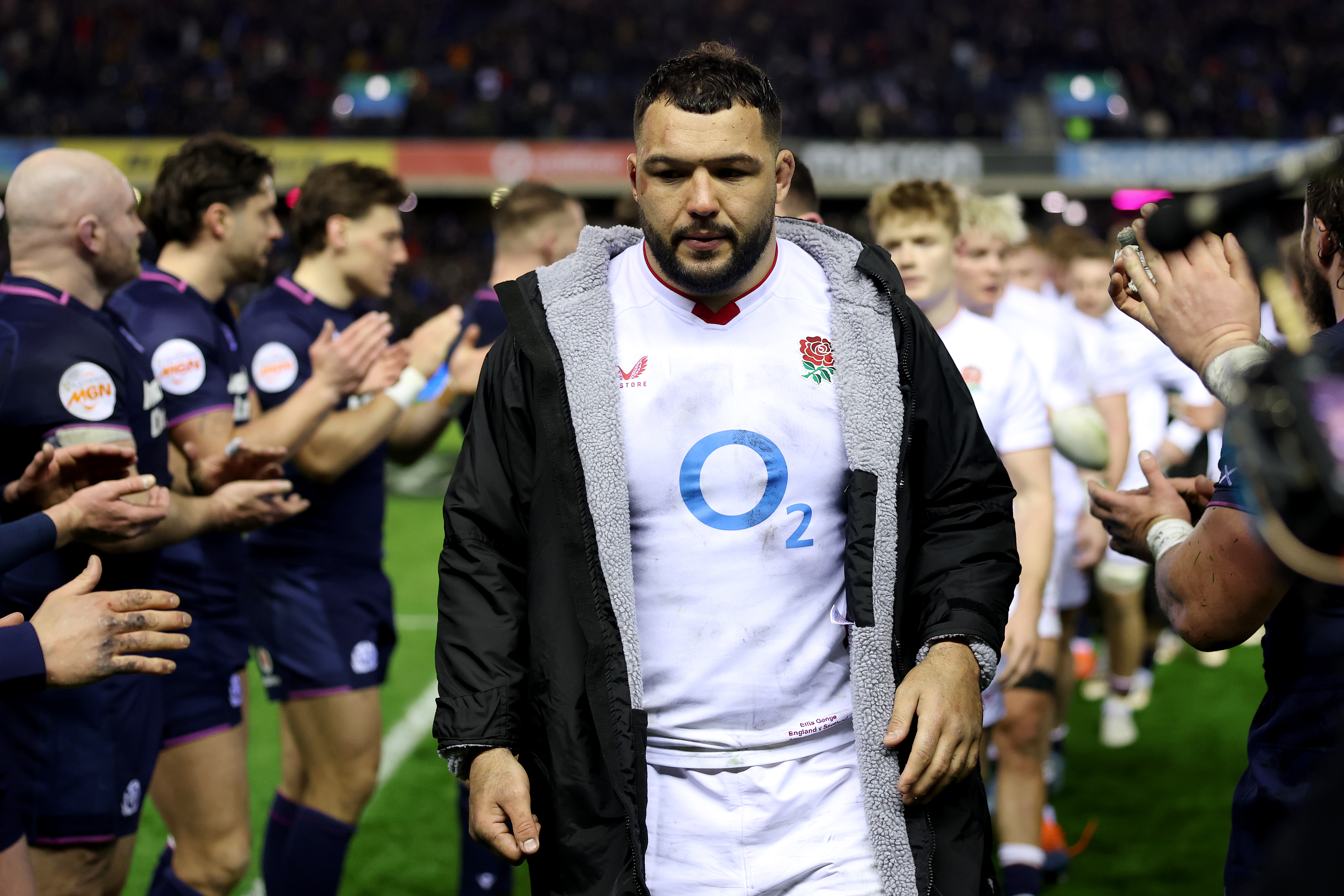
Genge had Zander Fagerson on toast at the scrum so it was baffling that England chose tactics that did not try to press home that advantage
DAN MULLAN/GETTY IMAGES
The officials were clearly surprised England did this, and the visitors then repeated the call after an hour, kicking to the corner after a second official warning when Pierre Schoeman walked around Joe Heyes. Alex Mitchell became the third man to drop the ball in contact in the Scotland 22 soon after.
The sloppy droppie
Even at 24-13, it felt as if England, yet to release Henry Pollock and the “Pom squad”, could wrestle it back, but the crucial ten-point swing moment came when Ford attempted a drop-goal and Matt Fagerson charged it down, fed Jones and Russell converted for 31-13.
Usually so keen to kick them with forward momentum, Ford will regret calling for the kick after a ruck that lasted nearly six seconds. He did not drop deep enough behind Mitchell either, and had no protection from the likes of Curry, who seemed unaware the drop was coming.
None of the most senior players were available to explain their defeat at Murrayfield on Saturday night. Perhaps they were dumbstruck as to how recent history had repeated.
Having seen demons all over Edinburgh, and suffered a sixth defeat in nine Calcutta Cup matches in the past decade, Itoje, Ford, Genge and Underhill had better be the loudest voices in camp this week if England are to regenerate again, making this an anomalous blip, and rescue their Six Nations.