
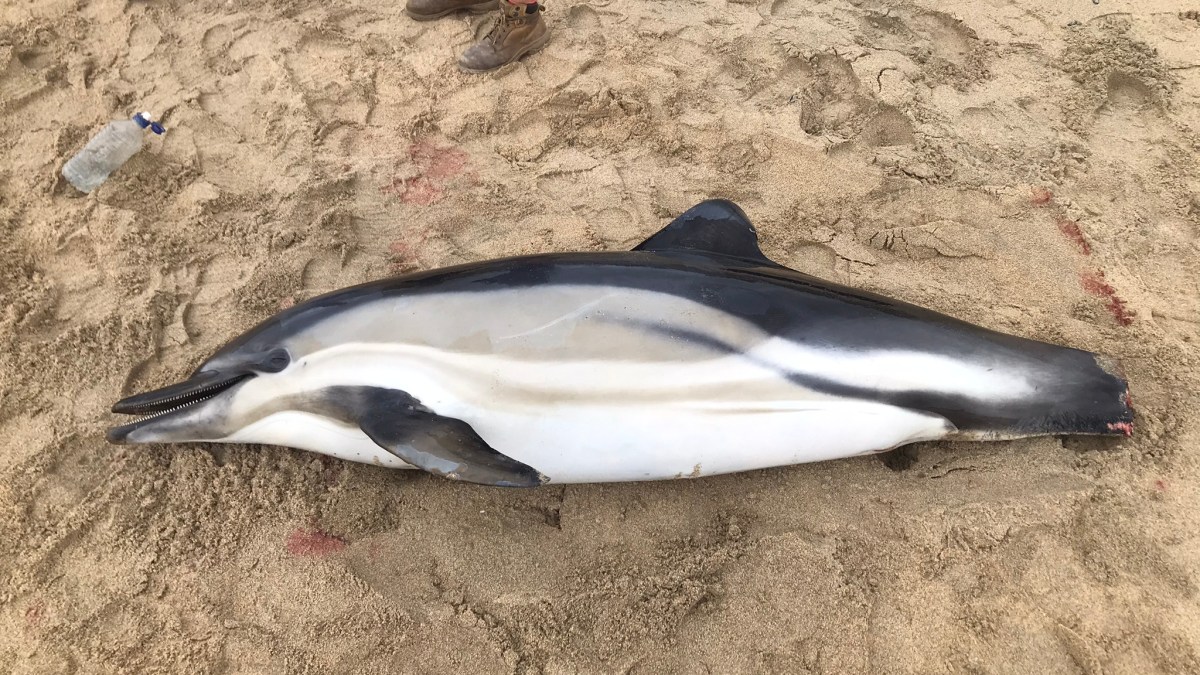
Dolphin strandings have more than doubled on Cornish beaches in the past decade with many being killed in fishing nets and ropes each year.
Conservationists said that bycatch remained one of the greatest threats to dolphins and whales worldwide. Last month 27 dolphins washed up on Cornish beaches, seven of which were stranded in just eight days.
Four of the seven sent for post-mortem examination were confirmed to have died as a result of bycatch — the unintended capture of marine life in fishing gear such as nets, lines and hooks.
A rise in the number of dolphins moving north into British waters has led to the increase in strandings in Cornish waters since 2015. An average of 200 have washed up around Cornwall each year since then.
It is estimated that more than 1,000 whales, dolphins and porpoises and up to 9,500 fulmars and 3,300 guillemots are killed every year by British fishing activity, as well as countless seals, sharks, skates and rays.
Rebecca Allen, from the Cornwall Wildlife Trust, said: “Not all dead animals wash up on the shore, so we are only getting a small proportion of them. The amount of animals dying is a lot more.”
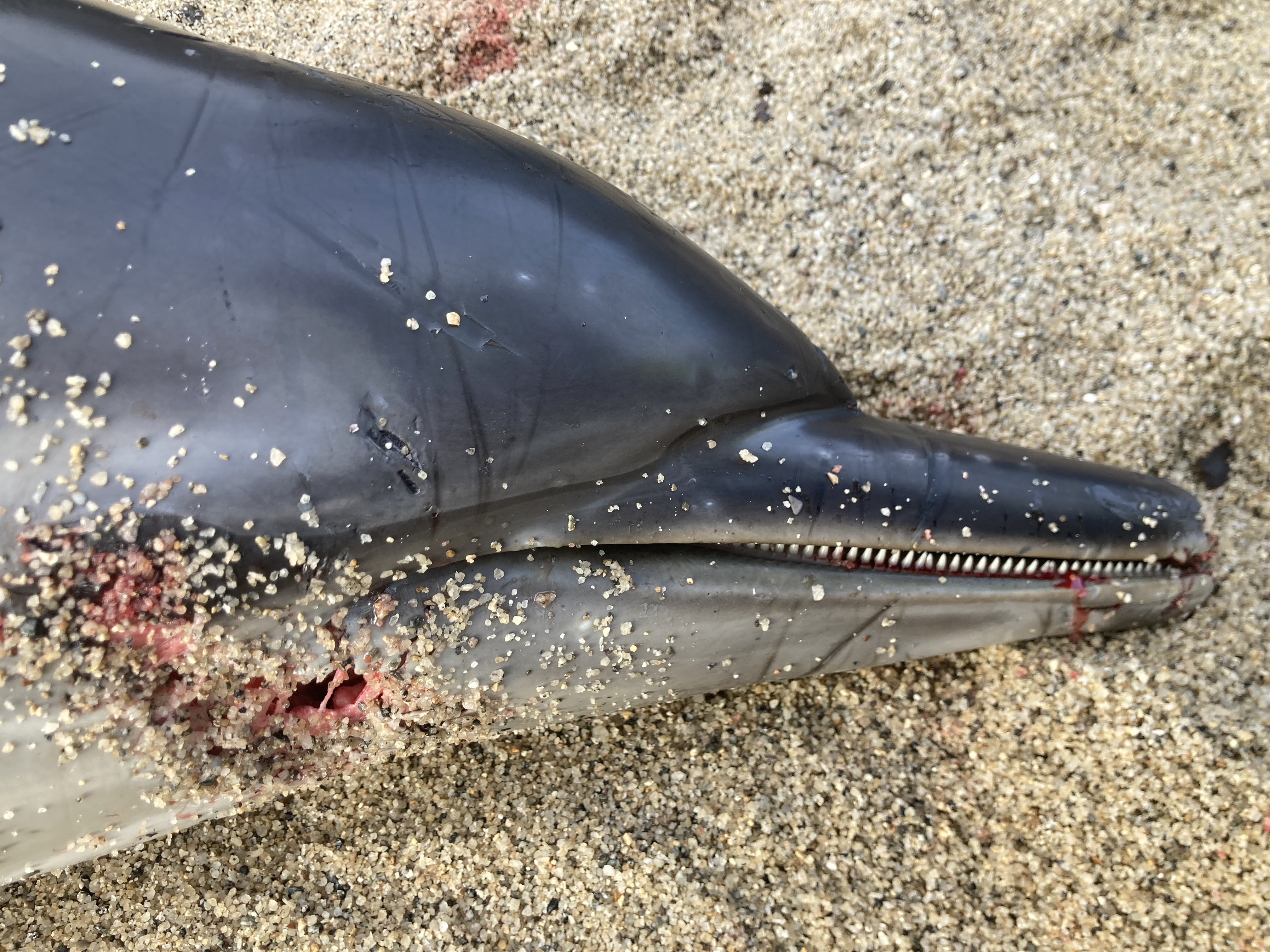
Bycatch scars are visible on many of the dolphin’s bodies
Many of the dolphins washed up show the tell-tale signs of rope marks or external injuries on their bodies from fishing gear.
• Dozens of whales dead in ‘biggest mass stranding in decades’
Acoustic deterrents, known as pingers, are required by law on fishing gear used on vessels over 12 metres in length, using bottom-set gill nets or entangling nets to reduce the amount of dolphin and porpoise bycatch.
There are no regulations that require smaller boats, used by inshore fisheries in coastal waters, to report bycatch or implement practices or equipment to avoid it.
“There is very little monitoring and we are not getting enough information to do anything about this,” Allen said, adding that dolphins “cannot keep taking this kind of punishment. It’s something everyone needs to step up and do something about. The government has really lost focus on this problem.”
Similar stranding levels have been reported across Europe, raising concerns about the effect on the populations of species such as common dolphins.
• ‘Catastrophic’ collapse in wild Atlantic salmon juveniles in Dorset
Regulations on monitoring bycatch requires fishers to accept observers on board, but the monitoring at present covers less than 5 per cent of British fishing, meaning that the true extent of the problem is probably underestimated, particularly for rarer species.
Allen said that fishermen “do not want to catch these wonderful animals and many have worked hard to reduce risk”.
“Some people have taken steps to practice better net setting,” she said. “Instead of leaving those nets they will stay in the vicinity and monitor them. They have worked out the areas where bycatch happens and avoid them. But there is no incentive to do that. They don’t get any better money for doing that and there is no incentive to report bycatch.”
In Mevagissey, near St Austell, fishermen have done just that. These voluntary actions have been effective locally, with no bycatch recorded by onboard cameras in the past four years.
• AI tool can track dolphins — and spot their regional accents
However, conservationists said that stronger policy was needed to address the issue on a larger scale. Nick West, chair of the Mevagissey Fisherman’s Association, said fishermen “are fully committed to excluding the likelihood of bycatches completely”. He added: “We have not given up with our goal of being able to use pingers.”
Cornwall Wildlife Trust has called on the government and regulators to introduce measures needed to better protect dolphins and porpoises and has urged the public to raise the issue with their MPs.
The Wildlife and Countryside Link said that it was unclear how long it would take to put into effect government plans to introduce remote electronic monitoring (REM) in fisheries.
“Rather than rely on voluntary adoption of REM, which has not been effective, the government should set out an expedited timetable for mandatory REM,” the charity said in a report presented to parliament last year.
A spokesman for the government’s Marine Management Organisation said: “Any instances of bycatch should be reported to the Marine Management Organisation within 48 hours using our bycatch reporting template. All cetaceans, including whales, dolphins and harbour porpoises, are protected under UK law.”