
norman lebrecht
February 15, 2026
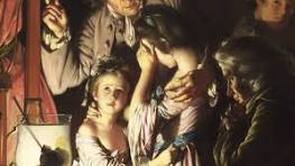
Is Wright of Derby Britain’s Caravaggio? If you lived in Britain in the 1700s, you would have spent your evenings in candlelight. Joseph Wright of Derby painted this shadowy world like no other.
Drawing inspiration from artists like Caravaggio, he used a technique called tenebrism to bring drama and tension to his paintings. In his work, Wright explored themes of science, philosophy and death in clever ways, throwing light and shadow across the awe-struck faces of his sitters.
Join Christine Riding, Director of Collections and Research at the National Gallery, as she takes a closer look at two of Wright’s greatest paintings. In these large-scale works, learn how Wright painted hidden meaning into every small detail.
In an interplay of light and darkness, Joseph Wright of Derby conjures sublime pictures of discovery and learning.
‘Wright of Derby: From the Shadows’ is the first major exhibition dedicated to the British artist’s ‘candlelight’ paintings. It looks again at his most admired works.
Illuminated faces gather around a variety of objects – from classical sculptures and scientific instruments to bones, bladders and animals. Through his unflinching scenes of people watching, Wright of Derby proposes moral questions about acts of looking. The strong light and deep shadows create drama, reminding us of great painters from earlier centuries like Caravaggio.
Challenging the traditionally held view of Wright of Derby as a figurehead of the Enlightenment, this exhibition contributes to the ongoing re-evaluation of the artist, portraying him not merely as a ‘painter of light’. More than virtuoso scenes of dramatic light and shade, Wright of Derby used the night-time to explore deeper and more sombre themes, including death, melancholy, morality, scepticism and the sublime.
With over twenty works, including other paintings, mezzotints, works on paper and objects the exhibition explores both Wright of Derby’s artistic practice and the historic context of scientific and artistic development in which they were made.
Read more