
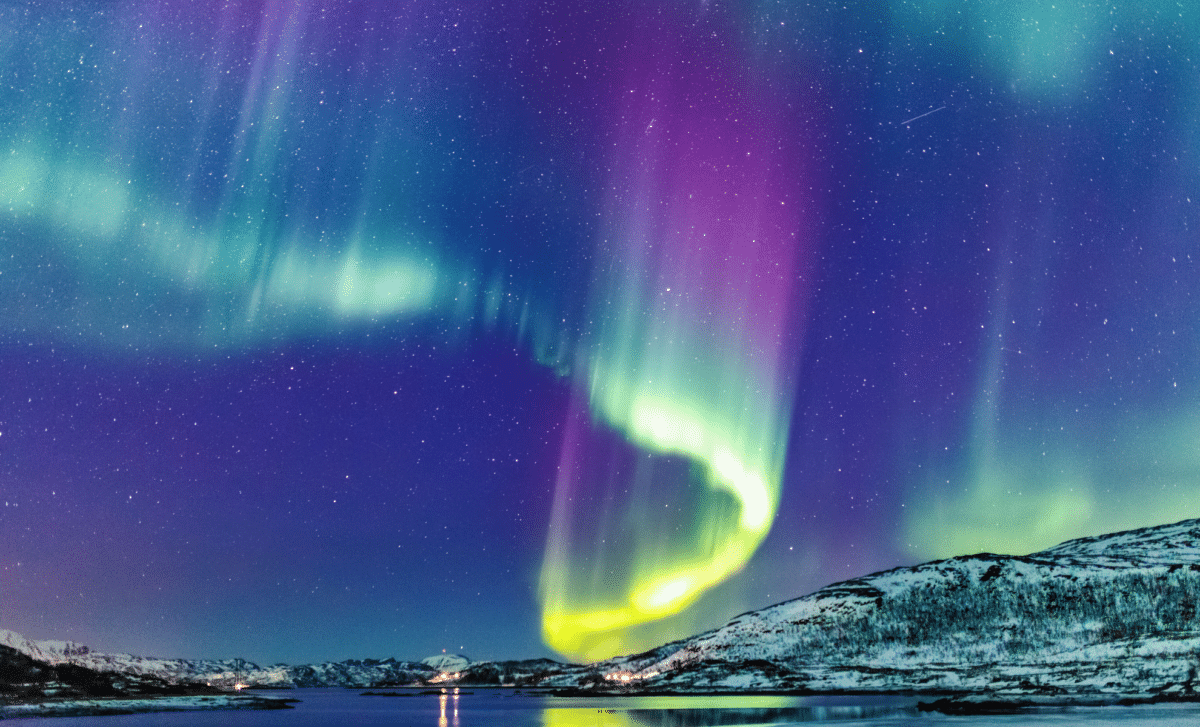
Today, February 14, 2026, marks a rare and exciting opportunity to witness the Northern Lights in the U.S. As reported by the National Oceanic and Atmospheric Administration (NOAA), 12 states are on alert for the Aurora Borealis, which will be visible tonight. The Northern Lights, usually seen in high-latitude regions, will be making a special appearance across parts of Alaska and other states, offering an unforgettable Valentine’s Day experience. With the sun’s increased solar activity, tonight’s light show promises to be extraordinary.
The Northern Lights: A Celestial Spectacle
The Northern Lights, or Aurora Borealis, are one of the most awe-inspiring natural phenomena, and they’re typically visible in areas like Alaska, Canada, and Scandinavia. This spectacular light display is caused by charged particles from the sun interacting with Earth’s magnetic field, which then excites atmospheric gases like oxygen and nitrogen, creating vivid streaks of green, purple, and even red light.
Tonight, thanks to increased solar activity, the Northern Lights will be visible across 12 U.S. states, an exciting event for skywatchers. The Aurora’s display can vary in intensity, but tonight’s solar storm is expected to provide excellent conditions for observing this natural wonder, even in areas that don’t usually get such a close-up view. If you’re in Alaska or other states in the northern U.S., you might be treated to a bright, colorful light show across the night sky. For many, this rare occurrence is an unmissable event.
NOAA’s Alert: What to Expect Tonight
NOAA’s space weather experts have been monitoring solar activity, and the forecast for tonight shows that the Aurora Borealis will be visible in 12 states. This event is a result of increased solar storms, which are expected to send waves of charged particles toward Earth. When these particles interact with Earth’s atmosphere, they create the stunning lights known as the Aurora.
Tonight’s display is the result of heightened solar flare activity, as the sun approaches the peak of its 11-year solar cycle. According to NOAA, the best time to view the Northern Lights will be from 10 p.m. to midnight local time, though the lights could last until dawn in some areas. The forecast predicts that the Aurora will be visible as far south as parts of New York and Michigan, where such displays are usually rare. Those in northern states will likely get the best view, but residents from the southern parts of the affected states may still see an impressive show.
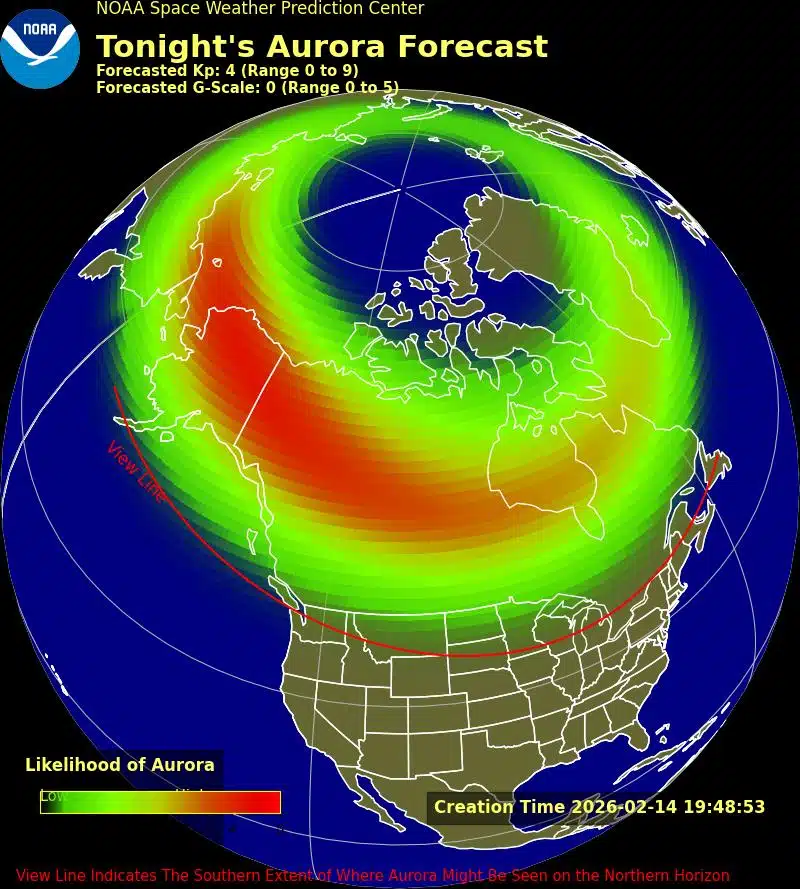 Credit: NOAA
Optimal Viewing Locations and Times
To maximize your chances of seeing the Aurora Borealis tonight, it’s important to find the right location. The best conditions for viewing the Northern Lights include clear skies and as little light pollution as possible. Urban areas with lots of artificial lights can obscure the view, so the farther away from city lights you are, the better your chances of seeing the full display. Rural areas, national parks, and open fields are all excellent spots to catch the Aurora.
The prime viewing time is from 10 p.m. until midnight, but the Northern Lights could remain visible into the early hours of the morning, especially in more northern regions like Alaska and parts of Minnesota or Wisconsin. If you’re in one of the affected states, check the weather to ensure clear skies, and head outside as soon as it gets dark.
What to Expect From Tonight’s Aurora Display
Tonight’s Aurora Borealis is expected to be a vibrant, multi-colored light show, with greens, reds, purples, and pinks dancing across the sky. These colors are the result of different gases in Earth’s atmosphere interacting with the solar particles. Oxygen at high altitudes produces red and green colors, while nitrogen can create purples and pinks. The intensity of the display will depend on the strength of the solar storm, but experts predict it will be bright enough for many people to witness the Northern Lights even in areas that are typically too far south to see them.
Although it’s a rare event to see the Northern Lights so far south, the solar activity during this time of year is expected to cause an especially vivid display. In fact, some of the southernmost states, such as New York and Michigan, are expected to be able to catch a glimpse of the Aurora tonight, which could be a once-in-a-lifetime opportunity for many.
The Science Behind Solar Storms and the Aurora
Solar storms are the main cause of the Northern Lights. These storms occur when the sun releases bursts of energy, sending charged particles streaming towards Earth. When these particles reach Earth’s atmosphere, they interact with gases in the air, exciting them and causing them to emit light. The result is the stunning, colorful aurora that stretches across the night sky.
According to NOAA, solar storms follow an 11-year cycle, with the intensity of these storms increasing as the sun reaches its solar maximum. Tonight’s Aurora display is a direct result of heightened solar activity, meaning skywatchers can expect a particularly spectacular show. Thanks to NOAA’s monitoring of space weather, people in the affected states were given advanced notice, so they could plan to see the Northern Lights tonight.