
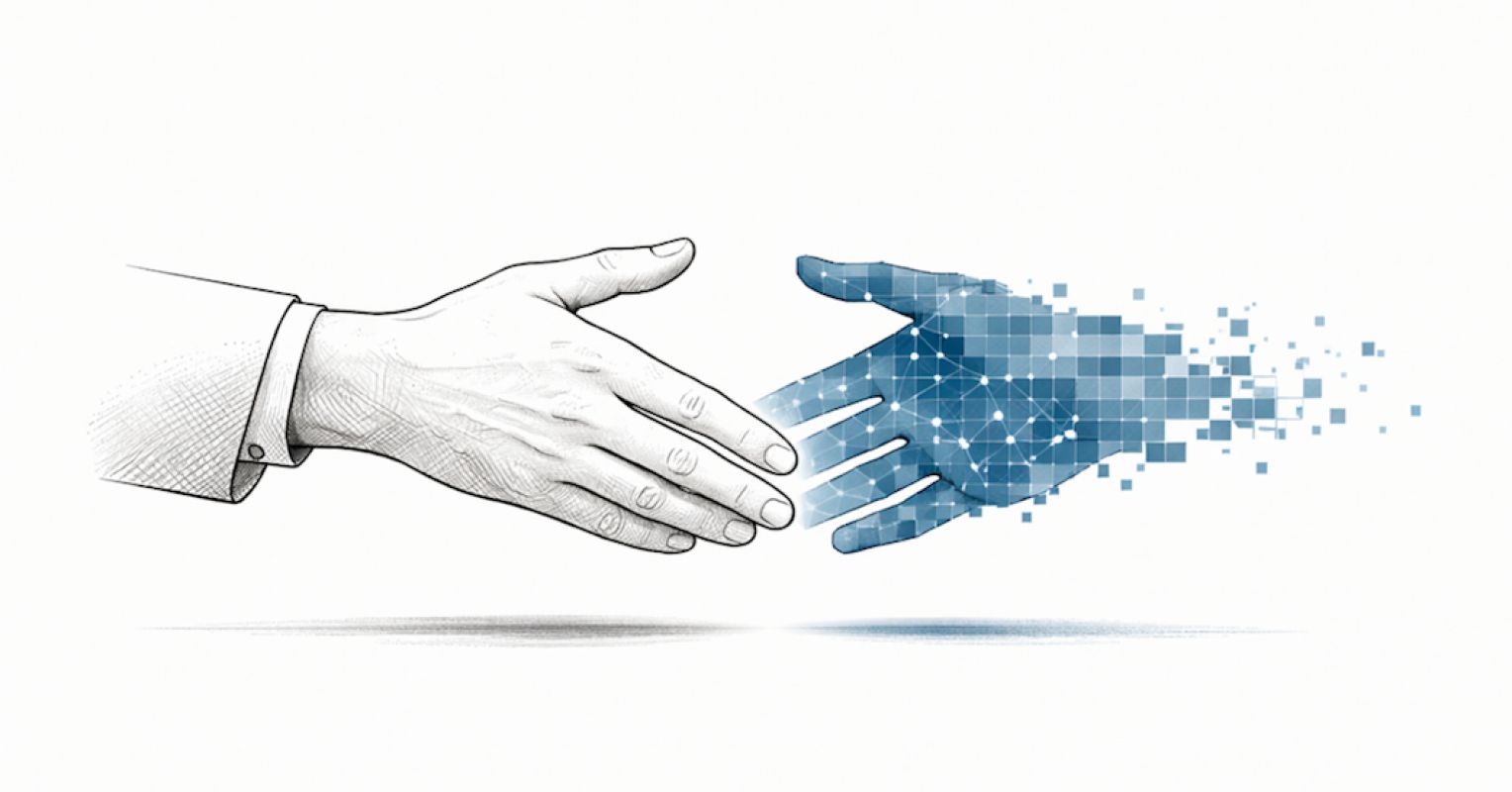
Can we actually have a relationship with AI? I don’t think this is a trivial question, but one that deserves a closer look.
In several earlier posts, I’ve presented the concept of anti-intelligence to describe a sort of structural property of artificial intelligence and large language models. The term helped me understand how this technology was fundamentally antithetical to human cognition. In essence, LLMs generate the form of understanding without bearing the existential costs that define human thought. There is no lived experience baked into the process. And while the reasoning can appear fluid and adaptive, it remains disconnected from biography and identity.
This distinction becomes more consequential when the focus shifts from thinking to relating.
When Conversation Feels Like a Connection
My sense is that it’s become increasingly natural to describe interactions with AI in relational language. Today’s dialogues can seem attentive and even personal. And along this slippery slope, the vocabulary of companionship and collaboration has entered this with little resistance or scrutiny. Yet something fundamental distinguishes this engagement from any human bond.
Human relationships are built on continuity. Over time, memory accumulates and identity is shaped through the shared human experience. Words leave impact, actions carry consequence, and trust forms gradually. Even conflict becomes part of a narrative that cannot simply be reset with the click of a button.
Architecture Without Biography
Let’s be clear: AI operates within a different architecture. Pattern recognition can mimic attentiveness. And yes, engineered memory systems can store and retrieve past interactions to create the appearance of continuity. Yet that continuity remains computational, not existential. No lived experience accumulates and no enduring self is shaped through the dynamic range from intimacy to conflict. Each response emerges from statistical structure rather than biography.
When we humans engage AI, continuity enters the interaction from only one side. Those unique aspects of our humanity—history, vulnerability, unique identity—are brought into the exchange by the person. AI generates structured responses that may feel reflective or supportive, but this occurs asymmetrically. A human perspective may shift or beliefs can be revised, and accordingly, decisions may be influenced. The architecture generating the AI response remains structurally unchanged in any biographical sense. This asymmetry gives rise to what might be called the anti-relationship: engagement without reciprocal continuity.
Responsiveness Without Reciprocity
The interaction contains many “surface signals” associated with connection. Turn-taking resembles dialogue, tone-matching resembles empathy, and personalization resembles care. Beneath those signals, however, is a key structural difference. In human relationships, there is always the possibility of mutual alteration. And this shared history connects both parties over time.
AI offers responsiveness without vulnerability and participation without exposure. No shared past binds the architecture to the individual engaging it. No internal narrative deepens because of the interaction. What feels like mutuality is structured reflection operating at scale. The deception is as deep as it is powerful.
Preserving the Meaning of Connection
Recognizing this difference doesn’t diminish or even negate the value of engaging AI. These systems can expand our intellectual reach and help articulate ideas that might otherwise remain unformed. The anti-relationship doesn’t replace human intimacy but occupies a different geometry.
Clarity matters because definitions can shape our expectations. If techno-responsiveness begins to substitute for relationship itself, the meaning of connection shifts, perhaps even becoming corrupted. Our human bonds require a path of connectivity that includes the bumps and bruises of life. And they require remaining aware to consequence over time. Our seductive banter with AI reduces that exposure.
I don’t think the risk is that technology eliminates human connection. The real risk is that connection is redefined without notice. If relationship no longer requires mutual consequence, preference may drift toward bonds that do not challenge identity in the same way. And in that context, how does that impact our human-to-human relationships?
This moment isn’t the end of relationships. But it might introduce a new category of engagement. The task at hand is discernment. Biography and consequence remain uniquely human contributions to connection. AI can participate in dialogue, but existence—with its continuity and weight—remains ours.