
0-20%: Unlikely – Lacks credible sources
21-40%: Questionable – Some concerns remain
41-60%: Plausible – Reasonable evidence
61-80%: Probable – Strong evidence
81-100%: Highly Likely – Multiple reliable sources
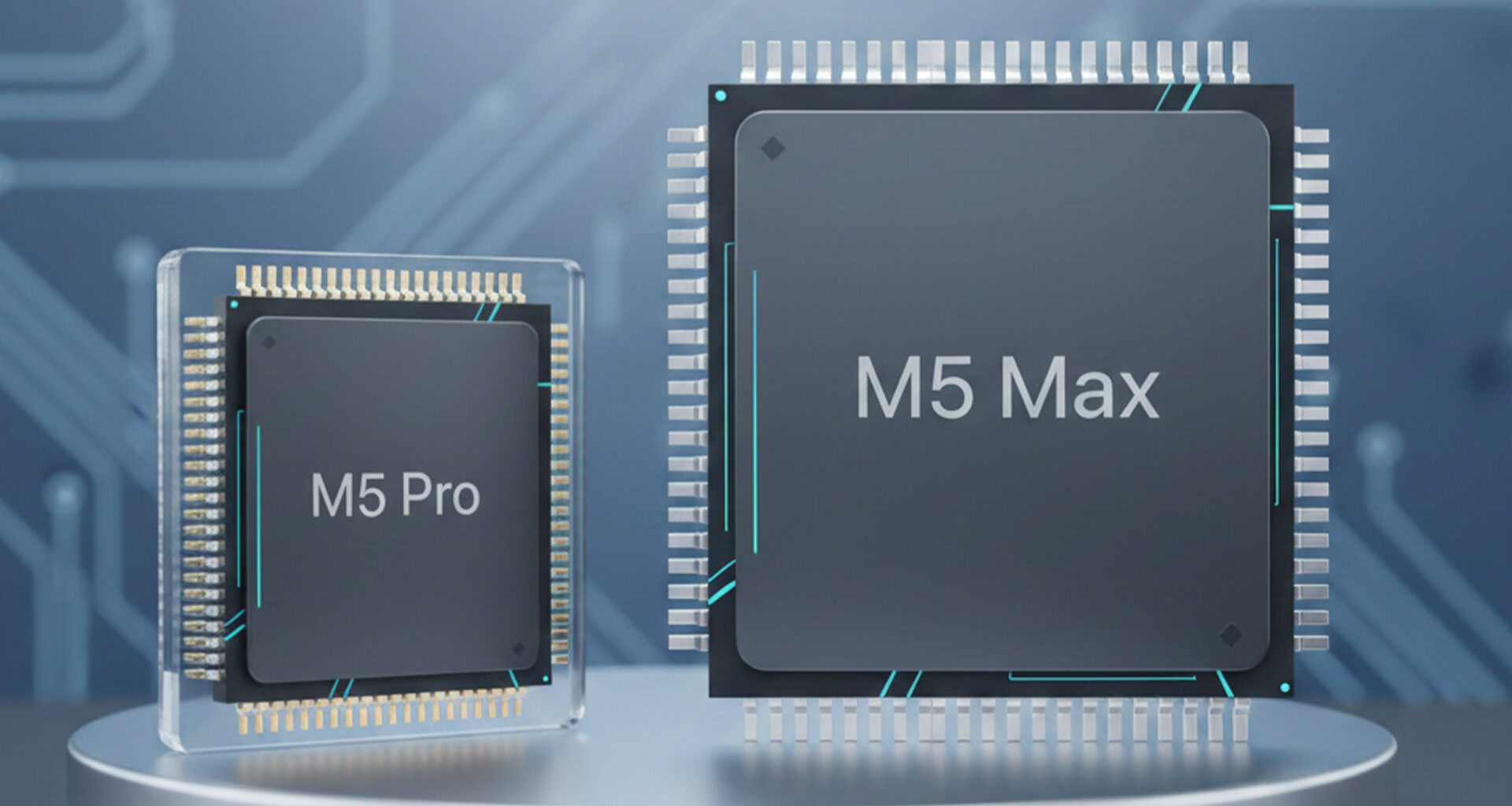
One of the M5 Pro’s and M5 Max’s biggest highlights is that both chipsets are rumored to feature TSMC’s SoIC packaging (Small Outline Integrated Circuit) and a 2.5D chiplet design that will enable the company to mass produce even more capable SoCs at a lower cost. A new rumor pretty much repeats the same information, talking about the advantages of the new Apple Silicon lineup, while also mentioning that both the M5 Pro and M5 Max will feature a slightly higher transistor density.
The new chiplet design for the M5 Pro and M5 Max is expected to allow unique CPU and GPU configurations for better flexibility
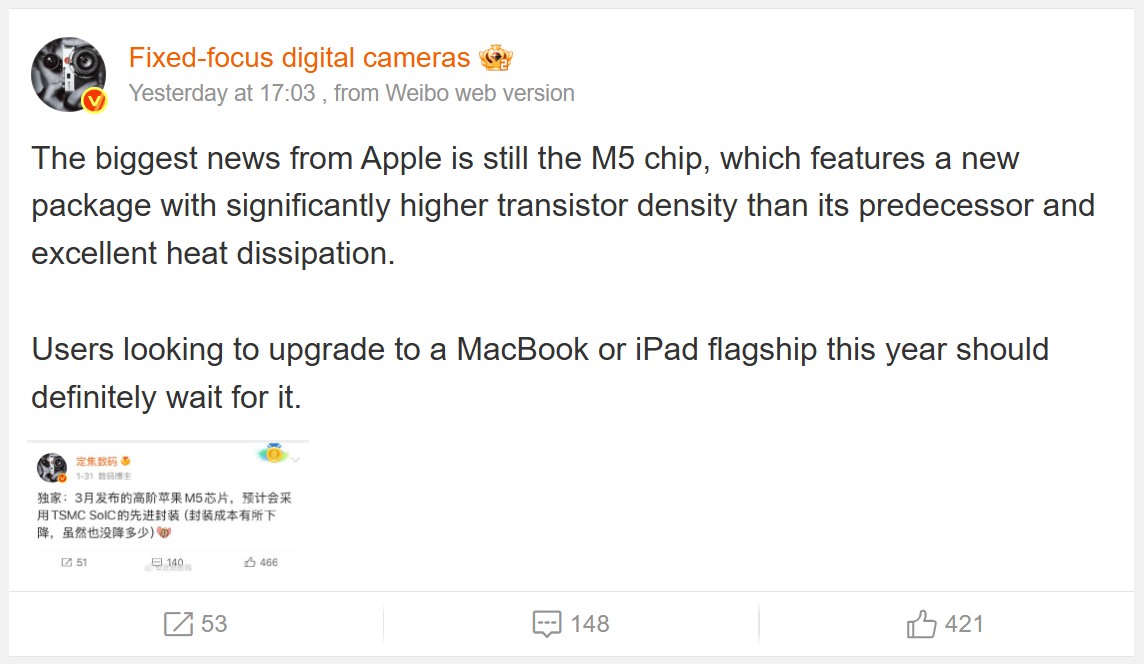
On Weibo, Fixed-focus digital cameras has shared various updates surrounding Apple’s upcoming chipsets, including a transition from InFO (Integrated Fan-Out) technology to 2.5D, bringing a slew of benefits to the table. On the latest post, the person has pretty much summarized the same perks, such as improved heat dissipation, a new packaging, with the only addition worthy of attention that hasn’t been mentioned before being increased transistor density.
Then again, Apple never disclosed the transistor count for the M5, so there’s no way of knowing if it differs from the M4. Fortunately, the only proper evidence that the M5 Pro and M5 Max offer a higher transistor count than the M4 Pro and M4 Max is Apple switching from TSMC’s 3nm N3E node to the 3nm N3P technology.
We’ve discussed previously that one reason Qualcomm may not want to switch to a chiplet design like Apple is due to the increased power draw, thanks to multiple chiplets communicating with one another. If that’s the case, wouldn’t it mean that the M5 Pro’s and M5 Max’s power draw also increases?
Logically, that’s the correct assumption, but if we take a look at Apple’s architectural changes on the A19 Pro, which allow the efficiency cores to deliver up to 29 percent increased performance at no power draw, the same changes can be applied to the M5 Pro and M5 Max.
Thankfully, we won’t have to wait too long to get a hold of this elusive information, as the same tipster claims that the chipsets will launch in March. Then again, Fixed-focus digital cameras doesn’t have the best of track records, so we’d treat this rumor with a pinch of salt for now.
News Source: Fixed-focus digital cameras
Follow Wccftech on Google to get more of our news coverage in your feeds.