
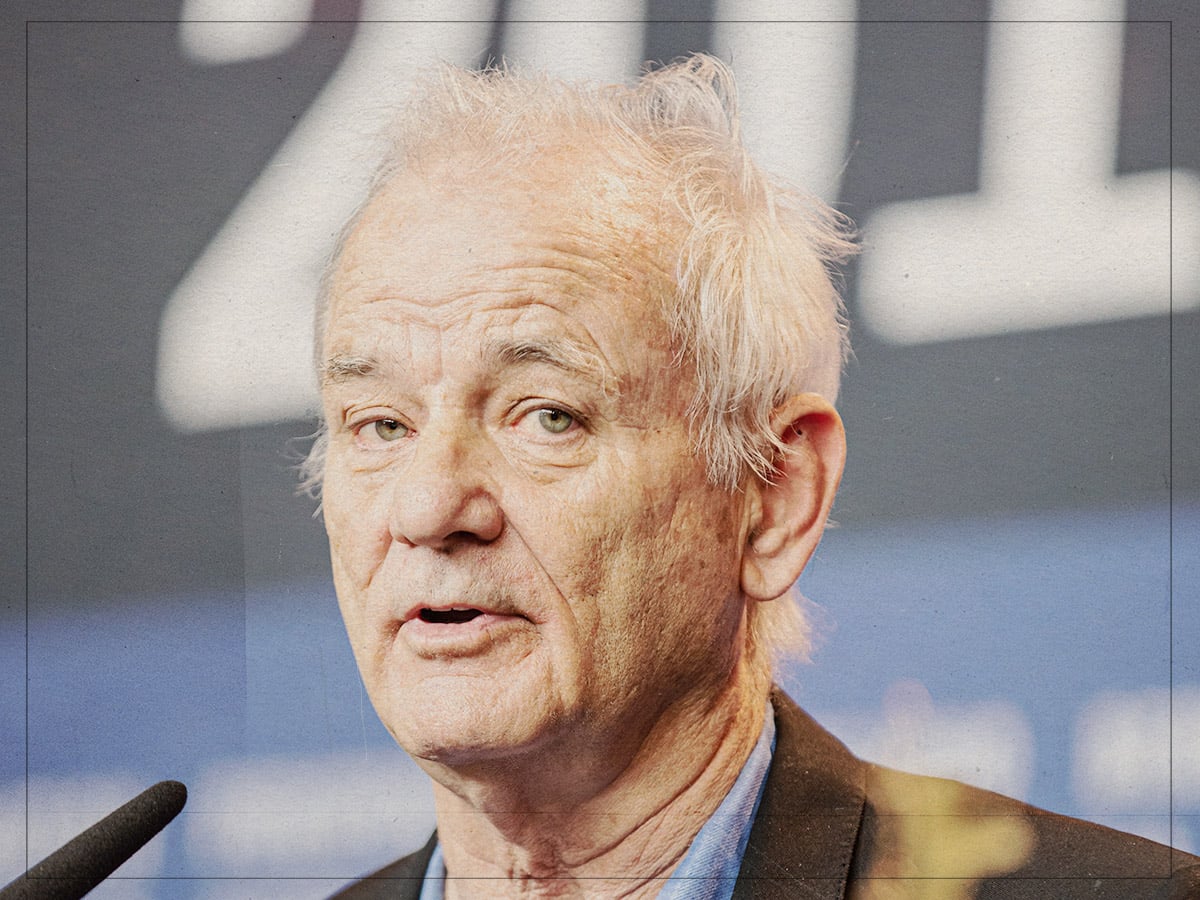
(Credits: Far Out / Harald Krichel)
Sun 15 February 2026 18:20, UK
Based entirely on the tales, both positive and negative, that have followed him throughout his career, it’s easy to think that Bill Murray has a one-track mind and remains incapable of admitting if and when he’s in the wrong.
After all, he didn’t exactly do a stellar job of downplaying the allegations that mothballed Aziz Ansari’s Being Mortal, suggesting that the misconduct that saw the movie shut down and abandoned was “still funny” to him, and he was being unnecessarily “barbequed” in the age of cancel culture.
This is the same actor who responded to Charlie’s Angels director McG’s claims that he was difficult to work with by saying he wanted to pierce him with a lance and see him dead, and history has shown that he’s never been too apologetic to the laundry list of people he’s irked and offended over the years.
With all of that in mind, it’s fair to say that humility and Murray don’t always go hand in hand. And yet, in a rare case of the Saturday Night Live veteran holding his hands up, shouldering the blame, and acknowledging that everything was his fault, he once took the blame entirely upon his shoulders.
However, there was a caveat; he was talking about a film, rather than an individual. For his first screenplay credit on a feature, Murray co-wrote the adaptation of W Somerset Maugham’s The Razor’s Edge alongside director John Byrum, and it would send him running away from Hollywood with his tail between his legs.
There was one major benefit, though, at least from a professional perspective. Murray struggled to find a studio willing to back his passion project, only for Dan Aykroyd to dangle a carrot in front of him that he couldn’t resist; sweetening the pot, Murray would agree to board the Ghostbusters cast if the same studio, Columbia Pictures, financed The Razor’s Edge, which it did.
Unfortunately for him, the latter bombed at the box office, was panned by critics, and did huge damage to his self-confidence, not to mention his hubris. “I kind of deluded myself that there would be a lot of interest,” he confessed. “I made a big mistake. The studio wanted to make it a modern movie, and I said no, it should be a period piece. I was wrong, and they were right.”
Whether it was set in 1917 or 1984 didn’t really matter, since The Razor’s Edge was lacking in many more departments than the time period. It was overwrought, navel-gazing filmmaking from an actor and writer who thought they were making something deep, meaningful, and profound, when in reality they were making something that was very, very boring.
While the picture has found some cult favour in the ensuing four decades, and Murray is still relatively proud of it, he let his delusions of grandeur get the better of him, and he paid the price for it.