
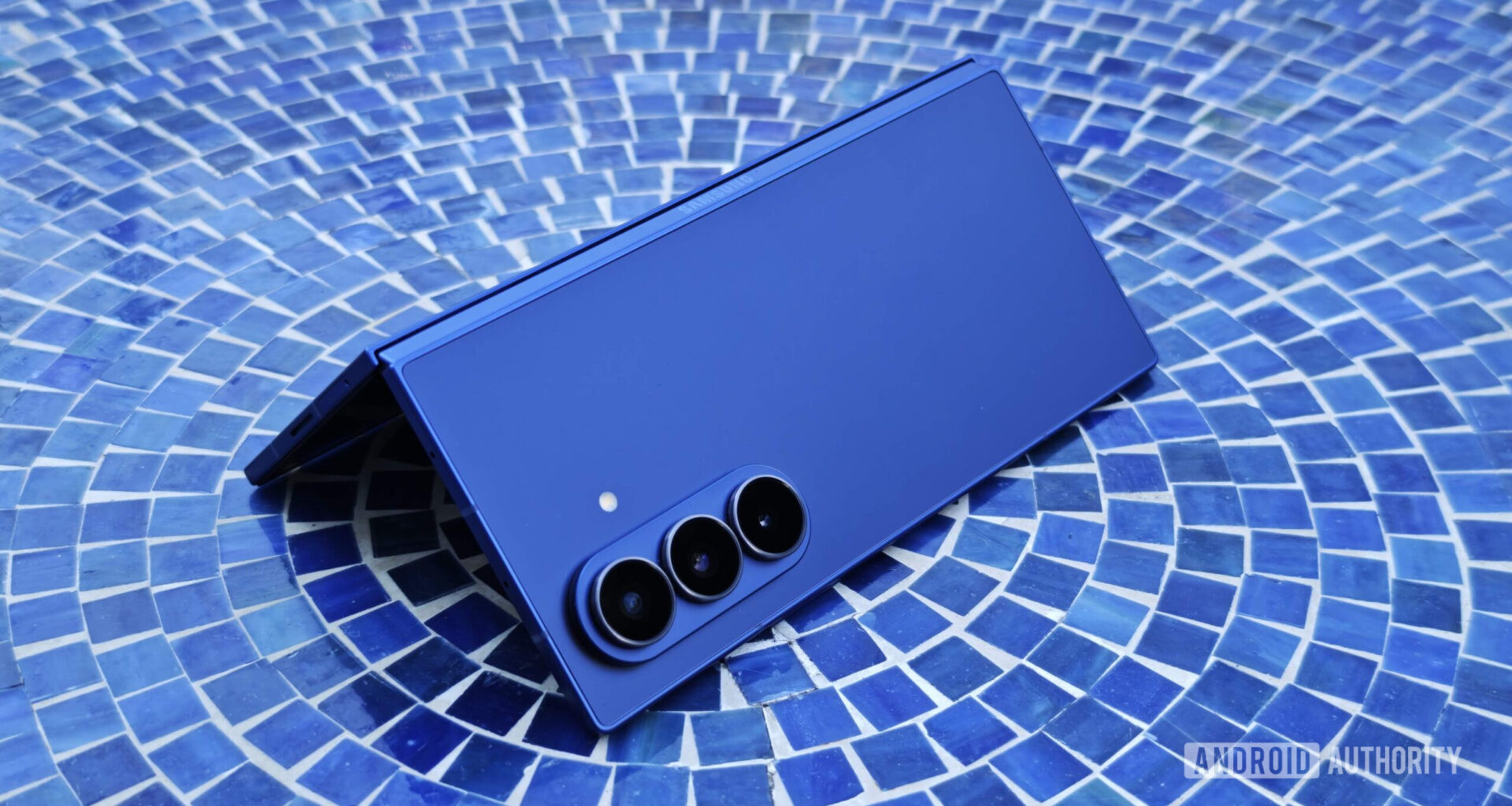
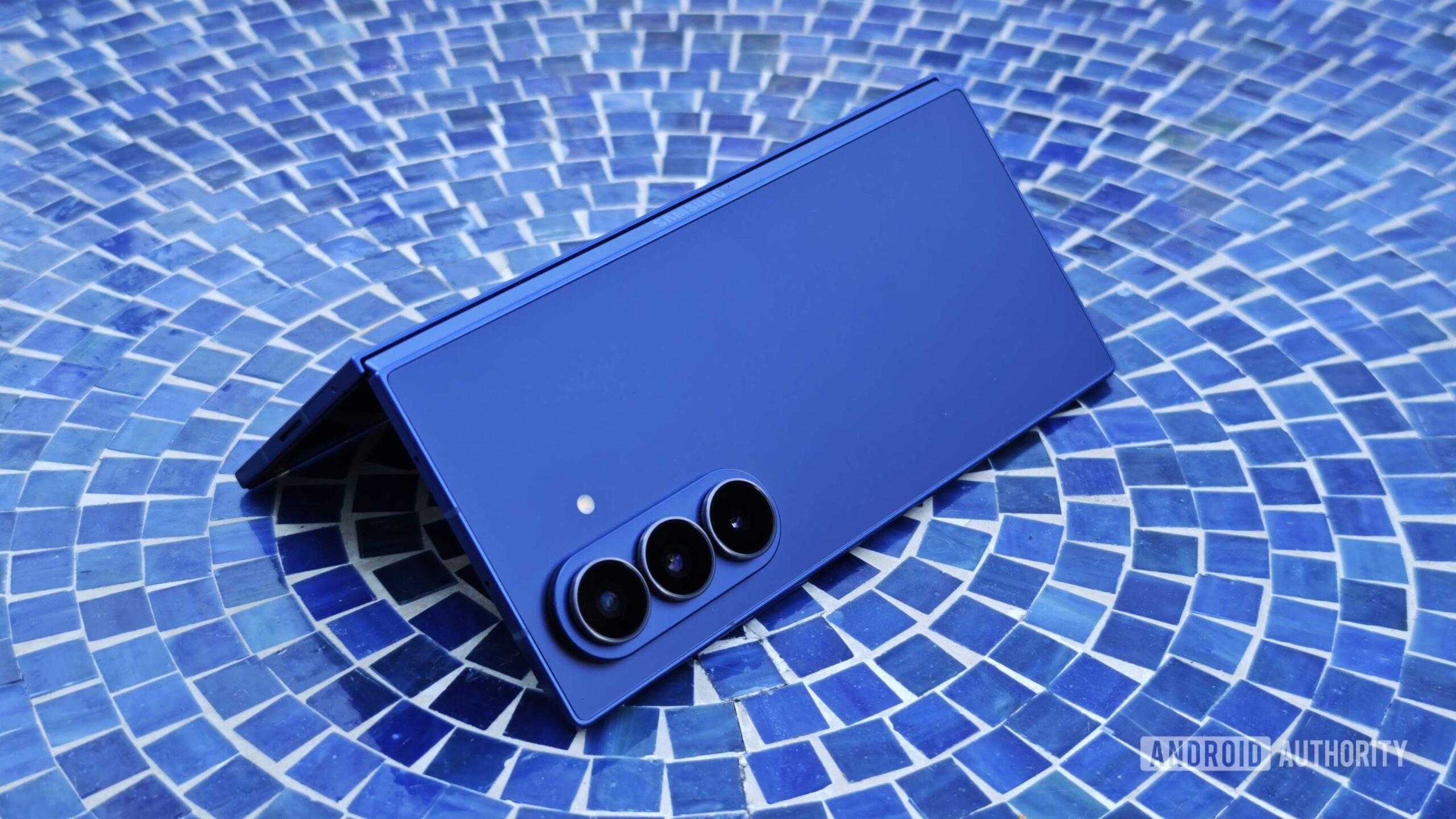
Mishaal Rahman / Android Authority
Ever since foldable phones came on the scene, I’ve wanted to use one. I have a Galaxy Z Fold 4, and while there was a lot to love, it was far too compromised for me to use every day. I liked the idea of a folding phone, but my experience with the Fold 4 led me to believe I couldn’t live with one long-term.
That all changed two months ago, however, when I got to try the Galaxy Z Fold 7 for the first time — and I haven’t been able to put it down since.
Would you use a foldable as your daily phone?
10 votes
Why the Z Fold 7 completely changed my mind about foldables
Zac Kew-Denniss / Android Authority
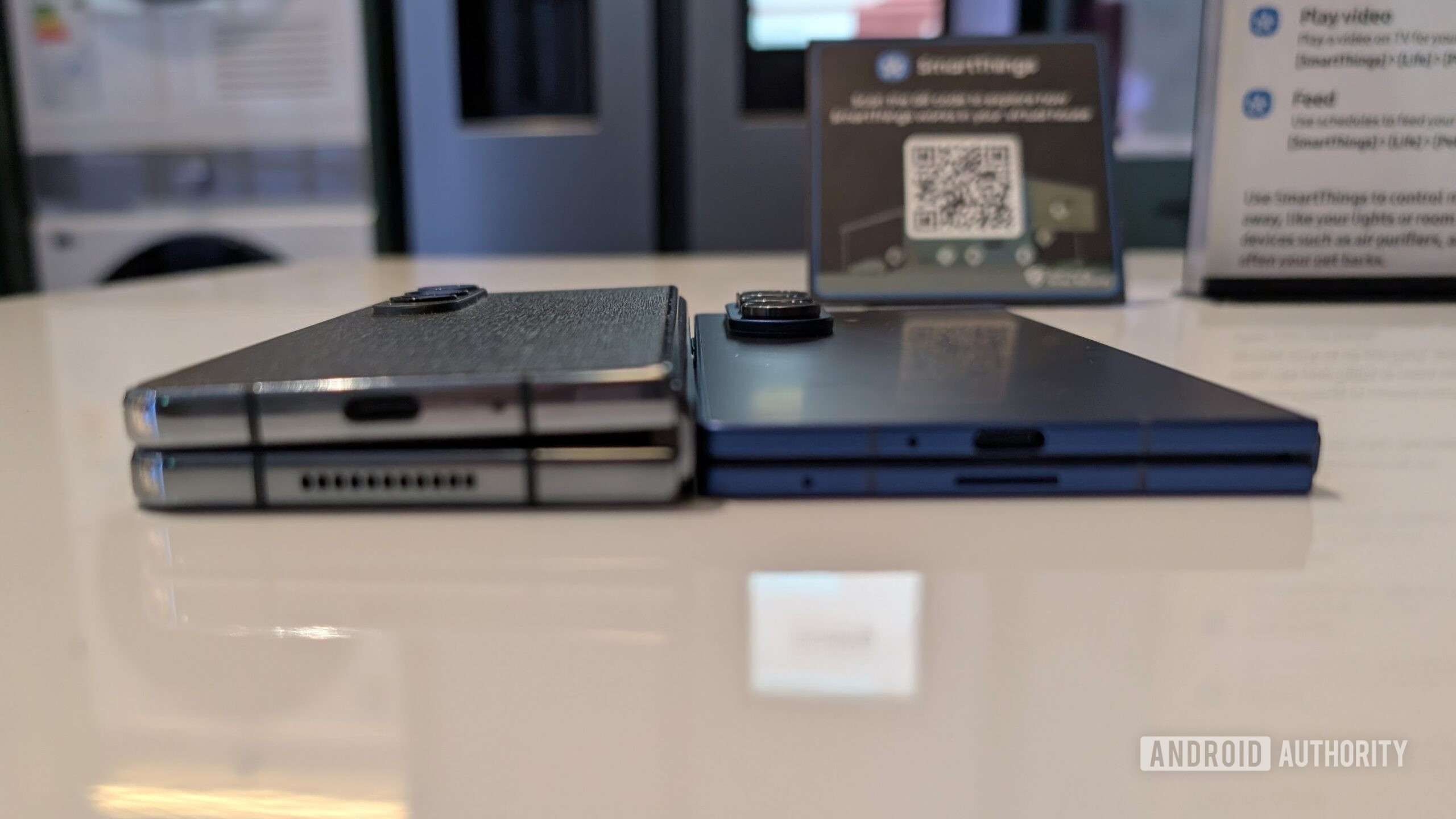
My Galaxy Z Fold 4 was heavy and awkward to hold. I loved the larger inner screen and the fantastic software Samsung offers for multi-tasking on Android, but the phone felt too much like a brick to use every day. 15.8mm and 263g is something you notice in your pocket, no matter what you’re doing.
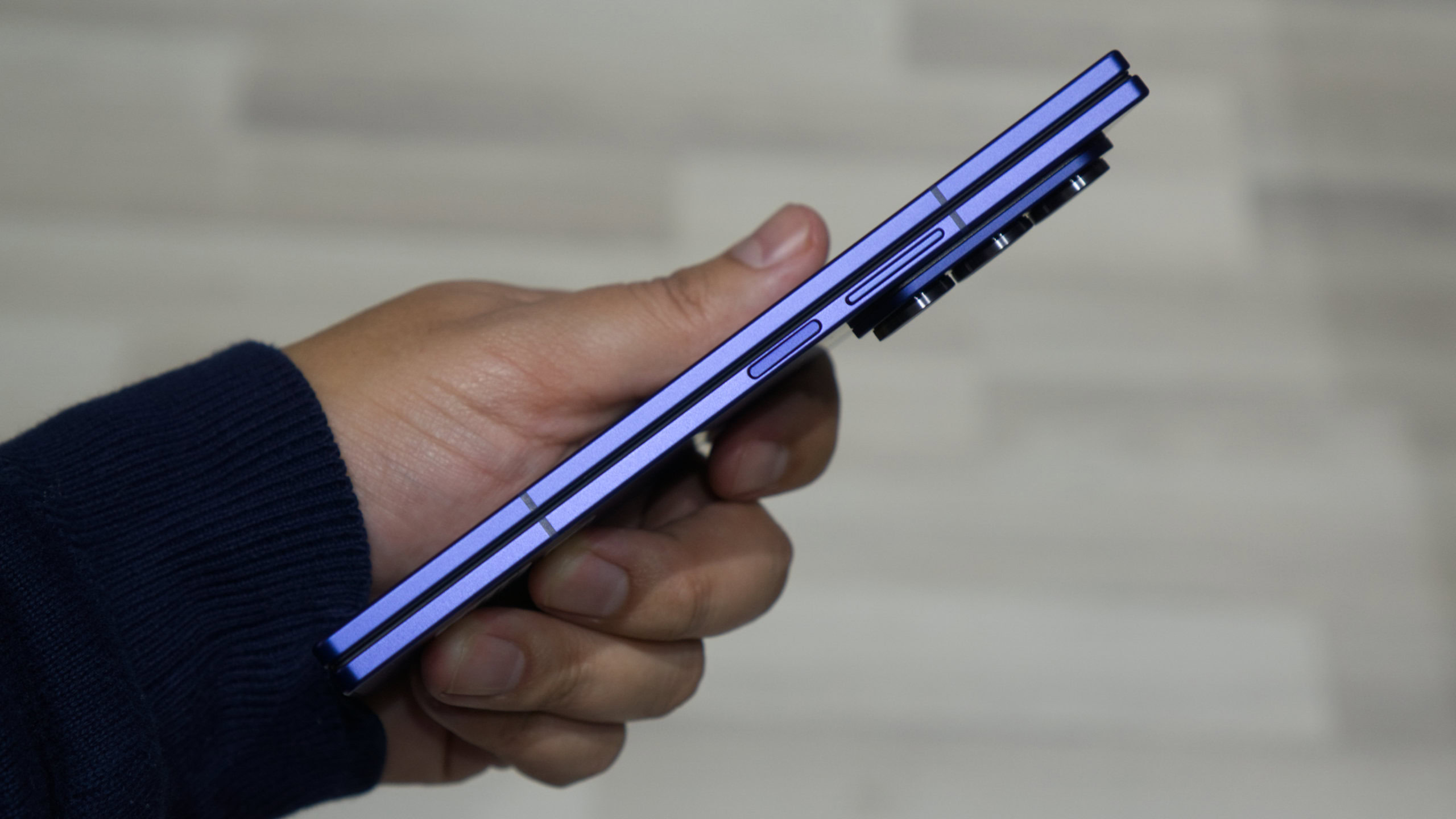
The Fold 6 achieved a respectable 12.1mm and 239g when folded, and finally folded flat, but that was still heavier and thicker than a normal phone. The Z Fold 7 cut that down to just 8.9mm and 215g. To put that into perspective, that’s 3g lighter than a Galaxy S25 Ultra and only 0.7mm thicker. For a phone that has to squeeze a hinge, two batteries, and two screens into a single device, that’s impressive, and if you’ve never held an older Galaxy Fold and a Z Fold 7 side-by-side, it’s hard to convey how much of a difference it makes.
C. Scott Brown / Android Authority
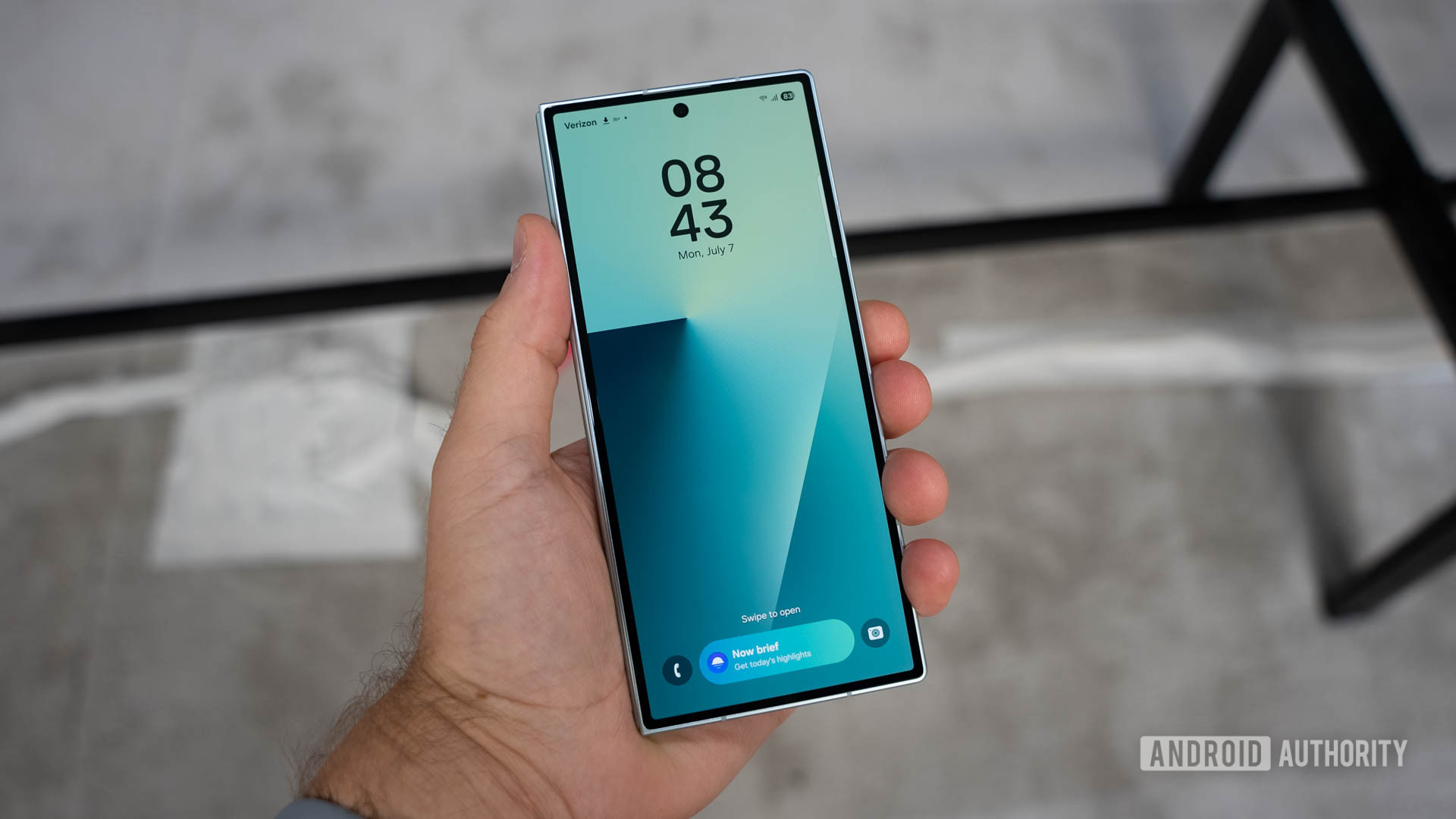
The Fold 7 may have gotten thinner, but it grew in every other dimension, which made the cover screen larger and rectified one of my other issues with previous models. The new phone has a 6.5-inch cover display, up from just 6.2 inches on my Fold 4.
The thing to keep in mind with these phones is that they aren’t the same aspect ratio as a normal phone — they’re taller and narrower — so while a 6.2-inch screen on a Galaxy S25 is perfectly fine, on a foldable it felt cramped and almost unusable. Thankfully, the Fold 7 hasn’t gone too far the other way. The 6.5-inch screen is significantly easier to use with one hand than any of Samsung’s Ultra phones, while still being large enough to enjoy.
The Fold 4 would usually run out of battery by 6 PM, but I haven’t been able to kill my Fold 7 before midnight.
What hasn’t changed is the battery. The Z Fold 7 has a 4,400mAh battery, just like the Fold 3, 4, 5, and 6. Thankfully, battery life has gotten better despite the capacity remaining the same. I can’t speak for the 5 and 6 personally, but I can say without a doubt that the Fold 7 lasts significantly longer than my Fold 4 ever has. Even when it was new, the Fold 4 would usually run out of battery by 6 PM, but I haven’t been able to kill my Fold 7 before midnight.
My typical usage consists mostly of Wi-Fi, with occasional 5G. I use both screens about 50% of the time, and I’m almost always running at least three apps on the inner screen at once. Usually, that’ll be Slack, Telegram, and YouTube Music, streaming to my Galaxy Buds 3 Pro. The Fold 7 is good for 6-7 hours of screen time from 8 AM to 12 AM.
What really impressed me about the Fold 7 battery was its longevity during an emergency journey to the other end of the country. Over a four-hour drive, connected to wireless Android Auto while streaming music over 5G and using GPS for navigation and location sharing via Telegram, it only dropped from 65% to 20%, and at no point was it even warm to the touch. A journey like that would’ve killed my Pixel 10 Pro.
Lanh Nguyen / Android Authority
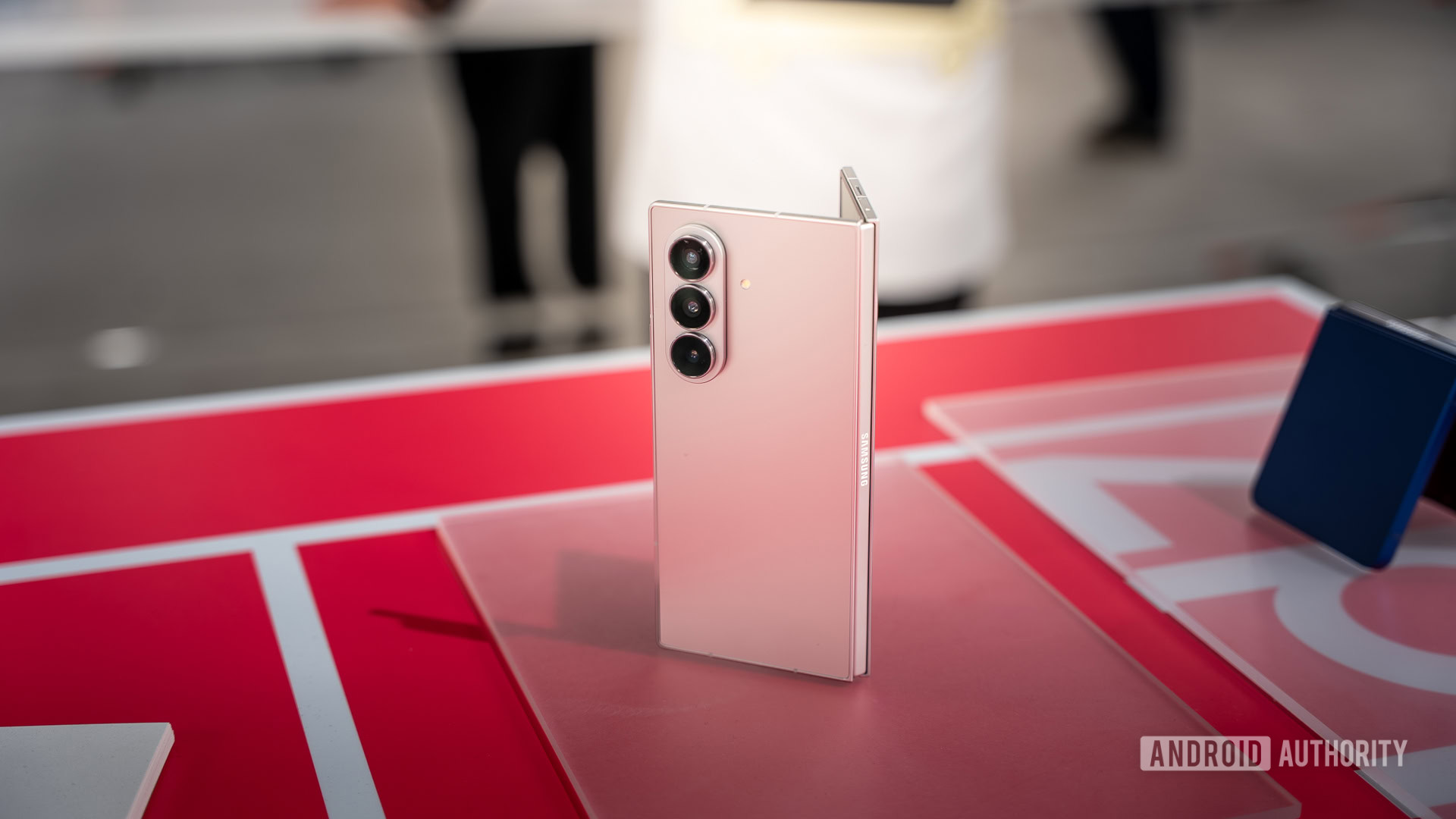
The other thing the Fold 7 gets right is how special it feels. Seven generations in, the novelty of opening a phone hasn’t worn off, and it feels like it should be impossible, especially with how thin this phone is. Using a folding phone also garners attention, and as shallow as it sounds, it feels good. I’ve had multiple people ask me which phone I’m using when I’ve unfolded the Fold 7 while waiting in line, or when I’ve folded it closed to pay for something in a shop. Folding phones have proven themselves to be more than a gimmick without losing what made them feel special and fun.
Add all of these factors to what I already liked about my Fold 4, like the software and the big inner display, and you get an almost perfect phone. Almost being the operative word, because while I adore the Galaxy Z Fold 7, there are things that annoy me about it.
Not everything is perfect, but it’s pretty close
Hadlee Simons / Android Authority
I know I’ve just praised how thin the Z Fold 7 is, but some sacrifices had to be made. The digitiser layer that allowed the S Pen to work is gone, and I miss it all the time. I’ve loved using the S Pen with every device I’ve owned that supports it, including my old Fold 4.
The S Pen situation is something I can overlook more easily than the fingerprint scanner, though. Like the Folds that preceded it, the Fold 7 has its fingerprint scanner integrated into the power button. I’ve always loved this implementation, finding it more accurate than any in-display reader. That’s no longer the case, though, as the button is so thin that it often takes two or even three attempts to get it to read my thumb correctly. It gets worse if you use a case, as the added bulk makes finding the button difficult, let alone getting it to read my fingerprint properly. Samsung has also removed the option to swipe on the sensor to pull down the notification shade, which I also enjoyed using on my Fold 4.
My other gripe is the selfie camera that lives beneath the inner screen. The Fold 3 through 6 used an under-display camera (UDC) that sacrificed image quality for blending (almost) seamlessly into whatever you were doing. The UDC was visible if you looked for it, but quickly faded into the background. With the Fold 7, Samsung went back to a traditional hole-punch camera. I don’t necessarily mind the return to a regular sensor, but I do mind that it interferes with content on the screen. As you can see in the images above, text is often interrupted by the camera when in full-screen, and it can be distracting when watching a video, too.
I wish Samsung had kept the UDC, but I understand why it opted to ditch it in favor of a higher-quality sensor. I also wish it had moved the camera elsewhere. Google’s foldables, for example, place the camera in the far-right corner of the screen, where text rarely reaches and where black bars usually frame the video. Hopefully, some apps will be updated to account for the camera placement, but I won’t hold my breath.
Ryan Haines / Android Authority
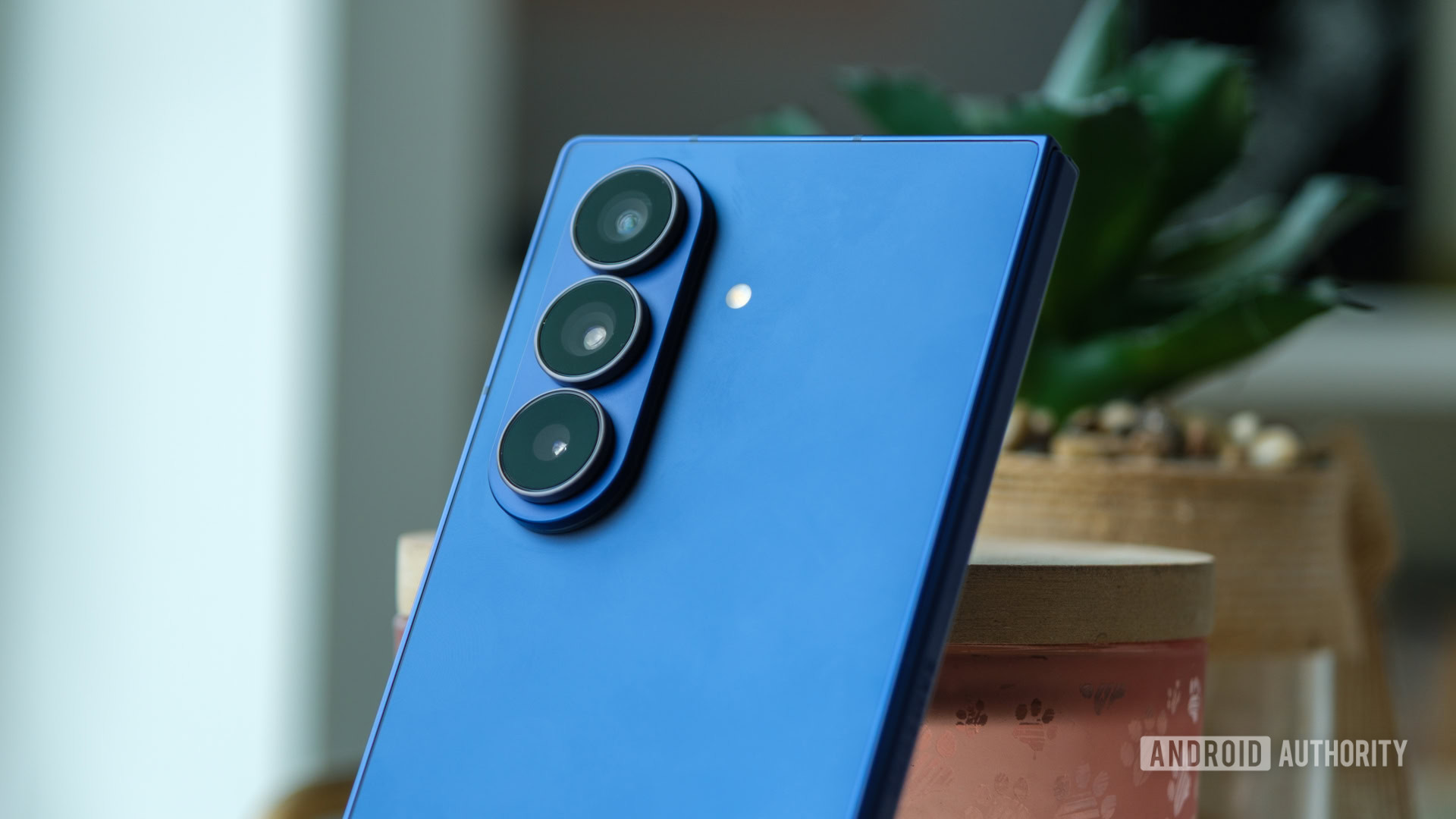
Finally, there are the cameras. They’re not great, unsurprisingly.
I’ve been unhappy with Samsung’s cameras for a long time — it’s one of the reasons I bought a Pixel 10 Pro — and while I’ve been using the Z Fold 7 as my primary phone since the start of December, my Pixel has been in my other pocket at all times so that I can take photos of my cat that aren’t unrecognisably blurry.
The shutter lag is still felt in all but ideal lighting; the 3X telephoto camera is so bad that you’re better off cropping into the 200MP primary, and the 50MP ultrawide camera that the S25 Ultra got is missing in action, with the old 12MP sensor making a return here. A phone this expensive needs to do better, as do Samsung phones in general.

Ryan Haines / Android Authority
Those complaints pale in comparison to the Fold 7’s strengths, though. Unlike my Fold 4, I haven’t wanted to remove my SIM card from this after a few weeks. The weight, size, and improved cover screen make this the folding phone I want to use every day — and it makes me look forward to the Z Fold 8, which I pray will resurrect the S Pen. I know, I shouldn’t hold my breath, but a man can dream.
Still, the fact remains that the Fold 7 is the first foldable I’ve felt comfortable using long-term — and, more importantly, have enjoyed using long-term. It’s not perfect, but as far as foldables go in 2026, it’s pretty darn close.
Samsung Galaxy Z Fold 7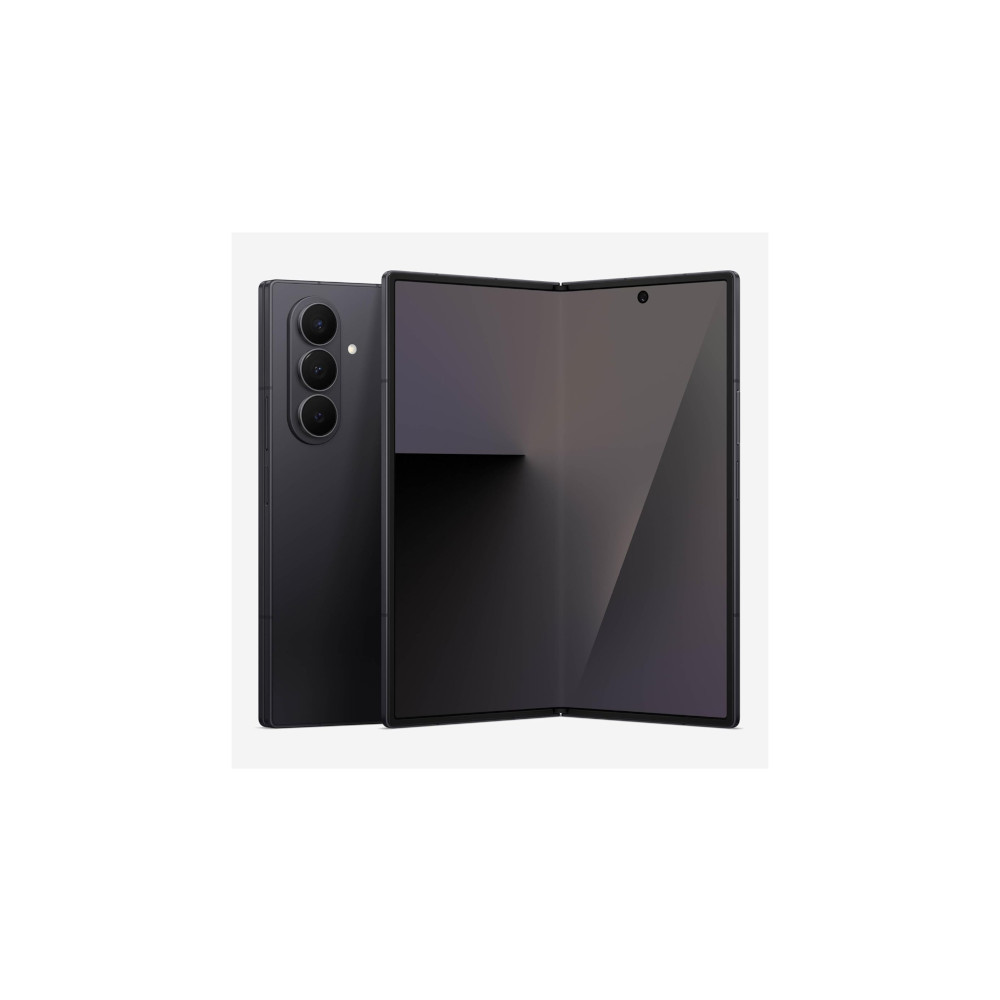
 Samsung Galaxy Z Fold 7
Thinnest, lightest Z Fold to date • More durable design • 200MP primary camera • Snapdragon 8 Elite for Galaxy
Thin, light, high-powered, and it folds!
The Samsung Galaxy Z Fold 7 offers an 8-inch OLED screen, a 200MP camera, the Snapdragon 8 Elite for Galaxy chipset, and a 4,400mAh battery. The Galaxy AI experience is baked in, offering tools across the camera, Circle to Search, and much more. Best of all, Samsung continues to evolve its foldable hinge assembly, promising reduced visibility of the crease.
Don’t want to miss the best from Android Authority?


Thank you for being part of our community. Read our Comment Policy before posting.