
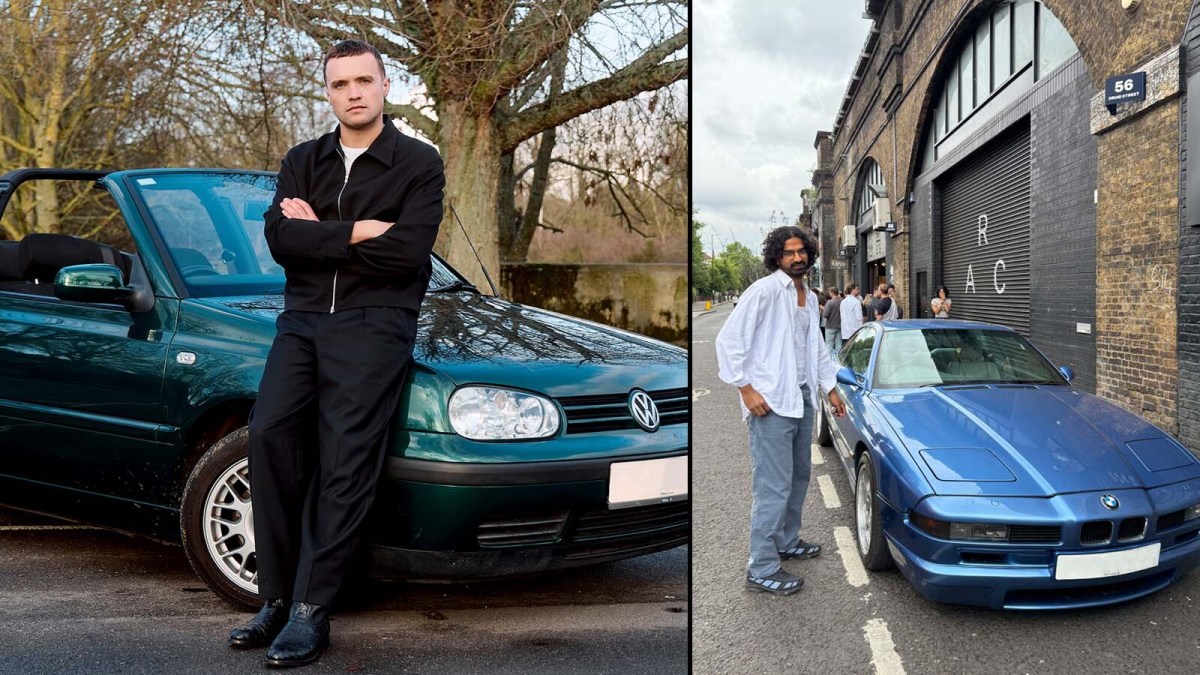
I’m 31 and drive a car that’s almost as old as me. A 2000 Volkswagen Golf Mk 3.5 convertible in the era-defining Dragon Green, it’s a car I have wanted since I was a kid. It is the car of anyone raised in north London during the Noughties. So when one came up for sale in south Wales in 2024 I joined a growing number of people my age and bought a banger, for £4,000.
My VW has given me more pleasure than any purchase has a right to. London, it turns out, is an excellent place to own a convertible: mostly dry and mild, rarely extreme. Roof down, wafting through the city, it’s like being on an open-top bus. Last year I even drove it to the south of France for a three-month cooking job.
It is cool, boxy, old-school and the recipient of endless head nods from cabbies and bus drivers. They are tapping into something that is mostly unarticulated about cars: that the modern ones, by and large, are joyless things, homogenised, puffy, samey, underwhelming and utterly lacking in individuality. By contrast a relatively bog-standard high-production 2-litre Golf from the early Noughties begins to develop a bit of personality.
• I miss my old car. It smelt a bit, but don’t we all after a certain age?
I am not alone in feeling this way. There is a growing subculture of people in my generation, of similar backgrounds — city kids from more or less middle-class backgrounds — rediscovering and falling in love with the cars of the Nineties and Noughties. Raised on Top Gear and Gran Turismo, we are returning to the vehicles that were parked in the background of our childhoods — an era, though we didn’t know it at the time, that was peak car.
Crucially this is not rich kids in Lamborghinis, red-trousered Chelsea boys in daddy’s vintage Porsche or the chaos of suburban boy racers. It is the quiet middle: ordinary young adults who love cars and save up for something a bit different, drawn in by the cars’ analogue heart and unpretentious charm.
Nowhere captures this better than Mildly Interesting Cars of London (Micol), a cult Instagram account run by Ghaleb Rahim and Michal Fidowicz that has become the unofficial archive of this movement. They started posting interesting cars from the Nineties and Noughties. The two of them, far more steeped in car lore than I am, started to write captions, and eventually mini essays, explaining why a car mattered: a rare colour, a one-year spec, a design detail you don’t see any more. The account grew from a few thousand followers to almost 40,000.
What’s more, people weren’t just liking photos, they were messaging, sharing their own stories, asking if they would ever host a meet-up.
Micol began hosting informal gatherings across London, drawing people from many different backgrounds, mostly in their twenties and thirties, united by an affection for old-fashioned cars.
So what is it about cars from this era? Partly it’s build quality. Ghaleb points to the Nineties as a high-water mark: there was solid engineering, good materials and brave designs, all before screens and software flattened everything into the same experience. Cars had ABS and crumple zones but were still primarily designed to feel good to drive.
Then, sometime in the early Noughties, things shifted. Market research worked out what consumers “didn’t care enough about” for corners to be cut. Paint quality dipped, plastics replaced metal, designs became blander. The cars were safer and more powerful but also heavier, more isolated and increasingly detached from the road.
Eventually a backlash started — albeit a small one in the grand scheme of modern car owners. People, myself included, were drawn back to those era-defining modern classics.
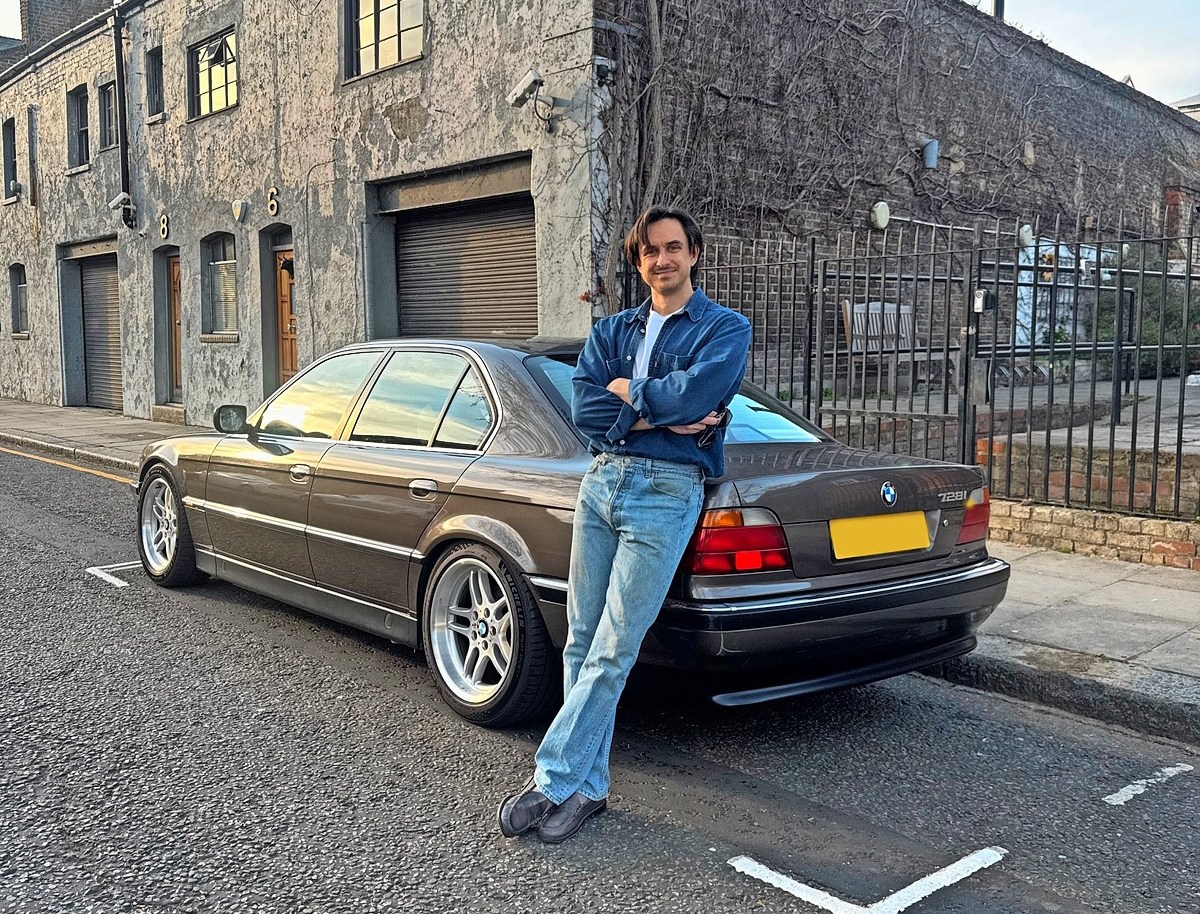
Michal Fidowicz has also chosen a BMW
Covid poured fuel on the nostalgia, particularly among Gen Zers and Millennials (about 60 per cent of whom, in a recent survey, expressed an interest in owning a classic car.) Locked indoors, young people rediscovered hobbies that were tactile and absorbing. Used-car prices jumped by 20 to 30 per cent. Instagram turned obscure passions into shared identities. Furlough money met latent desire. When we were released back into the world, there was only one way this was going to go.
It is worth talking about the environmental argument here. Cars from that era are not the sooty, unregulated polluters of the past. Pre-catalytic classics can be filthy, but many of the Nineties and early Noughties modern classics enjoying a revival were built to comply with contemporary emissions rules, fitted with catalytic converters and relatively efficient engines.
• Why your old banger may actually be a classic car in waiting
Building a new car is carbon-intensive: mining, smelting, battery production, global shipping — it all adds up. Studies vary but it can take tens of thousands of miles for a new electric vehicle to offset the emissions created in its manufacture compared with simply keeping an existing car on the road. The most sustainable car, in many cases, is the one that already exists.
Most of all, though, there is something more emotional at work. Owning an older car is fun. They demand a little effort. They ask you to pay attention. In a world engineered to remove friction, that effort feels meaningful. Mastery feels earned. Driving becomes an activity again, not a background process.
As Jeremy Clarkson said, “If you’re going to develop a relationship with a car, it’s got to have human qualities. And if it’s got human qualities, it’s got to have faults.”
My Golf is not fast, rare or valuable but it makes me feel connected. It has, improbably and rather embarrassingly, become part of my identity. I now find myself in blokey Facebook owners’ groups comparing photos of slightly different trim pieces with the pride I imagine I’ll one day reserve for photos of my children.
In a culture saturated with frictionless, disposable objects, it matters to care deeply about something imperfect. And judging by the packed car meets, the long DM threads and the joy of a London street full of interesting old cars, I’m clearly not the only one who feels it.