
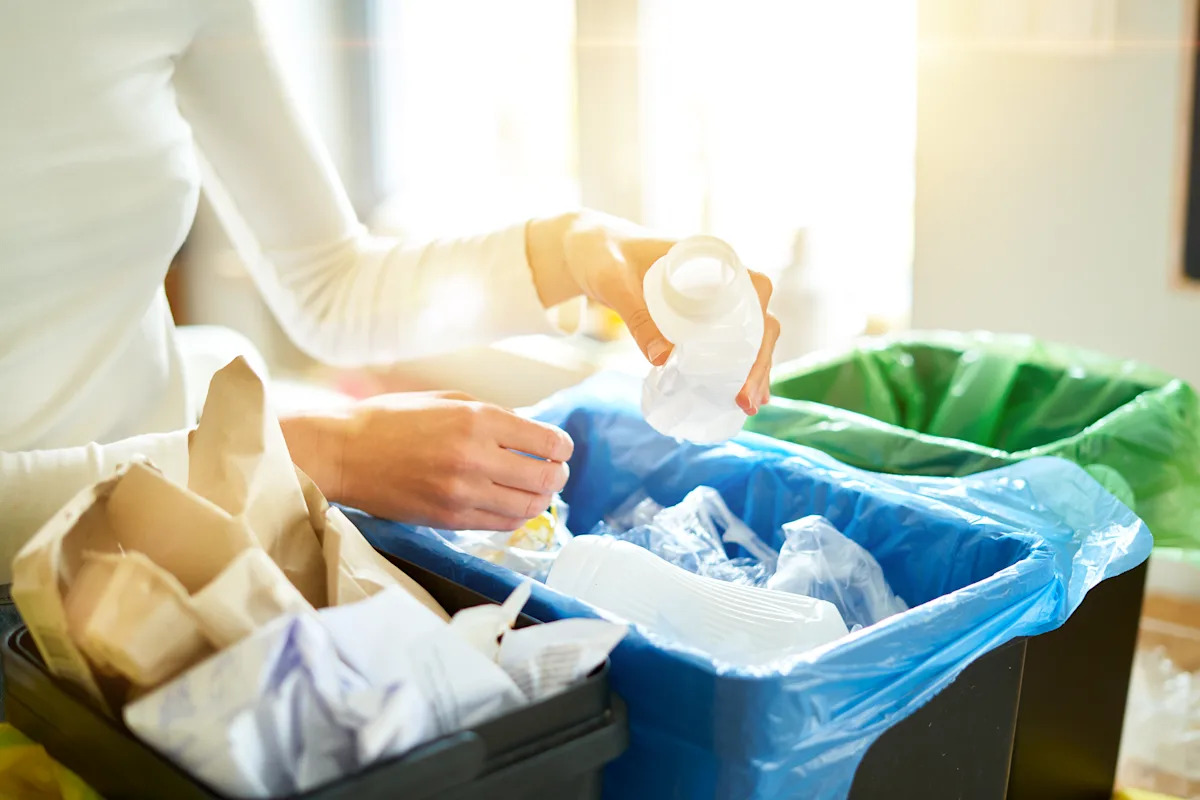
Household bin collections for homeowners in England will change from this March, when new collection rules are introduced in an attempt to boost recycling rates.
It’s part of the rollout of the government’s Simpler Recycling scheme – but that is only the start of the changes coming to Britain’s bins.
“Simpler Recycling” means that, from 31 March, all households will have four waste containers: paper, other dry recycling, food waste and “normal” waste.
But even bigger changes are due in March 2027, when many plastics that previously went to incineration will be recycled from kerbside green bins.
Official statistics show that recycling rates have flatlined since 2015 – stuck at around 44–45% – with the government hoping to raise that figure to 65% of municipal waste by 2035.
Plastics that will be recycled from 2027 include some that many of us assumed were already being recycled, such as plastic films used to wrap foodstuffs.
Statistics from plastic campaign group WRAP show that 81% of us dispose of items in recycling that are not accepted, averaging in total 5.4 items per collection.
Adam Herriott, senior specialist at WRAP, told Yahoo News: “Under Simpler Recycling, all local authorities in England will collect the same core set of materials, including plastic packaging. This consistency means people will have a much clearer understanding of what can and can’t be recycled, wherever they live.
“It will also give recyclers access to larger, more reliable streams of high‑quality material, helping build stronger UK recycling infrastructure over time and increasing the likelihood that plastics are recycled here at home.”
What is changing in March 2026?
From 31 March, all households in England will have to separate paper and card into their own bin, and put other dry recyclables – including plastic, metal and glass – in another bin.
Similar regulations are also coming into force in Scotland and Wales.
Households will have four waste containers: paper and cardboard, other dry recycling, food waste and residual waste (the normal bin).
There will also be mandatory weekly collections of food waste in every council area.
More plastics will be recycled, including plastic bottles made from several plastics not currently recycled, such as polyethylene terephthalate (PET), along with pots, tubs and trays made from the same substance.
Cartons for food and drink will also be recycled (they are currently not recycled in many council areas).
What’s changing in March 2027?
In March 2027, one of the biggest changes in plastic recycling in recent decades will be introduced, with so-called “flexible plastics” becoming recyclable.
Flexible plastics refer to items like plastic bags and make up almost a quarter of all plastic waste in the UK, Herriott explained.
They also include products like crisp packets, bread bags, bubble wrap and food pouches. While people can already recycle them, it can only be done at specialist pick-up points like supermarkets – meaning that, in practice, very few are recycled.
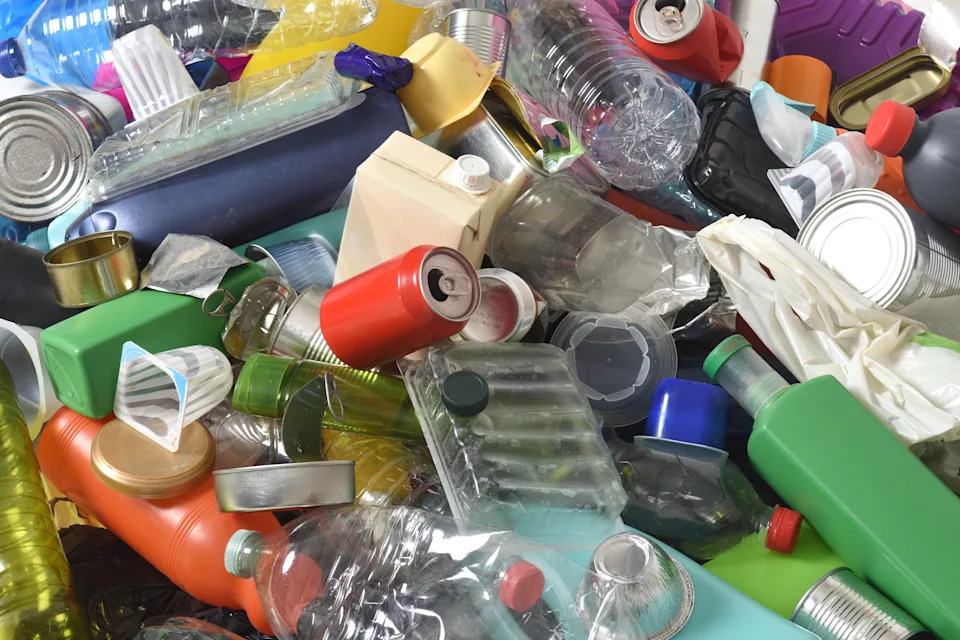
Previously only hard plastics were recycled, along with paper and cans.
(curtoicurto via Getty Images)
“Flexible plastics (aka, plastic bags and wrapping) are items like plastic bags, bread bags, wrappers and film. They’re lightweight, protect food and are widely used, but they’ve historically been hard to recycle through kerbside systems, with a recycling rate of around 7%,” Herriott explained.
Flexible plastic currently makes up around a quarter of plastic household waste, Herriott added.
The introduction of Simpler Recycling will mean paper and card are recycled separately and recycling plants will no longer mix them up with flexible plastic.
Previously, flexible plastic that was thrown out in kerbside collections would be sent to landfill or incinerated.
“Films and flexibles are one of the last major types of household packaging not universally collected at the kerbside,” said Herriott.
“Bringing them into mainstream recycling could unlock over 200,000 tonnes of additional material each year for recycling in the UK. If we want a truly circular economy, we can’t leave flexibles behind.”
What will still not be recycled?
There are still several materials that cannot be recycled – or, at least, not in kerbside collections.
Any plastic which is labelled as “compostable” or “biodegradable” still cannot be recycled in kerbside plastic collections. That includes popular items such as coffee pods.
Plastic bottles that have contained engine oils, paints, antifreeze or white spirit also cannot be recycled.
Polystyrene (often used in foam packaging or packing beads) or polyvinyl chloride (PVC) packaging, used in shrink wrap and blister packs, will not be recycled either.