
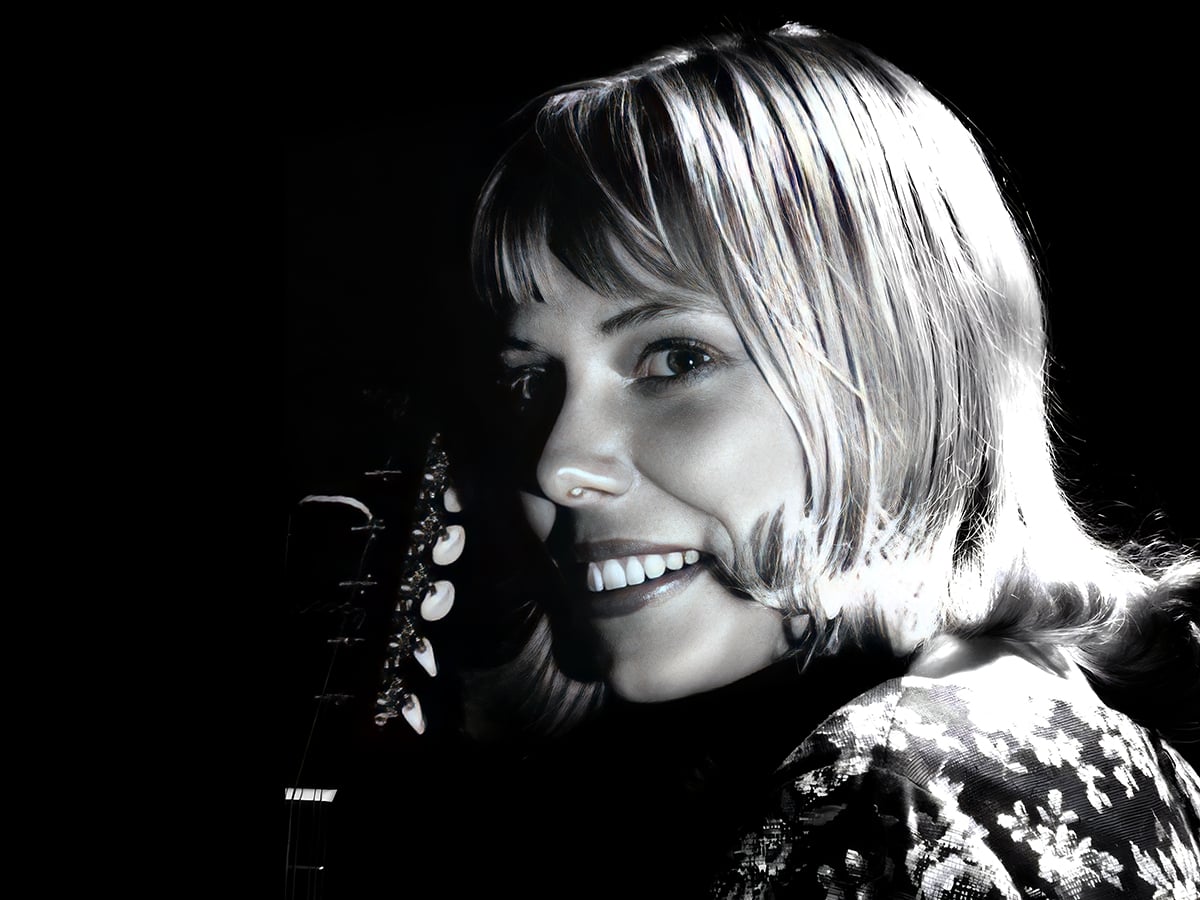
(Credits: Press)
Mon 16 February 2026 19:45, UK
Spoken word poetry isn’t for everyone.
As a former spoken word poet myself, knees knocking audibly on a stage watched by dozens of other beady-eyed writers, I must admit, sometimes it comes across as a little cringe; surely, the listener hears the lyrics just as well when they are sung as when they are spoken, right?
A bad spoken-word-type lyric can come across as quite musical theatre; for instance, think Lin-Manuel Miranda’s Hamilton, when each character launches into sing-song out of nowhere, popping their p’s and exploding their t’s until a river of spit is cascading from their mouth. Sure, there are ways to do it right, such that today, we might point to Dry Cleaning, who have taken Sprechgesang into an entirely new direction, then of course, Bob Dylan has always been around.
Rest assured, the ‘Subterranean Homesick Blues’ singer wasn’t an afterthought for Joni Mitchell, who discussed this “speak-singing style” with an interviewer in 1998. When the interviewer admitted that they found it hard to perfectly summate the affectation of this vocable melody after seeing one of Mitchell’s shows, the singer-songwriter responded, “It’s the same thing that Bob does”, and then followed up with the delicious phrase, “The poet takes over”.
Ruminating on who might be the best point of comparison, Mitchell thought aloud: “Maybe I guess Lou Reed, although I’m not as familiar with his material as Bob’s. The point in the performance is to make the words come alive.”
Anybody who might invite an odd inflexion upon their recorded performance does so to manipulate the impact of their work further, like an artist putting their canvas in a frame that holds a secret meaning, too. The content and the form are in conversation with one another, with the form, here the singing style, is activated, and can tease out further meaning in the work due to the friction, tension, or indeed the ease of delivery.
Mitchell understood this, Dylan understood this, heck, even university me, reading out timid female-rage poems on a Wednesday night at an upstairs coffee shop joint, understood this. So why didn’t Ella Fitzgerald? Mitchell explained: “Like Ella Fitzgerald is a beautiful singer, she has perfect pitch and perfect time, but she doesn’t illuminate the words, she just sings through them. ‘S’wonderful, s’marvellous’, that’s the way it’s written, she sings through it.”
In complete contrast, jazz and swing singer Billie Holiday was famed for her gorgeously unique, emotive vocal style, celebrated for what appeared to be an improvisational, heartfelt delivery that made the inner souls of her words soar.
Don’t just take my word for it, for Mitchell said, “Billie Holiday makes you hear the content and the intent of every word that she sings, even at the expense of her pitch or tone. So of the two, Billie is the one that touches me the deepest, although I admire perfect pitch and perfect time.”
When she puts it as eloquently as that, it’s not hard to spot Holiday’s influence seeping into Mitchell’s own discography, in the bumps and the cracks of her rippling voice as it soars through the air and deep into the chest, burrowing forever into our hearts; it’s a shame that Fitzgerald had to catch strays in the meantime.