
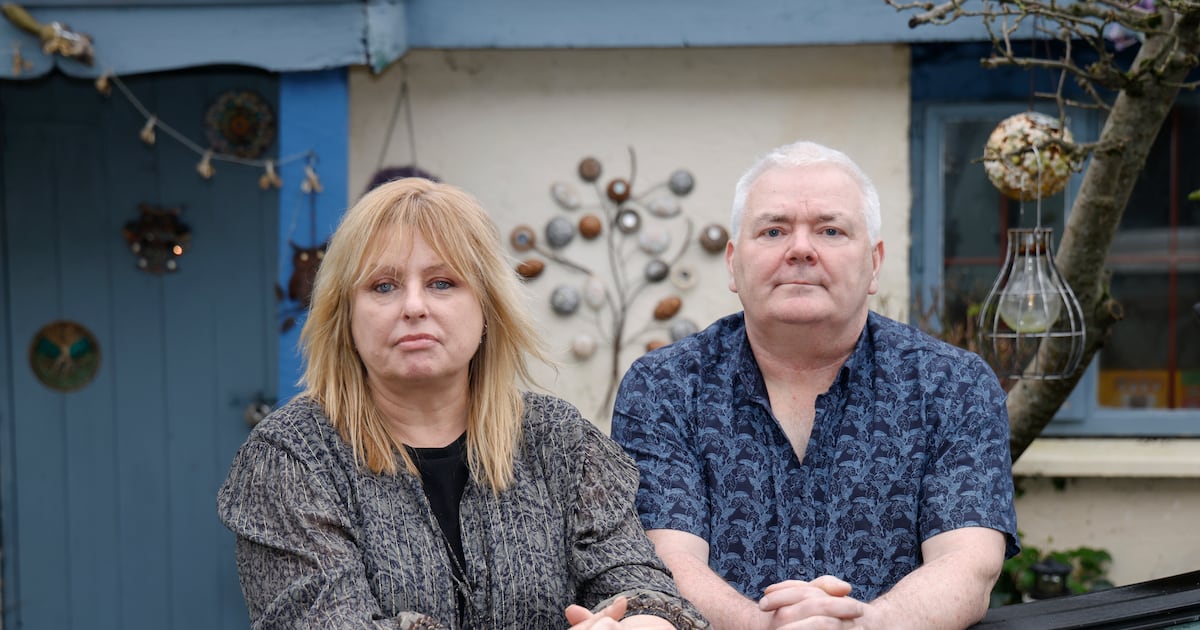
Sandra Luz has a long list of symptoms she continues to suffer from six years after contracting Covid-19 while working on the frontline of the pandemic as a support worker in a Dublin residential care centre.
Joint pain, fatigue, skin sensitivity, fatigue and palpitations, she says.
“I used to be quite outgoing. Now, I isolate myself. I don’t want to go out for fear of having an attack. I don’t drive distances.”
“We just feel abandoned,” says Luz.
Luz is one of more than 120 healthcare workers who were still receiving the special payment, intended to cover pay, allowances and premiums, when it was discontinued last December. They have been transferred to the standard public service sick leave scheme, which provides for three months’ full pay. Come April, their pay will halve for three months.
After that, the workers say, they are not guaranteed access to other HSE schemes intended to provide extended, term-limited payments. They say they face not being able to pay mortgages or other financial commitments.
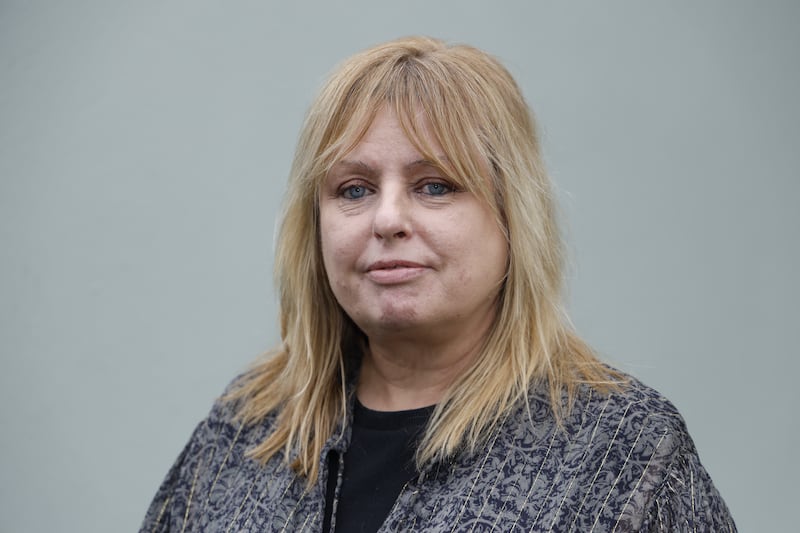 Sandra Luz is concerned the financial implications of the payment ending will ultimately further impact her mental health. Photograph: Nick Bradshaw
Luz says she was advised by her GP against going to work as the pandemic unfolded in March 2020 as she already had fibromyalgia and asthma. However, she ended up on wards dealing directly with patients.
“When you’re in that line of work, you’re programmed … you go in, whatever … Now we ask ourselves: ‘If we hadn’t have gone into work, would we be sick? And the answer is ‘no’. We would still be healthy,” she says.
By April 2020, just a few weeks after the first cases of Covid were identified, she contracted the virus. She says she has been sick since with Long Covid, a condition defined by the World Health Organisation as featuring persisting symptoms more than three months after infection.
Now, she adds, the ending of guarantees around her income “will eventually impact on my mortgage, on my bills, on everything. That’s also going to impact on my mental health”.
Reports of issues with sleep, brain fog and mental health are commonplace among those with the condition.
Dr Brian Kent, a consultant respiratory and sleep physician at St James’s Hospital in Dublin, says he has seen a wide range of patients with Long Covid. He questions whether the term is useful given how many different conditions can arise from the original virus and the range of severity.
He says a significant proportion contracted Covid during their work in the health service and most require multidisciplinary treatment..
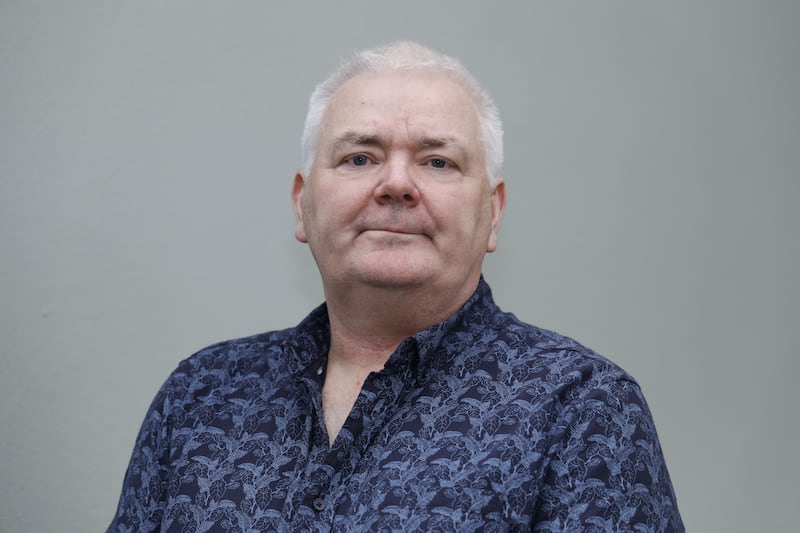 Michael Lee says he continues to suffer from acute anxiety and exhaustion as a result of Long Covid. Photograph: Nick Bradshaw
Michael Lee, a healthcare assistant in a busy general hospital, became sick soon after the pandemic started.
A former construction worker, he says he was healthy at the time. He has since developed a string of major issues including heart problems and an immune system condition called Sarcoidosis that most commonly affects the lungs but in his case has severely reduced his kidney function.
He has been told he may ultimately need a transplant but would need to lose much of the weight he has put on due to steroids that are among about 10 regular medications he is taking.
“I think the mental side of it is worse,” he says, adding he suffers from constant brain fog.
“He is not the same man he was before this,” says his wife, Sharon.
Both recall the point at which he became convinced his family, including two then teenage children, was trying to kill him. “I moved into the garage and slept on an old mattress,” he says.
He still suffers from acute anxiety and exhaustion, he says. He recounts ill-fated attempts to go away on holidays, including a trip to Monza for a Formula One race with his brother and son.
“After saving all year for the trip, I didn’t make the race. My body just gave up on the Sunday morning. I told them I couldn’t make the race unless they carried me. I could barely walk to the toilet.”
[ Long Covid: ‘I’m only in my 30s, but I’m not the person I was in December 2020′Opens in new window ]
Margaret Smyth (62), a nurse at a community inpatient unit, tested positive for Covid over the new year period in 2021. She says she has since gone from being “very able-bodied for my age” and “very active” to struggling with a string of physical conditions, including vertigo and a succession of serious infections.
“I’ve been to so many consultants,” she says, as she tries to tot up the many medical bills she had to pay last year. She has been told on various occasions that the problems stem from Long Covid but she feels many people do not understand the condition. Some, she suggests, “just want to sweep us under the carpet and hope we haven’t got the energy to fight”.
Being sick for so long brings many days when her “mood is low”, she says. She wants to get back to work although; “You have to be 110 per cent well in these jobs, it’s not like we’re going and sitting at a desk. You have to be well and your mind has to be very sharp.”
All three are concerned about their short and long-term income.
Other affected workers who speak to The Irish Times cite the circumstances in which they got Covid. They point to it having been a “chaotic” time in hospitals and other healthcare settings, with personal protective equipment often in short supply.
Some Opposition TDs, including Pádraig Rice and Liam Quaide of the Social Democrats, and Labour’s Marie Sherlock continue to advocate for sufferers.
Quaide says there are still a “window of time” before the healthcare workers’ sick leave will be halved. “The Government could implement the call of the Irish Congress of Trade Unions to classify Long Covid as an occupational injury for this cohort,” he says.
This is a key point in the push by health sector unions to have the special leave extended. All but two EU states have recognised Covid as an occupational disease or accident. The European Parliament previously recommended workers affected should receive adequate supports.
The Irish Government has resisted pressure to recognise the condition in the same way, with then minister for social protection Heather Humphreys saying it would be impossible to prove where somebody caught the virus.
Quaide, who has worked as a clinical psychologist in Long Covid services in Cork, says: “These healthcare staff have been paid their special Covid leave with pay on the basis that they contracted the virus at work in high-risk settings and developed disabling symptoms.”
“It’s clear now that this is a chronic health condition that renders them unable to work and is not responding to treatment; yet the financial support they had has been cut at an arbitrary date.”
Minister for Health Jennifer Carroll MacNeill and Taoiseach Micheál Martin have said the winding down of the scheme is occurring after many extensions of what was intended to be a temporary measure. They have said the move was in line with a Labour Court recommendation issued last summer.
But Phil Ní Sheaghdha of the Irish Nurses and Midwives Organisations, which represents most of the healthcare workers affected, says the union, along with others, took the case to the Labour Court but it essentially said its “hands were tied because the Irish Government hadn’t declared Covid-19 an occupational illness”.
“So, our claim now is quite simple. We want the Government to declare it an occupational illness, which will allow us go back to the court,” she says.
“These people have been let down. I think when you think back to that time and what they faced, these were the first people who nursed Covid positive patients or cared for them or worked close to them.
“When nobody else was exposed to a virus that we didn’t really know a lot about, when there was no vaccine a lot of the information we had was incorrect, they went to work.”
It is “baffling” to the organisation that the workers are being treated in this way, she adds.
“If you get a blood borne disease, if you prick your finger with a needle and, God forbid, you get hepatitis, or HIV, we have a scheme. These workers should get the same support.”