
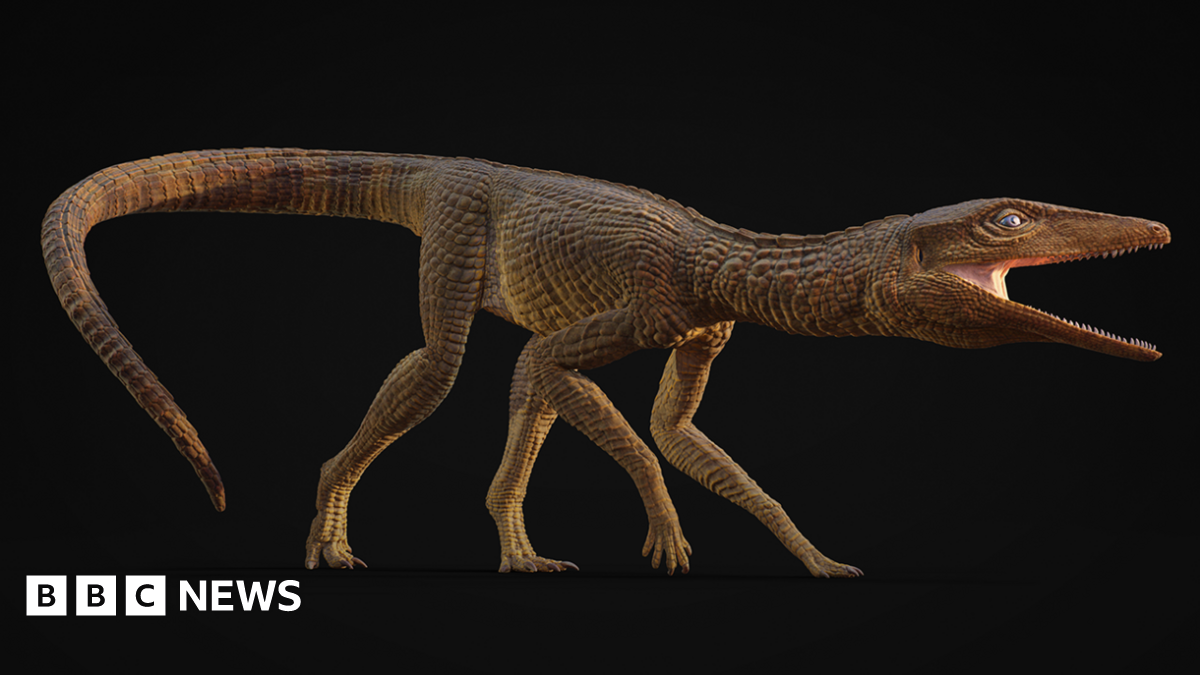
The fossil studied by Bodenham was originally discovered in Gloucestershire in 1969 but had remained in the Natural History Museum collection for decades before being examined in detail.
The geological deposits where it was found occur across south Wales and south-west England.
His former teacher’s influence played a major role in shaping his academic path, even though he ultimately chose to pursue biology rather than physics, which Jones jokingly refers to as a “softer science”.
“Mr Jones was just such a good teacher, not only in being able to explain things well, but you could tell that he was genuinely interested in the sciences. I think that really inspired me,” said Bodenham.
“He also didn’t let me settle. He was very good at challenging people and helping students be the best they can be. Above all, he’s a very funny, genuine, nice guy.
“He was also a big part in getting me to go to London, as he went to UCL as well and really helped to push me to go there.”
Bodenham said the decision to name the species after Jones had been warmly received by both his former teacher and the wider community.
He noted that other potential candidates for the honour, such as family members and his girlfriend, had not been upset by the decision.
“It’s been a very positive response and I think he [Jones] has also received a lot of nice messages and is a very well-liked person within the school and community,” he said.