
Sam Hawley: Could we solve the entire housing crisis in Australia by simply taxing the extremely rich more? Could we ensure a whole generation can afford a home if we take back more of the mining giants’ profits? Today, British economist, former trader and YouTube star Gary Stevenson on why a wealth tax could work to end growing inequality and fix our housing problem. I’m Sam Hawley on Gadigal land in Sydney. This is ABC News Daily. Gary, you are well a star, I think it’s safe to say, on social media. Your videos have more than 180 million views.
Sam Hawley: I didn’t know that. Thanks.
Sam Hawley: It’s pretty incredible. You’re obviously making economics interesting. So well done.
Gary Stevenson: Thank you. I do my best.
Gary’s Economic Youtube clips: Okay. Welcome back to Gary’s Economics. Today, we’re going to talk about how to make money. I wanted to do a video that explains very explicitly how you lose your house. Today, we are going to talk about interest rates and house prices.
Sam Hawley: How do you do it?
Gary Stevenson: You know, the big thing when I started the channel, the big thing was understandability. Understandability. When I started it, I honestly thought 90, 95% of the country, the UK, didn’t have a source of economics news analysis that they could understand. It takes a surprisingly large amount of work to make it easy to understand. That’s the key.
Sam Hawley: You became very wealthy, of course, after studying economics and becoming a trader. But you did leave that role to spend your time campaigning against widening inequality. So in essence, just tell me what is your message?
Gary Stevenson: The big thing that I want people to understand, Australians to understand, is that if wealth inequality gets bigger and bigger and bigger, and the super rich, the very rich take a bigger and bigger, bigger share of the wealth, what that means is ordinary Australians will get squeezed out. And the biggest consequence of that is unaffordable housing. But it’s not just that. What you see is government wealth gets squeezed out. In the UK now, we’re at a situation where we’ve got a so-called left-wing Labour government being forced to do austerity, cutting services because they’ve been squeezed out of wealth. The main thing is, if you don’t keep an eye on inequality, it will grow and grow and grow. And what that will mean is living standards will fall for ordinary Australians. And you’re seeing that, and we’re seeing it much more aggressively in the UK and in Europe.
Sam Hawley: So you argue that the biggest economic problem the world faces now is that the rich keep accumulating more wealth, that they earn money off the wealth they have, and they just don’t have the capacity to spend it. Just explain that.
Gary Stevenson: Yeah, you know, if your kids can’t buy houses, who’s buying the houses? Because the houses aren’t disappearing. You know, that wealth is being transferred to the rich. These guys make enormous amounts of passive income. If you’ve got $1 billion in wealth, you’re going to make $50 million a year, $1 million a week. What are you going to do with that? It’s impossible to do anything other than buy out the assets. If you look at history in my country, you’ll see this phenomenal inequality across Europe, back before World War II. Tiny, super-rich elites surrounded by poverty. You don’t have that here, but we’re going in that direction. If you do not watch your inequality, living standards will fall for the average Australian, American, British person. You’ve got to watch it.
Sam Hawley: Okay, but what led to the rise of this, to the rich getting richer, to becoming so extremely rich as we see today?
Gary Stevenson: You know, this was kind of held under control in the post-war period by very high levels of tax on the rich people. So in the UK, in the post-war period, we had 95% top income tax, 90% top inheritance tax. And I think it’s no coincidence that that was a period of time when people like my dad could work a regular job. My dad worked for the post office for 35 years and could buy a house, have a family, go on holiday, have a pension, have a retirement. In the 80s, we had this massive change globally in taxes. We had obviously Thatcher in the UK, Reagan in the US, they slashed taxes on the rich. And then suddenly the rich start accumulating these massive incomes and using them to buy assets. You know, it’s not complicated. If you do not tax rich people, they will have massive passive incomes and they will buy all the assets. And I want to make it This is not about working people, doctors, lawyers, heaven forbid, even YouTubers. This is about super rich families with wealth of 50, 100 million, $1 billion. They are paying no tax. In many cases, they’re paying tiny taxes as a percentage of their overall incomes, while ordinary working people listening to this will be paying 40, 50%.
Sam Hawley: What role are these tech giants playing in all of this? The tech bros?
Gary Stevenson: Well, I mean, that’s again, it’s about concentration of wealth and concentration of I mean, look at Elon Musk, Elon Musk, he buys, he’s got Tesla, what does he do? He uses it to buy Twitter. What does he use Twitter for? To basically support politicians that want to cut his taxes. Now, you know, you’re lucky here in Australia, you haven’t got a long history of that super rich elite. And it’s meant that you’ve been able to provide for a long period of time, good working conditions and good wages for working people. But you’re losing it now.
Sam Hawley: We’ll come to Australia in a moment more broadly. But you’re saying that these very rich people who keep getting richer are also driving a shift to the right in politics, in your view?
Gary Stevenson: Yeah, look, if you’ve got your eyes open at this point, you can see that the current political and economic system is failing. You know, across the world, across Europe, traditional political parties, which have existed in some cases for decades or centuries, are collapsing and are disappearing. That is because your average man or woman, your person on the street can see that living standards are not getting better, that living standards are continuing to fall and they want change. They’re demanding change. Now, there’s a quote from an American economist, Milton Friedman, said that at times of crisis, change will be chosen from the ideas lying around at the time. And what are the political ideas lying around at the time? Well, I think there’s two big ideas that are fighting to win. One of them is me and my lot, which is the problem is inequality. The problem is billionaires. If you want to fix living standards, you need to deal with the taxation of the super rich. And the other one is obviously the far right, who are saying the problem is foreigners, the problem is immigrants. Now, if you’re a billionaire and you know that the political economic system is going to shift in one of two directions, either tax billionaires or blame foreigners and immigrants, what are you going to do? You are going to start funding the far right. Of course you will. Of course you will. And they’re going to keep doing that.
Sam Hawley: All right, well, Gary, let’s come back to Australia then. As you say, it’s a bit of a different case than the UK or the US. We don’t have quite as many billionaires hanging around here. That’s for sure. We have a strong welfare system, a compulsory super system. We’ve set up things pretty well in this country to give people a go. That’s true, right?
Gary Stevenson: Yeah. But you know what? So did we in my country 40 years ago. 40 years ago, we had that. We didn’t have a lot of billionaires hanging around and we had good wages for ordinary working people. But then we slashed taxes on the rich. The rich started to accumulate money and people like my dad’s kids, like my sister, got squeezed out and will never be able to buy a house. And we have many, many families in the UK and I know also here in Australia, which have two working people, in many cases with degrees, that will never be able to afford a home. You’re going in the same direction. You’re not taxing rich people. You’re developing a billionaire class. That billionaire class is pushing up asset prices. And what that means is that your kids can’t afford a home and they’ll be renting their whole lives. And where does that rent go? To the billionaires who use that rent to push house prices up even further.
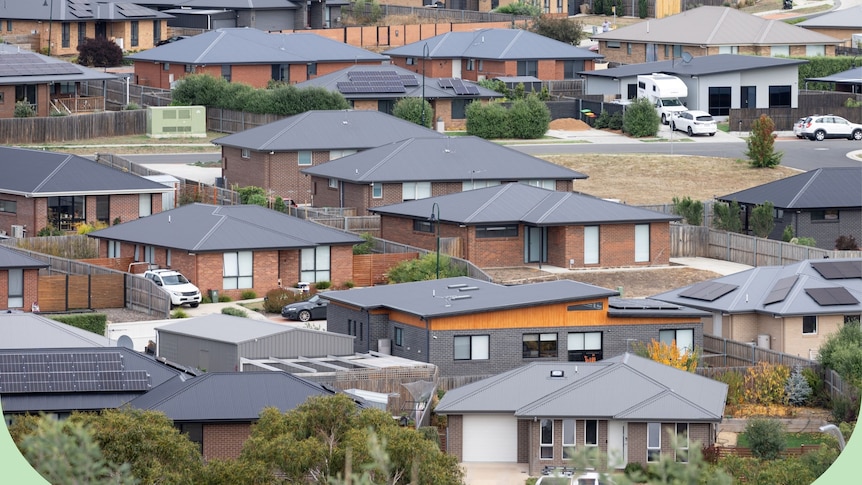
Sam Hawley: Big problem though in this country with housing, and of course, there are many young people now that are finding it really, really hard to get into the market. But a lot of that comes down to supply.
Gary Stevenson: I grew up in a place called Ilford. It’s in East London, historically one of the poorest parts of London. It’s never been rich, but it was respectable working class families when I was a kid trying to build our way out of a housing crisis. And the city that I grew up in is a slum now. It’s extended up, it’s extended back. These are houses I rented out by the room. And to be honest, it’s pretty extreme poverty where I grew up. Listen, if you want, you can turn this city into Mexico City. You can if you want. And you can have a tiny, tiny, super rich luxury center here in Sydney or in Melbourne or in Perth or in Brisbane, any of these cities surrounded by desperate poverty. And you can build those cities bigger and bigger and bigger. And you can turn Australia into the Hunger Games. If you try to build your way out of an inequality crisis, what you will do is you’ll build slums. The whole world shows you that. And I’m not saying don’t build. It’s important to build. But if you build in the context of inequality, there will be only two kinds of houses that you will build, which is super luxury houses for the super rich in the middle and extremely low quality houses for the poor on the outskirts.
Sam Hawley: But what about demand? Because some people argue that we should just cut migration to deal with that.
Gary Stevenson: Listen, people with low migration, they can have lower migration. I try to stay out of this debate. The problem that I have is very, very often these arguments that if you keep migrants out, that will fix the problem are funded by right wing parties who are funded by billionaires. The people who are driving house prices up in Australia are the same people driving house prices up in the UK and in Europe and in America. It is the billionaires.
Sam Hawley: Well, Gary, you also think that we are in a better position here in Australia, of course, because we are rich in resources. There’s a lot of stuff that we can dig up. But by the way, there’s some very wealthy people here and companies that have deeply benefited from that.
Gary Stevenson: You know, I envy you. I envy Australia because I make this argument in the UK every day. And people say, oh, we can’t tax them. If we tax them, they’ll leave. And then they will be screwed. You know, we can’t tax them. We need them. We need the billionaires. Listen, this country, Australia, has an enormous amount of wealth, the vast majority of which is in housing and natural resources under the ground. You know, these guys can’t take that away. You know, one of the main reasons why I wanted to come here to do my tour here in Australia is because I do not think there is a single country in the entire world which has a better shot at taxing the super rich and protecting that wealth for the people, because it is so difficult for those billionaires to take that wealth away from Australia because the vast majority of it is either built on or underneath the ground. You have everything you need here, everything you need here to provide an excellent economy, which provides excellent living conditions for ordinary working people. If you allow those natural resources to be monopolized and dominated by the very rich, then it doesn’t have to do anything for working people. You need to protect it.
Sam Hawley: Well, our former Prime Minister Kevin Rudd did try to give that a go, I think, Gary, about 15 years ago. He wanted to impose a 40% levy on super profits, going to be known as, of course, the mining tax.
Kevin Rudd, former Prime Minister: It’s important to make sure that Australians get a fair share of the resources which they themselves own. This package won’t be popular with everyone. Some will say it will cost projects and jobs. The fear campaign will be large and the fear campaign will be well funded.
Sam Hawley: The mining giants had a really big campaign against it and it never got through and by the way, Kevin Rudd lost his job. So it’s not that easy, is it?
Gary Stevenson: No, of course, listen, his job wasn’t easy and my job’s not easy, because I campaign to tax the richest, most powerful people in the world and I’m no billionaire. I wrote a book recently and when I was writing it, I was reading a book by Charles Dickens, famous British author, you wrote in the 1800s and at that time, Britain was the absolute economic centre of the world and he talked about a campaign to tax the billionaire industrialists. They weren’t billionaires at the time, but these super wealthy industrialists and he said these British factory owners said, if you tax us, we’ll rip up our factories and we’ll throw them into the sea. Listen, these guys will fight against it. They’ll fight against it tooth and nail and they’ve got the power and they’ve got the money. The only thing that you’ve got, the ordinary Australians listening to this, is power in numbers, people and you only use that if you fight together. Listen, you can tax them. That iron ore is under the ground. They cannot take it with them unless you let them, but I guarantee you, if you don’t do it, you will see a continuation of what’s happening, which is house prices going up and up and up and ordinary Australian families being squeezed out of home ownership.
Sam Hawley: Alright, well Gary, one of your ideas of course to fix all of this rather large problem is to bring in a wealth tax. As people have pointed out, of course, billionaires can leave the country, they can look to offshore tax havens. There’s all sorts of ways that very rich people get out of taxes, we all know that.
Gary Stevenson: Yeah, they’ll try to avoid it, which is why when we bring in a wealth tax, it has to be very, very carefully planned and very, very carefully designed. To those who say it’s impossible, I say, well, it was possible 50 years ago. You know, we did it in my country, not just my country, we did it in basically the whole of the West 50 years ago. We had massively higher tax on the richest, massively higher and that was a time when ordinary families could buy homes and have pensions and have families and have financial security. So it’s possible, it’s possible.
Sam Hawley: Okay, and if Gary, we leave things as they are, what nations like Australia, the UK, even America look like?
Gary Stevenson: Yeah, have you ever been to India? That’s the future. Listen, we can see the world shows us right in front of our eyes. I always remember when Donald Trump, I’m not sure if I’m allowed to swear here, but Donald Trump used a very insulting term to refer to poorer countries of the world. And I think what that implied was that he thinks, and I think often British Australian people naively think, that we cannot see the kind of inequality, the kind of poverty in Britain or Australia that currently exists in a lot of Africa, in a lot of Latin America, in a lot of Asia. That can happen here. That can happen here. Listen, the world shows us what an unequal country looks like. You know, read your Charles Dickens. Look at what Britain was like when it was the richest country in the world. Desperate, desperate poverty, desperate poverty for ordinary people. That is what happens if you do not keep control of your inequality. And the most obvious short term consequence is house prices will go through the absolute moon and ordinary people will never be able to buy houses again. It will be a nation of renters and it will be a nation of impoverished renters. Listen, you’ve got a great country here, great living standards for ordinary working people. Protect it.
Sam Hawley: Gary Stevenson is a British economist, former trader and host of the podcast, Gary’s Economics. He’s currently in Australia for his People’s Economist tour. This episode was produced by Sydney Pead. Audio production by Sam Dunn. Our supervising producer is David Coady. I’m Sam Hawley. Thanks for listening.