
Get Starting Point
A guide through the most important stories of the morning, delivered Monday through Friday.
Every time I speak with a scientist about ultraprocessed foods, which a growing body of research has linked to poor health outcomes including diabetes, heart disease, obesity, and cancer, a small voice in the back of my mind says: These sure sound bad, but I wish I could figure out which products are actually the worst. Or this: Good luck trying to feed a 2-year-old and a 6-year-old on a busy schedule without these.
If I was having so much trouble translating the concern over ultraprocessed foods into tangible actions I could take, I thought, surely the average consumer is bewildered, too. And that’s before they start tallying up the costs.
So I decided to take my reporting skills straight to the grocery store.
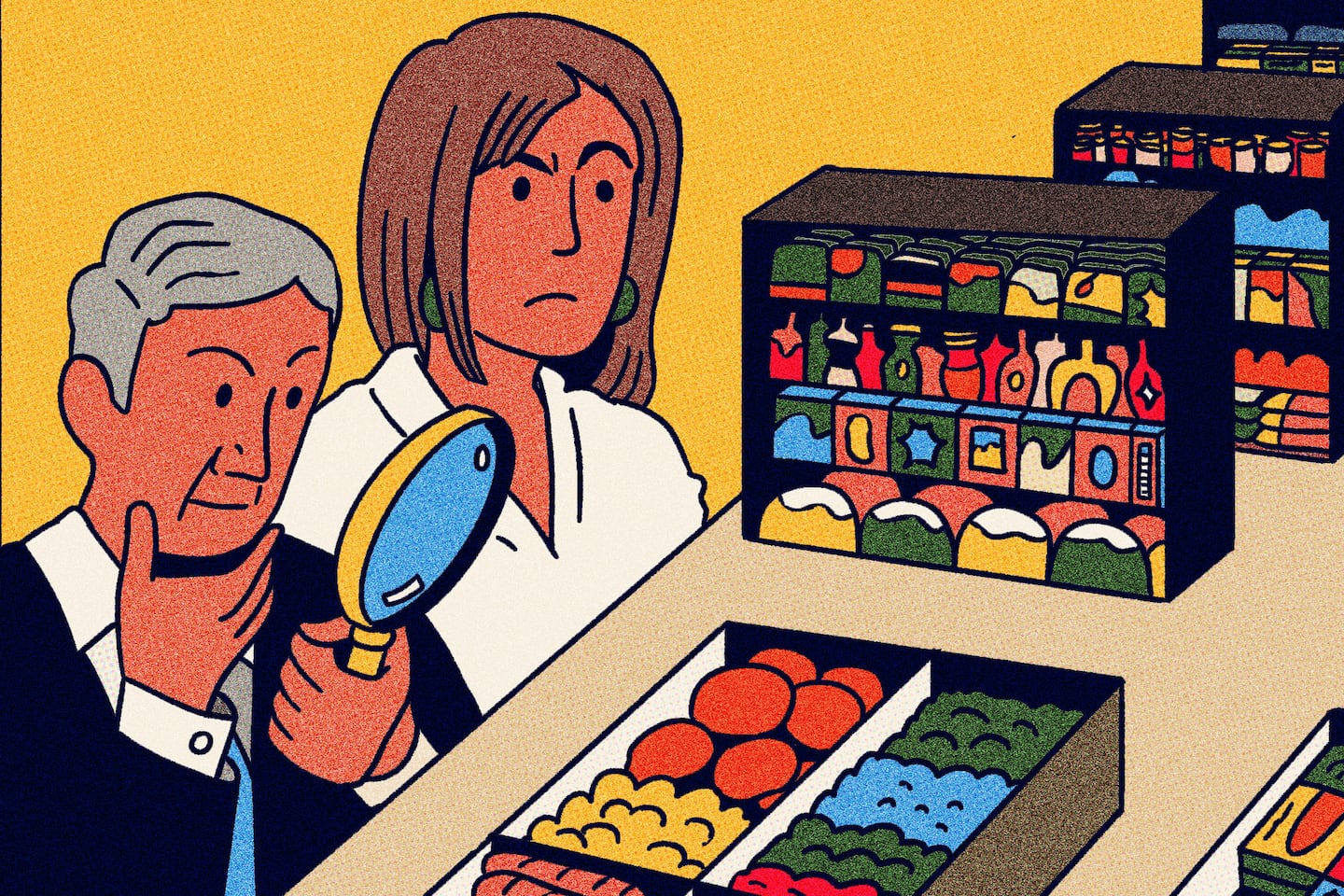
And that is how I ended up in the snack aisle with Mande, who, in the 1990s, helped design the nutrition facts label that packaged foods are required to display. He has worked at the Food and Drug Administration and US Department of Agriculture, and now is a professor at Harvard’s T.H. Chan School of Public Health and a nutrition advocate.
I invited Mande to accompany me on my usual grocery run at a couple stores in Washington, D.C., where I live — Trader Joe’s and Harris Teeter — picking his brain about the things my family buys on a regular basis to see how we are faring when it comes to ultraprocessed foods and nutrition.
As we walk through the aisles, he helps demystify the shelves, from ingredients lists to nutrition facts. Here is his practical advice.
Ahead of our trip, I had steeled myself for the scrutiny awaiting my family’s grocery selections, predicting a demoralizing result. My fear proves to be true, at least when we peruse the cheese section.
“Ultraprocessed,” Mande says gently, inspecting the ingredients on the “Mexican cheese” I’m buying for taco night. He points to the “anti-caking agents” and “mold inhibitor” listed at the end.
Nearly 75 percent of the American food supply is estimated to be ultraprocessed, supplying more than half of our calories. According to Kennedy, such foods are “poison.” But what makes a food ultraprocessed? There is no single agreed-upon definition (though the Trump administration is soliciting feedback in the hopes of developing one).
The term derives from a classification system first proposed by Brazilian researchers in 2009 and largely applies to food with chemical additives or made by industrial processes.
By this definition, they’re in almost every section of the supermarket. From sliced breads, breakfast cereals, lunch meats, and yes, even dairy, it’s a challenge to find anything outside of produce that’s not ultraprocessed. I’m relieved when Mande votes my chips and my go-to snack bar (mostly made of nuts) as arguably on the bubble.
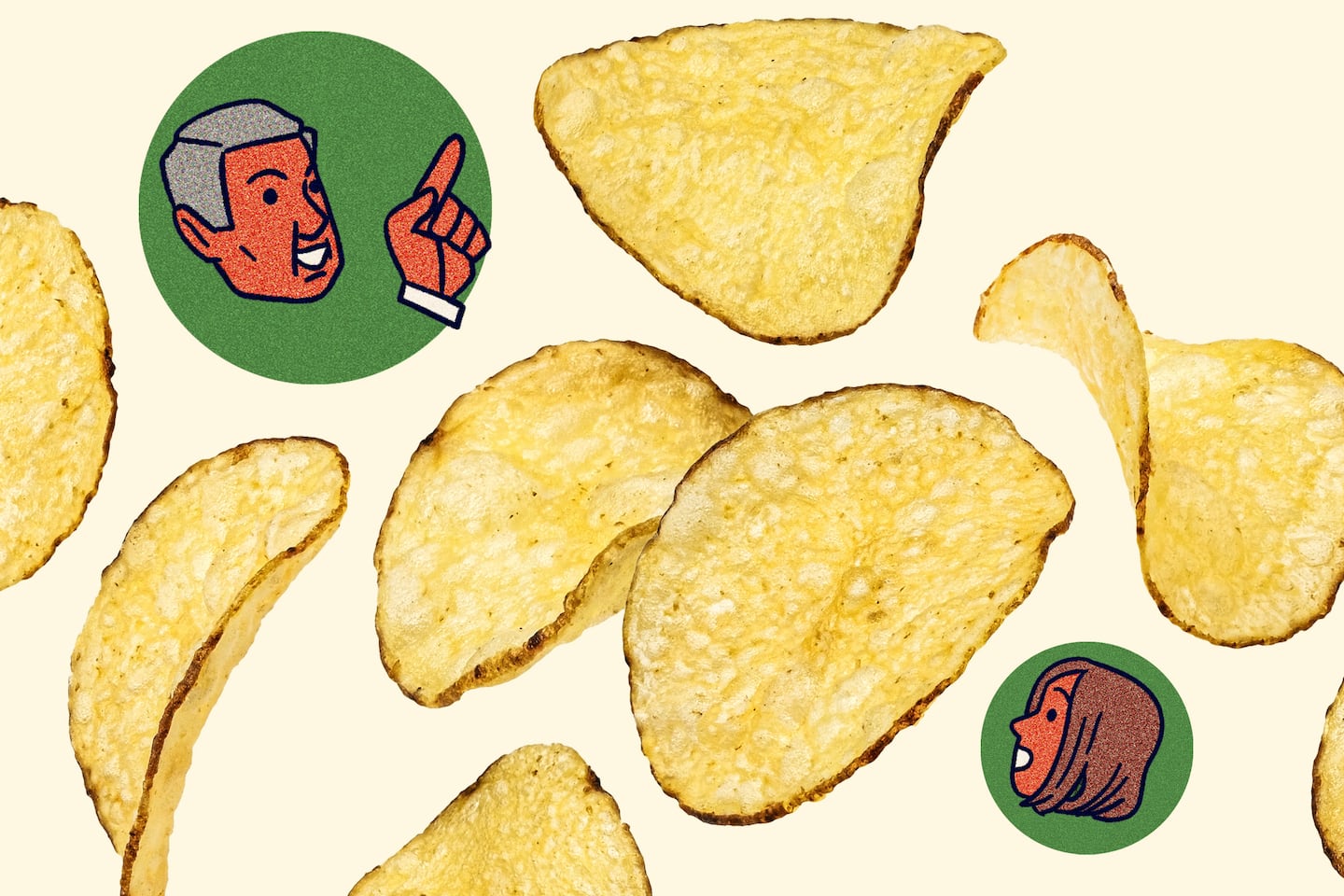 illustration by Mark Wang for the Boston Globe; photograph from Adobe Stock
I ask him how much I should worry about my ultraprocessed cheese. “You know,” he sighs, “it saves you time.”
He’s right. It feels like a victory to find products my young children will actually eat while juggling the demands of a budget, busy schedule, intense pickiness, and the mountain of recommendations about how to raise kids with a healthy relationship to food.
Mande’s advice? Try not to stress about everything. The main concern with ultraprocessed food, he says, is the way companies break food down into an unrecognizable form, mix it with added sweeteners and chemicals, and then reformulate it into something that is easy to eat — and eat way too much of.
“The things that make ultraprocessed food bad are twofold: It’s hyperpalatable and it’s calorically dense,” Mande tells me. “The food’s really being designed to be over-eaten, that’s what those ingredients allow them to do.”
“You want to eat food that’s nutrient-dense, not calorically dense.”
We are standing in the frozen foods aisle, and Mande is looking at the nutrition facts on a package of stir-fry. “Where I always start is here,” he says, pointing to the list of ingredients on the back.
Mande says he looks closely at the first three things, because ingredients are listed in order of most to least present in the food. The first three should be recognizable and nutritious — things you’d generally want to consume, he says. If the second or third ingredient is sugar or some other sweetener, proceed with caution.
As you continue down the list, be wary of ingredients that are unrecognizable or clearly an additive or preservative. Not all ingredients with funny names are automatically bad, though, and the fact that a food contains a preservative or ingredient to extend its shelf life is not immediately disqualifying.
There are things to look out for, however.
Take artificial dyes, for example. The administration has made a big deal of persuading companies to remove them from food, falsely claiming at times they’ve banned them. Some states have issued bans and companies are responding to pressures to phase them out, which nutrition experts say is overall a positive move. While there is evidence for some dyes being more harmful than others, experts note they are a key element to making ultraprocessed food attractive, especially to children.
Just because a dye (or other ingredient) is listed as “natural” doesn’t make it healthy.
“Cyanide is deadly. It is natural,” Mande quips.
 Mark Wang for the Boston Globe
Ultimately, he says, “You have to decide how much that’s going to concern you — that it’s ultraprocessed,” keeping in mind the totality of what you’re eating.
He recommends picturing a plate, and determining whether half is covered with produce, whole grains, and protein. “If [the ingredients] are those things, then you’re off to a good start,” he says.
Next, Mande points to the nutrition facts.
“The only thing you need to know about the ‘percent daily value’ is, if the number is five or less, it’s low, and if it’s 20 or more, it’s high,” he says. “And so some things you want low, some things you want high.”
So as we browse, Mande and I keep a keen eye out for added sugars, saturated fat, sodium, and dietary fiber.
In the prepared foods aisle, the saturated fat and sodium levels were the big offenders — often over 20 percent of the daily value. The dino-shaped chicken nuggets (a frequent necessity to get our kids to eat protein), are arguably ultraprocessed, but the main red flag is the higher sodium level. I am relieved that the granola bars my kid gravitates toward actually have a mostly recognizable ingredient list. But they have a fair amount of added sugar — something Mande warns is priming our kids to expect everything to be sweet.
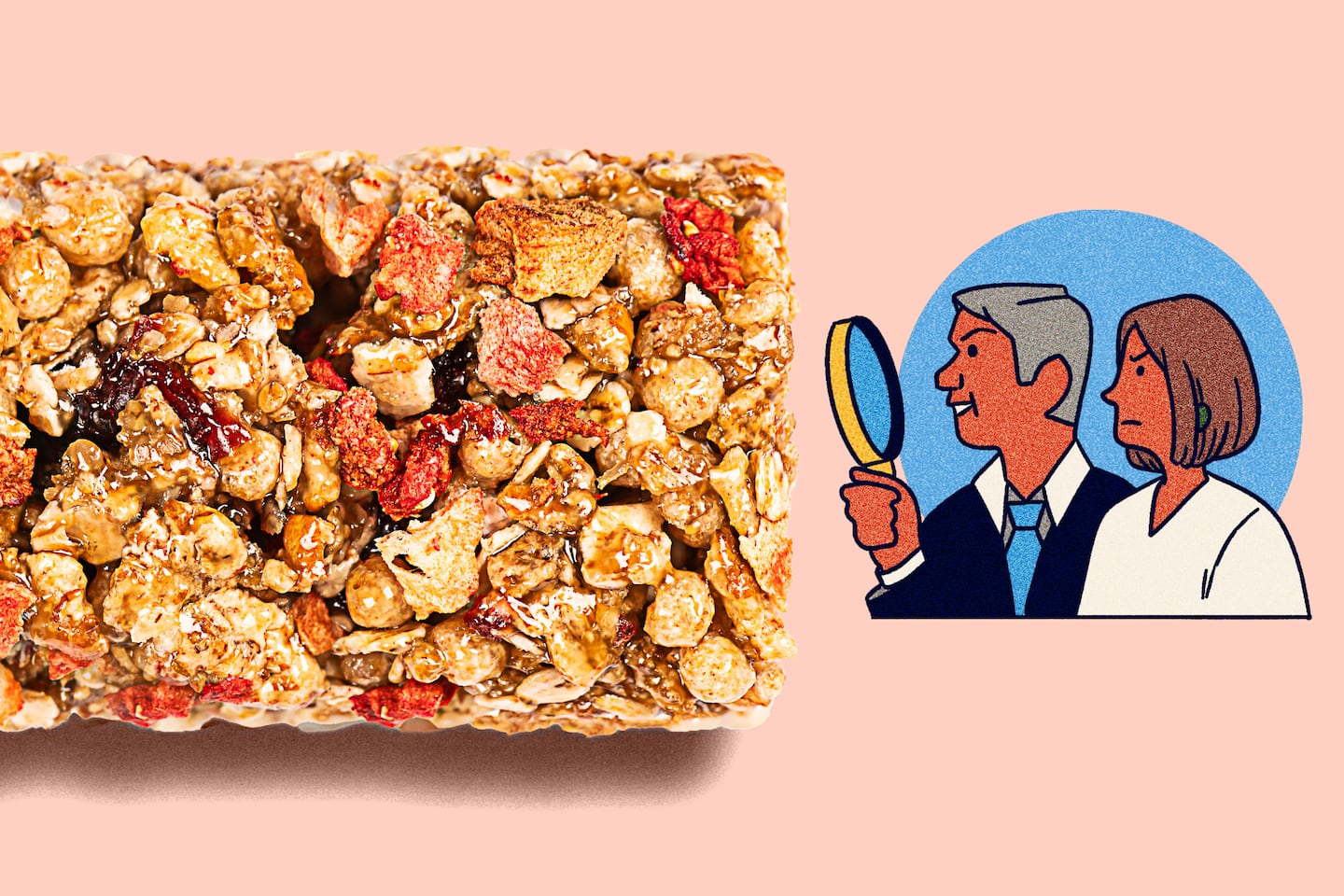 illustration by Mark Wang for the Boston Globe; photograph from Adobe Stock
In each case, Mande advises that I consider whether there is family history of health conditions to worry about (such as high blood pressure as it relates to sodium, or heart disease as it relates to saturated fat) and how those foods fit in as a proportion of the rest of what we are eating.
He notes that it’s added sugar to worry about — the freeze-dried fruit my kids adore have sugars in them, but they’re from the fruit and not added, making them less of a concern.
Turning the corner to the pasta aisle, it seems like a good time to talk about carbs. Mande points to dietary fiber as a useful measure of how refined a carb-heavy product is, whether bread, pasta, chips, or crackers. This is an example of something you want the percentage in the higher category.
He teaches me a trick: Ideally, the grams of dietary fiber should be 10 percent or more of the grams of total carbohydrates. For instance, a bag of spaghetti with 40 grams of carbohydrates per serving should have at least 4 grams of dietary fiber. (That chip that gave me so much hope? That was 14 grams of carbs per serving and 3 grams of dietary fiber — a solid 21 percent.)
Regulations around claiming a product is “whole grain” are loose enough that it can be hard to trust marketing, but if the dietary fiber is 10 percent or more of the total carbohydrates, that product is a better choice. If it’s excessively high, on the other hand, that may be a tell that it’s mostly an ultraprocessed food pumped with fiber additives.
A gluten-free noodle made with red lentil flour is by far the best nutritionally that we see. One made with brown rice barely exceeds the dietary-fiber percentage of the standard pasta.
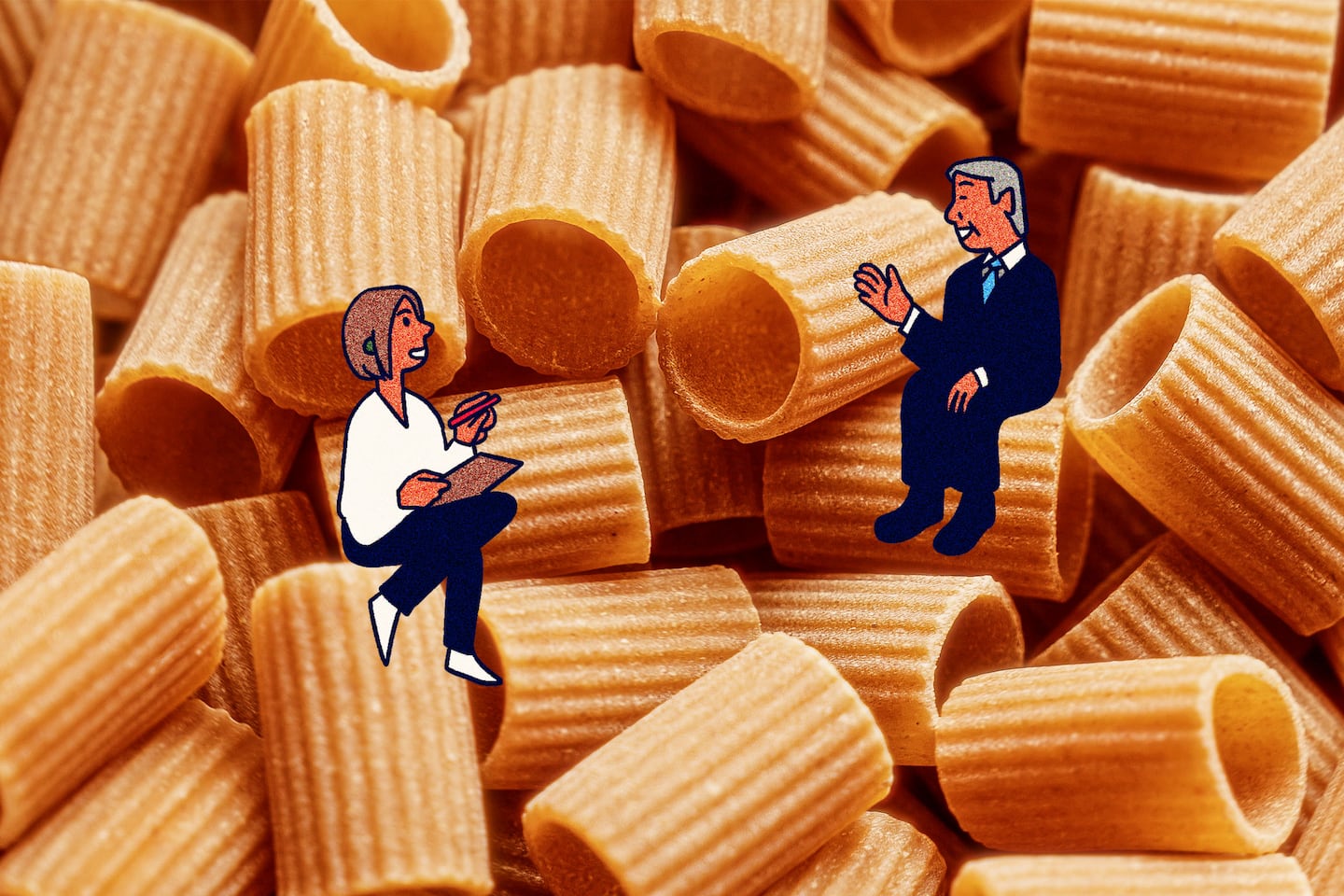 illustration by Mark Wang for the Boston Globe; photograph from Adobe Stock
A gluten-free boxed mac and cheese marketed as a healthy option, meanwhile, fails the test, fortified with a bunch of vitamins labeled with such descriptions as “extracted from broccoli” — healthy sounding, but nutritionally insignificant. But an unassuming option that comes with noodles made from chickpea flour is indeed a higher fiber, higher protein choice (both were very high in sodium). And Mande said simple tricks such as adding peas to a boxed mac and cheese can help if you just need an easy meal to get through the week (been there).
As we pass the tortilla section, he persuades me to try a whole grain version for our next taco night instead of regular to up the fiber, after I picked up a bag of the red lentil pasta to mix in with the tri-color spirals my kids are used to. (To my surprise, my picky kids actually end up eating both; on taco night and when I prepare a dish with the two pastas.)
There is some data backing up the idea that small changes such as these are worth it, including in the scientific review published alongside new dietary guidelines rolled out by the Trump administration, which place a heavy emphasis on eating “real food” — protein, produce, and whole grains.
One extra serving of whole grains per day lowers diabetes risk by 18 percent and the risk of death from all causes combined by 13 percent, according to Michael Goran, a researcher at the University of Southern California who was a member of the committee that did the review. Cutting ultraprocessed food calories by 10 percent a day could lower the risk of diabetes by 14 percent.
But it’s not always easy to know what’s good and bad, even when you’re with an expert. Holding a box of standard round crackers, I opine that even though they are heavily refined and have some added sugars, they have to be better than a bag of Doritos, right?
“I don’t know if that’s true,” Mande says, wanting to actually compare the labels. He suggests a basic corn tortilla chip, with fewer ingredients and possibly more fiber, might be the better option.
As our tour winds down, I take stock of what I’ve learned. I feel heartened that my family’s diet is not quite as bad as I feared, though probably still too high in added sugars, sodium, and saturated fat, and too low in dietary fiber.
The truth is that with many of my questions (What additive ingredient is the worst? Are all ultraprocessed foods equal? Where is the line?), Mande just couldn’t answer, because the research hasn’t been done.
“I mean, the whole nutrition field is just stricken by the fact we don’t invest in the science,” he says. “So most things we don’t know — it wouldn’t be hard to know—we just don’t.”
He shows me some of his favorite cookbooks for someone in my shoes (How to Cook Everything Fast by Mark Bittman and Simply Ancient Grains by Maria Speck), because, he said, if you’re going to try to navigate this morass, “What you need is a plan.” Mainly, he emphasizes finding a routine that works for each family.
 Mark Wang for the Boston Globe
But I leave with another takeaway: Consumers shouldn’t feel like failures for not figuring this out on their own. We are being bombarded with products and marketing that confuse us and give us few healthy options, often a trade-off for convenience and corporate profits.
If it feels impossible, Mande says, it’s because it is impossible. He encourages me by saying that doing my best — not reaching perfection — is the goal. Every expert I’ve spoken with has advised making whatever improvements in my diet feels manageable, whether it’s cutting a few ultraprocessed foods here or picking whole grain options there.
But collectively, they say, consumers should demand better.
“The answer is we have to fix the system,” Mande says. “You can’t as a consumer sort this out and protect yourself.”
Before I head home, I grab a tube of ready-to-bake biscuits. We make them for a breakfast-for-dinner night to accompany eggs and veggies.
I scan the label, applying the lessons Mande has taught me. They have virtually no dietary fiber, but they do have added sugars, and a fair amount of sodium and saturated fat, and in his words, are “definitely ultraprocessed.”
“Well,” I say, pausing before I put them in the cart. “Can’t win ’em all.”
Tal Kopan can be reached at tal.kopan@globe.com. Follow her @talkopan.